Profiles: 76-Year Old Country Singer Terry Allen Releases New Album “Just Like Moby Dick”

The connections to Melville’s masterpiece are metaphorical and allusive, as elusive as the White Whale. The masterly spiritual successor to Lubbock (on everything)Just Like Moby Dick casts its net wide for wild stories, depicting, among other monstrous things, Houdini in existential crisis, the death of the last stripper in town, bloodthirsty pirates (in a pseudo-sequel to Brecht and Weill’s “Pirate Jenny”), the wars in Iraq and Afghanistan (in the “American Childhood” suite), a vampire-infested circus, mudslides and burning mobile homes, and all manner of tragicomic disasters, abandonments, betrayals, bad memories, failures, and fare-thee-wells.

Iconic and iconoclastic Texan songwriter and visual artist Terry Allen’s heartbreaking, hilarious new album, his first set of new songs since 2013’s Bottom of the World, features the full Panhandle Mystery Band, including co-producer Charlie Sexton (Dylan, Bowie, Blaze), Shannon McNally, and Jo Harvey Allen; mainstays Bukka AllenRichard Bowden, and Lloyd Maines; and co-writes with Joe Ely and Dave Alvin

Album Website

Terry Allen (born May 7, 1943 in Wichita, Kansas) is an American Texas country and outlaw country singer-songwriter, painter and conceptual artist from Lubbock, Texas. He currently lives in Santa Fe, New Mexico. He has recorded twelve albums of original songs, including the landmark releases Juarez (1975) and Lubbock (on everything) (1979). His song “Amarillo Highway” has been covered by Bobby Bare, Sturgill Simpson and Robert Earl Keen. Other artists who have recorded Allen’s songs include Guy Clark, Little Feat, David Byrne, Doug Sahm, Ricky Nelson, and Lucinda Williams. Rolling Stone magazine describes his catalog, reaching back to Juarez as “..uniformly eccentric and uncompromising, savage and beautiful, literate and guttural.”

From Wikipedia

Top New Science Podcasts: Australian Fires, Isaac Asimov’s Robots And The Coronavirus (Nature)

Nature PodcastsListen to the latest from the world of science, with Benjamin Thompson and Nick Howe. This week, establishing climate change’s role in Australian bushfires, and revisiting Isaac Asimov’s thoughts robots.

In this episode:

00:46 Behind the bushfires

Researchers are working to establish the role that climate change is playing in the bushfires that are raging across Australia. News Feature: The race to decipher how climate change influenced Australia’s record firesEditorial: Australia: show the world what climate action looks like

10:02 Research Highlights

The debate around how Vesuvius claimed its victims, and an ancient mummy speaks. Research Highlight: Vitrified brains and baked bones tell the story of Vesuvius deathsResearch Article: Howard et al.

12:21 Asimov’s legacy

This year marks the centenary of Isaac Asimov’s birth. We reflect on the impact of his writing on the field of robotics. Essay: Isaac Asimov: centenary of the great explainer

21:00 News Chat

The latest on a new virus from Wuhan in China, and social scientists’ battle with bots. News: Coronavirus: latest news on spreading infection; News: Social scientists battle bots to glean insights from online chatter

Future Of Driving: Testing Electric-Vehicles In Four Countries (WSJ Video)

Dozens of new electric-vehicle models are expected to arrive at dealerships in the next few years. We followed eight Wall Street Journal reporters in four countries to see if they, and the world, are ready to make the switch.

Exercise: Older Adults With Higher Muscle Mass Reduce Cardiovascular Disease By Over 80% (Study)

From a Journal of Epidemiology & Community Health online release:

Jounal of Epidemiology &amp; Community Health January 2020The 10 year CVD (cardiovascular disease) incidence increased significantly across the baseline SMI (skeletal muscle mass index) tertiles (p<0.001). Baseline SMM (Skeletal muscle mass) showed a significant inverse association with the 10 year CVD incidence (HR 0.06, 95% CI 0.005 to 0.78), even after adjusting for various confounders. Additionally, participants in the highest SMM tertile had 81% (95% CI 0.04 to 0.85) lower risk for a CVD event as compared with those in the lowest SMM tertile.

Background Skeletal muscle mass (SMM) is inversely associated with cardiometabolic health and the ageing process. The aim of the present work was to evaluate the relation between SMM and 10 year cardiovascular disease (CVD) incidence, among CVD-free adults 45+ years old.

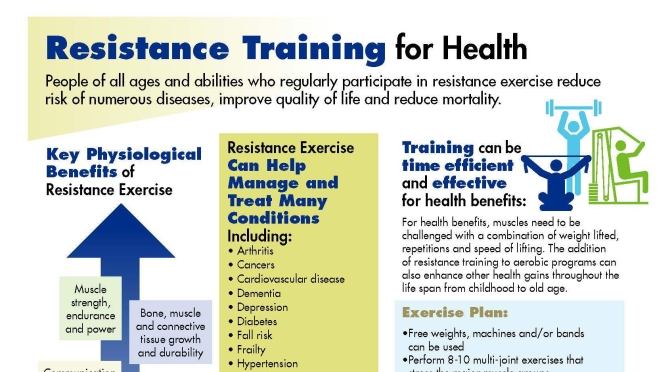
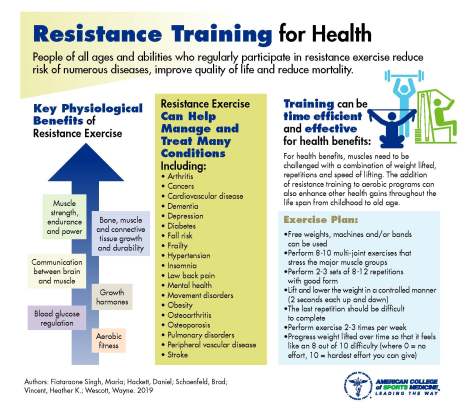
INFOGRAPHIC-ACSM-resistance-training-for-health

Methods ATTICA is a prospective, population-based study that recruited 3042 adults without pre-existing CVD from the Greek general population (Caucasians; age ≥18 years; 1514 men). The 10 year study follow-up (2011–2012) captured the fatal/non-fatal CVD incidence in 2020 participants (50% men). The working sample consisted of 1019 participants, 45+ years old (men: n=534; women: n=485). A skeletal muscle mass index (SMI) was created to reflect SMM, using appendicular skeletal muscle mass (ASM) standardised by body mass index (BMI). ASM and SMI were calculated with specific indirect population formulas.

The global population is ageing at an unprecedented speed, especially in Europe. As a concept, ageing is considered a continuous process starting from birth and is accompanied by various physiological changes and a number of comorbidities1 2 that affect health and quality of life.3 4 Skeletal muscle mass (SMM)4 alterations are among these physiological changes.

SMM tissue decline, as a part of these physiological changes, starts in middle age (or even earlier, in the 30s) and progresses in more advanced age.5 It has been shown that SMM declines with a rate of more than 3% per decade starting from the age of 30+.6 Half of the human body’s mass is actually SMM and it has an active role in numerous metabolic pathways.5 7 SMM decline is related, among others, to various disability patterns, poor mental health and increased mortality.5 7 8 In addition, well documented studies have shown that SMM alterations are related to cardiovascular health,9 10 even different muscle morphology.11 Recently, Srikanthan et al 12 reported the importance of muscle tissue in relation to cardiovascular disease (CVD) and total mortality in stable CVD patients.

Read full study

Weight Loss: Medical Review Of “Keto, Atkins, and Pritikin Diets” (JAMA)

JAMA Clinical Studies PodcastThere are many named diets that receive a great deal of attention. But what are they and do they work? David Heber, MD, PhD, from the UCLA Center for Human Nutrition explains these diets.


Studies: Heart Surgery Patients Can Be Safely Discharged In 3 Days

From a News-Medical.net online release:

Northwestern Medicine logo“Patients can go home after a shorter length of stay in the hospital without increased risk of complications and rehospitalizations,” said Dr. Malaisrie. “Because we found no detrimental effect of accelerated discharge, both patients and physicians should not be averse to discharging patients when medically ready.”

Dr. Malaisrie anticipates that the Northwestern Medicine cardiac ERAS program will result in faster recoveries, reduced complications, decreased time in the hospital, lower costs, and improved patient/family satisfaction. In the future, the researchers plan to closely examine both traditional clinical endpoints and patient-reported outcomes from the program.

“Expectations for recovery after cardiac surgery are being reset in the current era,” he said. “What does this mean for patients? It means that prolonged or taxing recovery is no longer required. Patients should know that recovery from heart surgery is not only quicker, but also better with ERAS programs.”

Read more

Super Bowl Ads: Hilarious “Avocados From Mexico Shopping Network” (2020)

https://www.youtube.com/watch?v=W4QYhAAKja8

Healthy, delicious, always in season- it may seem like Avocados From Mexico have it all. But they don’t have a luxury yurt. Or a Tortilla Chip Floatie. Luckily, Molly Ringwald and the Avocados From Mexico Shopping Network has everything you need to give your avocado everything it deserves.

Interviews: 72-Year Old Artist James Wrayge

Excerpts from a NextAvenue.org online article interview:

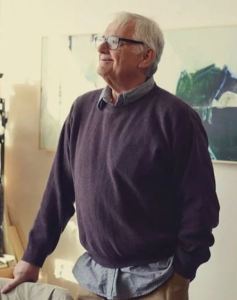
While Wrayge’s work has appeared in galleries and been bought across the globe, he prefers to focus on creating, not selling Photo by Elle Moulin in NextAvenue

“I don’t like the word ‘evolve,’” he says. “Art means the same thing today as it always has. Styles change, but art doesn’t.”

Hesitant to put too defining a label on his work, Wrayge claims his paintings have “a landscape feel.” He doesn’t consider them to be abstract. “That’s a word invented by the press, not by painters,” he says. “What I prefer to say [about my paintings] is that they are a visual manifestation of my values.”

James Wrayge Fine Artist website pageIn James Wrayge’s quiet studio on an early winter afternoon, there is a tangible sense of  purpose. Wrayge’s paintings line the walls along the portion of the space he shares with another artist at the Northrup King Building in Minneapolis. There are also some paintings on the floor propped up against the same walls. And there is one — in progress — set on an easel in the corner.

James Wrayge website

NextAvenue logo

To read more

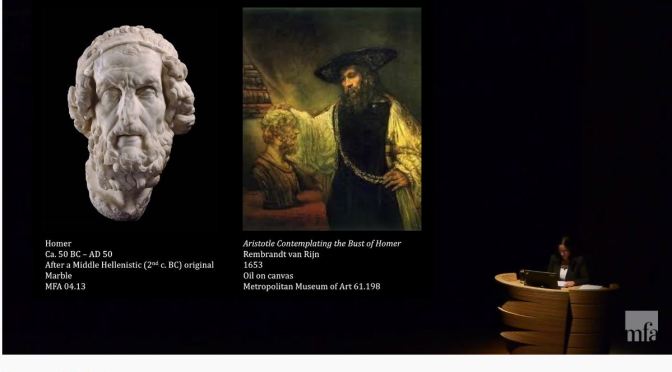
History & Literature: “Homer and the Epics”

The bard and the visual artists he inspired.

Phoebe C. Segal, Mary Bryce Comstock Curator of Greek and Roman Art

Homer is the legendary author of the Iliad and the Odyssey, two epic poems that are the central works of ancient Greek literature. The Iliad is set during the Trojan War, the ten-year siege of the city of Troy by a coalition of Greek kingdoms. It focuses on a quarrel between King Agamemnon and the warrior Achilles lasting a few weeks during the last year of the war. The Odyssey focuses on the ten-year journey home of Odysseus, king of Ithaca, after the fall of Troy. Many accounts of Homer’s life circulated in classical antiquity, the most widespread being that he was a blind bard from Ionia, a region of central coastal Anatolia in present-day Turkey. Modern scholars consider these accounts legendary.

From Wikipedia