Category Archives: Arts & Literature

SPECTACLE MAGAZINE —- SPRING 2026 PREVIEW

SPECTACLE MAGAZINE: This inaugural issue features the “mechanical culture” of Lego to luxury watchmaking in sailing, profiling Gumball 3000 founder Maximillion Cooper and Eastnor Castle’s Imogen Hervey-Bathurst……

Gone fishing: In the Andean foothills of Northern Patagonia, the wild trout are biting

Ivo Dawnay

The casa grande could be an ancient chalet in the Austrian Tyrol. A steeply gabled roof to slough off the winter snow, dandelion-yellow paintwork, and inside a treasure trove of all an outdoorsman loves. Antlers jostle for space on every wall. There is a tack room thick with the leathery tang of saddles, a bathroom

Colm Tóibín explores the art of short story writing

Amy Raphael

hen I was 20 and tentatively trying to write, every single person I knew read Ian McEwan’s First Love, Last Rites (1975). It not only gave the short story a good name, but it also gave writing a good name. It was like a punk moment converted into fiction. People used the word “macabre,” but there was a sort of excitement about the characters, the strangeness of the stories, the shortness of some of the stories and just how much contemporary urban life was in them.

Zack Christenson

Exploring the world’s oceans with the world’s most interesting man

Zack Christenson

“You can just do things.”

It’s a popular phrase on X, usually in response to someone accomplishing something remarkable, taken to mean that there’s nothing stopping you from doing something out of the ordinary. SpaceX might post video of a rocket landing – “you can just do things.” Victor Vescovo might be the living embodiment of the phrase.

My first introduction to Vescovo was an email from him, extending an invitation to be a guest at his table for the Explorers Club Annual Dinner. The name was vaguely familiar to me but didn’t immediately register. Who was this mysterious correspondent?

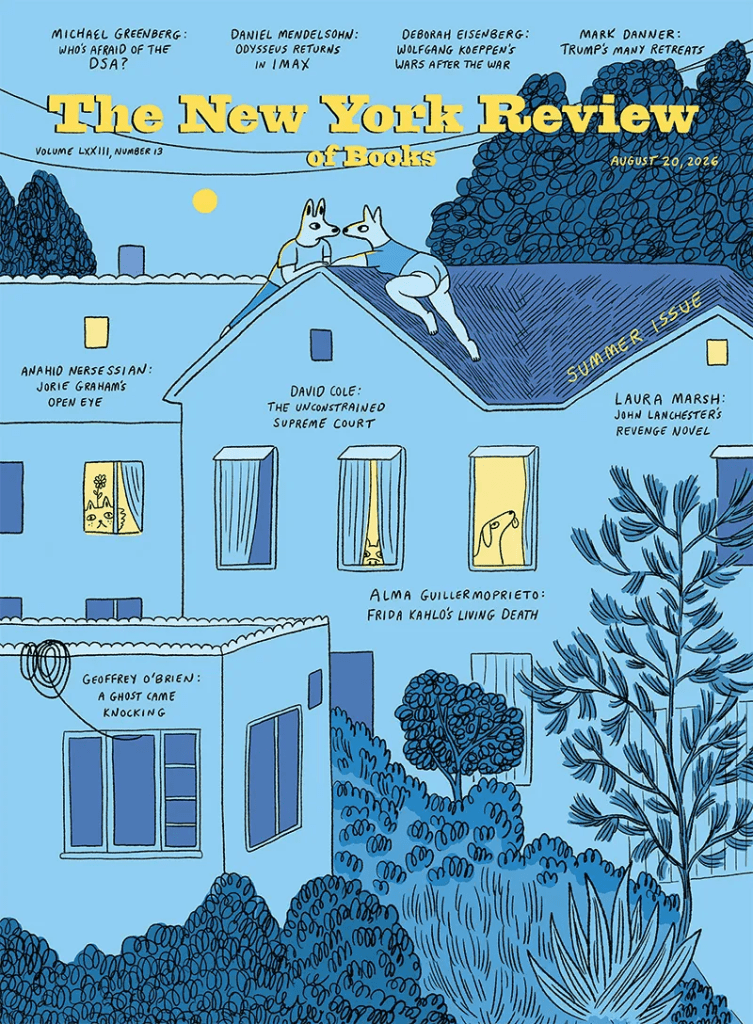
THE NEW YORK REVIEW OF BOOKS – MAY 28, 2026

THE NEW YORK REVIEW OF BOOKS: The latest issue features Ben Tarnoff on Silicon Valley’s paterfamilias, Christopher de Bellaigue on Iran’s political future, Frances Wilson on Liza (with a “Z”), Christopher Tayler on Ben Lerner, Lynn Hunt on Marat’s afterlife, Charlie Lee on John Gregory Dunne’s descent into Vegas, Adam Hochschild on the dream of the Bundists, Nina Siegal on the real-life Hoosier Indiana Jones, Louisa Lim on contemporary Hong Kong literature, poems by Dan Chiasson and Emily Berry, and much more.

Whither the Nerd-Bully?

Bill Gates was the monopolistic father figure who Silicon Valley’s young founders rebelled against—and, in so rebelling, became.

Billionaire, Nerd, Savior, King: Bill Gates and His Quest to Shape Our World by Anupreeta Das

Source Code: My Beginnings by Bill Gates

Iran’s New Winter

The US-Israeli war against Iran, far from encouraging a popular uprising, has strengthened the regime’s grip and set back the cause of Iranian freedom indefinitely.

Don’t Call It Entertainment

In Everthing Is Now, J. Hoberman chronicles a radical avant-garde’s attempts to jostle New York City out of its postwar complacency and moral retrenchment.

Everything Is Now: The 1960s New York Avant-Garde—Primal Happenings, Underground Movies, Radical Pop by J. Hoberman

The Sage of Washington

Walter Lippmann was the most influential political commentator of his generation, but behind his preternatural confidence was a far more complicated and unsettled character.

Walter Lippmann: An Intellectual Biography by Tom Arnold-Forster

GAGOSIAN QUARTERLY – SUMMER 2026 PREVIEW

Gagosian Quarterly: The latest issue features an excerpt from Sharad Chari’s recent essay on Ellen Gallagher, musing on his visit to the artist’s studio in Rotterdam, Netherlands. Sebastian Smee writes of Francis Bacon’s time in Paris, Adam D. Weinberg ruminates on Giuseppe Penone’s enduring engagement with bronze, and Derrick Adams joins Tessa Bachi Haas in conversation ahead of his first mid-career survey.

With the opening of the 61st Biennale di Venezia, a number of the magazine’s features engage with the history and contemporary culture of the storied city. Jenny Saville speaks with art historian Stefania Ventra to mark her major exhibition at Ca’ Pesaro–Galleria Internazionale d’Arte Moderna. In an essay bridging the Republic of Venice and the twenty-first century, Ben Street explores the timeless resonance of Giovanni Domenico Tiepolo’s tragicomic frescoes. And Nancy Spector discusses her bold pairing of Richard Prince and Arthur Jafa in an exhibition at the Fondazione Prada.

In the world of literature, Helen Oyeyemi shares the second installment of her fiction series As You Wish, Mary Gaitskill speaks with Jill Mulleady about their recent Picture Books collaboration inspired by Faust, Wyatt Allgeier interviews Andrew Durbin on the occasion of his new dual biography of Peter Hujar and Paul Thek, and Alana Pockros guides us through the refractive wonderlands of novelist Elaine Kraf.

Elsewhere in the issue, Carlos Valladares ponders Charli XCX’s mockumentary The Moment, Janne Sirén examines Anselm Kiefer’s mythological figures, and three luminaries from the worlds of design, fashion, and food—Ronan Bouroullec, Michèle Lamy, and Enrique Olvera—consider the furniture of Donald Judd.

THE NEW YORKER MAGAZINE – MAY 11 & 18, 2026 PREVIEW

The cover of the May 11  18 2026 issue of The New Yorker on which a worldweary George Washington slouches at a party...

THE NEW YORKER MAGAZINE: The latest issue cover features ‘Barry Blitt’s “Red, White, and Kinda Blue” – America’s birthday party.

Two Hundred and Fifty Years of Complicated Commemorations

Donald Trump’s aversion to admitting fault suggests that we will not likely see events that grapple with the nuanced nature of the nation’s history this July 4th. By Jelani Cobb

Was the Declaration of Independence Better Before the Edits?

Amid contention, criticism, and compromise, a divided nation had to present a unified front. It came at a cost. By Jill Lepore

Barack Obama Considers His Role in the Age of Trump

The former President remains one of the most popular politicians in the country. What are his obligations to it?

The Burlington Magazine – May 2026 Preview

May 2026, #1478 – Vol 168 | Current issue | Current issue − The Burlington  Magazine

The Burlington Magazine: The latest issue features….

Main Articles and Research

“The Consolidation of Collections: New Light on the 18th-Century British Art Market” An in-depth study by the editorial team and guest contributors exploring how major British estates restructured their private galleries during the mid-1700s. The article utilizes newly discovered ledger books to trace the provenance of several key Italian Baroque works.

“Paolo Veneziano and the International Gothic in Venice” Following the research trends seen in the early part of the year, this feature provides a technical analysis of recently restored altarpieces attributed to Veneziano, focusing on the use of ultramarine and gold leaf techniques that defined the Venetian style in the 14th century.

“Nicholas Lanier and the ‘Star’ Drawings: New Discoveries” Building on recent scholarship (featured in related symposiums), this article identifies several previously unrecognized drawings from the collection of Nicholas Lanier (1588–1666). It specifically examines the “star-shaped marks” used by Lanier and his uncle Jerome to catalog their sixteenth-century Italian acquisitions.

Editorial and Shorter Notices
Editorial: “The Future of Art History in the Digital Age” Editor Christopher Baker discusses the balance between traditional archival research and the integration of AI and digital imaging in art historical authentication.

Object in Focus: “George Frederic Watts’s Satan (1847)” A specialized notice providing a new interpretation of Watts’s massive canvas. The author argues that the figure’s pose was inspired by the Monte Cavallo Horse Tamers in Rome rather than the Apollo Belvedere, as previously thought.

Exhibition and Book Reviews
The Farnese Gallery Drawings (Musée du Louvre, Paris): A critical review by Ketty Gottardo on the exhibition focusing on the Carracci brothers’ preparatory works.

Studio Prints: A History, 1968–2011: A review of the new publication by Paul Holberton Publishing, detailing the impact of the London workshop on 20th-century printmaking.

Modernizing the Catalog: A review of the Patek Philippe exhibition and the intersection of fine horology with decorative arts history.

LITERARY REVIEW MAGAZINE – MAY 2026 PREVIEW

LITERARY REVIEW : The latest issue features Ritchie Robertson on Weimar * Charles Darwent on Louise Bourgeois * John Guy on the Tudors * Kirsten Tambling on dogs in art * Piers Brendon on Churchill and the crown * Saul David on AI warfare * Simon Nixon on private equity predators * Nigel Andrew on outsider animals * Zoe Guttenplan on Beatrice Warde * Maren Meinhardt on women and music * Lucy Lethbridge on swimming * Diane Purkiss on being published * Anthony Pagden on the West * Michael Reid on Lula * Anthony Teasdale on Tory leaders * Anna Reid on Vera Gedroits * Wendy Holden on Elizabeth II * Harriet Rix on trees * Emma Smith on Shakespeare’s identity * Jane Yager on Herta Müller * Sheena Joughin on Siri Hustvedt *  Adam Kucharski on evidence * Keith Miller on Douglas Stuart * Natalie Perman on Jem Calder *  and much, much more…

Weimar Germany: Death of a Democracy By Victor Sebestyen

Weimar: Life on the Edge of Catastrophe By Katja Hoyer

The small town of Weimar is overladen with historical associations. Goethe spent more than fifty years there as an employee and friend of Duke (later Grand Duke) Karl August. After the last grand duke abdicated in November 1918, the National Assembly met in Weimar to draw up a new republican constitution for Germany. Other symbolically charged venues considered were Nuremberg (home of Dürer) and Bayreuth (because of Wagner), but it was Weimar that gave its name to the period of German history from … 


Knife-Woman: The Life of Louise Bourgeois By Marie-Laure Bernadac (Translated from French by Lauren Elkin)

Having been named for her father, Louis, a mere dealer in antique tapestries, seemed insufficiently romantic to Louise Bourgeois, who was born on Christmas Day in 1911. She preferred the idea that her namesake was Louise Michel, ‘the red virgin of Montmartre’, an anarchist heroine of the Paris Commune. It wasn’t true, of course, but … 

This Little World: A New History of Tudor and Stuart England By Nandini Das

A phrase like ‘fortress England’ seems to echo down the centuries, and turns up again in This Little World, Nandini Das’s new study of identity and belonging, cross-border migration, assimilation and estrangement in the period between 1500 and the restoration of Charles II. Das seeks to unmask the period’s most fundamental assumptions about English … read more

Zyzzyva Magazine —– Spring 2026 Preview

ZYZZYVA Magazine: The latest issue features…

Nonfiction

“Saguaro in the Sea” by Sophia Acuña: on surfing and indigeneity in Southern California, told through collage.

“Care Directive” by Sarah Matsui: a daughter’s attempt to keep her aging father in Hawaii from all sorts of calamity, but having to monitor him from the mainland.

“Triptych: A Biographer’s Sketchbook” by Carolyn Burke: “The Baroness was lively, curious, and still blond at eighty-five. She received me in a flurry of franglais, the mingling of two languages in which we would converse, and put us at ease with pink champagne, her favorite.”

Fiction

“Decoys” by Will Boast: goofing around working at the town supermarket, burning through the days till it all comes to head.

“Lilac Mud” by Anita Felicelli: A Bay Area artist in Amsterdam is approached one night by a man claiming to be a former student, leading to a crisis of identity and purpose.

“Grote geplumaceerde” by Emily Nemens: “Afterward, staring hard at her phone, which was her radio, which was the bearer of bad news, she wondered what mattered at all.”

Poetry

Kevin Cantwell, Geraldine Jorge, Jonathon Keats, Caroline Kessler, and Noelani Piters.

In Conversation

Lydia Kiesling talks to acclaimed author Karen Russell about Russell’s latest novel, The Antidote, and about Russell’s “fascination with foundational myths, the things we choose to know, and the things we choose to ignore or forget.”

Art

Ian Everard

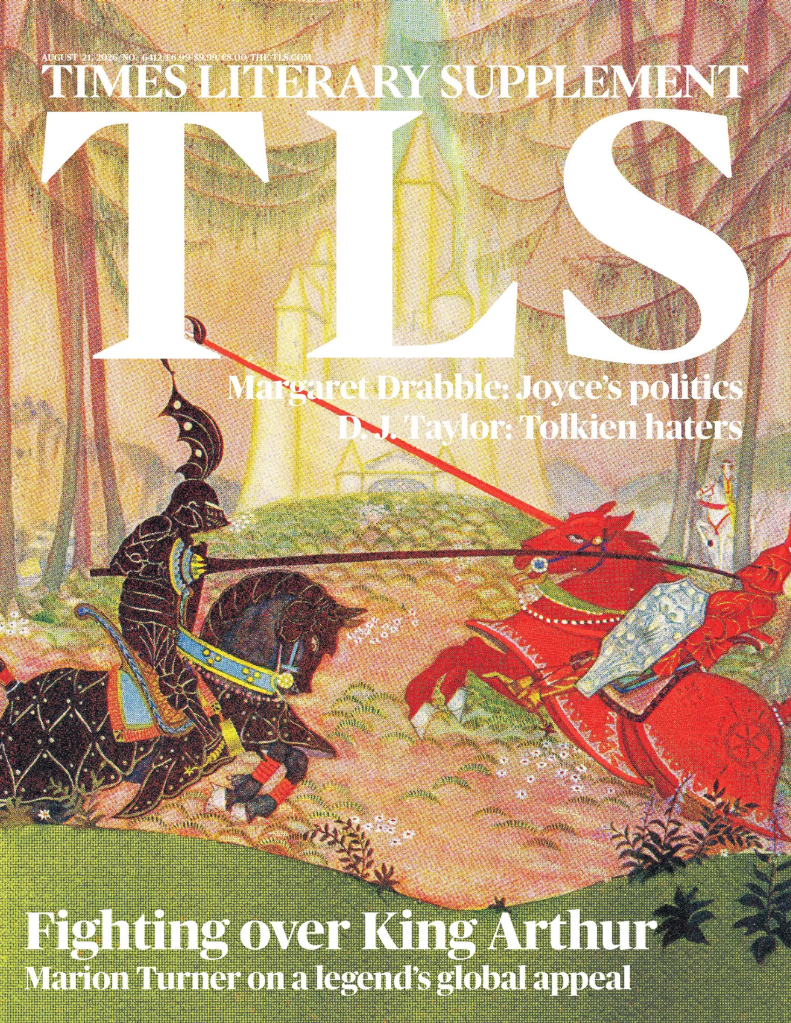
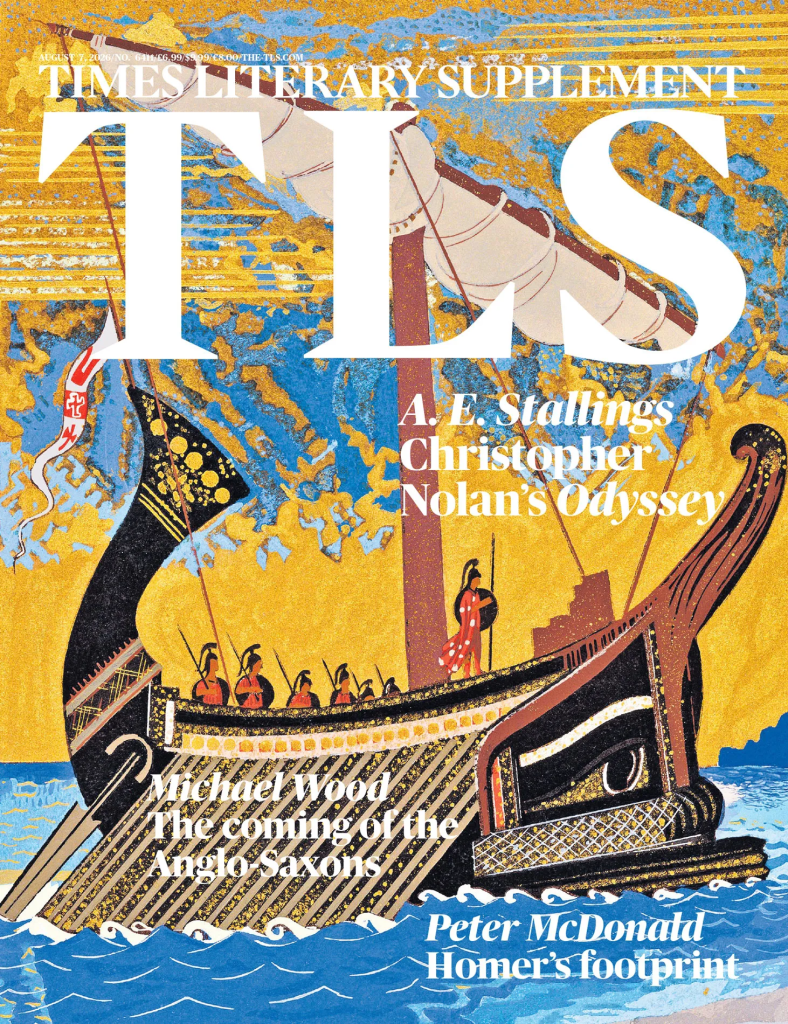
TIMES LITERARY SUPPLEMENT – MAY 1, 2026 PREVIEW

TIMES LITERARY SUPPLEMENT: The latest issue features ‘A View of Her Own’….

Out of nothing

Tracey Emin’s self-fashioning By Sophie Oliver

Amateurs in name only

Women landscape painters reconsidered By Jenny Uglow

Bomb culture

Mankind has escaped nuclear war, for now By P. D. Smith

So close to the United States

Mexico’s challenge to received historical ideas By Benjamin T. Smith

Greedy for light        

The bittersweet contentment of old age By Rory Waterman

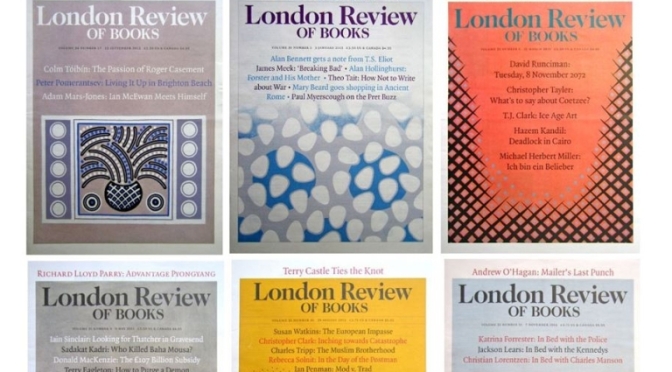
LONDON REVIEW OF BOOKS – MAY 7, 2026 PREVIEW

LONDON REVIEW OF BOOKS: The latest issue features ‘Who Owns The Arctic?’ by Laleh Khalili; De Kooning in Cuba by T.J. Clark; Politics on Speed by William Davies…

Who owns the Arctic?

Laleh Khalili

From the 16th century onwards, as European powers feverishly colonised the world, the possibility of a Northern Sea Route connecting the Atlantic to the Pacific, from Scandinavia to the Bering Strait, tantalised the Dutch and the British as an alternative to the southern routes to Asia and the Americas, which were dominated by Portugal and Spain. But the route only became a reality in the Soviet era, after investments in scientific, economic, industrial and military infrastructure in Siberia. 

Politics on Speed

William Davies

This is what distinguishes hyperpolitics from the mass democracy of the mid-20th century. Symbolic political gestures are now commonplace, but paid membership of organisations and parties has plummeted. The left has failed to find a replacement for trade unions as a basis for collective action in civil society. Political movements are easy to join, and just as easy to leave. 

De Kooning in Cuba

T.J. Clark

De Kooning’s Suburb in Havana is a counter-revolutionary painting. Well, of course. It is counter-revolutionary because it is counter everything, versus everything, lost in suburbia. It wants to show us how hard it had to work to get precisely nowhere. Why nowhere was where it wished to get to is a question it leaves to the viewer. 

Orbán’s Fall

Jan-Werner Müller

Can there be poetic justice in politics? Perhaps once in a lifetime. In 1989, a young Viktor Orbán bravely told the crowds in Budapest’s Heroes’ Square that it was time for the Russians to go home, just as protesters had demanded in 1956; almost four decades later, he was heckled on the campaign trail with the same words.

APOLLO MAGAZINE ———- MAY 2026 PREVIEW

Apollo issue: May 2026

APOLLO MAGAZINE: The latest issue features Inside the crisis at the Louvre | how Marcel Duchamp invented modern art | an interview with Abbas Akhavan | Whistler shows his metal

FEATURES | Valeria Costa-Kostritsky explores the crisis at the Louvre; Hettie Judah talks to Abbas Akhavan before the artist represents Canada at the Venice Biennale; Ana María Bresciani of the Munchmuseet on Edvard Munch and the chocolate factory; Nicole Rudick on how Marcel Duchamp has been misunderstood; and Tara Contractor takes a closer look at Whistler’s love of metallic surfaces

REVIEWS | Sheila Barker on Raphael’s interest in women – and their interest in him; Zachary Ginsberg takes the temperature of contemporary American art at the Whitney Biennial; Digby Warde-Aldam admires Hurvin Anderson’s tricky balancing acts; Robert Hanks on the role of man’s best friend in art history; and William Aslet on the craftsmen behind some of Britain and Ireland’s best buildings

MARKET | Jane Morris on the status of online auctions; Emma Crichton-Miller on the mid-century French designers who married form, function and fun; in New York fair previews: Fatema Ahmed picks highlights from TEFAF; and Arjun Sajip looks ahead to Frieze

PLUS | Charles Darwent salutes the subtleties of Jasper Johns; Samuel Reilly on the threat to one of Glasgow’s most unusual attractions; Will Wiles applauds the witty architectural cartoons of Alan Dunn; Ivan Day on extravagant banquets in the Georgian era; Christina Makris visits the vineyard of Château La Coste; Helena Attlee is fired up by a depiction of Mount Etna; and Edward Behrens on a sale that shines new light on Gerhard Richter