Category Archives: Technology

MIT TECHNOLOGY REVIEW – MAY/JUNE 2026 PREVIEW

MIT TECHNOLOGY REVIEW: The Nature issue features Technology remade the world. Now what? As we work to understand how much our own ingenuity has created an increasingly unnatural world, we’re also confronting tough choices about what to preserve—and how. Plus: Killer microbes from the mirror universe and fresh fiction from Jeff VanderMeer.

Colossal Biosciences said it cloned red wolves. Is it for real?

The red wolf has long been a contentious species. The debate over its preservation got even messier last year, when Colossal said it had cloned the animal.

The problem with thinking you’re part Neanderthal

The idea that modern humans inherited DNA from Neanderthal ancestors is one of the 21st century’s most celebrated discoveries in evolution. It may not be that simple.

Digging for clues about the North Pole’s past

To understand what the future holds for Earth’s northernmost waters, scientists are burrowing deep below the seabed.

DISCOVER MAGAZINE – SPRING 2026 PREVIEW

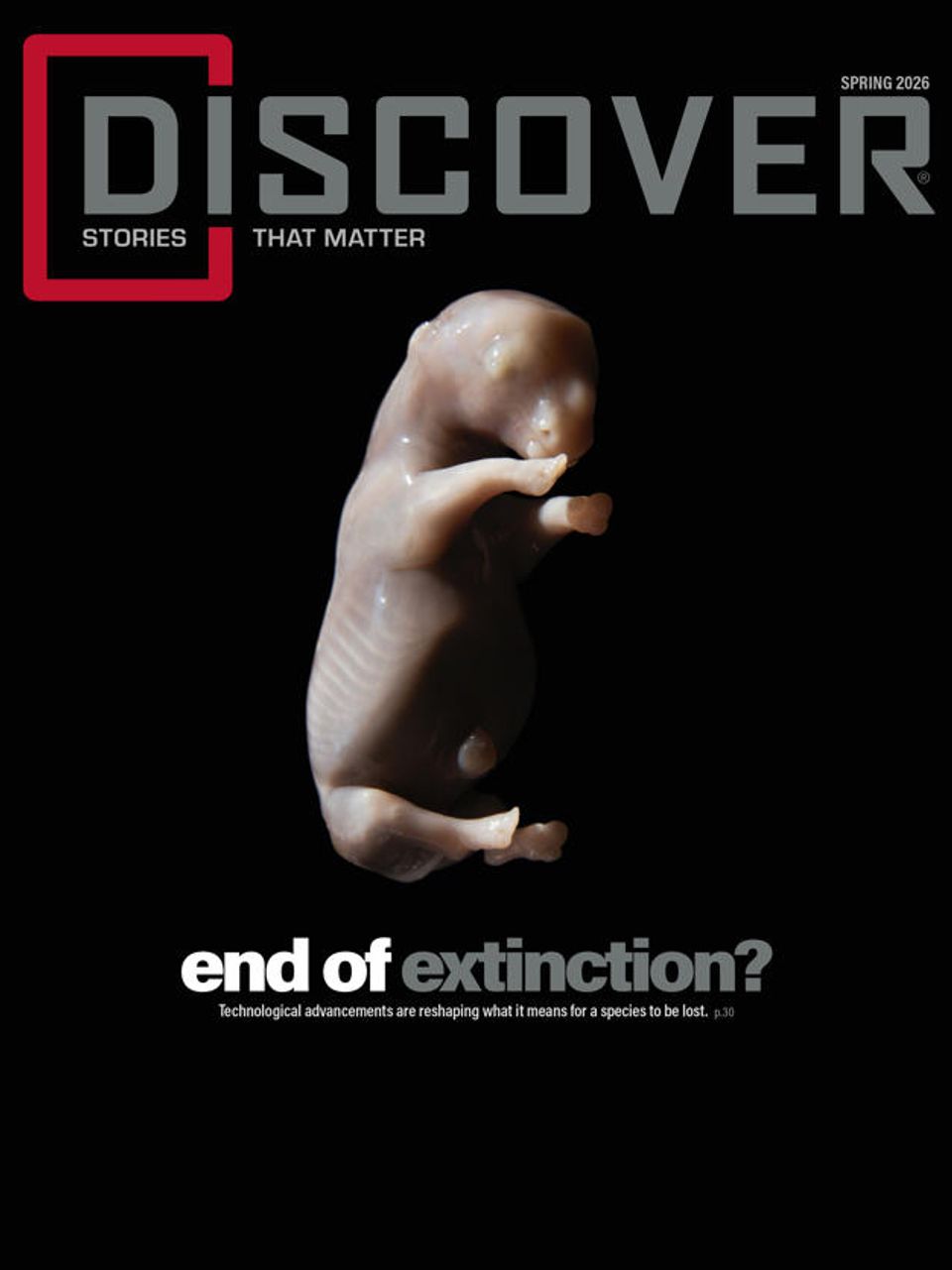
Spring 2026 Issue | Discover Magazine

Discover Magazine: The latest issue features ‘end of extinction?’ – Technological advancements are reshaping what it means for a species to be lost….

Summary of top 5 articles:

1. The De-Extinction Dilemma (Cover Story)

This feature dives into the ethics and technology behind “resurrection biology.” It tracks the progress of teams working on the Woolly Mammoth and the Thylacine (Tasmanian Tiger). Rather than just “cloning,” the article explains how researchers are using CRISPR to edit the genomes of living relatives to recreate extinct traits, questioning whether these hybrids truly represent the lost species or are simply “proxies” for a vanished world.

2. Ancient DNA and the Human Speed-Up

Drawing from a groundbreaking study, this piece explores how human evolution didn’t slow down after the dawn of agriculture—it accelerated. By analyzing 2,000-year-old genetic samples, researchers found that the transition to farming and dense city living forced our immune systems and metabolisms to evolve faster in a few millennia than they had in the previous 50,000 years.

3. The “Headless Wonder”: The Death of Comet MAPS

A standout in the space section, this article chronicles the dramatic disintegration of Comet C/2026 A1 (MAPS). Discovered only in early 2026, the comet skimmed the sun on April 4th and lost its nucleus entirely. Astronomers explain the “headless wonder” phenomenon—where a comet’s tail continues to drift through space without its head—and what its fragile structure reveals about the early solar system.

4. Starquakes: The Archaeology of Red Giants

Using data from “stellar archaeology,” this article describes how vibrations inside stars—known as starquakes—are allowing scientists to see hidden magnetic fields. By linking the magnetism of modern white dwarfs to their earlier lives as red giants, researchers have created a “fossil record” of a star’s evolution, offering a preview of what might happen to our own Sun in several billion years.

5. Artemis II: The Far Side and Beyond

Following the safe return of the Artemis II crew, this long-form report provides the first detailed look at the data gathered during their moon flyby. It highlights the crew’s record-breaking distance from Earth and their observations of the “Grand Canyon of the Moon”—the South Pole-Aitken basin. The article shifts focus to the upcoming Artemis III mission, discussing the challenges of establishing a long-term lunar base.

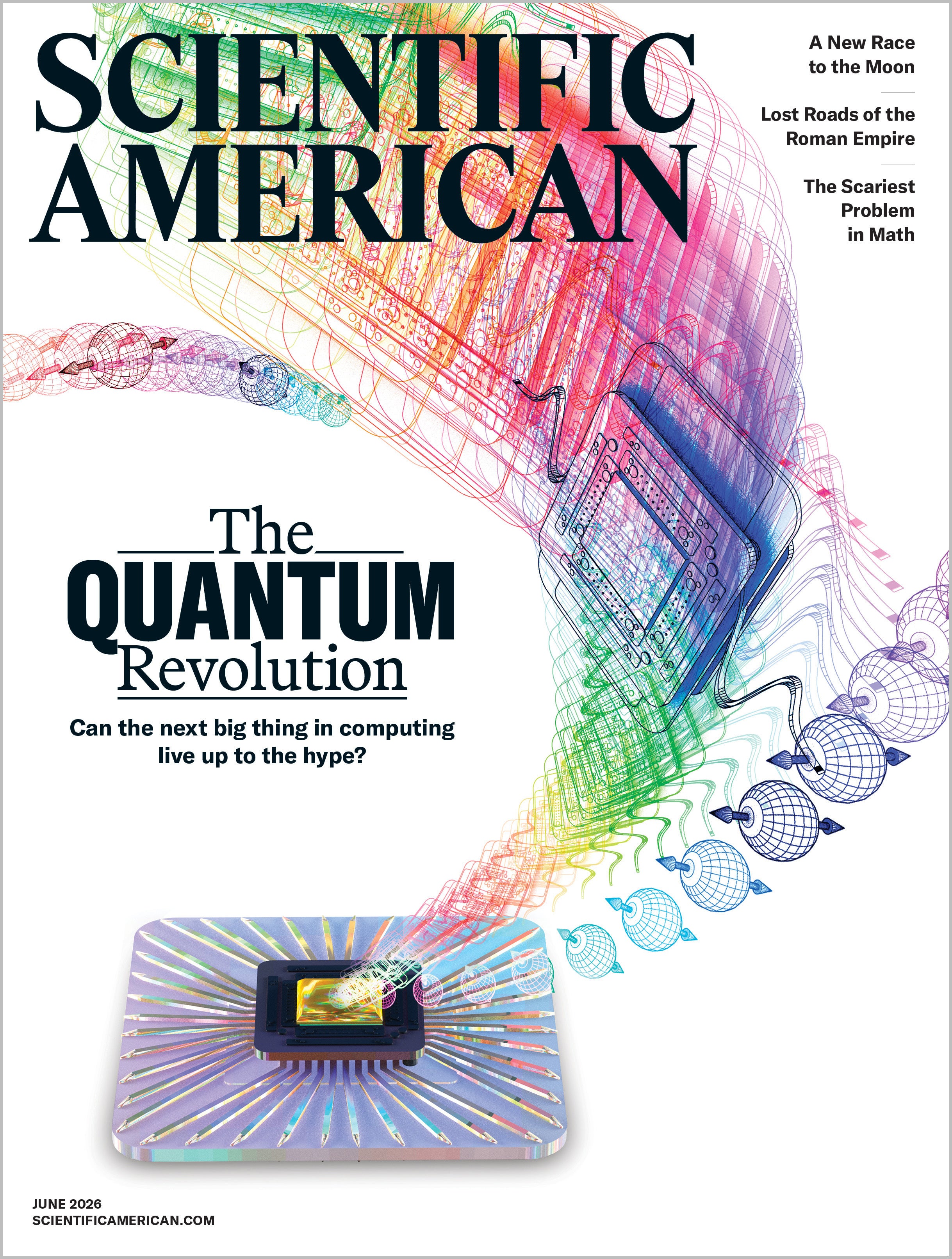
SCIENTIFIC AMERICAN MAGAZINE – MAY 2026

Scientific American

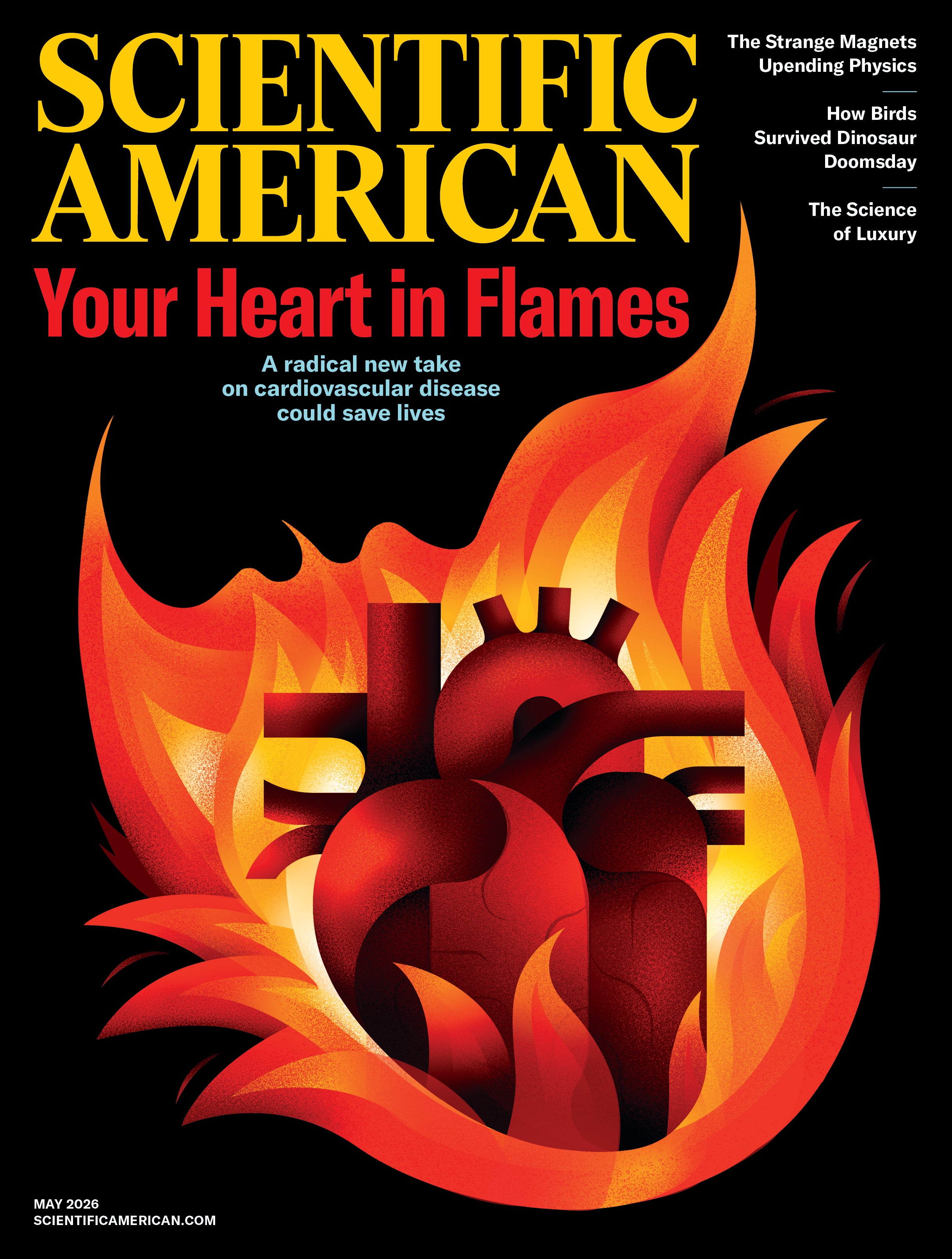
SCIENTIFIC AMERICAN MAGAZINE: The latest issue features ‘Your Heart In Flames’ – A radical new take on Cardiovascular Disease could save lives…

The hidden cause of heart disease is inflammation

Immune system overreactions may be the true culprit of cardiac illness—and lifesaving drugs can calm them down

How strange new ‘altermagnets’ could rewrite physics

How birds survived the dinosaurs’ doomsday

Space hotels are coming soon

Inside the labs where chemists engineer luxury perfumes

How a lost 1812 wristwatch sparked a 200-year race in precision engineering

SCIENTIFIC AMERICAN MAGAZINE – APRIL 2026

Scientific American

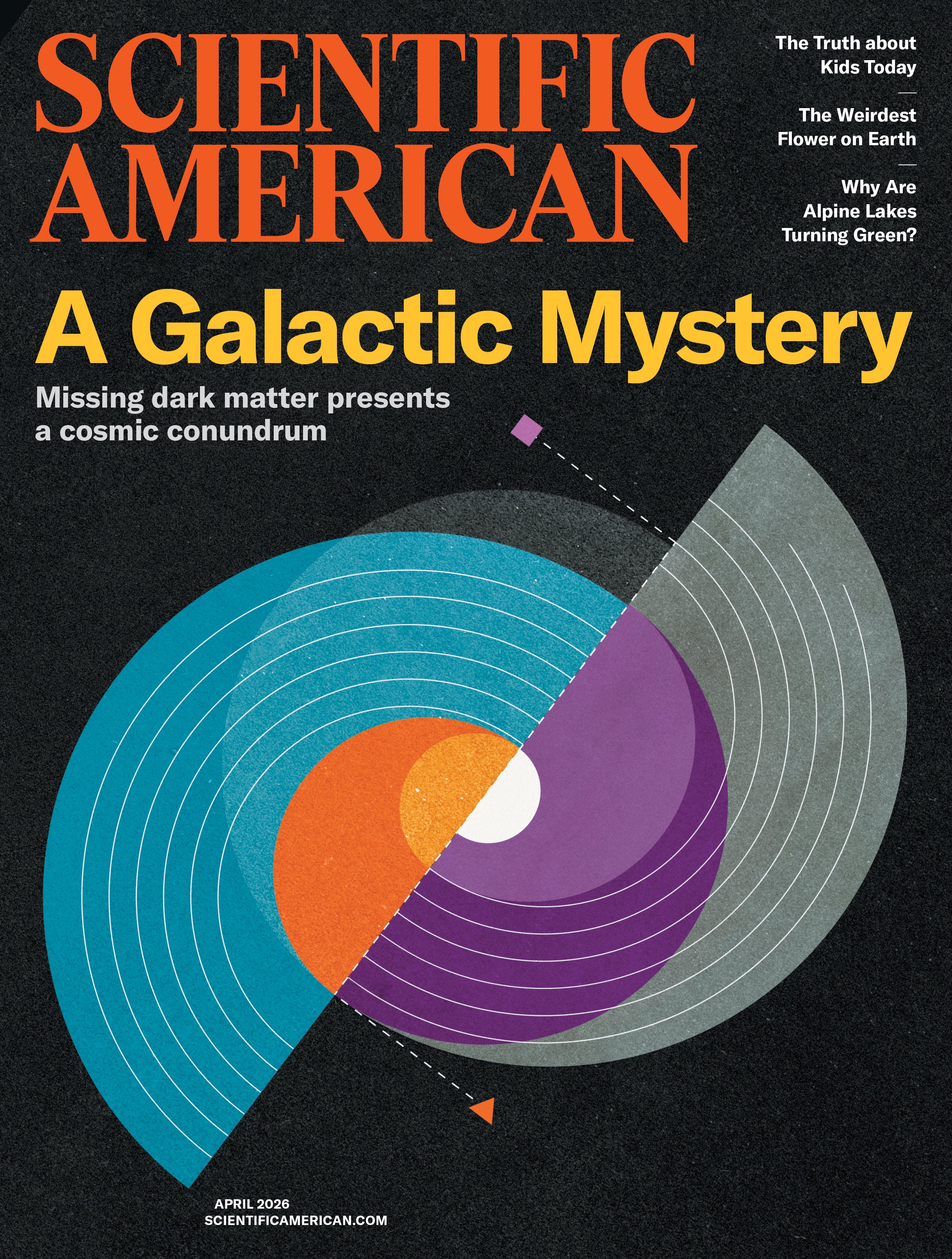
SCIENTIFIC AMERICAN MAGAZINE: The latest issue features ‘A Galactic Mystery’ – Missing Dark Matter presents a Cosmic conundrum.

Why pristine mountain lakes are suddenly turning green

High in the Rockies, researchers are discovering that wind-borne pollution and rising heat are fueling unprecedented algal blooms by Cody Cottier

The kids are all right

Surprising studies show young people are doing better than previous generations in many ways by Melinda Wenner Moyer

Galaxies without dark matter mystify astronomers

Maria Luísa Buzzo

How the corpse flower came to be so weird

Jacob S. Suissa

New ways to save kidneysThe number of kidney patients is going up

Now Medical Studios, Jen Christiansen

MIT TECHNOLOGY REVIEW – MARCH/APRIL 2026 PREVIEW

MIT TECHNOLOGY REVIEW: The Crime issue features ‘It’s a bad, bad, bad, bad world out there’. From AI-powered scams to roboticized drug-smuggling submarines. New technologies have supercharged the human knack for wrongdoing, just as they’ve juiced the law’s ability to chase them—challenging privacy and equity along the way. Plus, read about crypto shenanigans, breast biomechanics, heist science, and music that’s really, really deep.

AI is already making online crimes easier. It could get much worse.

Some cybersecurity researchers say it’s too early to worry about AI-orchestrated cyberattacks. Others say it could already be happening.

Welcome to the dark side of crypto’s permissionless dream

Jean-Paul Thorbjornsen is a leader of THORChain, a blockchain that is not supposed to have any leaders—and is reeling from a series of expensive controversies.

How uncrewed narco subs could transform the Colombian drug trade

Fast, stealthy, and cheap—autonomous, semisubmersible drone boats carrying tons of cocaine could be international law enforcement’s nightmare scenario. A big one just came ashore.

Hackers made death threats against this security researcher. Big mistake.

Allison Nixon had helped arrest dozens of members of the Com, a loose affiliation of online groups responsible for violence and hacking campaigns. Then she became a target.

MIT TECHNOLOGY REVIEW – JAN/FEB 2026 PREVIEW

MIT TECHNOLOGY REVIEW: The Innovation issue features the 10 breakthrough technologies for 2026! That’s hyperscale data centers, designer babies, new batteries made of salt, smaller and more flexible nuclear power, space stations you can visit, and more. Plus, read about conjuring water from air, dissecting artificial intelligence, and putting robots on the kill chain … and a scientist who swears he’s going to do a human head transplant any day now.

10 Breakthrough Technologies 2026

Here are our picks for the advances to watch in the years ahead—and why we think they matter right now.

Meet the new biologists treating LLMs like aliens

By studying large language models as if they were living things instead of computer programs, scientists are discovering some of their secrets for the first time.

This Nobel Prize–winning chemist dreams of making water from thin air

Omar Yaghi thinks crystals with gaps that capture moisture could bring technology from “Dune” to the arid parts of Earth.

AI coding is now everywhere. But not everyone is convinced.

Developers are navigating confusing gaps between expectation and reality. So are the rest of us.

SCIENTIFIC AMERICAN MAGAZINE – JANUARY 2026

Scientific American Volume 334, Issue 1 | Scientific American

SCIENTIFIC AMERICAN MAGAZINE: The latest issue features ‘A (Friendly) Robot Invasion – Can we live alongside intelligent machines?

These Orcas Are on the Brink—And So Is the Science That Could Save Them

Mysterious Bright Flashes in the Night Sky Baffle Astronomers

Meet Your Future Robot Servants, Caregivers and Explorers

A Distorted Mind-Body Connection May Explain Common Mental Illnesses

Rising Temperatures Could Trigger a Reptile Sexpocalypse

Heart and Kidney Diseases and Type 2 Diabetes May Be One Ailment

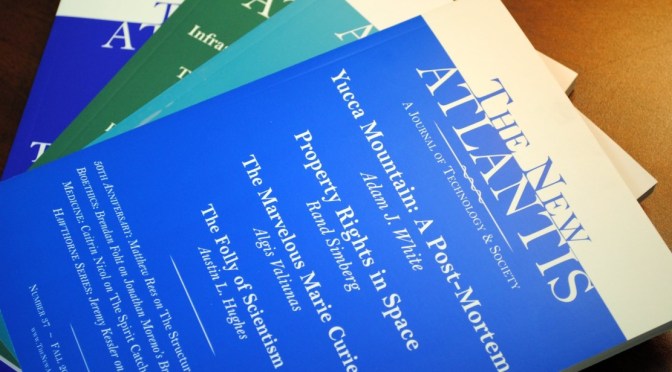
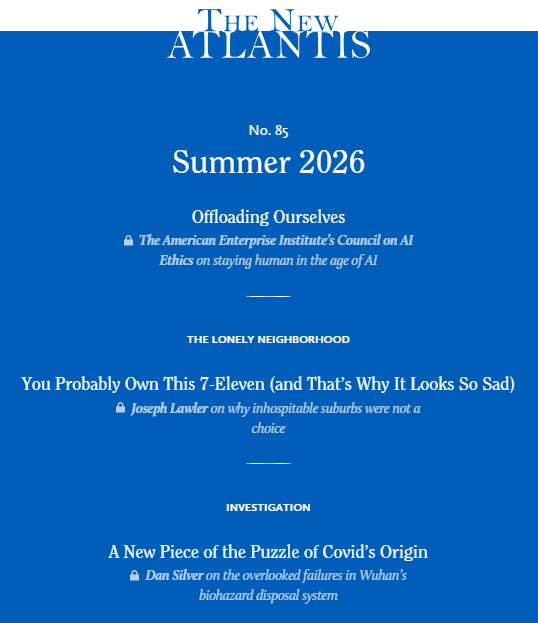
THE NEW ATLANTIS —— WINTER 2026 ISSUE

THE NEW ATLANTIS MAGAZINE: The latest issue features….

American Diner Gothic

In the 2020s, the weird soul of placeless America is being born on Discord servers. Robert Mariani

The Bills That Destroyed Urban America

The planners dreamed of gleaming cities. Instead they brought three generations of hollowed-out downtowns and flight to the suburbs. Joseph Lawler

The Folly of Golden Dome

Trump’s vaunted missile defense system is a plan for America’s retreat and defeat. Robert Zubrin

Caltech Magazine ——- Spring 2026 Preview

Caltech Magazine: This issue featuresthe different ways researchers channel the power of persistence to shape their work, explore new projects that investigate how ice melts at Earth’s poles, find out what President Rosenbaum keeps in his office, and much more.

Where Perseverance Meets Discovery

On the power of cathedral-building in science.

The Ice at the Far Ends of Earth

Researchers know the planet’s ice is melting; now, they are uncovering what that will mean for all of us.

MIT TECHNOLOGY REVIEW – NOV/DEC 2025 PREVIEW

MIT TECHNOLOGY REVIEW: Genetically optimized babies, new ways to measure aging, and embryo-like structures made from ordinary cells: This issue explores how technology can advance our understanding of the human body— and push its limits.

The race to make the perfect baby is creating an ethical mess

A new field of science claims to be able to predict aesthetic traits, intelligence, and even moral character in embryos. Is this the next step in human evolution or something more dangerous?

The quest to find out how our bodies react to extreme temperatures

Scientists hope to prevent deaths from climate change, but heat and cold are more complicated than we thought.

The astonishing embryo models of Jacob Hanna

Scientists are creating the beginnings of bodies without sperm or eggs. How far should they be allowed to go?

How aging clocks can help us understand why we age—and if we can reverse it

When used correctly, they can help us unpick some of the mysteries of our biology, and our mortality.