When Vladimir Putin sent his tanks over the Ukrainian border to seize Kyiv in February 2022, it’s unlikely he evisaged the mess he finds himself in today. Four-and-a-half years later, Russia remains bogged down in what is no longer simply a ground war but one increasingly being fought in the air by drones.
After years of nightly attacks from Russian ballistic missiles and Iranian-designed Shahed drones, Ukraine has responded by scaling up to become the world’s leading manufacturer of unmanned systems. Its retaliatory campaign targeting Russian energy and retail infrastructure is bringing the war to the doorsteps of Russians in Moscow, Crimea and beyond, making life distinctly uncomfortable for Putin and his regime’s messaging over a “special military operation” that was expected to last days rather than years.
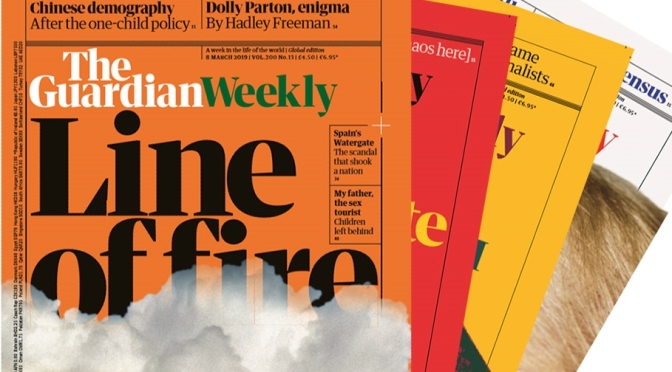
For our big story this week, Luke Harding gained exclusive access to Ukraine’s elite drone strike force, going behind the scenes with senior commanders.
Spotlight | Chaos on the streets of Ceuta People among the more than 70,000 who entered the Spanish enclave in north Africa last week describe the journey and their prospects to Okba MohammadandJavier Jennings Mozo
Technology | What if the streetlights have eyes? The new breed of camera-equipped streetlights has the potential to fight crime and track down missing persons. Or will it just take us one step closer to surveillance states, asks Zoe Williams
Feature | The Clacton klaxon: what Farage’s voters think of Britain The Reform UK leader’s constituency takes in genteel resorts and one of England’s poorest villages. With a snap byelection approaching, Tim Burrows finds out what residents want from him and their views on the country at large
Opinion | The battle of Elon Musk and the media The trillionaire Tesla owner has called the editor of the Economist a “traitor to the west” after a clash-filled interview. The truth must not be the loser, argues Jane Martinson
Culture | Why is the National Theatre shaking up Sophocles? Australian theatre director Benedict Andrews’ bold new London production Electra/Persona, starring Cate Blanchett and Nina Hoss, fuses Sophocles and Ingmar Bergman. Mark Lawson asks what it tells us about how we live today
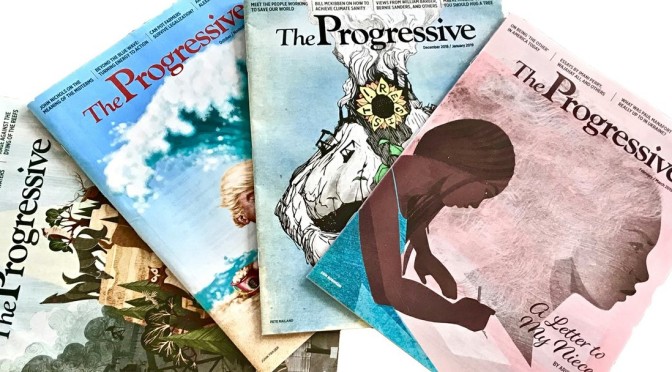
Beijing is competing with the U.S. for tech supremacy. Who wins will have huge political implications. By Evan Osnos
The Failures of the Fauci Hearing
Senator Rand Paul may have approached the matter with theatrics and ill will, but Dr. Anthony Fauci’s decision not to testify was a loss. By Amy Davidson Sorkin
How Roy Cohn Taught Donald Trump Everything
The lawyer who showed an outer-borough striver how to ignore the rules, avoid a paper trail, and make up a good story for the media. By Kai Bird and Susan Goldmark
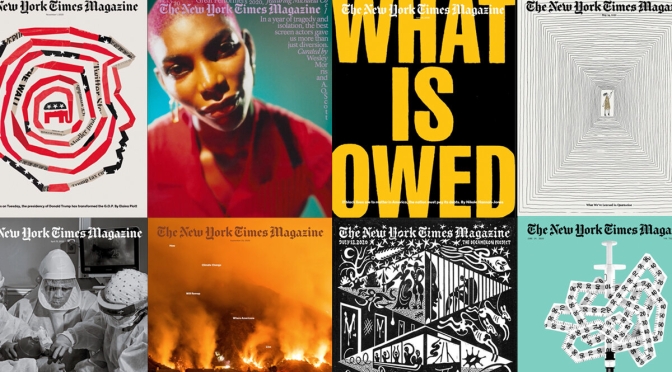
THE NEW YORK TIMES MAGAZINE:The 8.2.26 Issue features Daniel Bergner on sibling therapy; Elisabeth Zerofsky on the Heritage Foundation crackup; Benoit Denizet-Lewis on Bill Maher; and more.
The billionaire’s company took on ominous loads of debt to build data centers around the world. The implications go far beyond Oracle. By Jonathan MahlerJim Rutenberg and Kirsten Grind
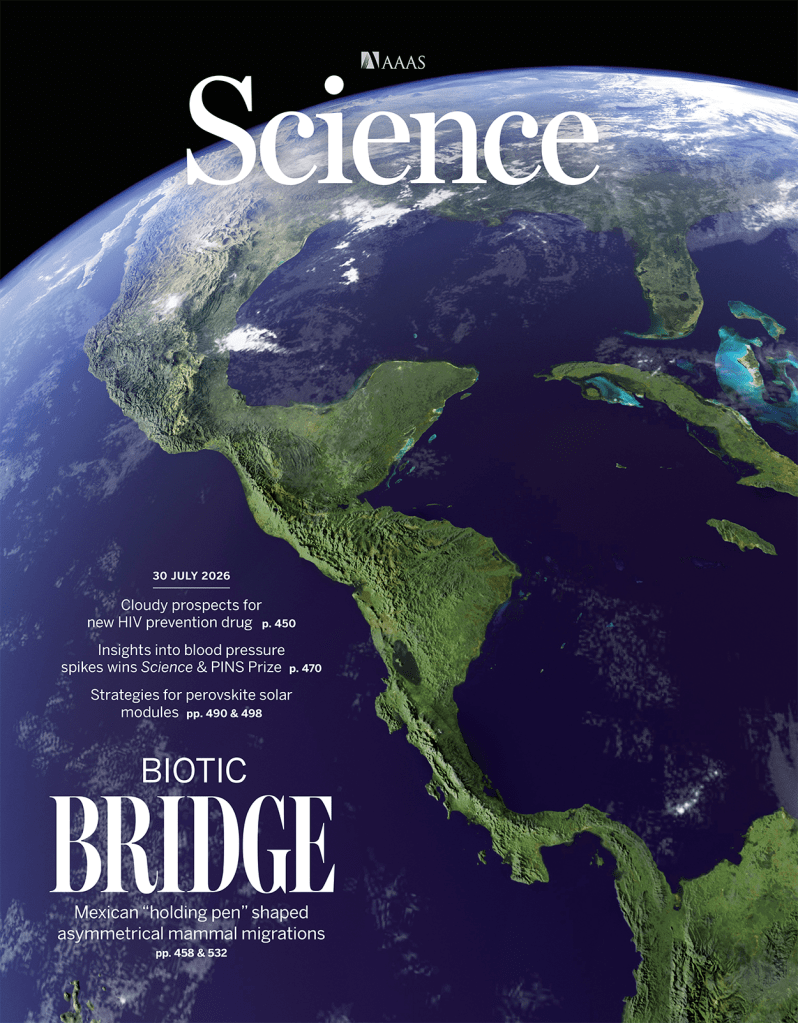
A 10-million-year biogeographic holding pen primed the Great American Biotic Interchange
For millions of years after the breakup of the supercontinent Gondwana, South America was disconnected from other landforms, a time period that has been referred to as its “splendid isolation.” This isolation allowed for the evolution of mammals with distinctive features, including xenarthrans, sprassodont carnivores, and notoungulates. The formation of the Panamanian land bridge facilitated connection of North and South American faunas, with a bias from north to south. Tseng et al. looked at fossils from low latitudes in México and found that northern mammals accumulated in the region before the connection (see the Perspective by McGuire and Williams). This allowed for more rapid dispersal south and further supports that the land bridge first formed during the Pliocene rather than the Miocene.
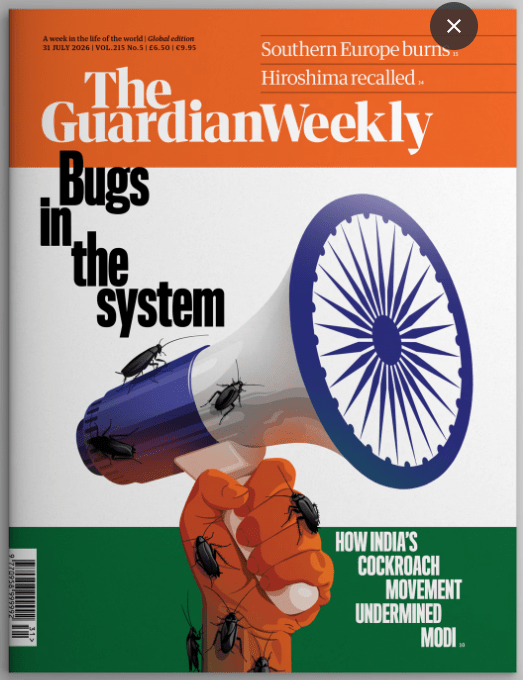
The news agenda has been so dominated for many months by a few big stories about perennial global hotspots and the biggest figures on the international stage, that one could accuse journalists of missing what was happening outside the US, Middle East or Ukraine. But as our south-east Asia correspondent, Hannah Ellis-Petersen, explains for this week’s big story, the rapid rise and sudden explosion on to the streets of India’s Cockroach Janta party took everyone – especially Narendra Modi’s government – by surprise.
What began as a satirical protest when the chief justice of India compared the country’s unemployed youth to cockroaches has damaged prime minister Modi’s image as a “strongman” leader and loosened his grip over the media. But as Hannah explains, it’s not just that the joke has “legs” and strong visuals; young people want a viable future and change.
Spotlight | ‘Smoke covered the sun’ Angelique Chrisafis hears from people evacuated from France’s Gironde region near Bordeaux as southern Europe battles wildfires, the spread and ferocity of which have shocked everyone
Spotlight | Blue horizons for Gaza’s children Sea pools made out of sandbags and rubble are part of Amjed Tantesh’s project to give traumatised children a brief respite from war, reports his niece and our Gaza reporter Seham Tantesh
Feature | A Hiroshima journey from anger to peace Simon Hattenstone meets Koko Kondo, who survived the dropping of the atom bomb on Hiroshima and hears about the publication of her father’s long-forgotten diary written in the aftermath of that horrific day in 1945
Opinion | Andy Burnham’s ticket to major change The UK prime minister’s first policy announcement on cut-price bus fares signals more than a cheap gimmick, says Jonathan Freedland
Culture | John Carpenter interview The uncompromising film director talks to Steve Rose about his shock and horror Hollywood career and his new music album
News, Views and Reviews For The Intellectually Curious



















 Boomers Daily