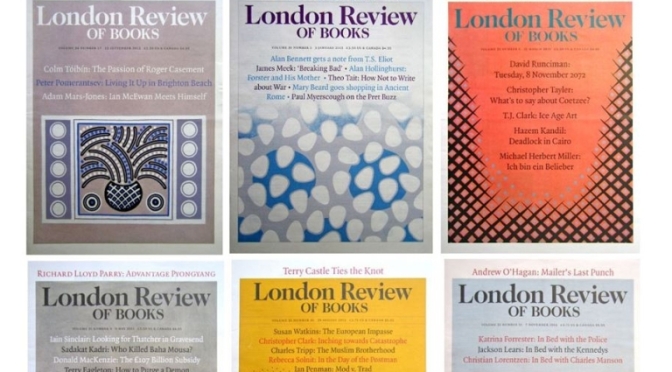
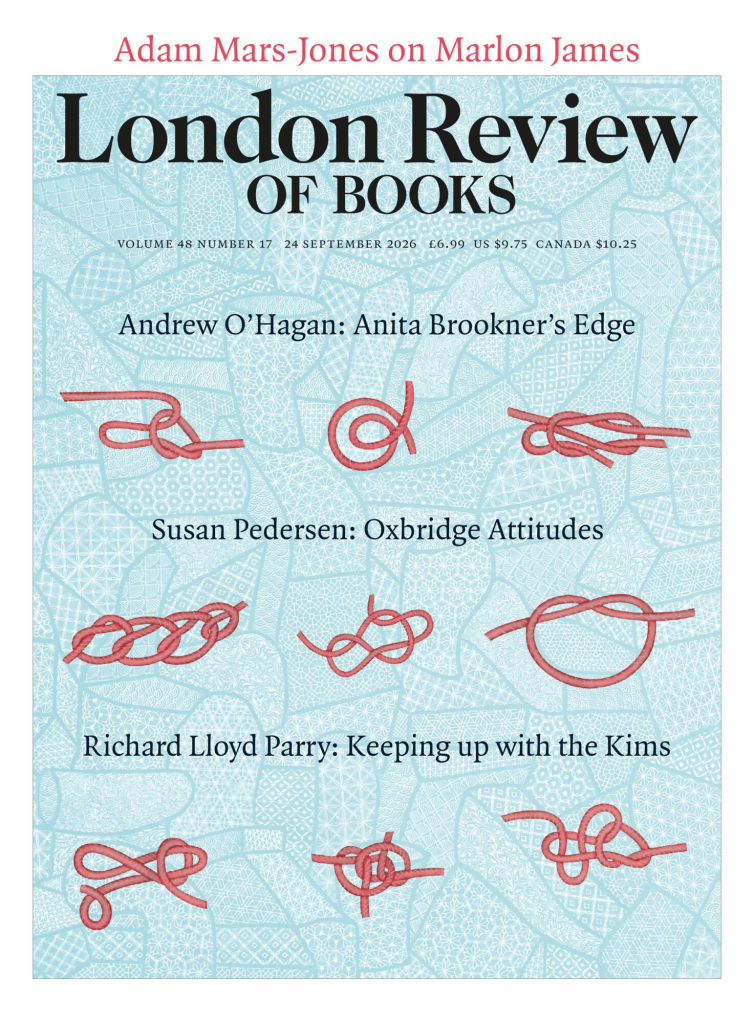
LONDON REVIEW OF BOOKS – SEPTEMBER 24, 2026 PREVIEW


GUERNICA MAGAZINE: The latest issue features essays evaluating artificial intelligence through Emily Dickinson’s poetry, examining humanity’s relationship with divinity via Mark Twain, and an interview on how poetry transforms experiences of violence and displacement.
I’ve been thinking about Newton’s third law of motion after recently revisiting it for my son’s science project: for every action, there is an equal and opposite reaction. It is a consoling law, built upon certainty. But human lives seldom hold such hard consolations. The leaders we elect, the borders we erect, the violence we permit produce consequences that outlive the choices that set them in motion. Mothers understand something of this. To bring a life into the world is to initiate a sequence whose consequences can never be calculated or contained. Across Guernica’s August–September double issue, motherhood appears as place, inheritance, origin, and impossible return. The works gathered here cast a look upon the afterlives of history; they ask what follows from our most intimate and collective decisions.
In fiction, Naeem Murr’s Bye-Bye Palestine traces the complex entanglements of lives back to a historical rupture whose convulsions remain present in the ongoing genocide in Palestine. “Haifa became known as Um Al Gharib, Mother of the Stranger,” Murr writes. The name holds the story’s central contradiction: a city figured as mother to those made strangers within it. In Emmy Rossum’s Tether, motherhood becomes its own law of action and reaction. In a futuristic world, a daughter uses her heightened olfactory abilities to mark the boundary between herself and her mother. Following a matrilineal inheritance through scent, she attempts to trace her way back to her own beginnings. In Yukiko Tominaga’s The Little Corner of the Factory, a child discovers the many forms love can take, and the hurt and betrayals it can contain. In a small room inside a rental hot-towel factory, the youngster is initiated into a tenderness that will outlast the people who teach it to her.
In nonfiction J. Malcolm Garcia’s narrative reportage Last Fight tells the story of a man living in the wake of his brother’s death. Nazeer, an Afghan interpreter who served alongside US forces in Afghanistan, is detained by ICE and dies within twenty-four hours of entering custody. Garcia follows a chain of consequence stretching from the war in Afghanistan to the American immigration system, tracing the afterlife of a vote, and the distance between a choice made in a voting booth and the body upon which its force eventually lands.
In A Nation Wrestles with God, excerpted from A Nation Wrestles with God: American Prophets, Philosophers, and Firebrands, Ilan Stavans traces America’s long and unsettled relationship with the idea of God. From the use of divine authority in the service of empire to God’s persistent presence in the nation’s literature, politics, vernacular, and imagination, Stavans traces how belief becomes another force with an afterlife. The gods a nation creates continue to shape the lives over which it assumes the right to “play God.”
In Guernica’s first foray into the encounter between artificial intelligence and human epistemology, Liane Strauss and an AI read Emily Dickinson’s “I felt a Funeral, in my Brain” together. Moving between Dickinson, Monet’s Water Lilies, and the irresolvable problems literature allows us to inhabit, Strauss discovers that an AI can identify ambiguity but cannot experience the doubt that lends it its resonant weight. The first instalment in a three-part series, the essay is a reminder that human knowledge begins in uncertain spaces.
In interviews, The Insistence of Beauty brings poets Tina Chang and Nathalie Handal into a reciprocal conversation about their new collections, LION and Roma Roam, respectively. A question becomes an invitation to step beyond the stories assigned to us, and in this exchange, each poet turns that invitation toward the other. Here, imagination creates another kind of afterlife: the freedom to move beyond violence’s last account.
In the latest installment of Guernica’s Posthumanitarian interviews series, After Development, Russell Reed speaks with Bhutanese scholar Dasho Karma Ura about the intrinsic relationship between our individual choices and communal happiness. Critiquing the humanitarian regime’s presentism, Ura suggests that our individual well-being cannot be separated from the ecological futures our present choices are already creating.
In Global Spotlights this month, Nwanne Agwu’s Faint Lines maps identity through maternal and paternal lines, and asks what it means to belong to people who came before us. Published first in Isele Magazine, the narrative reimagines home not as where one comes from, but as a place where one is recognized and held with love.
Poetry in this issue enters the charged space where beauty and violence meet. In Tina Chang’s I’ve Gone to Look for America, Term One, Pistil/Pistol, and I’ve Gone to Look for America, Term Two, roses tangle in the brain; a peony becomes first a woman’s cheek and then a bullet; the pistil carries within it the sound of a pistol. Within these poems, the inherited past exerts its force upon the present, but the speaker answers by naming herself—lion, flower, weapon, and “little spark”—and turning that inheritance toward another future.

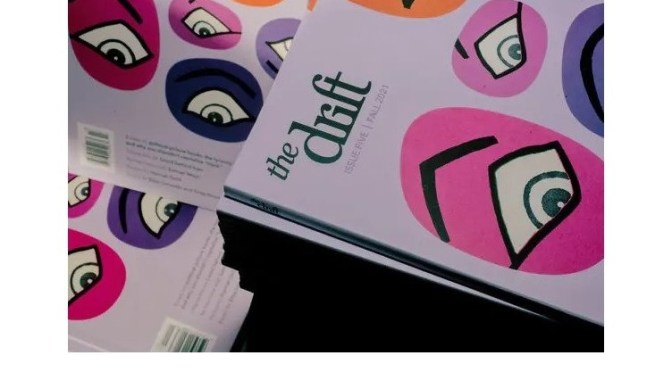
The Drift Magazine – The latest issue features an editors’ note on contemporary democracy, an interview with Marion Nestle regarding food industry oversight, a report on postliberal Budapest, and analytical essays on regional strategies and political momentum.
Former Marketer at a Product Management FirmHollywood ScreenwriterIvy League Literature ProfessorIvy League PostdocLiterary AgentMagazine Editor and WriterNew York Times Best-selling AuthorNews ReporterPhD Student in HistoryProminent NovelistPsychiatry FellowSoftware Engineer at a Big Five Tech companyUnemployed AnthropologistUnion Organizer

THE NEW YORKER MAGAZINE: The latest issue cover features “Dean Rohrer’s “Beginnings” – The city as a blank canvas.
Donald Trump’s son-in-law represents the kind of Washington figure for whom public office serves as a means to extraordinary wealth.
Where Benjamin Moser replaces one story of Jewish exceptionalism with another, Omer Bartov shows what’s lost when polemic takes the place of history.
The emergence of Germany’s far right as a political force represents an old dilemma. By Joshua Yaffa
Why are we so obsessed with putting our belongings in metal boxes and then never looking at them again? By David Owen

PORTICO LITERARY QUARTERLY: The latest issue features….
By Michael Crews
Tracy Daugherty’s biography of Cormac McCarthy is a landmark publication. Putting together the life of a writer who not only shunned publicity but actively worked to keep fans, journalists, the media, and academics off his trail requires the powers of both a skilled biographer and a nosy private detective. In that latter role, some of what Daugherty has uncovered is unsavory, though with the recent revelation of McCarthy’s relationship with Augusta Britt, who was sixteen when they began an affair, readers may be prepared for some of the shocks. One of Daugherty’s leitmotifs is McCarthy the “bad boy” and “outlaw,” and though such appellations risk cliché, the story he tells is of a man who, at least in the first half of his life, preferred the company of moonshiners, gamblers, hard drinkers, and petty criminals like his old Knoxville pal John Sheddan, who seems to have been the Falstaff to McCarthy’s Prince Hal.
Helen Andrews
There are two books before me, which, if I mistake not, will mark an epoch,” wrote W. E. B. Du Bois in The Crisis magazine in 1924. One was a novel of middle-class African-American life by Jessie Fauset called There Is Confusion. The other was a collection of stories, songs, poems, and character sketches called…
Christopher J. Scalia
During the last quarter of the twentieth century, few writers were more admired by peers and critics than Andre Dubus. But because Dubus’s territory was the relatively confined space of the short story and novella, he never enjoyed great commercial success or recognition. Dubus was destined to be a writer’s writer—what Joshua Bodwell calls a…
By Lionel Shriver
In that we’ve been married for sixteen years, you really don’t have to try so hard to make your feelings known,” Janet said at the wheel. “I’m well aware you don’t want to do this.”
“I THINK I’ve been pretty stoic about it,” Rick said, eyes to the thick woods he’d be reflexively scanning for deer. Ever since they’d planted an ambitious garden behind their upstate New York summerhouse, the creatures that had once seemed so exquisite had become evil incarnate.
“Stoic? More like long-suffering,” Janet said. “You’ve hardly said a word the whole way here. But there’s no point in having joined Saint Peter’s if we don’t put our beliefs into practice. Charity doesn’t only mean parting with twenty bucks to get someone at the door to go away. It means sometimes doing what’s right when you don’t feel like it.”
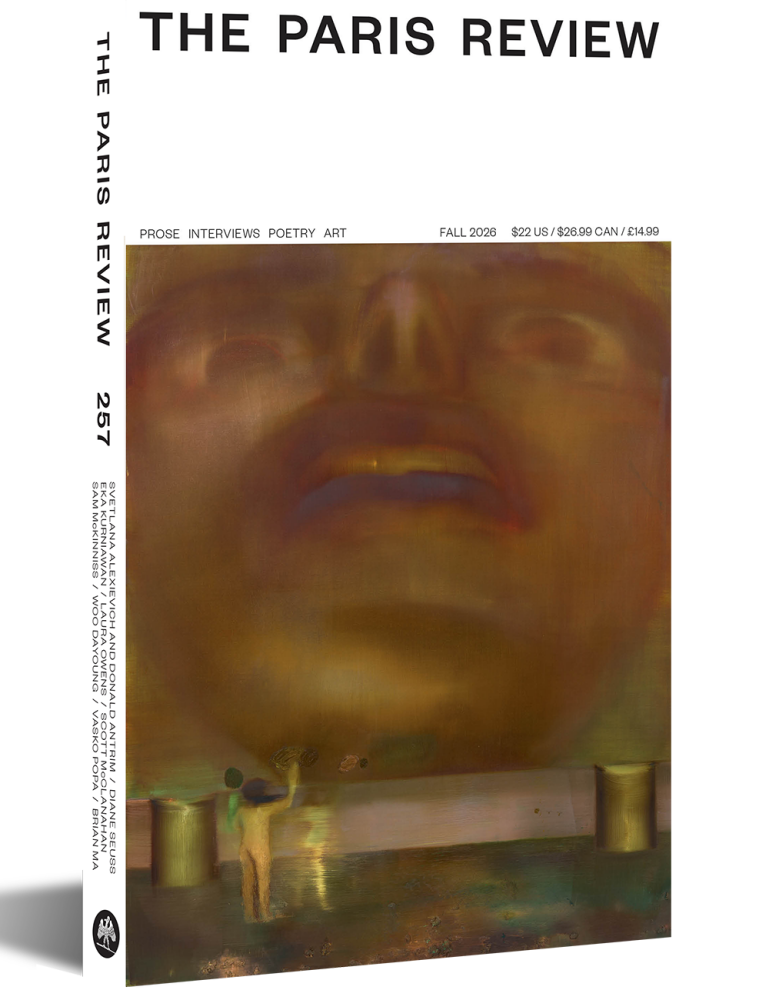
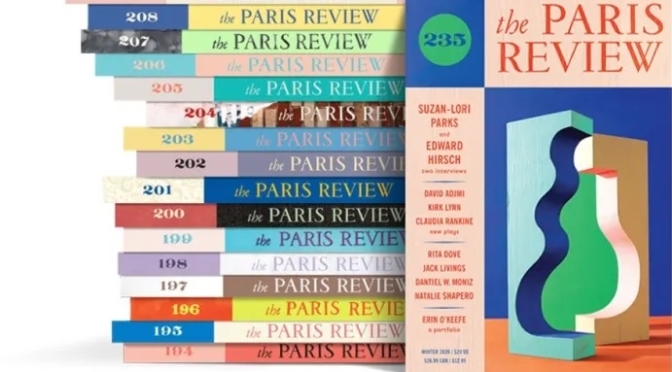
THE PARIS REVIEW : The latest features Interviews, Prose, Poetry and Art….
Svetlana Alexievich on the Art of Oral History: “If you cut straight to the part you need, which is what journalists do, it won’t be interesting, and it won’t be the truth, either. Not the whole truth.”
Donald Antrim on the Art of Fiction: “I deplored the idea that writing involves suffering, that it had to be a bloodletting. Later I found out that it would be, and maybe should be.”
Prose by Eka Kurniawan, Angie Sijun Lou, Brian Ma, Scott McClanahan, Sam McKinniss, Tomoka Shibasaki, and Woo Dayoung.
Poetry by Asha Futterman, Zakaria Mohammed, Geoffrey G. O’Brien, Vasko Popa, Diane Seuss, and Natalie Shapero.
Art by Gertrude Abercrombie, Silke Otto-Knapp, and Laura Owens; cover by Elizabeth Glaessner.

THE NEW YORKER MAGAZINE: The latest issue cover features “Lennart Gäbel’s “Showstopper” – Commuter couture.
A quarter century after the attacks, the grief, wars, and political furies of their aftermath still shape American life. By Jill Lepore
The culture wars have come for lingerie as the right, once the advocates of promise rings and purity culture, embarks on a crusade to “Make America Hot Again.” By Jennifer Wilson
The kingdom, seeking to rebrand as a culinary juggernaut, has bankrolled new restaurants and conscripted big-name chefs. Will it succeed? By Ruby Tandoh
A coterie of advisers, planners, and architects is enabling the President’s passion project—renovating D.C. in his own image. By Antonia Hitchens
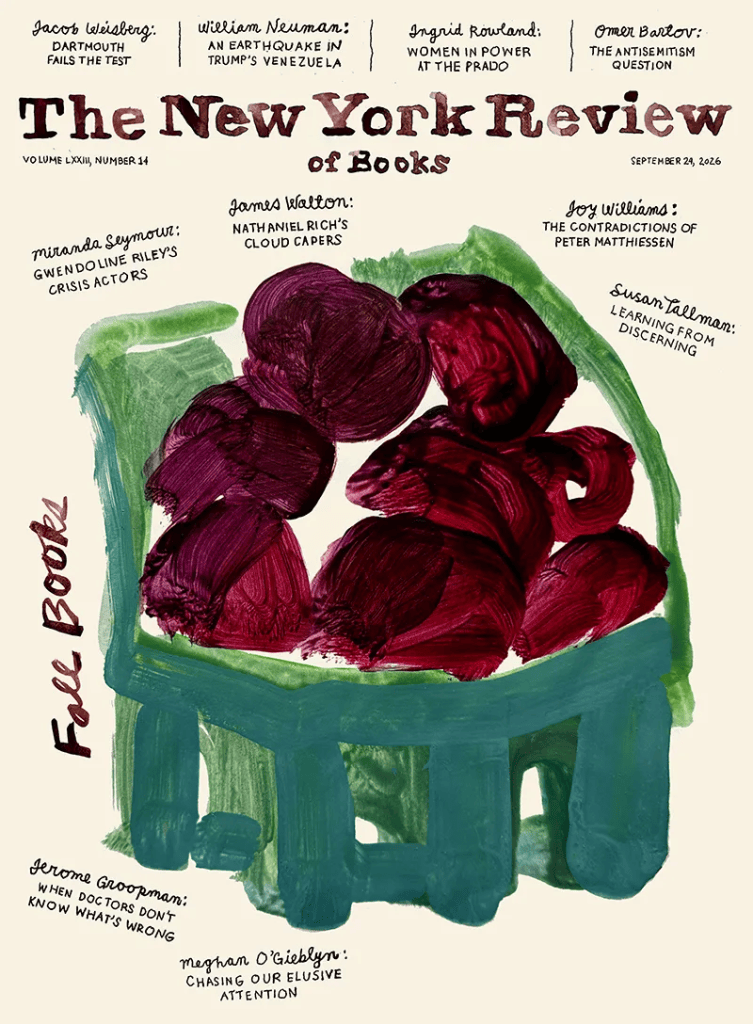
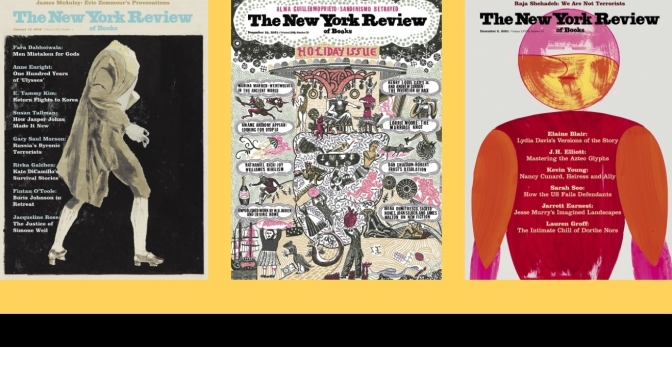
THE NEW YORK REVIEW OF BOOKS: The latest issue features ‘Fall Books’…
As AI erodes our attention spans and expressiveness, philosophers like Simone Weil and Arthur Schopenhauer offer profound insights on what it means to be an individual.
Timely questions lurk at the heart of connoisseurship: What counts as originality, what value do we place on it, how do we protect it?
The Connoisseur: A Cultural History by Peter Burke
The Goldsmith’s Debt: Conceptions of Property in Early Modern Art by Shira Brisman
Among its peers in the Ivy League, Dartmouth was perfectly positioned to resist Trump’s attack on higher education. It chose not to.
In The Diversity of Morals, Steven Lukes attempts to reconcile philosophical arguments that there is one morality despite cultural differences with empirical studies that suggest it’s all relative.
The Diversity of Morals by Steven Lukes

TIMES LITERARY SUPPLEMENT: The latest issue features ‘Philip Zelikow and Anchit Sathi on progress, AI and the death of the author…..
When doctors and families fall out over medical intervention By Charles Foster
Looking at John Berger By Margaret Drabble
Can literary culture survive in the era of machine intelligence? By Anchit Sathi
Why nations win or lose the technological race By Philip Zelikow
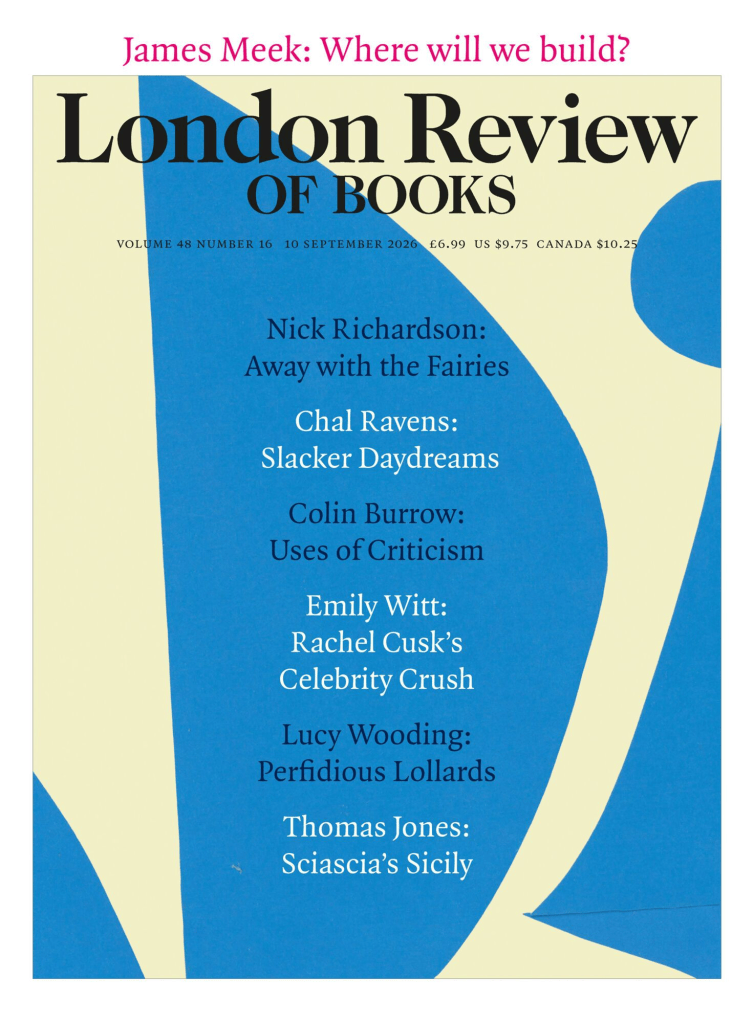
LONDON REVIEW OF BOOKS: The latest issue features…
By Colin Burrow
What’s the point of literary criticism? In June the University of Exeter announced plans that might make roughly a third of its English department – one of the best in the country – redundant. Other institutions, including Canterbury Christ Church University, have stopped offering English degrees altogether. Most mainstream publishers now wouldn’t dream of publishing a work of literary criticism, as they happily did in the 1970s and 1980s. Even literary biography, literary criticism’s previously marketable stepsister, no longer brings a gleam to a publisher’s eye. The grassroots of the subject are also suffering badly. Since 2000 the number of people taking A-level English literature in England has dropped by around a third, to around 36,000, with an even higher drop among male students.



 Boomers Daily