Category Archives: Art

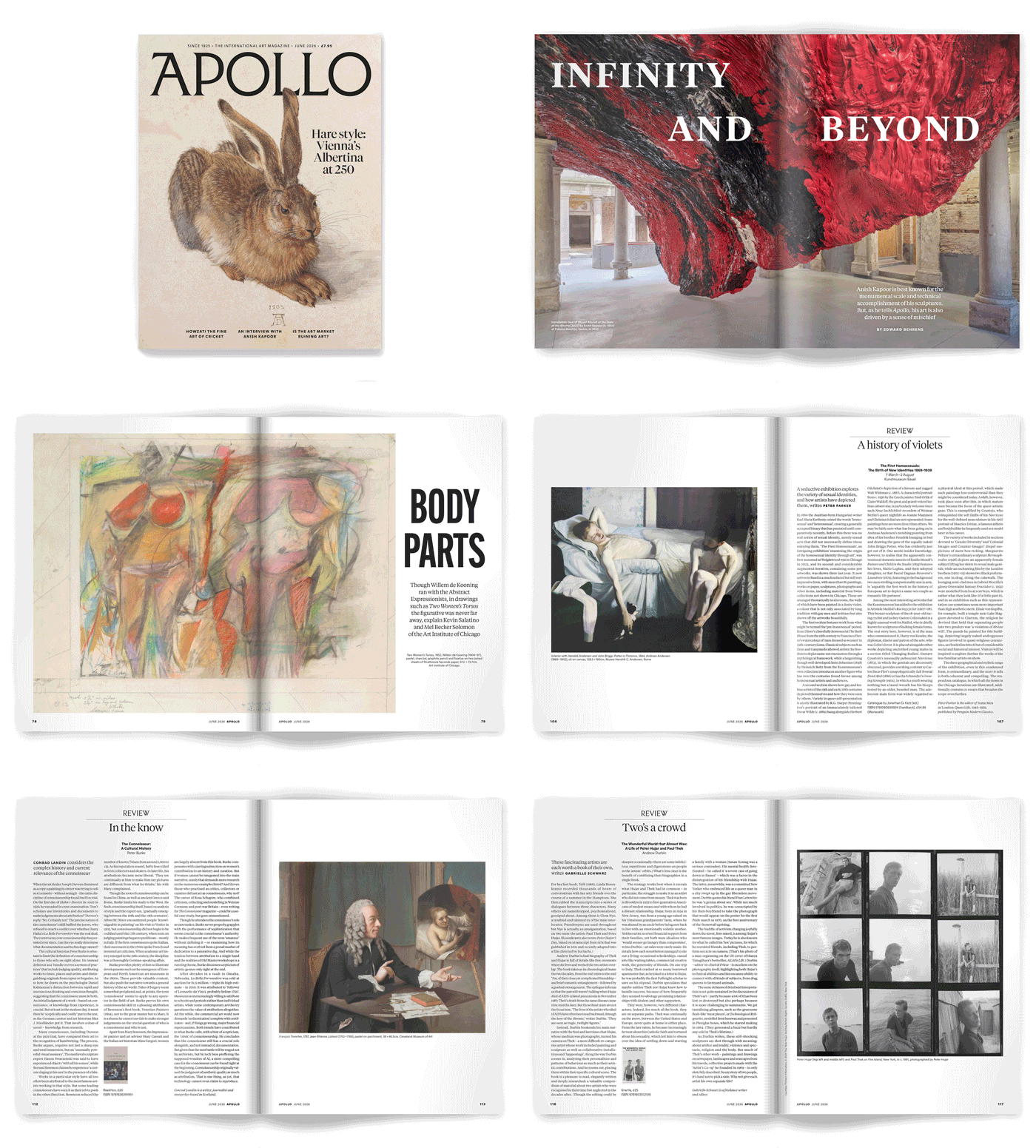
APOLLO MAGAZINE ———- MAY 2026 PREVIEW

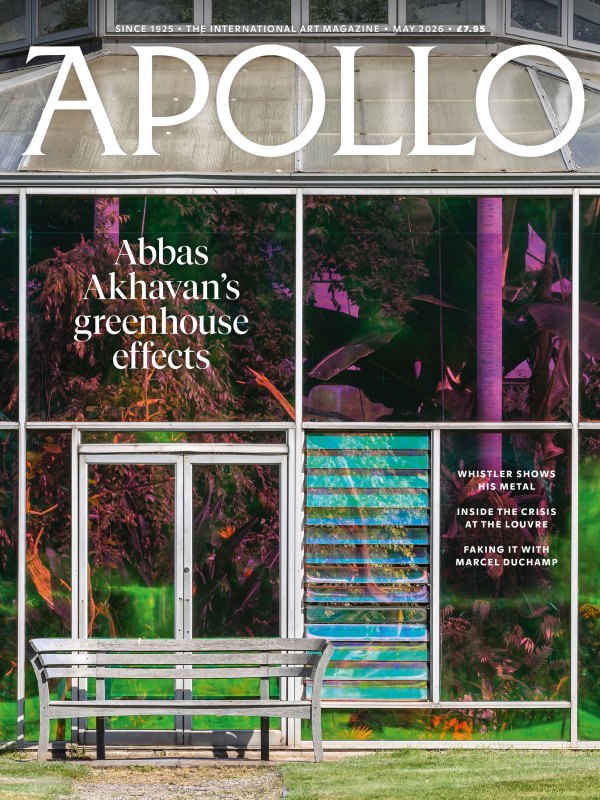
Apollo issue: May 2026

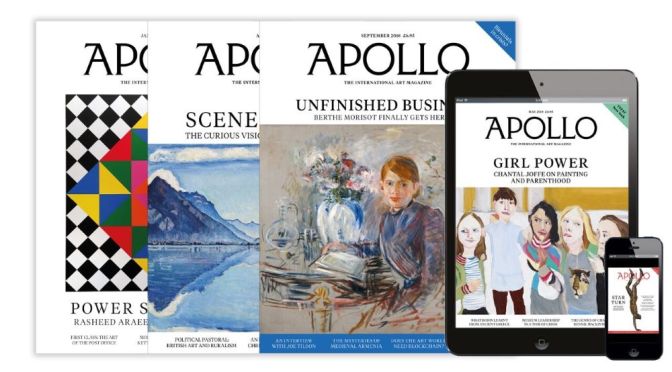
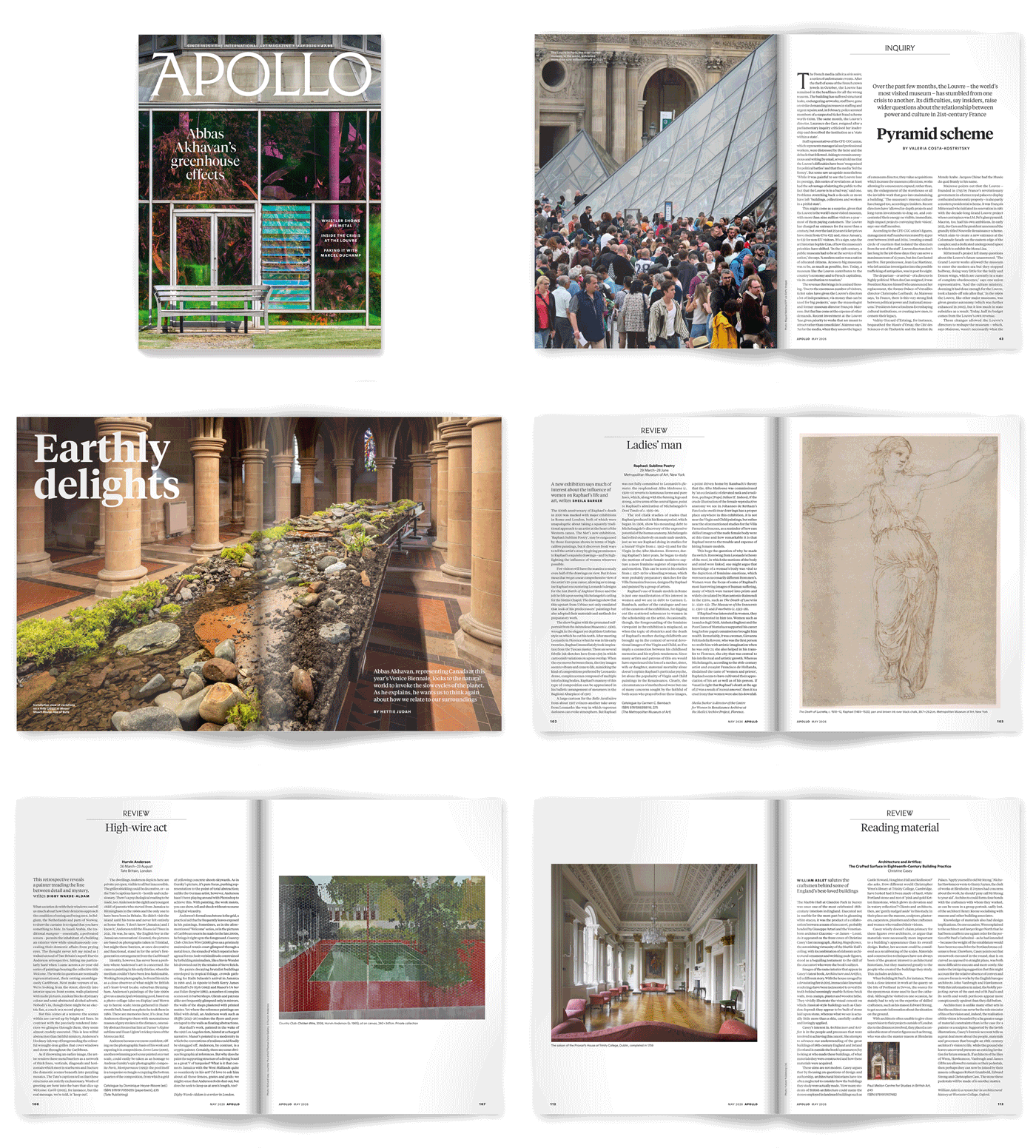
APOLLO MAGAZINE: The latest issue features Inside the crisis at the Louvre | how Marcel Duchamp invented modern art | an interview with Abbas Akhavan | Whistler shows his metal

FEATURES | Valeria Costa-Kostritsky explores the crisis at the Louvre; Hettie Judah talks to Abbas Akhavan before the artist represents Canada at the Venice Biennale; Ana María Bresciani of the Munchmuseet on Edvard Munch and the chocolate factory; Nicole Rudick on how Marcel Duchamp has been misunderstood; and Tara Contractor takes a closer look at Whistler’s love of metallic surfaces

REVIEWS | Sheila Barker on Raphael’s interest in women – and their interest in him; Zachary Ginsberg takes the temperature of contemporary American art at the Whitney Biennial; Digby Warde-Aldam admires Hurvin Anderson’s tricky balancing acts; Robert Hanks on the role of man’s best friend in art history; and William Aslet on the craftsmen behind some of Britain and Ireland’s best buildings

MARKET | Jane Morris on the status of online auctions; Emma Crichton-Miller on the mid-century French designers who married form, function and fun; in New York fair previews: Fatema Ahmed picks highlights from TEFAF; and Arjun Sajip looks ahead to Frieze

PLUS | Charles Darwent salutes the subtleties of Jasper Johns; Samuel Reilly on the threat to one of Glasgow’s most unusual attractions; Will Wiles applauds the witty architectural cartoons of Alan Dunn; Ivan Day on extravagant banquets in the Georgian era; Christina Makris visits the vineyard of Château La Coste; Helena Attlee is fired up by a depiction of Mount Etna; and Edward Behrens on a sale that shines new light on Gerhard Richter

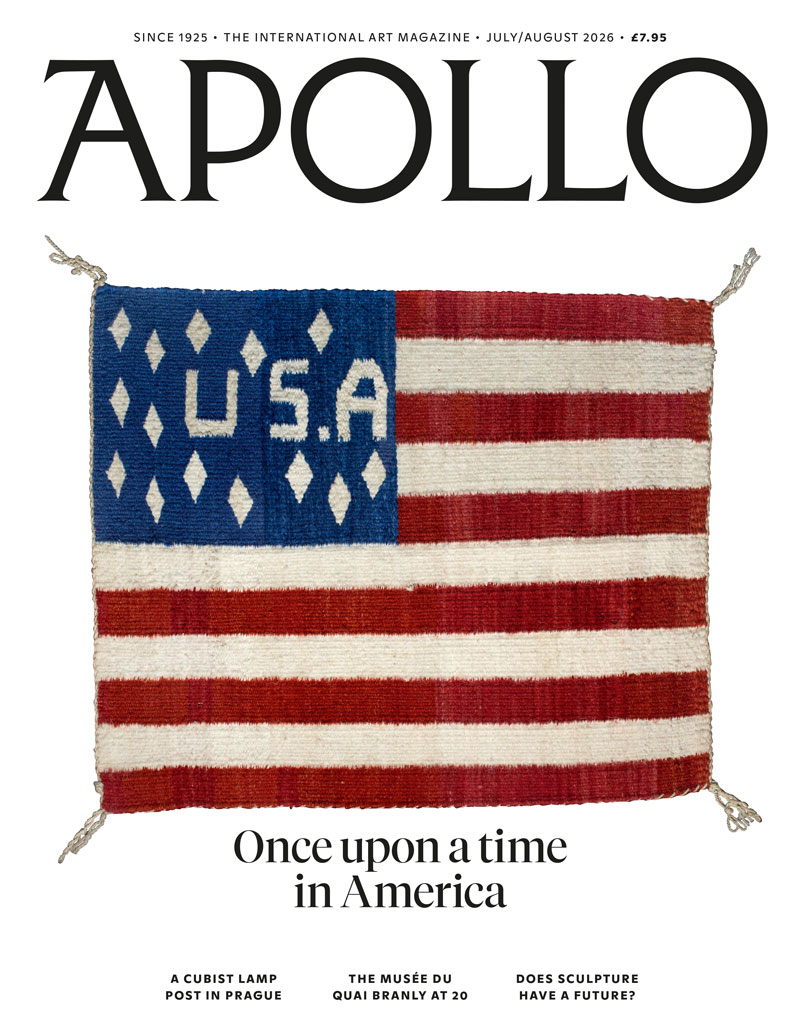
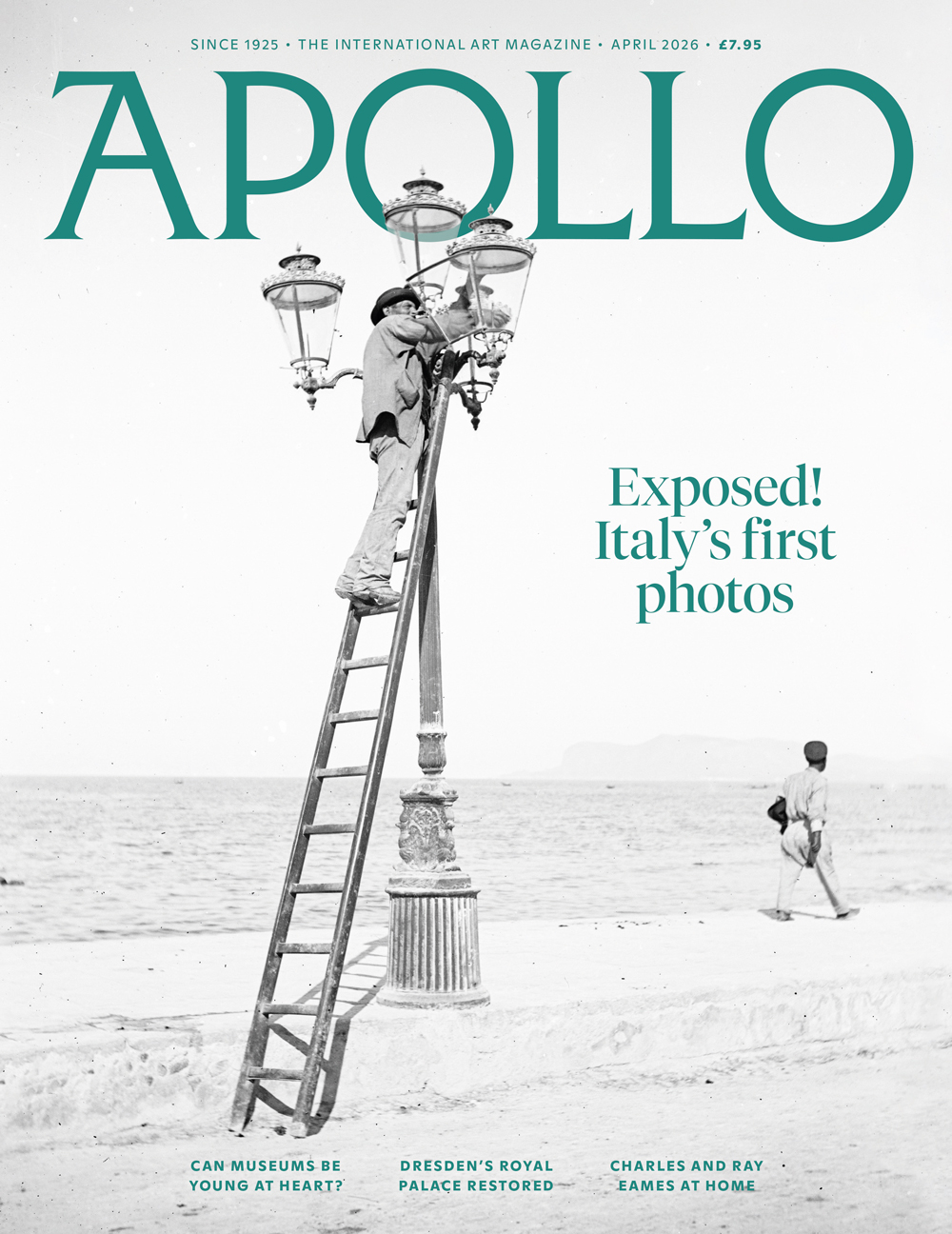
APOLLO MAGAZINE ———- APRIL 2026 PREVIEW

April 2026 - Apollo Magazine

APOLLO MAGAZINE: The latest issue features ‘Exposed! – Italy’s First Photos”

How Milan is refashioning itself as a contemporary art hub

The city has long been synonymous with finance, fashion and design, but it is increasingly banking on art too

The dangers of playing the ‘beautiful’ game

The idea of the beautiful and the damned is a longstanding one, but a problematic one – in art as well as life


Restoring Dresden’s crowning glory

The city has been rebuilding the Residenzschloss, home of its one-time ruler Augustus the Strong, since the Second World War – and the results are worth the wait

Simply red: a short history of Shiraz

The Shiraz grape is native to France, but it has longstanding links with Persian courtly life and culture

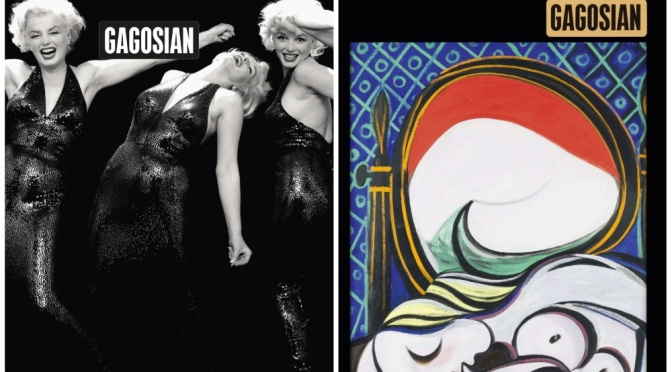
GAGOSIAN QUARTERLY – SPRING 2026 PREVIEW

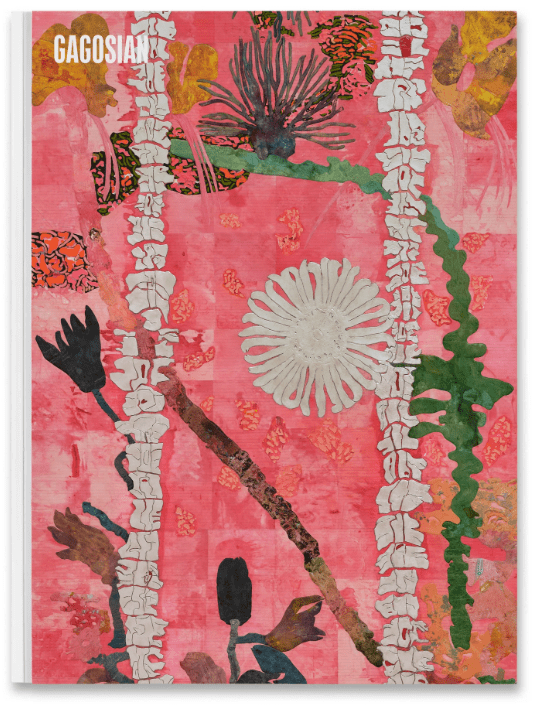
Gagosian Quarterly Spring 2026 | Gagosian Quarterly

Gagosian Quarterly: The Spring 2026 issue features Jeff Koons pays homage to Duchamp’s tremendous generosity. On the occasion of an exhibition of historic works by Jasper Johns, Larry Gagosian reflects on the artist’s crosshatching technique and its impact on audiences past and present. We also trace the evolution of Michael Heizer’s complex negative sculptures and celebrate the fortieth anniversary of Nan Goldin’s The Ballad of Sexual Dependency.
The House on Utopia Parkway: Joseph Cornell’s Studio Re-Created by Wes Anderson

The House on Utopia Parkway: Joseph Cornell’s Studio Re-Created by Wes Anderson is an exhibition conceived by curator Jasper Sharp and the acclaimed American filmmaker. The show brings Cornell’s New York studio to the heart of Paris, transforming Gagosian’s storefront gallery into a meticulously staged tableau—part time capsule, part life-size shadow box—for the first solo presentation of the artist’s work in Paris in more than four decades. In this video, Anderson discusses the genesis of the exhibition and the process by which it came together.

Michael Heizer: Negative Sculpture

Michael Heizer: Negative Sculpture

Across his nearly six-decade career, Michael Heizer has continued to probe the possibilities of sculptural form defined by its absence. His exhibition Negative Sculpture features Convoluted Line A and Convoluted Line B, among the artist’s most complex negative sculptures. Here, we consider a selection of works that have preceded the new sculptures.

Over the Guardrails, Into the Water

Over the Guardrails, Into the Water

Mike Stinavage meets with actor—and now director—Kristen Stewart to talk about her debut feature-length film, The Chronology of Water.

Berthe Weill

Berthe Weill

Valentina Castellani is the author of Trading Beauty: Art Market Histories from the Altar to the Gallery (2026), an expansive history of the art market and of the dealers who charted its course. Here—inspired by the recent exhibition Make Way for Berthe Weill: Art Dealer of the Parisian Avant-garde at the Musée de l’Orangerie, Paris—Castellani considers the impact of the French gallerist.

Titus Kaphar: The Fire This Time

Titus Kaphar: The Fire This Time

On the occasion of his exhibition The Fire This Time at Gagosian, Paris, Titus Kaphar explores themes of history, representation, and collective memory in his recent paintings and hand-carved wood sculptures.

A Tremendous Generosity: Jeff Koons on Marcel Duchamp

A Tremendous Generosity: Jeff Koons on Marcel Duchamp

Jeff Koons tells Alison McDonald about his appreciation for the pioneering artist and thinker Marcel Duchamp.

Jonas Wood: The Rules of the Game

Jonas Wood: The Rules of the Game

Following a recent visit to Jonas Wood’s Los Angeles studio, Justin Beal thinks through the artist’s paintings of tennis courts—the subject of an exhibition at Gagosian, Beverly Hills—examining their relation to the game, color theory, and the rewards of practice.

Game Changer
Beatrice Wood

Beatrice Wood

Salomé Gómez-Upegui honors Beatrice Wood, the “Mama of Dada,” an underappreciated trailblazer within the movement who went on to become a brilliant ceramist.

Jasper Johns: Between the Clock and the Bed

Jasper Johns: Between the Clock and the Bed

On January 22, Gagosian, in partnership with Castelli Gallery, opened an exhibition of historic works by Jasper Johns at the 980 Madison Avenue gallery in New York. A survey of the crosshatch paintings and drawings that dominated his practice from 1973 to 1983, the presentation united works that have rarely been seen with loans from sources including distinguished American museums. The exhibition commemorates the fiftieth anniversary of this body of work’s debut at Castelli Gallery in 1976. Here, Larry Gagosian speaks with the Quarterly’s Alison McDonald about the impetus for this project, his memories of seeing the exhibition in 1976, and the enduring impact of these paintings on artists and collectors.

Nan Goldin: Another Word for Love

Nan Goldin: Another Word for Love

For the fortieth anniversary of Nan Goldin’s genre-defining photobook The Ballad of Sexual Dependency (Aperture, 1986), Gagosian, London, will be exhibiting all of its 126 photographs, the first time the entire body of work will be shown in the United Kingdom. To celebrate the occasion, David Velasco looks back to the series’ creation and evolution, considering the radical exploration of seeing and love at the core of The Ballad.

Frank Gehry: Every Building, a Self-Portrait

Frank Gehry: Every Building, a Self-Portrait

Deborah McLeod, senior director at Gagosian, Beverly Hills, reflects on the generous and innovative vision of Frank Gehry. Having worked with the architect and artist for more than a decade, McLeod addresses his outsize impact on the city of Los Angeles and the world beyond.

Fashion and Art: Thomas Gainsborough

Fashion and Art: Thomas Gainsborough

The Frick Collection, New York, opened Gainsborough: The Fashion of Portraiture on February 12. The first exhibition devoted to the English artist’s portraiture ever held in New York, the show comprises more than two dozen paintings and explores the role of fashion in Gainsborough’s depictions, in terms both of the sitters’ clothes and of the larger context of class, labor, craft, and time. Aimee Ng, the Frick’s Peter Jay Sharp Chief Curator, has been working on the show for a decade; last fall she met with the Quarterly’s Derek C. Blasberg to talk about this historic project.

APOLLO MAGAZINE ——- MARCH 2026 PREVIEW

Anthony van Dyck | Exact Editions

APOLLO MAGAZINE: The latest issue features ‘Van Dyck’s Ruff Magic’….

Was Henri Rousseau a sophisticate all along?

The self-taught painter had a trememdous sense of self-belief, despite being ridiculed in his lifetime. A landmark exhibition confirms him as a singularly modern artist

East Side success story: the Asia Society at 70

Since 1956, the New York institution has fostered cross-cultural understanding, equipped with a collection of masterpieces assembled by its founder, John D. Rockefeller

When art becomes an act of last resort

Joseph Koerner’s account of art made in extremis turns Bosch, Beckmann and Kentridge into unexpected associates across the ages

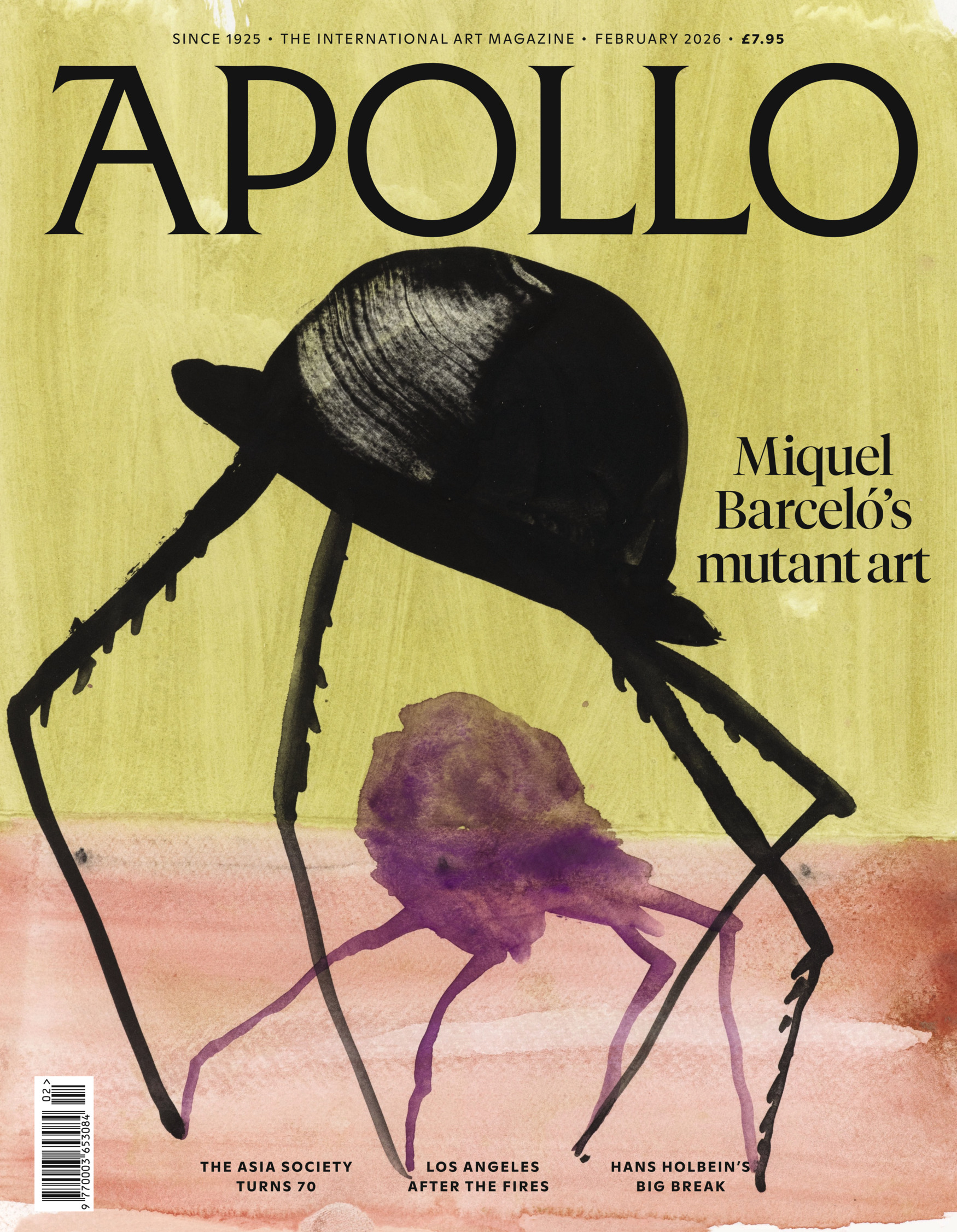
APOLLO MAGAZINE – FEBRUARY 2026 PREVIEW

Apollo cover image 1

APOLLO MAGAZINE: The latest issue features ‘Miquel Barceló’s Mutant Art’….

The Asia Society Turns 70

Los Angeles After The Fires

Hans Holbein’s Big Break

On Viollet-le-Duc, the punchbag of Notre-Dame

While the architect’s approach to restoring France’s medieval buildings remains controversial, his many and varied talents are still utterly awe-inspiring by Tim Smith-Laing

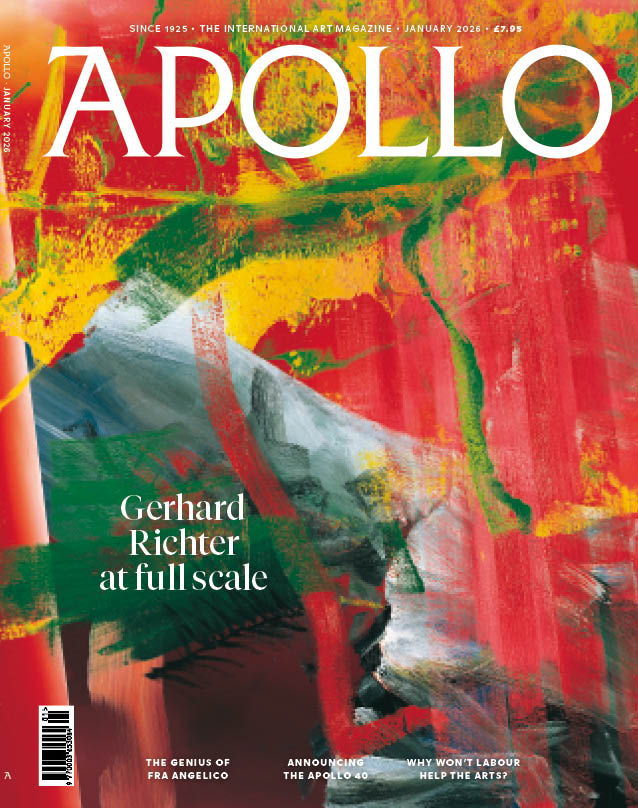
APOLLO MAGAZINE – JANUARY 2026 PREVIEW

January 2026

APOLLO MAGAZINE: The latest issue features ‘In search of Gerhard Richter’; the man who reinvented Notre-Dame; why won’t Labour help the arts? and announcing the Apollo 40

Gerhard Richter at full scale

A mammoth retrospective in Paris confirms the German artist as one of the world’s greatest living painters – and one of the most elusive

On Viollet-le-Duc, the punchbag of Notre-Dame

While the architect’s approach to restoring France’s medieval buildings remains controversial, his many and varied talents are still utterly awe-inspiring

Finishing the Sagrada Família

Antonio Gaudi’s masterpiece is nearing completion a century after the architect’s death

When it comes to views of Venice, Canaletto is still master of all he surveys

Demand for the best paintings of the city shows no sign of sinking, but some artists have a more buoyant market than others

Should museums be making spectacles of themselves?

If galleries and institutions want to grow their visitor numbers, they need to add style to their substance

APOLLO MAGAZINE – NOVEMBER 2025 PREVIEW

November 2025 - Apollo Magazine

APOLLO MAGAZINE: The latest issue features The Studio Museum in Harlem is back | have we reached peak Bloomsbury? | Tilda Swinton turns herself into art | how Constable ploughed his own furrow | Michaelina Wautier takes her place among the greats

Is the art market at a turning point?

After a gloomy few years, promising auction results and some exciting upcoming sales suggest that the market could be on the road to recovery

Yerevan, Armenia’s rock-star capital

A century ago, Alexander Tamanyan devised a startling layout for the city. Despite changes in regime and fashion, his vision has endured

Reviews: ‘The Week In Art’

THE WEEK IN ART (October 2, 2025): The latest episode feature a new exhibition at the Fitzwilliam Museum in Cambridge, UK, called Made in Ancient Egypt, reveals untold stories of the people behind a host of remarkable objects, and the technology and techniques they used.

The Art Newspaper’s digital editor, Alexander Morrison visits the museum to take a tour with the curator, Helen Strudwick. One of the great revelations of the past two decades in scholarship about women artists is Michaelina Wautier, the Baroque painter active in what is now Belgium in the middle of the 17th century. The largest ever exhibition of Wautier’s work opened this week at the Kunsthistorisches Museum in Vienna, and travels to the Royal Academy of Arts in London next year.

Ben Luke speaks to the art historian who rediscovered this extraordinary painter, Katlijne Van der Stighelen, who has also co-edited the catalogue of the Vienna show. And this episode’s Work of the Week is Robert Rauschenberg’s Bed (1955), one of the most important works of US art of the post-war period. It features in the exhibition Five Friends: John Cage, Merce Cunningham, Jasper Johns, Robert Rauschenberg, Cy Twombly, which this week arrives at the Museum Ludwig in Cologne.

We speak to Yilmaz Dziewior, the co-curator of the exhibition.

Made in Ancient Egypt, Fitzwilliam Museum, Cambridge, UK, 3 October-2 April 2026

Michaelina Wautier, Painter, Kunsthistorisches Museum, Vienna

30 September-22 February 2026; Royal Academy of Arts, London

27 March – 21 June 2026.

Five Friends: John Cage, Merce Cunningham, Jasper Johns, Robert Rauschenberg, Cy Twombly, Museum Ludwig, Cologne, Germany,

3 October-11 January 2026

APOLLO MAGAZINE – OCTOBER 2025 PREVIEW

October 2025

APOLLO MAGAZINE: The latest issue features Hew Locke and the Empire’s new clothes | Princeton University Art Museum reopens | William Hogarth’s bedside manner | the many faces of Nigerian modernism


Hew Locke and the Empire’s new clothes

On the eve of a major US survey, the artist talks to Apollo about decorating statues and the ornamental side of the British Empire

A compact history of the London mews

By turns picturesque and insalubrious, mews houses have a compellingly chequered past

Art Basel’s smallest fair has big ambitions

Eclectic art and innovative curation are helping Art Basel Paris fly the flag for the French art market

New frontiers for the Chinese art market

Work by late 20th-century and contemporary Chinese artists has been throwing up surprises recently

SILENCE AFTER THE BELL

Bashō’s narrow road, re-imagined in ink and light

By Michael Cummins, Editor, September 24, 2025

In the spring of 1689, Matsuo Bashō set out from Edo with his inkstone and his disciple, walking north through Japan’s interior. This essay imagines the painter Ogata Kōrin at his side, brush catching what haiku left unsaid: the lantern’s glow, a fox’s mischief, the silence after sound.

The morning I left Edo, the sky was thick with petals. Cherry blossoms fell in sudden gusts, scattering across canals and clinging to the backs of merchants. Someone in the crowd said my name. “Bashō—the man of stillness.” The words felt like a shroud. Stillness was not peace. Stillness was suffocation.

I carried only a robe, a small pack, and my inkstone. I gave no notice, offered no farewell. A poet should know the difference between an entrance and an exit, and Edo was drowning in entrances—recitations in smoky salons, verses pinned to pillars, applause echoing in courtyards. To slip away silently was my only true poem.

Sora, my disciple, waited by the gate, his journal tied at his side. Beside him stood Ogata Kōrin, carrying brushes wrapped in cloth, a small box of pigments, and sheets of fine paper. He was famed for painting bold pines and cranes against gold, but he wanted to walk with us, to see if paint could keep pace with words.

“You walk for silence,” he said as we stepped into the road.

“And you?” I asked.

“I will paint the sound.”


A crow on a bare branch—
autumn evening.

Walking unstitched illusions. You cannot hurry rain. You cannot plead with a mountain. Each step was a reminder of smallness.

Oku—the interior—was more than geography. It was the hidden chamber within things. To walk north into deep country was to step into the interior of myself.

The road gave humility: a thin robe against spring wind, an empty belly by sundown, blistered feet in straw sandals. Hunger was not a lack but a space for the world to fill. Only when stripped of comfort could I hear the world breathe.


By the second month, rains thickened. Each evening Sora dried our sandals by the inn’s hearth, though by morning they were heavy again.

At a mountain temple, a monk struck the great bell. The sound swelled, then emptied into air.

“Not the ringing,” he whispered, “the silence after—that is the true temple.”

Kōrin ground his ink and left behind a circle fading into white paper. I looked at it and felt the hush expand. His first gift of the journey.

Pine shadow—
the road bends
to meet it.


Summer pressed down like a hand. Cicadas shrieked in the trees, their chorus burning itself away. At a roadside inn, a farmer’s wife handed me a bowl of barley and salt.

“Why walk in this heat?” she asked.

“To see what words cannot hold,” I said. She laughed, shaking her head.

That night, I listened to the cicadas outside the window. Kōrin painted their wings in silver strokes. Sora struggled to describe them, blotting his brush, sighing. Not every moment can be pinned to the page.

One afternoon, a girl chased dragonflies, sleeves spread like wings. She caught none, but her laughter rang sharper than capture. Kōrin caught her mid-flight in vermilion. He pressed the paper into Sora’s hands. “If you cannot hold it with words,” he said, “let color remind you.”


We reached Matsushima, where pine-covered islets scattered like jewels across the bay. Some places do not need words. Kōrin’s blues and greens glowed even at dusk.

That night, fireflies pressed against the paper walls of our hut, their glow brighter than the lamp. I set down my brush. Some nights call for silence more than lines.

Later, in a fishing village, I collapsed with fever. A fisherman’s wife placed cloths on my brow and whispered prayers to the sea.

When I woke, Kōrin held out a small painting of a lantern’s glow against dark waves. The flame was steadier than I had felt in days.

Lantern flickers—
the sea’s hush louder
than my pulse.


By August, the barley fields had turned gold. The harvest moon rose red above the stubble. Villagers poured sake and sang. A boy ran over with a cup. “Drink, master!”

“The moon is already enough,” I said.

Snow still lingered in the high passes. The mountain does not flatter. It does not care if a man is poet or beggar. It accepts only attention.

Winter gust—
even the inkstone
holds the wind.


Crossing a frozen river, I slipped. A peasant caught my arm. “Careful, master. The ice breaks without warning.”

“So does the self,” I said.

Even in silence, the self lingered like a shadow. I imagined my words drifting northward, reaching readers yet unborn. But the further I walked, the thinner that dream became. What immortality is there in syllables, when rivers change their course and mountains crumble?

In Edo, applause had filled the air like thunder. On the road, there was only silence. Silence wounds, but it also heals.

The answer came not in thunder but in a sparrow’s wing. Write not to endure, but to attend. Not for tomorrow, but for now.


Near a riverbank, a boy approached with a scroll of verses. “Master, how do I make my poems last?”

“Write what you see,” I said. “Then write what you feel when you see it. Then tear it up and walk.”

The boy bowed. Kōrin added, softly: “Or paint the emptiness left behind.”

River mist—
the boy’s scroll
left unopened.


In the mountains I met a man from the north whose dialect I could not follow. He pointed to the sky, then to the river, then to his chest. We shared tea in silence. I realized then that language is not the vessel, but the gesture. Poetry lives in the space between.

One morning, I watched a fox dart through a field, a rice ball clutched in its mouth. The farmer cursed, but I laughed. Even hunger has mischief. Kōrin’s brush caught the moment in quick ink.

Fox in the field—
the rice ball warmer
than the sun.


Toward the end of our walk, Sora counted the ri that remained. “Two thousand and more behind us,” he said. His journal pages were full of weather, distances, small observations.

“I counted shadows,” I told him. “I counted pauses.”

Kōrin smiled. “I painted both.”

At last, beneath a cedar, I placed the inkstone on my lap and listened. Snow weighed heavy on the branches. The air was sharp with winter. The wind moved through ridges and needles and into the hollow of the stone. For a moment it seemed the ink itself stirred.

I wrote one last haiku, not as conclusion but as surrender. The road has no end. Only pauses where breath gathers.

Wind in the cedar—
the inkstone deepens
into silence.


When these fragments later formed Oku no Hosomichi, I wondered what I had left behind. Not a record of steps, but a trace of listening. The form belonged not to me but to the rhythm of walking.

Kōrin returned to Edo with his scrolls. I with my scattered lines. Yet three small works stayed with me: the fading bell, the glowing lantern, the fox with his rice ball. They were his haiku in color, brief offerings to impermanence.

If others take their own narrow roads, let them not follow our footsteps but their own shadows. The road is never the same twice. Neither traveler nor mountain remains unchanged.

Perhaps one day, a traveler will walk with a pen of light, or a scroll made of glass. They will pause beneath a cedar, not knowing my name, not knowing Kōrin’s brush, but feeling the same hush. The road will whisper to them, as it did to us. And they will listen—not to the words, nor the colors, but to the breath between.

Digital ink—
the silence still.

THIS ESSAY WAS WRITTEN AND EDITED UTILIZING AI