Tag Archives: Book Reviews

LITERARY REVIEW MAGAZINE – MAY 2026 PREVIEW

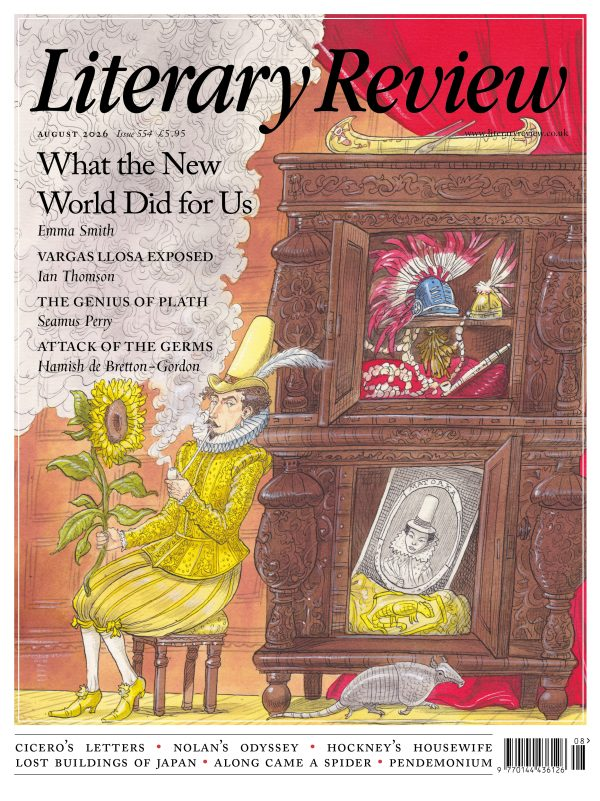
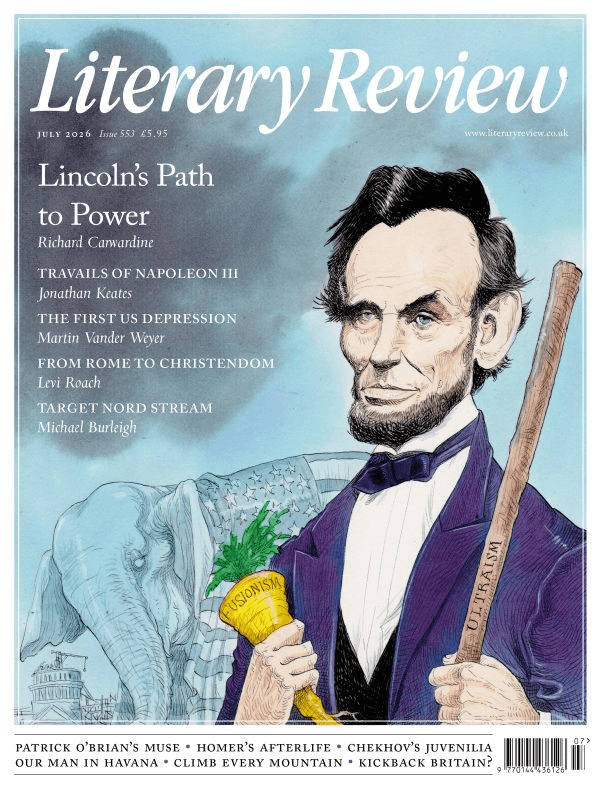
LITERARY REVIEW : The latest issue features Ritchie Robertson on Weimar * Charles Darwent on Louise Bourgeois * John Guy on the Tudors * Kirsten Tambling on dogs in art * Piers Brendon on Churchill and the crown * Saul David on AI warfare * Simon Nixon on private equity predators * Nigel Andrew on outsider animals * Zoe Guttenplan on Beatrice Warde * Maren Meinhardt on women and music * Lucy Lethbridge on swimming * Diane Purkiss on being published * Anthony Pagden on the West * Michael Reid on Lula * Anthony Teasdale on Tory leaders * Anna Reid on Vera Gedroits * Wendy Holden on Elizabeth II * Harriet Rix on trees * Emma Smith on Shakespeare’s identity * Jane Yager on Herta Müller * Sheena Joughin on Siri Hustvedt *  Adam Kucharski on evidence * Keith Miller on Douglas Stuart * Natalie Perman on Jem Calder *  and much, much more…

Weimar Germany: Death of a Democracy By Victor Sebestyen

Weimar: Life on the Edge of Catastrophe By Katja Hoyer

The small town of Weimar is overladen with historical associations. Goethe spent more than fifty years there as an employee and friend of Duke (later Grand Duke) Karl August. After the last grand duke abdicated in November 1918, the National Assembly met in Weimar to draw up a new republican constitution for Germany. Other symbolically charged venues considered were Nuremberg (home of Dürer) and Bayreuth (because of Wagner), but it was Weimar that gave its name to the period of German history from … 


Knife-Woman: The Life of Louise Bourgeois By Marie-Laure Bernadac (Translated from French by Lauren Elkin)

Having been named for her father, Louis, a mere dealer in antique tapestries, seemed insufficiently romantic to Louise Bourgeois, who was born on Christmas Day in 1911. She preferred the idea that her namesake was Louise Michel, ‘the red virgin of Montmartre’, an anarchist heroine of the Paris Commune. It wasn’t true, of course, but … 

This Little World: A New History of Tudor and Stuart England By Nandini Das

A phrase like ‘fortress England’ seems to echo down the centuries, and turns up again in This Little World, Nandini Das’s new study of identity and belonging, cross-border migration, assimilation and estrangement in the period between 1500 and the restoration of Charles II. Das seeks to unmask the period’s most fundamental assumptions about English … read more

TIMES LITERARY SUPPLEMENT – MAY 1, 2026 PREVIEW

TIMES LITERARY SUPPLEMENT: The latest issue features ‘A View of Her Own’….

Out of nothing

Tracey Emin’s self-fashioning By Sophie Oliver

Amateurs in name only

Women landscape painters reconsidered By Jenny Uglow

Bomb culture

Mankind has escaped nuclear war, for now By P. D. Smith

So close to the United States

Mexico’s challenge to received historical ideas By Benjamin T. Smith

Greedy for light        

The bittersweet contentment of old age By Rory Waterman

THE NEW YORK REVIEW OF BOOKS – MAY 14, 2026

THE NEW YORK REVIEW OF BOOKS: The latest issue features Jed Perl on the Whitney Biennial, Fintan O’Toole on the president’s precarious sanity, Nicole Rudick on June Leaf’s unique vision, Clare Bucknell on know-it-alls, Julian Bell on Joseph Wright of Derby, Dennis Lim on low-resolution cinema, Elaine Blair on the Guerrilla Girls, Mark O’Connell on a death in London, Martin Filler on David Adjaye’s demons, Nick Laird on the complete Seamus Heaney, Rosa Lyster on the evaporating salt lakes, Susan Tallman on Manet and Morisot, poems by Paul Muldoon and Fiona Sze-Lorrain, and much more.

‘The Right Amount of Crazy’

In Trump’s strategy of feigning madness to get what he wants, there is no longer any border between pretense and actual irrationality. By Fintan O’Toole

Charlatans & Bores

The profile of the pedant has changed surprisingly across time periods and cultures, but what’s constant is that nobody wants to be called one.

On Pedantry: A Cultural History of the Know-It-All by Arnoud S.Q. Visser

‘The Music of What Happens’

Seamus Heaney’s complete poems, following on editions of his letters, prose, and translations, confirm the extent of his achievement.

The Poems of Seamus Heaney edited by Rosie Lavan and Bernard O’Donoghue, with Matthew Hollis

Manet and Morisot: Game On

An important exhibition showcases a painterly repartee that altered the trajectory of the two artists’ work and, by extension, modern art itself.

Manet and Morisot – an exhibition at the Legion of Honor, San Francisco, October 11, 2025–March 1, 2026, and the Cleveland Museum of Art, March 29–July 5, 2026

The New Criterion ———- MAY 2026 Preview

THE NEW CRITERION: The latest issue features ‘ Western Decline’ by Victor Davis Hanson; Stoppard & Stopparianism by Jonathan Gaisman; The hector’s veto by Simon Heffer; The metaphysics of murder by Theodore Dalrypmple and New poems by Alfred Corn, Michael Homolka and Sunil Iyengar…

TIMES LITERARY SUPPLEMENT – APRIL 17, 2026 PREVIEW

TIMES LITERARY SUPPLEMENT: The latest issue features ‘The many faces of Shakespeare’….

History lessons?

China, America and the danger of war By Philip Zelikow

A man of property

Discovering exactly what Shakespeare owned By Lucy Munro

Go deeper

Blake Morrison’s guide to life writing By Joyce Carol Oates

Out of sheer intention

Writing about others as a means to write about yourself By Catherine Taylor

THE NEW YORK REVIEW OF BOOKS – APRIL 23, 2026

THE NEW YORK REVIEW OF BOOKS: The latest issue features a dispatch from Tehran, Jed Perl on Morgan Meis’s funky kind of art criticism, Francine Prose on MAGA fiction, Caroline Fraser on the dump, Michael Gorra on Civil War diaries, David Cole on the constitutional guarantee of birthright citizenship, Hermione Lee on Virginia Woolf’s letters, Trevor Jackson on American “retirement,” Kathryn Hughes on Tennyson’s cosmos, Colm Tóibín on Irish reunification, a collage by Lucy Sante, poems by Andrea Cohen and Timmy Straw, and much more.


From the Rooftops of Tehran

We in Iran own our grief, mourning all by ourselves.

Living Through the Civil War

George Templeton Strong’s diaries provide the North’s best record of daily passions and woes during its struggle against the South.

George Templeton Strong: Civil War Diaries edited by Geoff Wisner

‘A Vast Symphony of Stone’

In his renovation of Notre-Dame, Eugène Viollet-le-Duc projected his own Romantic vision of the Middle Ages onto the Gothic cathedral.

Viollet-le-Duc: Drawing Worlds an exhibition at the Bard Graduate Center Gallery, New York City, January 28–May 24, 2026

The Aging Class

Retirement, like so much of the American economy, is a broken system that benefits private interests and exploits the most vulnerable people.

Golden Years: How Americans Invented and Reinvented Old Age by James Chappel

Work, Retire, Repeat: The Uncertainty of Retirement in the New Economy by Teresa Ghilarducci, with a foreword by E. J. Dionne Jr.

TIMES LITERARY SUPPLEMENT – APRIL 3, 2026 PREVIEW

TIMES LITERARY SUPPLEMENT: The latest issue features Claude Rawson on the British Imagination; ‘Trump’s Whisperers; Hardy’s breakthrough novel; Thomas Mann today…

Cultural superpower?

An argument for ‘British is best’

The argument of Peter Watson’s hugely ambitious The British Imagination: A history of ideas from Elizabeth I to Elizabeth II is that “The essential arc of British history – intellectual and creative history, just as much as political, economic and military history – is of a small, indeed tiny, country sequestered on the north-west coast of Europe that over the centuries would forge the largest and most unlikely empire the world has seen”. It may seem odd to be reading this in the present depressed state of the nation, although Watson stresses from the outset that the concept of “the British imagination” embraces its hospitality to foreign influences and eventually to the power of a wider “Anglosphere”.

English virtue battles the pagan

The genesis of Far from the Madding Crowd

The texture of etcetera

What smartphones can’t record

Freeing Thomas Mann

Modern English translations that do justice to the work

LITERARY REVIEW MAGAZINE – APRIL 2026 PREVIEW

Relative Failures: The Lives of Willie Wilde, Mabel Beardsley and Howard  Sturgis by Matthew Sturgis - review by Thomas W Hodgkinson
LITERARY REVIEW : The latest issue features Piers Brendon on Jan Morris * Richard Norton-Taylor on the Cambridge Five * Jane O’Grady on Wittgenstein * Wendy Holden on royal fashion * Martin Vander Weyer on Patrick Radden Keefe * Jeremy Treglown on Shakespeare in translation….

Jan Morris: A Life By Sara Wheeler

The subject of this excellent biography wished to be remembered as Jan ‘Empire’ Morris, author of the great imperial trilogy Pax Britannica, but she correctly predicted that the valedictory headlines would read ‘Sex Change Author Dies’. As James Morris, he had won early fame as the Times reporter who broke the news of the conquest of Everest on Coronation Day, 1953. And Morris’s real distinction, as Sara Wheeler affirms, was as a travel writer. It was a term she loathed. (Wheeler follows Morris’s own lead in using male pronouns for the author’s early life and female ones after 1970, when transition was nearing completion.) But as a young man James had immersed…

Stalin’s Apostles: The Cambridge Five and the Making of the Soviet Empire By Antonia Senior

It may be thought that the notorious Cambridge spies – the majority of them members of the Apostles, that university’s secretive, elitist society – had been written out. But, as Stalin’s Apostles makes clear, such is not the case. Most of the books on what the KGB later called their ‘Magnificent Five’ – Kim Philby, Guy Burgess, Donald Maclean, Anthony Blunt and John Cairncross – have dwelt …

We Know You Can Pay a Million: Inside the Dark Economy of Hacking and Ransomware By Anja Shortland

Not so long ago, stories about powerful computer viruses apparently spreading around the world and threatening to bring modern life to a halt regularly filled the news. These days, cybercrime rarely makes the headlines, and most of us have become inured to warnings that our passwords have been found in a data leak. Yet ..

THE NEW YORK REVIEW OF BOOKS – APRIL 9, 2026

THE NEW YORK REVIEW OF BOOKS: The latest issue features geopolitical analyses of the Iran conflict by Fintan O’Toole and Pankaj Mishra, alongside cultural explorations of literature and art. Key contributions include discussions on the economic dualities of Shenzhen, China, and critiques of historical narratives regarding the Allied firebombing of Japan. 

A Bitter Education

In its quiescence to the West’s war on Iran, India is squandering a precious legacy.

Shenzhen Express

In Shenzhen, the successes and failures of China’s remarkable new economy are on full display.

Breakneck: China’s Quest to Engineer the Future by Dan Wang

House of Huawei: The Secret History of China’s Most Powerful Company by Eva Dou

Who Built France?

A new history explores France’s empire from the perspective of the indigenous and enslaved people who participated, willingly or not, in its creation.

By Flesh and Toil: How Sex, Race, and Labor Shaped the Early French Empire by Mélanie Lamotte

A Man-Made Disaster

There has never been a moral and historical reckoning with the horrors inflicted by the Allied firebombing of Japan during World War II.

Black Snow: Curtis LeMay, the Firebombing of Tokyo, and the Road to the Atomic Bomb by James M. Scott

The Bomber Mafia: A Dream, a Temptation, and the Longest Night of the Second World War by Malcolm Gladwell

TIMES LITERARY SUPPLEMENT – MARCH 20, 2026 PREVIEW

The TLS - Current Issue Cover

TIMES LITERARY SUPPLEMENT: The latest issue features William Golding’s beast within; the many lives of W. H. Auden; Palantir spreads; the spirit of the Risorgimento; Ishiguro on film; experiencing consciousness – and much more.

Darkness visible

The struggle between good and evil in William Golding’s fiction By Alan Jenkins

Clock stopper

The many lives of W. H. Auden By Ian Sansom

All-seeing eye

Alex Karp, CEO of Palantir, the controversial US tech company By Emily Jones

The feeling of being alive

Why do we experience consciousness?