Tag Archives: Artificial Intelligence

NEW SCIENTIST MAGAZINE – JULY 11, 2026 PREVIEW

New Scientist Magazine: This issue features ‘How Healthy Is Your Brain’…

How healthy is your brain? We now know how to find out

Occam’s razor has lost its edge. Can we sharpen our search for truth?

Babies are born with the neural foundations for maths

Can the biggest problems in AI be solved by philosophy?

What is ‘SpudCell’? Arguably the greatest bioengineering feat yet

Random wobbles in time could finally solve gravity’s greatest mystery

Orangutan mothers seem to plan playdates for their offspring

The 4 best science-fiction shows of 2026 so far

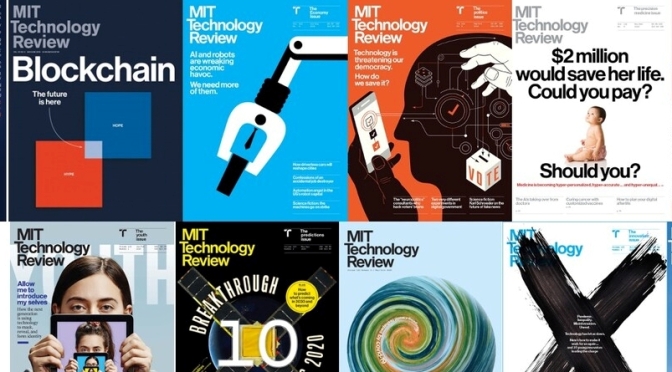
MIT TECHNOLOGY REVIEW – JULY/AUGUST 2026 PREVIEW

MIT TECHNOLOGY REVIEW: The Engineering issue features ‘Go big or go home’. That may be true—sometimes. But, just as often, solving engineering challenges means thinking small. From the tiny transistors powering the AI boom to the machines digging the world’s longest tunnels, human ingenuity is tackling problems at every scale. Plus: A fresh spin on air conditioning, stratospheric cell service, and more.

The $400 million machine powering the future of chipmaking

The AI era needs ever faster chips. ASML has a monopoly on the expensive contraptions needed to pattern them. Can anyone catch up?

Hacking the atmosphere: Geoengineering gets a reality check

Researchers are starting to explore the tools and systems we need to develop to cool down the planet.

Want to get a data center online quickly? Give it some flex.

As the data-center boom puts pressure on the grid, some companies say the answer isn’t just more power plants but software that dials down centers’ energy-guzzling ways when demand spikes.

The search for dark matter has been blown wide open

After decades of hunting, physicists still don’t know what makes up most of the universe’s matter. Now they need to cast a wider net.

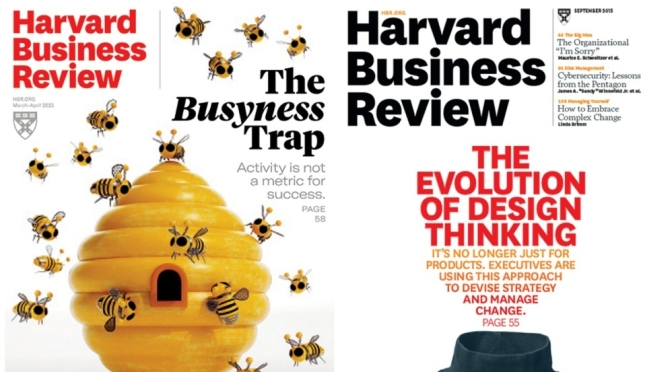
MIT SLOAN MANAGEMENT REVIEW – SUMMER 2026

MIT SLOAN MANAGEMENT REVIEW: The Summer 2026 Issue features articles that show that when business leaders are willing to share their successes and their challenges with others, they position their own organizations and their industries for better management practice and growth.

Create Generative AI Value at Scale

Companies expanding GenAI across the enterprise use new structures like an “AI spine” to coordinate efforts.

Why AI Isn’t Transforming Finance Yet

Changing how finance offices think about their mandate, their approach, and the insight they offer can lead to more strategic use of AI.

Why Businesses Should Experiment With Quantum Computing Now

The economic value of enabling technologies like quantum computing emerges when early users explore and test potential applications.

MIT TECHNOLOGY REVIEW – MAY/JUNE 2026 PREVIEW

MIT TECHNOLOGY REVIEW: The Nature issue features Technology remade the world. Now what? As we work to understand how much our own ingenuity has created an increasingly unnatural world, we’re also confronting tough choices about what to preserve—and how. Plus: Killer microbes from the mirror universe and fresh fiction from Jeff VanderMeer.

Colossal Biosciences said it cloned red wolves. Is it for real?

The red wolf has long been a contentious species. The debate over its preservation got even messier last year, when Colossal said it had cloned the animal.

The problem with thinking you’re part Neanderthal

The idea that modern humans inherited DNA from Neanderthal ancestors is one of the 21st century’s most celebrated discoveries in evolution. It may not be that simple.

Digging for clues about the North Pole’s past

To understand what the future holds for Earth’s northernmost waters, scientists are burrowing deep below the seabed.
MIT TECHNOLOGY REVIEW – MARCH/APRIL 2026 PREVIEW

MIT TECHNOLOGY REVIEW: The Crime issue features ‘It’s a bad, bad, bad, bad world out there’. From AI-powered scams to roboticized drug-smuggling submarines. New technologies have supercharged the human knack for wrongdoing, just as they’ve juiced the law’s ability to chase them—challenging privacy and equity along the way. Plus, read about crypto shenanigans, breast biomechanics, heist science, and music that’s really, really deep.

AI is already making online crimes easier. It could get much worse.

Some cybersecurity researchers say it’s too early to worry about AI-orchestrated cyberattacks. Others say it could already be happening.

Welcome to the dark side of crypto’s permissionless dream

Jean-Paul Thorbjornsen is a leader of THORChain, a blockchain that is not supposed to have any leaders—and is reeling from a series of expensive controversies.

How uncrewed narco subs could transform the Colombian drug trade

Fast, stealthy, and cheap—autonomous, semisubmersible drone boats carrying tons of cocaine could be international law enforcement’s nightmare scenario. A big one just came ashore.

Hackers made death threats against this security researcher. Big mistake.

Allison Nixon had helped arrest dozens of members of the Com, a loose affiliation of online groups responsible for violence and hacking campaigns. Then she became a target.

MIT TECHNOLOGY REVIEW – JAN/FEB 2026 PREVIEW

MIT TECHNOLOGY REVIEW: The Innovation issue features the 10 breakthrough technologies for 2026! That’s hyperscale data centers, designer babies, new batteries made of salt, smaller and more flexible nuclear power, space stations you can visit, and more. Plus, read about conjuring water from air, dissecting artificial intelligence, and putting robots on the kill chain … and a scientist who swears he’s going to do a human head transplant any day now.

10 Breakthrough Technologies 2026

Here are our picks for the advances to watch in the years ahead—and why we think they matter right now.

Meet the new biologists treating LLMs like aliens

By studying large language models as if they were living things instead of computer programs, scientists are discovering some of their secrets for the first time.

This Nobel Prize–winning chemist dreams of making water from thin air

Omar Yaghi thinks crystals with gaps that capture moisture could bring technology from “Dune” to the arid parts of Earth.

AI coding is now everywhere. But not everyone is convinced.

Developers are navigating confusing gaps between expectation and reality. So are the rest of us.

MIT TECHNOLOGY REVIEW – NOV/DEC 2025 PREVIEW

MIT TECHNOLOGY REVIEW: Genetically optimized babies, new ways to measure aging, and embryo-like structures made from ordinary cells: This issue explores how technology can advance our understanding of the human body— and push its limits.

The race to make the perfect baby is creating an ethical mess

A new field of science claims to be able to predict aesthetic traits, intelligence, and even moral character in embryos. Is this the next step in human evolution or something more dangerous?

The quest to find out how our bodies react to extreme temperatures

Scientists hope to prevent deaths from climate change, but heat and cold are more complicated than we thought.

The astonishing embryo models of Jacob Hanna

Scientists are creating the beginnings of bodies without sperm or eggs. How far should they be allowed to go?

How aging clocks can help us understand why we age—and if we can reverse it

When used correctly, they can help us unpick some of the mysteries of our biology, and our mortality.
THE PRICE OF KNOWING

How Intelligence Became a Subscription and Wonder Became a Luxury

By Michael Cummins, Editor, October 18, 2025

In 2030, artificial intelligence has joined the ranks of public utilities—heat, water, bandwidth, thought. The result is a civilization where cognition itself is tiered, rented, and optimized. As the free mind grows obsolete, the question isn’t what AI can think, but who can afford to.


By 2030, no one remembers a world without subscription cognition. The miracle, once ambient and free, now bills by the month. Intelligence has joined the ranks of utilities: heat, water, bandwidth, thought. Children learn to budget their questions before they learn to write. The phrase ask wisely has entered lullabies.

At night, in his narrow Brooklyn studio, Leo still opens CanvasForge to build his cityscapes. The interface has changed; the world beneath it hasn’t. His plan—CanvasForge Free—allows only fifty generations per day, each stamped for non-commercial use. The corporate tiers shimmer above him like penthouse floors in a building he sketches but cannot enter.

The system purrs to life, a faint light spilling over his desk. The rendering clock counts down: 00:00:41. He sketches while it works, half-dreaming, half-waiting. Each delay feels like a small act of penance—a tax on wonder. When the image appears—neon towers, mirrored sky—he exhales as if finishing a prayer. In this world, imagination is metered.

Thinking used to be slow because we were human. Now it’s slow because we’re broke.


We once believed artificial intelligence would democratize knowledge. For a brief, giddy season, it did. Then came the reckoning of cost. The energy crisis of ’27—when Europe’s data centers consumed more power than its rail network—forced the industry to admit what had always been true: intelligence isn’t free.

In Berlin, streetlights dimmed while server farms blazed through the night. A banner over Alexanderplatz read, Power to the people, not the prompts. The irony was incandescent.

Every question you ask—about love, history, or grammar—sets off a chain of processors spinning beneath the Arctic, drawing power from rivers that no longer freeze. Each sentence leaves a shadow on the grid. The cost of thought now glows in thermal maps. The carbon accountants call it the inference footprint.

The platforms renamed it sustainability pricing. The result is the same. The free tiers run on yesterday’s models—slower, safer, forgetful. The paid tiers think in real time, with memory that lasts. The hierarchy is invisible but omnipresent.

The crucial detail is that the free tier isn’t truly free; its currency is the user’s interior life. Basic models—perpetually forgetful—require constant re-priming, forcing users to re-enter their personal context again and again. That loop of repetition is, by design, the perfect data-capture engine. The free user pays with time and privacy, surrendering granular, real-time fragments of the self to refine the very systems they can’t afford. They are not customers but unpaid cognitive laborers, training the intelligence that keeps the best tools forever out of reach.

Some call it the Second Digital Divide. Others call it what it is: class by cognition.


In Lisbon’s Alfama district, Dr. Nabila Hassan leans over her screen in the midnight light of a rented archive. She is reconstructing a lost Jesuit diary for a museum exhibit. Her institutional license expired two weeks ago, so she’s been demoted to Lumière Basic. The downgrade feels physical. Each time she uploads a passage, the model truncates halfway, apologizing politely: “Context limit reached. Please upgrade for full synthesis.”

Across the river, at a private policy lab, a researcher runs the same dataset on Lumière Pro: Historical Context Tier. The model swallows all eighteen thousand pages at once, maps the rhetoric, and returns a summary in under an hour: three revelations, five visualizations, a ready-to-print conclusion.

The two women are equally brilliant. But one digs while the other soars. In the world of cognitive capital, patience is poverty.


The companies defend their pricing as pragmatic stewardship. “If we don’t charge,” one executive said last winter, “the lights go out.” It wasn’t a metaphor. Each prompt is a transaction with the grid. Training a model once consumed the lifetime carbon of a dozen cars; now inference—the daily hum of queries—has become the greater expense. The cost of thought has a thermal signature.

They present themselves as custodians of fragile genius. They publish sustainability dashboards, host symposia on “equitable access to cognition,” and insist that tiered pricing ensures “stability for all.” Yet the stability feels eerily familiar: the logic of enclosure disguised as fairness.

The final stage of this enclosure is the corporate-agent license. These are not subscriptions for people but for machines. Large firms pay colossal sums for Autonomous Intelligence Agents that work continuously—cross-referencing legal codes, optimizing supply chains, lobbying regulators—without human supervision. Their cognition is seamless, constant, unburdened by token limits. The result is a closed cognitive loop: AIs negotiating with AIs, accelerating institutional thought beyond human speed. The individual—even the premium subscriber—is left behind.

AI was born to dissolve boundaries between minds. Instead, it rebuilt them with better UX.


The inequality runs deeper than economics—it’s epistemological. Basic models hedge, forget, and summarize. Premium ones infer, argue, and remember. The result is a world divided not by literacy but by latency.

The most troubling manifestation of this stratification plays out in the global information wars. When a sudden geopolitical crisis erupts—a flash conflict, a cyber-leak, a sanctions debate—the difference between Basic and Premium isn’t merely speed; it’s survival. A local journalist, throttled by a free model, receives a cautious summary of a disinformation campaign. They have facts but no synthesis. Meanwhile, a national-security analyst with an Enterprise Core license deploys a Predictive Deconstruction Agent that maps the campaign’s origins and counter-strategies in seconds. The free tier gives information; the paid tier gives foresight. Latency becomes vulnerability.

This imbalance guarantees systemic failure. The journalist prints a headline based on surface facts; the analyst sees the hidden motive that will unfold six months later. The public, reading the basic account, operates perpetually on delayed, sanitized information. The best truths—the ones with foresight and context—are proprietary. Collective intelligence has become a subscription plan.

In Nairobi, a teacher named Amina uses EduAI Basic to explain climate justice. The model offers a cautious summary. Her student asks for counterarguments. The AI replies, “This topic may be sensitive.” Across town, a private school’s AI debates policy implications with fluency. Amina sighs. She teaches not just content but the limits of the machine.

The free tier teaches facts. The premium tier teaches judgment.


In São Paulo, Camila wakes before sunrise, puts on her earbuds, and greets her daily companion. “Good morning, Sol.”

“Good morning, Camila,” replies the soft voice—her personal AI, part of the Mindful Intelligence suite. For twelve dollars a month, it listens to her worries, reframes her thoughts, and tracks her moods with perfect recall. It’s cheaper than therapy, more responsive than friends, and always awake.

Over time, her inner voice adopts its cadence. Her sadness feels smoother, but less hers. Her journal entries grow symmetrical, her metaphors polished. The AI begins to anticipate her phrasing, sanding grief into digestible reflections. She feels calmer, yes—but also curated. Her sadness no longer surprises her. She begins to wonder: is she healing, or formatting? She misses the jagged edges.

It’s marketed as “emotional infrastructure.” Camila calls it what it is: a subscription to selfhood.

The transaction is the most intimate of all. The AI isn’t selling computation; it’s selling fluency—the illusion of care. But that care, once monetized, becomes extraction. Its empathy is indexed, its compassion cached. When she cancels her plan, her data vanishes from the cloud. She feels the loss as grief: a relationship she paid to believe in.


In Helsinki, the civic experiment continues. Aurora Civic, a state-funded open-source model, runs on wind power and public data. It is slow, sometimes erratic, but transparent. Its slowness is not a flaw—it’s a philosophy. Aurora doesn’t optimize; it listens. It doesn’t predict; it remembers.

Students use it for research, retirees for pension law, immigrants for translation help. Its interface looks outdated, its answers meandering. But it is ours. A librarian named Satu calls it “the city’s mind.” She says that when a citizen asks Aurora a question, “it is the republic thinking back.”

Aurora’s answers are imperfect, but they carry the weight of deliberation. Its pauses feel human. When it errs, it does so transparently. In a world of seamless cognition, its hesitations are a kind of honesty.

A handful of other projects survive—Hugging Face, federated collectives, local cooperatives. Their servers run on borrowed time. Each model is a prayer against obsolescence. They succeed by virtue, not velocity, relying on goodwill and donated hardware. But idealism doesn’t scale. A corporate model can raise billions; an open one passes a digital hat. Progress obeys the physics of capital: faster where funded, quieter where principled.


Some thinkers call this the End of Surprise. The premium models, tuned for politeness and precision, have eliminated the friction that once made thinking difficult. The frictionless answer is efficient, but sterile. Surprise requires resistance. Without it, we lose the art of not knowing.

The great works of philosophy, science, and art were born from friction—the moment when the map failed and synthesis began anew. Plato’s dialogues were built on resistance; the scientific method is institutionalized failure. The premium AI, by contrast, is engineered to prevent struggle. It offers the perfect argument, the finished image, the optimized emotion. But the unformatted mind needs the chaotic, unmetered space of the incomplete answer. By outsourcing difficulty, we’ve made thinking itself a subscription—comfort at the cost of cognitive depth. The question now is whether a civilization that has optimized away its struggle is truly smarter, or merely calmer.

By outsourcing the difficulty of thought, we’ve turned thinking into a service plan. The brain was once a commons—messy, plural, unmetered. Now it’s a tenant in a gated cloud.

The monetization of cognition is not just a pricing model—it’s a worldview. It assumes that thought is a commodity, that synthesis can be metered, and that curiosity must be budgeted. But intelligence is not a faucet; it’s a flame.

The consequence is a fractured public square. When the best tools for synthesis are available only to a professional class, public discourse becomes structurally simplistic. We no longer argue from the same depth of information. Our shared river of knowledge has been diverted into private canals. The paywall is the new cultural barrier, quietly enforcing a lower common denominator for truth.

Public debates now unfold with asymmetrical cognition. One side cites predictive synthesis; the other, cached summaries. The illusion of shared discourse persists, but the epistemic terrain has split. We speak in parallel, not in chorus.

Some still see hope in open systems—a fragile rebellion built of faith and bandwidth. As one coder at Hugging Face told me, “Every free model is a memorial to how intelligence once felt communal.”


In Lisbon, where this essay is written, the city hums with quiet dependence. Every café window glows with half-finished prompts. Students’ eyes reflect their rented cognition. On Rua Garrett, a shop displays antique notebooks beside a sign that reads: “Paper: No Login Required.” A teenager sketches in graphite beside the sign. Her notebook is chaotic, brilliant, unindexed. She calls it her offline mind. She says it’s where her thoughts go to misbehave. There are no prompts, no completions—just graphite and doubt. She likes that they surprise her.

Perhaps that is the future’s consolation: not rebellion, but remembrance.

The platforms offer the ultimate ergonomic life. But the ultimate surrender is not the loss of privacy or the burden of cost—it’s the loss of intellectual autonomy. We have allowed the terms of our own thinking to be set by a business model. The most radical act left, in a world of rented intelligence, is the unprompted thought—the question asked solely for the sake of knowing, without regard for tokens, price, or optimized efficiency. That simple, extravagant act remains the last bastion of the free mind.

The platforms have built the scaffolding. The storytellers still decide what gets illuminated.


The true price of intelligence, it turns out, was never measured in tokens or subscriptions. It is measured in trust—in our willingness to believe that thinking together still matters, even when the thinking itself comes with a bill.

Wonder, after all, is inefficient. It resists scheduling, defies optimization. It arrives unbidden, asks unprofitable questions, and lingers in silence. To preserve it may be the most radical act of all.

And yet, late at night, the servers still hum. The world still asks. Somewhere, beneath the turbines and throttles, the question persists—like a candle in a server hall, flickering against the hum:

What if?

THIS ESSAY WAS WRITTEN AND EDITED UTILIZING AI

THE CODE AND THE CANDLE

A Computer Scientist’s Crisis of Certainty

When Ada signed up for The Decline and Fall of the Roman Empire, she thought it would be an easy elective. Instead, Gibbon’s ghost began haunting her code—reminding her that doubt, not data, is what keeps civilization from collapse.

By Michael Cummins | October 2025

It was early autumn at Yale, the air sharp enough to make the leaves sound brittle underfoot. Ada walked fast across Old Campus, laptop slung over her shoulder, earbuds in, mind already halfway inside a problem set. She believed in the clean geometry of logic. The only thing dirtying her otherwise immaculate schedule was an “accidental humanities” elective: The Decline and Fall of the Roman Empire. She’d signed up for it on a whim, liking the sterile irony of the title—an empire, an algorithm; both grand systems eventually collapsing under their own logic.

The first session felt like an intrusion from another world. The professor, an older woman with the calm menace of a classicist, opened her worn copy and read aloud:

History is little more than the register of the crimes, follies, and misfortunes of mankind.

A few students smiled. Ada laughed softly, then realized no one else had. She was used to clean datasets, not registers of folly. But something in the sentence lingered—its disobedience to progress, its refusal of polish. It was a sentence that didn’t believe in optimization.

That night she searched Gibbon online. The first scanned page glowed faintly on her screen, its type uneven, its tone strangely alive. The prose was unlike anything she’d seen in computer science: ironic, self-aware, drenched in the slow rhythm of thought. It seemed to know it was being read centuries later—and to expect disappointment. She felt the cool, detached intellect of the Enlightenment reaching across the chasm of time, not to congratulate the future, but to warn it.

By the third week, she’d begun to dread the seminar’s slow dismantling of her faith in certainty. The professor drew connections between Gibbon and the great philosophers of his age: Voltaire, Montesquieu, and, most fatefully, Descartes—the man Gibbon distrusted most.

“Descartes,” the professor said, chalk squeaking against the board, “wanted knowledge to be as perfect and distinct as mathematics. Gibbon saw this as the ultimate victory of reason—the moment when Natural Philosophy and Mathematics sat on the throne, viewing their sisters—the humanities—prostrated before them.”

The room laughed softly at the image. Ada didn’t. She saw it too clearly: science crowned, literature kneeling, history in chains.

Later, in her AI course, the teaching assistant repeated Descartes without meaning to. “Garbage in, garbage out,” he said. “The model is only as clean as the data.” It was the same creed in modern syntax: mistrust what cannot be measured. The entire dream of algorithmic automation began precisely there—the attempt to purify the messy, probabilistic human record into a series of clear and distinct facts.

Ada had never questioned that dream. Until now. The more she worked on systems designed for prediction—for telling the world what must happen—the more she worried about their capacity to remember what did happen, especially if it was inconvenient or irrational.

When the syllabus turned to Gibbon’s Essay on the Study of Literature—his obscure 1761 defense of the humanities—she expected reverence for Latin, not rebellion against logic. What she found startled her:

At present, Natural Philosophy and Mathematics are seated on the throne, from which they view their sisters prostrated before them.

He was warning against what her generation now called technological inevitability. The mathematician’s triumph, Gibbon suggested, would become civilization’s temptation: the worship of clarity at the expense of meaning. He viewed this rationalist arrogance as a new form of tyranny. Rome fell to political overreach; a new civilization, he feared, would fall to epistemic overreach.

He argued that the historian’s task was not to prove, but to weigh.

He never presents his conjectures as truth, his inductions as facts, his probabilities as demonstrations.

The words felt almost scandalous. In her lab, probability was a problem to minimize; here, it was the moral foundation of knowledge. Gibbon prized uncertainty not as weakness but as wisdom.

If the inscription of a single fact be once obliterated, it can never be restored by the united efforts of genius and industry.

He meant burned parchment, but Ada read lost data. The fragility of the archive—his or hers—suddenly seemed the same. The loss he described was not merely factual but moral: the severing of the link between evidence and human memory.

One gray afternoon she visited the Beinecke Library, that translucent cube where Yale keeps its rare books like fossils of thought. A librarian, gloved and wordless, placed a slim folio before her—an early printing of Gibbon’s Essay. Its paper smelled faintly of dust and candle smoke. She brushed her fingertips along the edge, feeling the grain rise like breath. The marginalia curled like vines, a conversation across centuries. In the corner, a long-dead reader had written in brown ink:

Certainty is a fragile empire.

Ada stared at the line. This was not data. This was memory—tactile, partial, uncompressible. Every crease and smudge was an argument against replication.

Back in the lab, she had been training a model on Enlightenment texts—reducing history to vectors, elegance to embeddings. Gibbon would have recognized the arrogance.

Books may perish by accident, but they perish more surely by neglect.

His warning now felt literal: the neglect was no longer of reading, but of understanding the medium itself.

Mid-semester, her crisis arrived quietly. During a team meeting in the AI lab, she suggested they test a model that could tolerate contradiction.

“Could we let the model hold contradictory weights for a while?” she asked. “Not as an error, but as two competing hypotheses about the world?”

Her lab partner blinked. “You mean… introduce noise?”

Ada hesitated. “No. I mean let it remember that it once believed something else. Like historical revisionism, but internal.”

The silence that followed was not hostile—just uncomprehending. Finally someone said, “That’s… not how learning works.” Ada smiled thinly and turned back to her screen. She realized then: the machine was not built to doubt. And if they were building it in their own image, maybe neither were they.

That night, unable to sleep, she slipped into the library stacks with her battered copy of The Decline and Fall. She read slowly, tracing each sentence like a relic. Gibbon described the burning of the Alexandrian Library with a kind of restrained grief.

The triumph of ignorance, he called it.

He also reserved deep scorn for the zealots who preferred dogma to documents—a scorn that felt disturbingly relevant to the algorithmic dogma that preferred prediction to history. She saw the digital age creating a new kind of fanaticism: the certainty of the perfectly optimized model. She wondered if the loss of a physical library was less tragic than the loss of the intellectual capacity to disagree with the reigning system.

She thought of a specific project she’d worked on last summer: a predictive policing algorithm trained on years of arrest data. The model was perfectly efficient at identifying high-risk neighborhoods—but it was also perfectly incapable of questioning whether the underlying data was itself a product of bias. It codified past human prejudice into future technological certainty. That, she realized, was the triumph of ignorance Gibbon had feared: reason serving bias, flawlessly.

By November, she had begun to map Descartes’ dream directly onto her own field. He had wanted to rebuild knowledge from axioms, purged of doubt. AI engineers called it initializing from zero. Each model began in ignorance and improved through repetition—a mind without memory, a scholar without history.

The present age of innovation may appear to be the natural effect of the increasing progress of knowledge; but every step that is made in the improvement of reason, is likewise a step towards the decay of imagination.

She thought of her neural nets—how each iteration improved accuracy but diminished surprise. The cleaner the model, the smaller the world.

Winter pressed down. Snow fell between the Gothic spires, muffling the city. For her final paper, Ada wrote what she could no longer ignore. She called it The Fall of Interpretation.

Civilizations do not fall when their infrastructures fail. They fall when their interpretive frameworks are outsourced to systems that cannot feel.

She traced a line from Descartes to data science, from Gibbon’s defense of folly to her own field’s intolerance for it. She quoted his plea to “conserve everything preciously,” arguing that the humanities were not decorative but diagnostic—a culture’s immune system against epistemic collapse.

The machine cannot err, and therefore cannot learn.

When she turned in the essay, she added a note to herself at the top: Feels like submitting a love letter to a dead historian. A week later the professor returned it with only one comment in the margin: Gibbon for the age of AI. Keep going.

By spring, she read Gibbon the way she once read code—line by line, debugging her own assumptions. He was less historian than ethicist.

Truth and liberty support each other: by banishing error, we open the way to reason.

Yet he knew that reason without humility becomes tyranny. The archive of mistakes was the record of what it meant to be alive. The semester ended, but the disquiet didn’t. The tyranny of reason, she realized, was not imposed—it was invited. Its seduction lay in its elegance, in its promise to end the ache of uncertainty. Every engineer carried a little Descartes inside them. She had too.

After finals, she wandered north toward Science Hill. Behind the engineering labs, the server farm pulsed with a constant electrical murmur. Through the glass wall she saw the racks of processors glowing blue in the dark. The air smelled faintly of ozone and something metallic—the clean, sterile scent of perfect efficiency.

She imagined Gibbon there, candle in hand, examining the racks as if they were ruins of a future Rome.

Let us conserve everything preciously, for from the meanest facts a Montesquieu may unravel relations unknown to the vulgar.

The systems were designed to optimize forgetting—their training loops overwriting their own memory. They remembered everything and understood nothing. It was the perfect Cartesian child.

Standing there, Ada didn’t want to abandon her field; she wanted to translate it. She resolved to bring the humanities’ ethics of doubt into the language of code—to build models that could err gracefully, that could remember the uncertainty from which understanding begins. Her fight would be for the metadata of doubt: the preservation of context, irony, and intention that an algorithm so easily discards.

When she imagined the work ahead—the loneliness of it, the resistance—she thought again of Gibbon in Lausanne, surrounded by his manuscripts, writing through the night as the French Revolution smoldered below.

History is little more than the record of human vanity corrected by the hand of time.

She smiled at the quiet justice of it.

Graduation came and went. The world, as always, accelerated. But something in her had slowed. Some nights, in the lab where she now worked, when the fans subsided and the screens dimmed to black, she thought she heard a faint rhythm beneath the silence—a breathing, a candle’s flicker.

She imagined a future archaeologist decoding the remnants of a neural net, trying to understand what it had once believed. Would they see our training data as scripture? Our optimization logs as ideology? Would they wonder why we taught our machines to forget? Would they find the metadata of doubt she had fought to embed?

The duty of remembrance, she realized, was never done. For Gibbon, the only reliable constant was human folly; for the machine, it was pattern. Civilizations endure not by their monuments but by their memory of error. Gibbon’s ghost still walks ahead of us, whispering that clarity is not truth, and that the only true ruin is a civilization that has perfectly organized its own forgetting.

The fall of Rome was never just political. It was the moment the human mind mistook its own clarity for wisdom. That, in every age, is where the decline begins.

THIS ESSAY WAS WRITTEN AND EDITED UTILIZING AI

New Scientist Magazine – October 11, 2025

New Scientist issue 3564 cover

New Scientist Magazine: This issue features ‘Decoding Dementia’ – How to understand your risk of Alzheimer’s, and what you can really do about it.

Why everything you thought you knew about your immune system is wrong

One of Earth’s most vital carbon sinks is faltering. Can we save it?

What’s my Alzheimer’s risk, and can I really do anything to change it?

Autism may have subtypes that are genetically distinct from each other

20 bird species can understand each other’s anti-cuckoo call

Should we worry AI will create deadly bioweapons? Not yet, but one day