

The mahout (elephant keeper), the turbaned Ottoman warriors, and the crowning crescent all allude to the Eastern origins of the elephant. Within the Kunstkammer the elephant represented rulership. This automaton clock, which strikes at both the quarter hour and the hour, is driven by a movement connected to a wheel mounted on the walkway of the howdah (saddle). On the hour, the four Muslim warriors revolve around the brickwork tower. The mahout thumps his arm up and down, as though he were leading the animal, and his counterweighted eyes move back and forth as the machine travels.
Presented to Empress Maria Theresa in Vienna in 1760, this automaton was made at the height of the “century of writing.” Written communication connected scientists, dignitaries, scholars, and artists across long distances, and the act of writing was celebrated in every form. This piece is the last in a series of increasingly complicated ones that Friedrich von Knaus produced during his tenure as Austrian court machinist; he presented other examples to dignitaries such as the French king Louis XV and Duke Charles Alexander of Lorraine.
The machine writes through the hand of the small statuette seated at its top, one of the first mechanical writing figures in human form. This video shows the mechanisms inside the sphere that produce its precise movements. Up to 107 words can be preprogrammed by the arrangement of pegs on a barrel. The figure can also be set via a hand-worked control to appear to write from dictation; this technology that presaged the first typewriter.
Duke Charles Alexander of Lorraine, who bought this automaton clock in 1777, collected luxury objects made in his realm that demonstrated local technical advances. The self-moving components of this timepiece represent the height of Flemish invention in a fashionable Neoclassical style. Mechanically complex and visually impressive, this sparkling clock was a worthy addition to the duke’s collection of timepieces and scientific instruments.
This video shows the movement of the dials for hours, minutes, and seconds; days of the month; and phases of the moon, as well as that of the seven dynamic design elements. The cross-of-Lorraine pendulum swings steadily over the main dial, underneath a dancing letter M. Above the calendar dial turns a Catherine wheel, while the four dragons supporting the obelisk flap their wings and spit pearls. Another Catherine wheel spins above the moon-phase dial, and the entire obelisk is topped by a rotating planetarium. The fourth dial shows the maker’s signature.
Website: https://www.metmuseum.org/exhibitions/listings/2019/making-marvels-science-splendor



 “The script is about questioning the nature of existence. I think about that every day of life. What is the purpose of life? As I get older, I look back on my own life as if it’s a novel written by someone else. To me it’s all a mystery. I started out over 60 years ago. My first job was, my God, 62 years ago and here I am. I don’t understand any of it. They gave me work, and I continued to work. It’s only just recently looking back, I thought, ‘My goodness, who designed this life? I certainly didn’t.’ I don’t know what’s life or destiny or kismet or God. I don’t want to get too philosophical about it. I’m fascinated about the mystery of life, about how we get through it, how we survive. I have no answers and I can’t take credit for any of it.”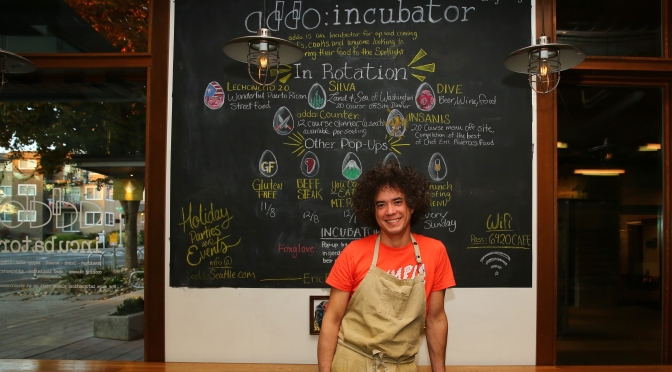
 Every possible step is done online, and for most meals customers must reserve—and often pay—in advance, essentially buying tickets through a service called Tock that’s mostly used only by high-end restaurants. This means no host manning a podium, no reservation or PR teams, no extra staff on a slow night, almost no food waste, and better guest communications. It also allowed them to go from 20 employees to four full-time and three part-time workers.

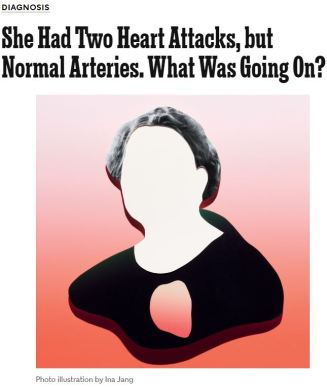 It was all horribly familiar — a rerun of an episode 15 months earlier, when she was with her family in River Vale, N.J. Back then, the burning pressure sent her to the emergency department, and she was told the same thing: She was having a heart attack. Immediately the cardiologist looked for blockages in the coronary arteries, which feed blood and oxygen to the hardworking muscles of her heart. That was the cause of most heart attacks. But they found no blockage.
 Indeed, that was the clue that led the rheumatologist to a likely diagnosis: Behcet’s disease. It’s an unusual inflammatory disorder characterized by joint pains, muscle pains and recurrent ulcers in mucus membranes throughout the body. Almost any part of the body can be involved — the eyes, the nose and lungs, the brain, the blood vessels, even the heart. Behcet’s was named after a Turkish dermatologist who in 1937 described a triad of clinical findings including canker sores (medically known as aphthous ulcers), genital ulcers and an inflammatory condition of the eye.



 A third of the nurses who took the survey are baby boomers and 20% of survey takers said they planned to retire in the next five years. More than a quarter, 27%, said they were unlikely to be working at their current job in a year.



 The idea for this ADU was conceived in the wake of the 2018 Woolsey Fire, as a way to help families reinhabit their properties while rebuilding their primary residence. All “BUD” designs provide beautiful living spaces that can be delivered quickly and enjoyed for generations as a valuable addition to almost any property.
 Boomers Daily