

From the Brain Plasticity Journal (Dec 26, 2019):
 In conclusion, increased CRF (cardiorespiratory fitness) following this six-month intervention was associated with enhanced brain glucose metabolism in the PCC (posterior cingulate cortex), a region linked to AD, and cognition among late-middle-aged individuals at risk for AD. If these findings are supported by a larger-scale study, this would provide strong evidence that adults at risk for AD may enhance brain function and cognition by engaging in aerobic exercise training.
PCC glucose metabolism correlated positively with change in VO2peak (the highest value of VO2 attained upon an incremental or other high-intensity exercise test, designed to bring the sub- ject to the limit of tolerance)…Improvement in executive function correlated with increased VO2peak. Favorable CRF adaptation after 26 weeks of aerobic exercise training was associated with improvements in PCC glucose metabolism and executive function, important markers of AD.
Aerobic exercise has been associated with reduced burden of brain and cognitive changes related to Alzheimer’s disease (AD). However, it is unknown whether exercise training in asymptomatic individuals harboring risk for AD improves outcomes associated with AD. We investigated the effect of 26 weeks of supervised aerobic treadmill exercise training on brain glucose metabolism and cognition among 23 late-middle-aged adults from a cohort enriched with familial and genetic risk of AD.

 Hear the latest from the world of science, brought to you by Benjamin Thompson and Nick Howe. This week, how setting an out-of-office email could help promote a kinder academic culture.



 High medical prices and billing practices may reduce public trust in the medical profession and can result in the avoidance of care. In a survey of 1000 patients, 64% reported that they delayed or neglected seeking medical care in the past year because of concern about high medical bills. The field of quality science in health care has developed measures of medical complications; however, there are no standardized metrics of billing quality.
 A recent study found that only 53 of 101 hospitals were able to provide a price for standard coronary artery bypass graft surgery. Notably, among the hospitals that provided a price, the price ranged from approximately $44 000 and $448 000 and was not associated with quality of care as measured by risk-adjusted outcomes and the Society of Thoracic Surgeons composite quality score.


 David Hockney, (born 9 July 1937) is a British painter, draftsman, printmaker, stage designer, and photographer. As an important contributor to the pop art movement of the 1960s, he is considered one of the most influential British artists of the 20th century.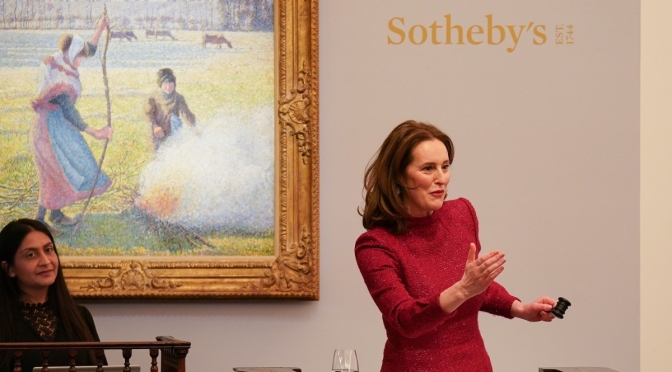
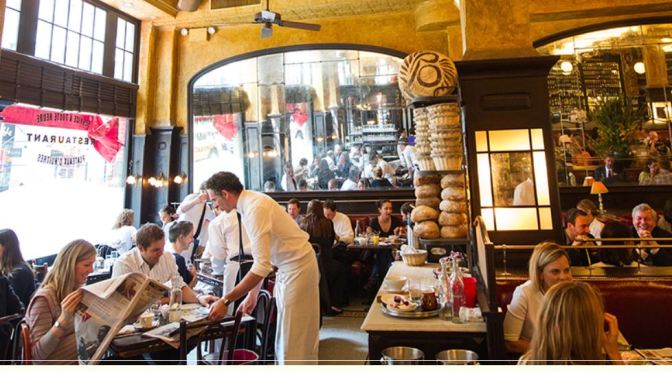

 When it comes to classic French eateries in New York City, few are more iconic than SOHO’s Balthazar. We sent Alex Delany to this famous brasserie to try one of everything on the breakfast menu, and we didn’t send him alone. For this episode, he was joined by French-speaking pastry expert Claire Saffitz to eat way too much food and drink multiple bowls (yes, bowls) of milky coffee.
 Born in Crete as Domenikos Theotokopoulos (1541–1614), El Greco trained in the traditional manner of Byzantine icon painting. He moved to Venice in 1567 to learn a new artistic approach, absorbing developments in Venetian Renaissance painting through the lens of artists such as Titian and Tintoretto. The works El Greco painted during his time in Venice, however, reveal both his embrace of and struggles to fully adapt to this manner of painting.
 Following this transformative period, El Greco went to Rome, probably in an attempt to attract patronage within the papal circle. There his acceptance into the elevated circle of Cardinal Alessandro Farnese brought a close association with the painter Giulio Clovio and the erudite historian and collector Fulvio Orsini. El Greco’s portraits, allegories, and religious paintings between 1570 and 1577 reflect these relationships as well as his complicated engagement with Michelangelo and other artistic luminaries of the 16th century.
 The Cord 810, and later Cord 812, was a luxury automobile produced by the Cord Automobile division of the Auburn Automobile Company in 1936 and 1937. It was the first American-designed and built front wheel drive car with independent front suspension. It followed the 1934 Citroën Traction Avant and the Cord L-29, both of which also had front wheel drive. Both models were also the first to offer hidden headlights.
 The styling of the Cord 810 was the work of designer Gordon M. Buehrig and his team of stylists, which included young Vince Gardner and Alex Tremulis. While the first American front-wheel-drive car with independent front suspension, it had an archaic tube rear axle with semi-elliptic rear springs. Power came from a 4,739 cc (289 cu in) Lycoming V8 of the same 125 hp (93 kW) as the L-29. The semi-automatic four-speed transmission (three plus overdrive) extended in front of the engine, like on a Traction Avant. This allowed Buehrig to dispense with the driveshaft and transmission tunnel; as a result, the new car was so low it required no running boards. It had a 125 in (3,175 mm) wheelbase (shared with several 812 body styles), and in 1936 came in four models: the entry-level sedan at US$1995, the Beverly sedan ($2095), Sportsman ($2145), and Phaeton ($2195). The 1937 812s had the same models, priced $2445, $2545, $2585, and $2645, plus two more, on a 132 in (3,400 mm) wheelbase, the $2960 Custom Beverly and $3060 Custom Berline.
 Boomers Daily