

From Sloan Kettering Institute:
 Infections with the Enterococcus bacterium are a major threat in healthcare settings. They can lead to inflammation of the colon and serious illnesses such as bacteremia and sepsis, as well as other complications.
Now, an international team led by scientists from Memorial Sloan Kettering has shown for the first time that foods containing lactose, a sugar that’s naturally found in milk and dairy products, help Enterococcus thrive in the gut, at least in mice. They also studied changes in the bodies of people having BMTs. The study was published November 29 in Science.
 Their previous research has shown that when harmless strains of microbes are wiped out, often due to treatment with antibiotics, Enterococcus and other harmful types of bacteria can take over due to lack of competition. As part of the new study, which included analysis of microbiota samples from more than 1,300 adults having BMTs, the team confirmed the link between Enterococcus and GVHD.
To read more: https://www.mskcc.org/blog/milking-it-study-mice-suggests-lactose-diet-feeds-dangerous-gut-bacteria?_subsite=research-ski

 Baby boomers remain the base of traditional PayTV. Even with the quickening decline of bundled TV services,
  The traditional video marketplace is no more. Driven by a combination of technologies including high-speed internet access, billions of mobile devices, and falling prices for high-resolution displays, television as we have known it for decades is undergoing a radical reinvention, one that will reshape the media ecosystem. Just in the last few months, game-changing streaming services have been announced or launched from industry giants including Disney and NBCUniversal, spurred in part by billion-dollar investments from newer entrants such as Netflix, Google, and Apple.
 In 1961 a new 2.6-litre (2,553 cc (155.8 cu in)) straight-six ‘Ruddspeed’ option was available, adapted by Ken Rudd from the unit used in the Ford Zephyr. It used three Weber or SU carburettors and either a ‘Mays’ or an iron cast head. This setup boosted the car’s performance further, with some versions tuned to 170 bhp (127 kW), providing a top speed of 130 mph (209 km/h) and 0–60 mph (0–100 km/h) in 8.1 seconds. However, it was not long before Carroll Shelby drew AC’s attention to the Cobra, so only 37 of the 2.6 models were made. These Ford engined models had a smaller grille which was carried over to the Cobra.

 The XT12 will launch in April 2020 and include sleeping for 4 adults, a permanent queen bed, a full fold-down dinette, Maxxair fan, double pane windows with built in screens and a wet bath with shower and cassette toilet in the fully insulated cabin. The XT12 will come equipped with a stainless steel sink and faucet, 3-burner stove, 75L dual zone fridge, forced air furnace, on-demand hot water, 220 watts of solar and a 250 amp hour battery and a 23Zero Peregrine 270 awning that will cover both the rear door and kitchen.




 Wall Street Journal corporate bureau chief Marcelo Prince explains the competition between retailers Amazon, Target and Walmart to provide one-day shipping to customers during the holiday season.
 As a consultant, I had profoundly failed to appreciate the experience of fatigue and apathy among patients. More than excessive tiredness, the fatigue was overwhelming, turning simple activities into insurmountable, exhausting challenges. It was frustrating and I fell into the trap of overexertion when I did have energy, thus exhausting myself and sabotaging the day’s recovery plan. Had staff not been so adept at encouraging me when I lacked energy and holding me back when I tried to overdo things, I would have squandered much valuable rehabilitation time.


 A key writer of the late 19th century, Joris-Karl Huysmans (1848-1907) was an art critic who is still little known or little understood by the general public. However, his contribution to the artistic press and the aesthetic debate was as decisive as the impact of his novel
 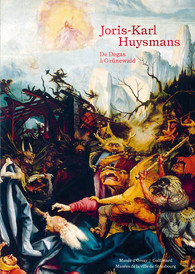 More passionate about Hals and Rembrandt until his discovery of Degas in 1876-1879, Huysmans admitted that this was a defining moment. And yet, his art criticism immediately accepted the possibility of a double modernity. The modernity of the painters of modern life and that of the explorers of dreams were not mutually exclusive. Here, Manet coexists with Rops and Redon. The desire Huysmans showed very early on to escape from the logic of church doctrine no doubt blurred the perception of his aesthetic choices.
 Boomers Daily