

Excerpts from a New York Times Style Magazine online article (February 10, 2020)

“People want newness, and they want it from a new person. I understand that I’m not the 25-year-old who was given this incredible job at Perry Ellis, or who created the grunge collection, or who was the bad boy of the 1990s,” he said. “I am a 56-year-old man who still has the privilege of doing a collection.” But his voice was calm as he said this, full of acceptance and experience.
“THE DRIVING FORCE in my life is fear,” Marc Jacobs said.
IT WAS A bright December afternoon, a week or so before Christmas, when Jacobs and I met for the last time. I waited in the reception area of his atelier next to a sculpture of Neville, Jacobs’s bull terrier, whom I had recently begun following on Instagram (he has over 200,000 followers). I thought I could finally understand why Jacobs commands such devotion from those around him. He exudes a precariousness that is deeply affecting to anyone even dimly aware of the mysterious connection between creativity and tragedy. If he attracts protectors, it is because one cannot speak at any length to him without feeling that, as Oscar Wilde wrote about his titular character in “The Picture of Dorian Gray,” “a note of doom runs like a purple thread” through “the gold cloth” of his talent.
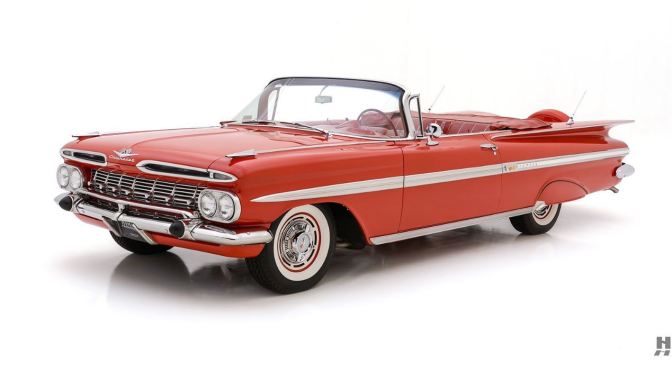
 The Chevrolet Impala is a full-size car built by Chevrolet for model years 1958 to 1985, 1994 to 1996, and 2000 onward. The Impala is Chevrolet’s popular flagship passenger car and is generally among the better selling American made automobiles in the United States.
 The Impala became a separate series, adding a four-door hardtop and four-door sedan, to the two-door Sport Coupe and convertible. Sport Coupes featured a shortened roof line and wrap-over back window. The standard engine was an I6, while the base V8 was the carryover 283 cu in (4.6 L), at 185 hp (138 kW). Optional were a 283 cu in with 290 hp (220 kW) and 348 cu in (5.7 L) V8 up to 335 hp (250 kW). Standard were front and rear armrests, an electric clock, dual sliding sun visors, and crank-operated front vent windows. A contoured hooded instrument panel held deep-set gauges. A six-way power seat was a new option, as was “Speedminder”, for the driver to set a needle at a specific speed and a buzzer would sound if the pre-set was exceeded.
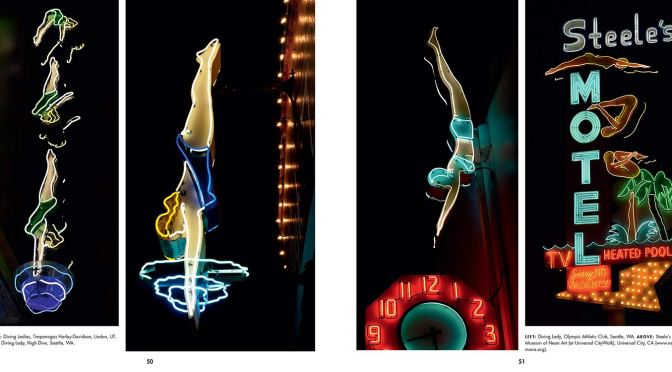
 The vivid photographs are arranged according to the signs’ imagery, with sections such as Spirit of the West, On the Road, Now That’s Entertainment, and Ladies, Diving Girls & Mermaids. Sixteen of the most iconic landmark signs include brief histories on how that unique sign came to be. A resource section includes a photography index by location and a Neon Museums Visitor’s Guide.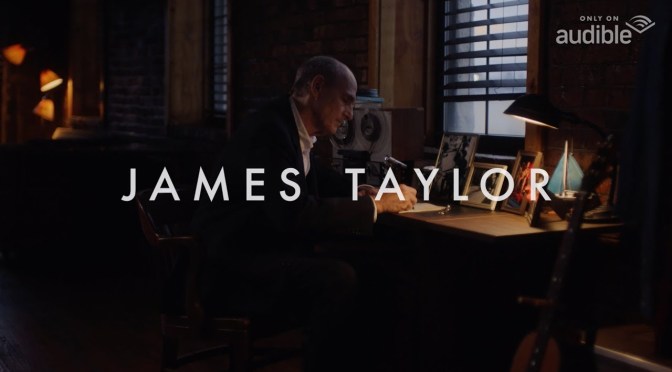
 James Taylor has been a household name for a long time now. Taylor was just 20-years-old when he released his self-titled debut in 1968; in the half century since then, he has sold over 100 million albums and cemented his status as one of the most successful American singer-songwriters.

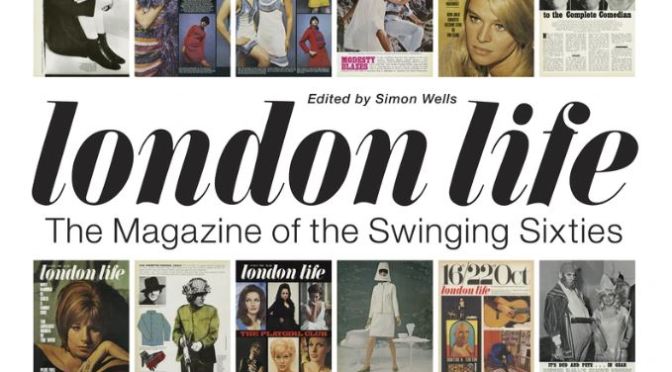
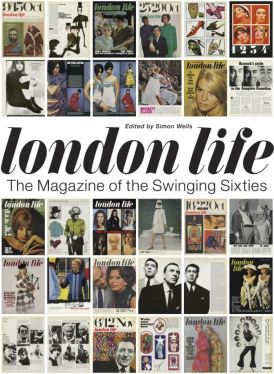 With imagery from the likes of David Bailey, Duffy and Terence Donovan, designs from Peter Blake, David Hockney, Gerald Scarfe and fledgling artist Ian Dury plus words and opinions from those riding high on the city`s cutting-edge, London Life remains the coolest document from the capital’s most exciting period.

 Monocle 24’s “The Menu” talks to Lisbon’s rising culinary talent, João Sá, owner and chef of SÁLA.
 Boomers Daily