Category Archives: Books

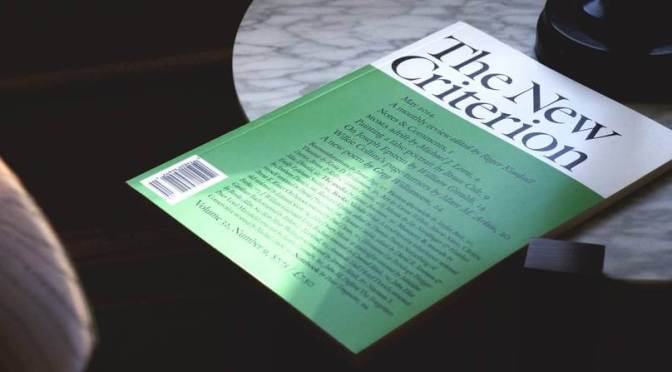
The New Criterion ———- JUNE 2026 Preview

THE NEW CRITERION: The latest issue features ‘Political philosophy? by Harvey Mansfield; A dream of reason by Bartle Bull; The elephant in the room by Anthony Daniels; Kierkegaard & the age by Jacob Howland; New poems by Morri Creech, Kaily Dorfman, Matthew Stewart & John Poch….

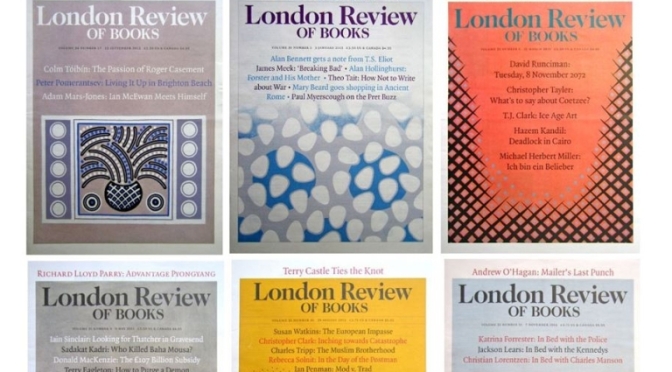
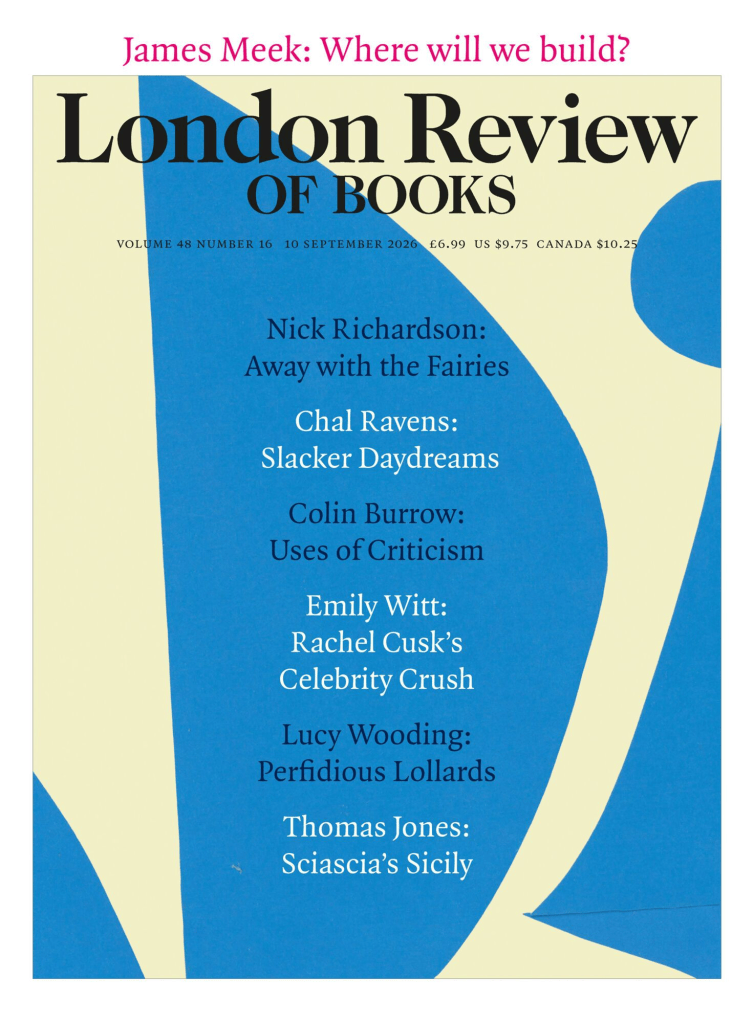
LONDON REVIEW OF BOOKS – MAY 21, 2026 PREVIEW

LONDON REVIEW OF BOOKS: The latest issue features

Lead Essays & Politics

  • “America’s Afghanistan Delusion” by Tom Stevenson: Stevenson examines the legacy of the War on Terror, arguing that the 2021 withdrawal from Kabul was viewed by the Western establishment as a “mistake” or “cautionary tale” rather than the “crime” he suggests it was. He traces the expansion of American power through “black sites” and military advisers across the globe.
  • “Short Cuts: Labour’s Failure” by James Butler: Butler analyzes the results of the English local elections (held on May 7). He criticizes Keir Starmer’s leadership style as “all injunction and no argument” and explores why national revulsion toward the Labour Party overshadowed local government issues.
  • “Where’s All the Cash?” by John Lanchester: A characteristically lucid investigation into modern economics, focusing on the circulation of physical currency and the shifting nature of wealth in a digital-first economy.

Literature & History

  • “On Marlen Haushofer” by Becca Rothfeld: A deep dive into the work of the Austrian writer, specifically her 1963 masterpiece The Wall. Rothfeld explores Haushofer’s recurring themes of entrapment and isolation, noting the paradoxical “joy” found in her most barricaded characters.
  • “Baltic Snake Cults” by Diarmaid MacCulloch: The eminent historian reviews the long survival of paganism and “serpent worship” in the Baltic regions, challenging the standard narrative of a monolithic Christian Europe during the Middle Ages.
  • “Should We Punish?” by Thomas Nagel: The philosopher engages with the ethics of the penal system, weighing the traditional justifications for punishment against contemporary moral and legal theories.

Other Features

“The Clearance of Aoineadh Mòr, 1824” by Tarn MacArthur: A historical account of the Highland Clearances, specifically focusing on the displacement of communities in Scotland.

At the Movies: Michael Wood provides his regular column of film criticism, likely focusing on current European or art-house releases.

Poetry & Correspondence: The issue also contains poems and a robust letters section, which in this period has been heavily occupied by debates over the Arctic (following Laleh Khalili’s piece in the previous issue) and the fallout of the UK local elections.

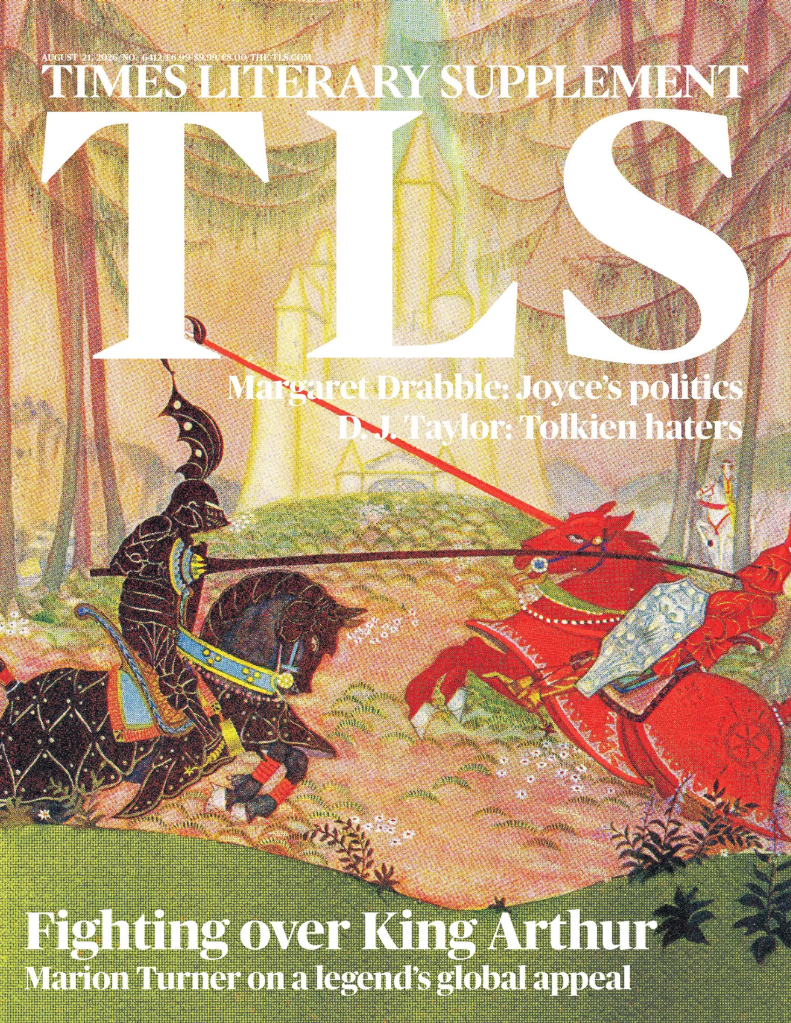
TIMES LITERARY SUPPLEMENT – MAY 15, 2026 PREVIEW

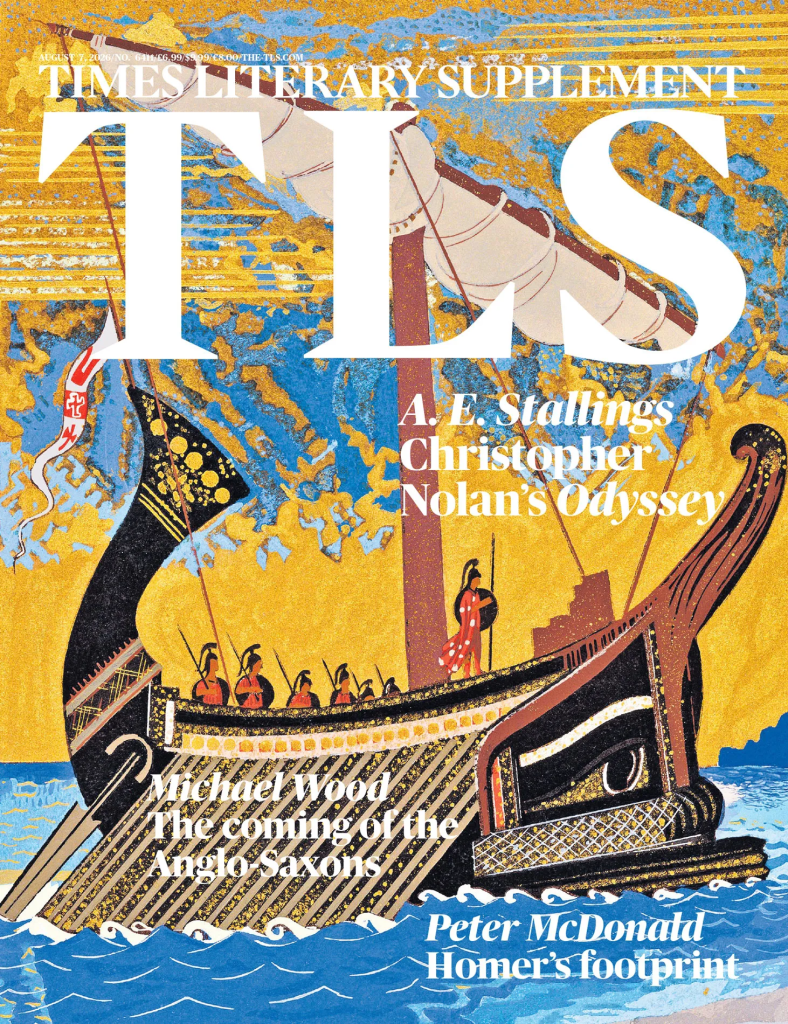
TIMES LITERARY SUPPLEMENT: The latest issue features ‘Among Putin’s Russians’…

Anti-communist or antisemitic?

The ideology behind Hitler’s assault on the Soviet Union By Richard J. Evans

‘Send on anything human’

Previously unseen letters between Ezra Pound and Gladys Hynes By Ed Vulliamy

You say lee-do …

The rise, fall and survival of open-air swimming pools By David Horspool

Main-character syndrome

Video games and political violence By Regina Rini

THE NEW YORK REVIEW OF BOOKS – MAY 28, 2026

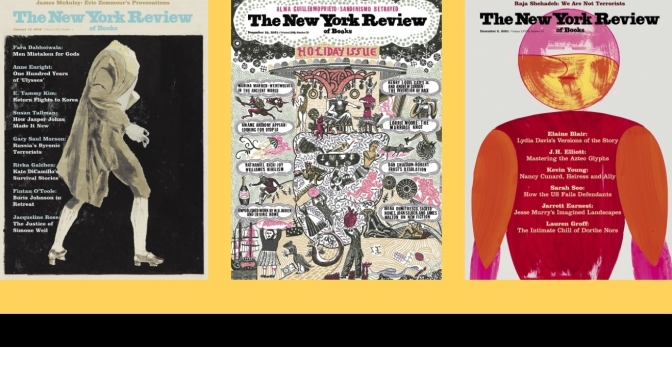
THE NEW YORK REVIEW OF BOOKS: The latest issue features Ben Tarnoff on Silicon Valley’s paterfamilias, Christopher de Bellaigue on Iran’s political future, Frances Wilson on Liza (with a “Z”), Christopher Tayler on Ben Lerner, Lynn Hunt on Marat’s afterlife, Charlie Lee on John Gregory Dunne’s descent into Vegas, Adam Hochschild on the dream of the Bundists, Nina Siegal on the real-life Hoosier Indiana Jones, Louisa Lim on contemporary Hong Kong literature, poems by Dan Chiasson and Emily Berry, and much more.

Whither the Nerd-Bully?

Bill Gates was the monopolistic father figure who Silicon Valley’s young founders rebelled against—and, in so rebelling, became.

Billionaire, Nerd, Savior, King: Bill Gates and His Quest to Shape Our World by Anupreeta Das

Source Code: My Beginnings by Bill Gates

Iran’s New Winter

The US-Israeli war against Iran, far from encouraging a popular uprising, has strengthened the regime’s grip and set back the cause of Iranian freedom indefinitely.

Don’t Call It Entertainment

In Everthing Is Now, J. Hoberman chronicles a radical avant-garde’s attempts to jostle New York City out of its postwar complacency and moral retrenchment.

Everything Is Now: The 1960s New York Avant-Garde—Primal Happenings, Underground Movies, Radical Pop by J. Hoberman

The Sage of Washington

Walter Lippmann was the most influential political commentator of his generation, but behind his preternatural confidence was a far more complicated and unsettled character.

Walter Lippmann: An Intellectual Biography by Tom Arnold-Forster

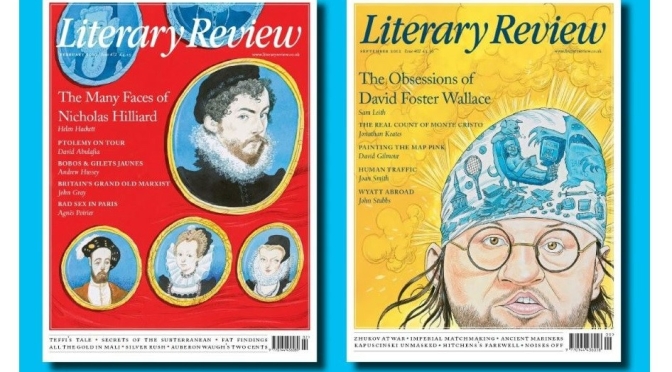
LITERARY REVIEW MAGAZINE – MAY 2026 PREVIEW

LITERARY REVIEW : The latest issue features Ritchie Robertson on Weimar * Charles Darwent on Louise Bourgeois * John Guy on the Tudors * Kirsten Tambling on dogs in art * Piers Brendon on Churchill and the crown * Saul David on AI warfare * Simon Nixon on private equity predators * Nigel Andrew on outsider animals * Zoe Guttenplan on Beatrice Warde * Maren Meinhardt on women and music * Lucy Lethbridge on swimming * Diane Purkiss on being published * Anthony Pagden on the West * Michael Reid on Lula * Anthony Teasdale on Tory leaders * Anna Reid on Vera Gedroits * Wendy Holden on Elizabeth II * Harriet Rix on trees * Emma Smith on Shakespeare’s identity * Jane Yager on Herta Müller * Sheena Joughin on Siri Hustvedt *  Adam Kucharski on evidence * Keith Miller on Douglas Stuart * Natalie Perman on Jem Calder *  and much, much more…

Weimar Germany: Death of a Democracy By Victor Sebestyen

Weimar: Life on the Edge of Catastrophe By Katja Hoyer

The small town of Weimar is overladen with historical associations. Goethe spent more than fifty years there as an employee and friend of Duke (later Grand Duke) Karl August. After the last grand duke abdicated in November 1918, the National Assembly met in Weimar to draw up a new republican constitution for Germany. Other symbolically charged venues considered were Nuremberg (home of Dürer) and Bayreuth (because of Wagner), but it was Weimar that gave its name to the period of German history from … 


Knife-Woman: The Life of Louise Bourgeois By Marie-Laure Bernadac (Translated from French by Lauren Elkin)

Having been named for her father, Louis, a mere dealer in antique tapestries, seemed insufficiently romantic to Louise Bourgeois, who was born on Christmas Day in 1911. She preferred the idea that her namesake was Louise Michel, ‘the red virgin of Montmartre’, an anarchist heroine of the Paris Commune. It wasn’t true, of course, but … 

This Little World: A New History of Tudor and Stuart England By Nandini Das

A phrase like ‘fortress England’ seems to echo down the centuries, and turns up again in This Little World, Nandini Das’s new study of identity and belonging, cross-border migration, assimilation and estrangement in the period between 1500 and the restoration of Charles II. Das seeks to unmask the period’s most fundamental assumptions about English … read more

TIMES LITERARY SUPPLEMENT – MAY 1, 2026 PREVIEW

TIMES LITERARY SUPPLEMENT: The latest issue features ‘A View of Her Own’….

Out of nothing

Tracey Emin’s self-fashioning By Sophie Oliver

Amateurs in name only

Women landscape painters reconsidered By Jenny Uglow

Bomb culture

Mankind has escaped nuclear war, for now By P. D. Smith

So close to the United States

Mexico’s challenge to received historical ideas By Benjamin T. Smith

Greedy for light        

The bittersweet contentment of old age By Rory Waterman

LONDON REVIEW OF BOOKS – MAY 7, 2026 PREVIEW

LONDON REVIEW OF BOOKS: The latest issue features ‘Who Owns The Arctic?’ by Laleh Khalili; De Kooning in Cuba by T.J. Clark; Politics on Speed by William Davies…

Who owns the Arctic?

Laleh Khalili

From the 16th century onwards, as European powers feverishly colonised the world, the possibility of a Northern Sea Route connecting the Atlantic to the Pacific, from Scandinavia to the Bering Strait, tantalised the Dutch and the British as an alternative to the southern routes to Asia and the Americas, which were dominated by Portugal and Spain. But the route only became a reality in the Soviet era, after investments in scientific, economic, industrial and military infrastructure in Siberia. 

Politics on Speed

William Davies

This is what distinguishes hyperpolitics from the mass democracy of the mid-20th century. Symbolic political gestures are now commonplace, but paid membership of organisations and parties has plummeted. The left has failed to find a replacement for trade unions as a basis for collective action in civil society. Political movements are easy to join, and just as easy to leave. 

De Kooning in Cuba

T.J. Clark

De Kooning’s Suburb in Havana is a counter-revolutionary painting. Well, of course. It is counter-revolutionary because it is counter everything, versus everything, lost in suburbia. It wants to show us how hard it had to work to get precisely nowhere. Why nowhere was where it wished to get to is a question it leaves to the viewer. 

Orbán’s Fall

Jan-Werner Müller

Can there be poetic justice in politics? Perhaps once in a lifetime. In 1989, a young Viktor Orbán bravely told the crowds in Budapest’s Heroes’ Square that it was time for the Russians to go home, just as protesters had demanded in 1956; almost four decades later, he was heckled on the campaign trail with the same words.

THE NEW YORK REVIEW OF BOOKS – MAY 14, 2026

THE NEW YORK REVIEW OF BOOKS: The latest issue features Jed Perl on the Whitney Biennial, Fintan O’Toole on the president’s precarious sanity, Nicole Rudick on June Leaf’s unique vision, Clare Bucknell on know-it-alls, Julian Bell on Joseph Wright of Derby, Dennis Lim on low-resolution cinema, Elaine Blair on the Guerrilla Girls, Mark O’Connell on a death in London, Martin Filler on David Adjaye’s demons, Nick Laird on the complete Seamus Heaney, Rosa Lyster on the evaporating salt lakes, Susan Tallman on Manet and Morisot, poems by Paul Muldoon and Fiona Sze-Lorrain, and much more.

‘The Right Amount of Crazy’

In Trump’s strategy of feigning madness to get what he wants, there is no longer any border between pretense and actual irrationality. By Fintan O’Toole

Charlatans & Bores

The profile of the pedant has changed surprisingly across time periods and cultures, but what’s constant is that nobody wants to be called one.

On Pedantry: A Cultural History of the Know-It-All by Arnoud S.Q. Visser

‘The Music of What Happens’

Seamus Heaney’s complete poems, following on editions of his letters, prose, and translations, confirm the extent of his achievement.

The Poems of Seamus Heaney edited by Rosie Lavan and Bernard O’Donoghue, with Matthew Hollis

Manet and Morisot: Game On

An important exhibition showcases a painterly repartee that altered the trajectory of the two artists’ work and, by extension, modern art itself.

Manet and Morisot – an exhibition at the Legion of Honor, San Francisco, October 11, 2025–March 1, 2026, and the Cleveland Museum of Art, March 29–July 5, 2026

The New Criterion ———- MAY 2026 Preview

THE NEW CRITERION: The latest issue features ‘ Western Decline’ by Victor Davis Hanson; Stoppard & Stopparianism by Jonathan Gaisman; The hector’s veto by Simon Heffer; The metaphysics of murder by Theodore Dalrypmple and New poems by Alfred Corn, Michael Homolka and Sunil Iyengar…

LONDON REVIEW OF BOOKS – APRIL 23, 2026 PREVIEW

LONDON REVIEW OF BOOKS: The latest issue features

At the National Gallery: Holbein and Henry James

The Language Puzzle: How We Talked Our Way out of the Stone Age by Steven Mithen

Surf’s Up: Brian Wilson and the Beach Boys by Peter Doggett

Kingmaker: Pamela Churchill Harriman’s Astonishing Life of Seduction, Intrigue and Power by Sonia Purnell

Indira Gandhi and the Years that Transformed India by Srinath Raghavan