

 The motifs of Thöny’s art are informed by the pervasive unease of the interwar years, whose apprehensions he portrayed in the grotesque and nightmarishly somber drawings he created around 1920 for his unpublished Buch der Träume (Book of Dreams). Other works, however, render serene and idyllic landscapes and urban views as well as scenes from social life.
Wilhelm Thöny (1888 Graz, AT—1949 New York, US) was a restless cosmopolitan and indefatigable networker whose peripatetic career took him far beyond Austria’s borders. A cofounder of the Secession in his native Graz, he made friends along the way—he spent time in Munich and Paris, on the Côte d’Azur and in New York, among other places—but zealously guarded his creative independence, building an oeuvre that did not align with any of the major tendencies of the period.
The Museum der Moderne Salzburg’s first exhibition devoted to Thöny’s oeuvre since 2010 presents around two hundred works from the museum’s own collection. One highlight in the show are the (letter) illustrations in the artist’s Scrap Book from the 1930s. Observations from everyday life captured with lighthearted humor are interspersed between reflections on the increasingly oppressive political situation. It is the first time that this body of work, which is of outstanding value both for its artistic quality and as a document of its time, is shown in its entirety in Salzburg.






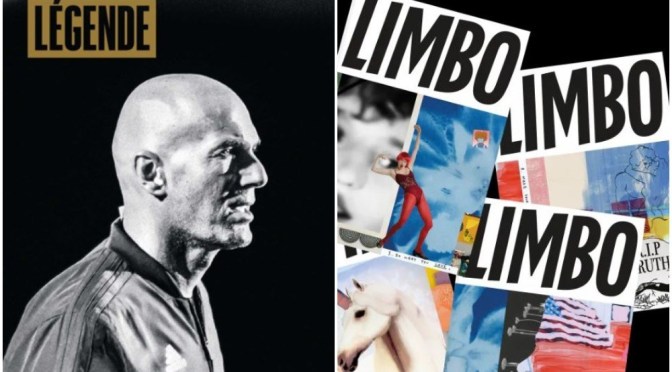
 Monocle 24 – The Stack looks at first issues of European magazine titles on the newsstands: ‘Limbo’, ‘Légende’, ‘command+i’ and ‘The White Room’.

 ‘Michael Jordan’s tremendous impact on basketball and sneakers is universally acknowledged, and it can be easy to think there aren’t any new stories to add to the legend,’ says John McPheters, co-founder and CEO of Stadium Goods. ‘But as we’ve seen with
  Boomers Daily