
New Art History Books: “Finding Dora Maar – An Artist, An Address Book, A Life” – Brigitte Benkemoun

Finding Doram MaarIn search of a replacement for his lost Hermès agenda, Brigitte Benkemoun’s husband buys a vintage diary on eBay. When it arrives, she opens it and finds inside private notes dating back to 1951—twenty pages of phone numbers and addresses for Balthus, Brassaï, André Breton, Jean Cocteau, Paul Éluard, Leonor Fini, Jacqueline Lamba, and other artistic luminaries of the European avant-garde.

After realizing that the address book belonged to Dora Maar—Picasso’s famous “Weeping Woman” and a brilliant artist in her own right—Benkemoun embarks on a two-year voyage of discovery to learn more about this provocative, passionate, and enigmatic woman, and the role that each of these figures played in her life.

Longlisted for the prestigious literary award Prix Renaudot, Finding Dora Maar is a fascinating and breathtaking portrait of the artist.

Brigitte Benkemoun is a journalist and writer. She is the author of La petite fille sur la photo (2012) and Albert le Magnifique (2016). Jody Gladding is a poet and translator. She has translated some thirty books from French, including, most recently, Roland Barthes’s Album: Unpublished Correspondence and Texts (2018), Michel Pastoureau’s Yellow: The History of a Color (2019), and Jean Giono’s Occupation Journal (2020).
Read more or purchase

Podcasts: “Developing Covid-19 Vaccines At Pandemic Speed” (NEJM)

NEJM InterviewsInterview with Dr. Nicole Lurie on rapid vaccine development, including new tools to facilitate vaccine testing and manufacturing and persistent challenges.


The need to rapidly develop a vaccine against SARS-CoV-2 comes at a time of explosion in basic scientific understanding, including in areas such as genomics and structural biology, that is supporting a new era in vaccine development. Over the past decade, the scientific community and the vaccine industry have been asked to respond urgently to epidemics of H1N1 influenza, Ebola, Zika, and now SARS-CoV-2. An H1N1 influenza vaccine was developed relatively rapidly, largely because influenza-vaccine technology was well developed and key regulators had previously decided that vaccines made using egg- and cell-based platforms could be licensed under the rules used for a strain change. Although a monovalent H1N1 vaccine was not available before the pandemic peaked in the Northern Hemisphere, it was available soon afterward as a stand-alone vaccine and was ultimately incorporated into commercially available seasonal influenza vaccines.

Nicole Lurie is a strategic advisor to the CEO of the Coalition for Epidemic Preparedness Innovations. Stephen Morrissey, the interviewer, is the Executive Managing Editor of the Journal.

Read more

Top Motorhomes: “2021 Wonder Rear Lounge” By Leisure Travel Vans

Introducing the all-new 2021 Wonder Rear Lounge, built on the 2020 Ford Transit Chassis featuring 2 living spaces, modern design, advanced technology, a spacious three-piece dry bathroom, and expansive galley. https://leisurevans.com/wonder-rl/

Inside the compact Wonder, an innovative dual-zone floorplan features a spacious rear living area that emulates the comforts of home while being surrounded by nature.

Top New Science Podcasts: The Struggle To Reopen Labs After Covid-19 And Arsenic In Drinking Water

science-magazine-podcastsOnline News Editor David Grimm talks with producer Joel Goldberg about the unique challenges of reopening labs amid the coronavirus pandemic. Though the chance to resume research may instill a sense of hope, new policies around physical distancing and access to facilities threaten to derail studies—and even careers. 

Despite all the uncertainty, the crisis could result in new approaches that ultimately benefit the scientific community and the world. Also this week, Joel Podgorski, a senior scientist in the Water Resources and Drinking Water Department at the Swiss Federal Institute of Aquatic Science and Technology, joins host Sarah Crespi to discuss the global threat of arsenic in drinking water. Arsenic is basically present in all rocks in minute amounts. Under the right conditions it can leach into groundwater and poison drinking water. Without a noticeable taste or smell, arsenic contamination can go undetected for years. The paper, published in Science, estimates that more than 100 million people are at risk of drinking arsenic-contaminated water and provides a guide for the most important places to test.

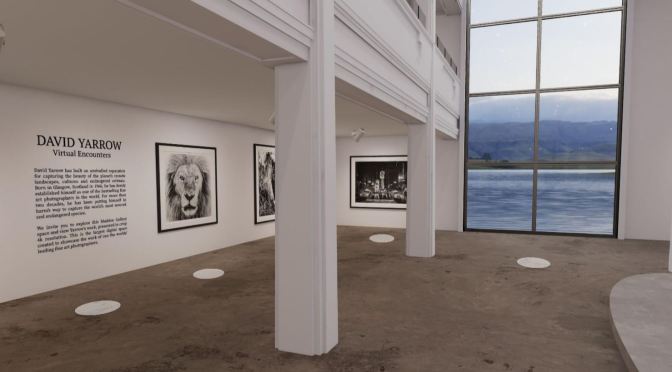
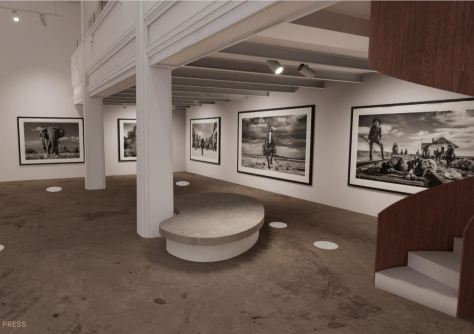
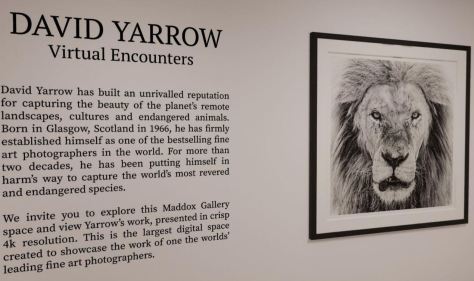
Photography Exhibitions: “Virtual Encounters – The World Of David Yarrow”

David Yarrow Virtual Encounters

CLICK HERE TO VIEW EXHIBITION

David Yarrow Virtual Encounters

David Yarrow is a British fine-art photographer, conservationist and author. He has travelled to isolated locations to capture images of wildlife, indigenous communities and landscapes. He currently lives in London.

Business: “Understanding The Economic Impact Of Covid-19” (Harvard)


Predicting the path ahead has become nearly impossible, but we can speculate about the size and scale of the economic shock. Economic contagion is now spreading as fast as Covid-19 itself. Social distancing, intended to physically disrupt the spread, has severed the flow of goods and people, stalled economies, and is in the process of delivering a global recession.

Predicting the path ahead has become nearly impossible, as multiple dimensions of the crisis are unprecedented and unknowable. Pressing questions include the path of the shock and recovery, whether economies will be able to return to their pre-shock output levels and growth rates, and whether there will be any structural legacy from the coronavirus crisis.

This Explainer explores several scenarios to model the size and scale of the economic shock and the path ahead.

Based on the HBR article by Philipp Carlsson-Szlezak, Martin Reeves and Paul Swartz

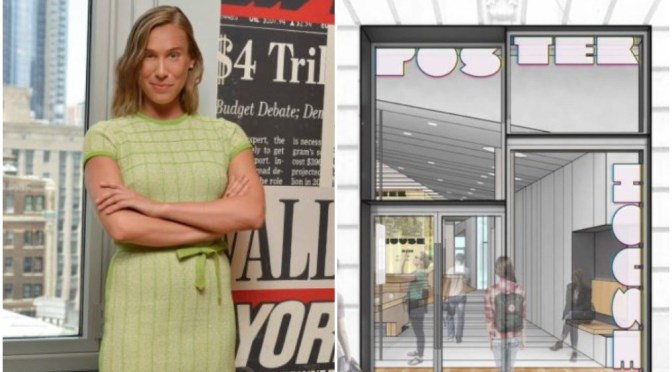
Podcast Interviews: Poster House Museum NYC Director Julia Knight

Monocle on DesignWhen New York City’s Poster House museum had to close its doors in early March, director Julia Knight wondered how the institution could support the city.
Today her inspiring solution can be seen across all five boroughs.

Poster House is the first museum in the United States dedicated exclusively to posters.

Through exhibitions, events, and publications, Poster House presents a global view of posters from their earliest appearance in the late 1800s to their present-day use. Poster House takes its mission from the medium, aiming to engage and educate all audiences as we investigate this large-format graphic design and its public impact.

Posters explore:

  • mass communication and persuasion
  • the intersection of art and commerce
  • control of the public domain

Website