From Wikipedia:
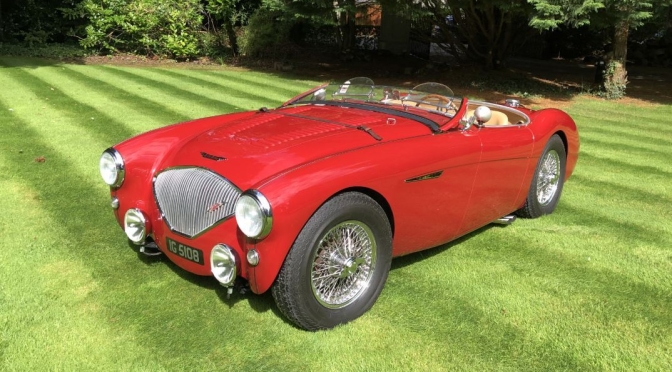
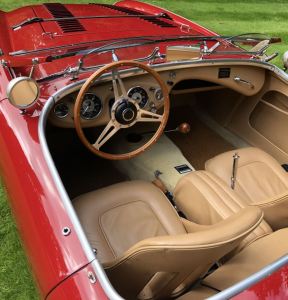 The Austin-Healey 100 is a sports car that was built by Austin-Healey from 1953 until 1956.
Based on Austin A90 Atlantic mechanicals, it was developed by Donald Healey to be produced in-house by his small Healey car company in Warwick.
Healey built a single Healey Hundred for the 1952 London Motor Show, and the design impressed Leonard Lord, managing director of Austin, who was looking for a replacement for the unsuccessful A90. Body styling was by Gerry Coker, the chassis was designed by Barry Bilbie with longitudinal members and cross bracing producing a comparatively stiff structure upon which to mount the body, innovatively welding the front bulkhead to the frame for additional strength. In order to keep the overall vehicle height low the rear axle was underslung, the chassis frame passing under the rear axle assembly.
 Lord struck a deal with Healey to build it in quantity; bodies made by Jensen Motors were given Austin mechanical components at Austin’s Longbridge factory. The car was renamed the Austin-Healey 100.
The “100” was named by Healey for the car’s ability to reach 100 mph (160 km/h); its successor, the better known Austin-Healey 3000, was named for the 3000 cc displacement of its engine.
Apart from the first twenty cars, production Austin-Healey 100s were finished at Austin’s Longbridge plant alongside the A90 and based on fully trimmed and painted body/chassis units produced by Jensen in West Bromwich—in an arrangement the two companies previously had explored with the Austin A40 Sports. 14,634 Austin-Healey 100s were produced.
The 100 was the first of three models later called the Big Healeys to distinguish them from the much smaller Austin-Healey Sprite. The Big Healeys are often referred to by their three-character model designators rather than by their models, as the model names do not reflect the mechanical differences and similarities well.
View more photos at Classic Driver



 David Remnick has appeared as the guest of Terry Gross on “Fresh Air” a number of times over the years, talking about Russia, Muhammad Ali, and other subjects. Hosting “Fresh Air” for nearly forty-five years, Gross is a defining voice of NPR, and is perhaps the most celebrated interviewer of our time.

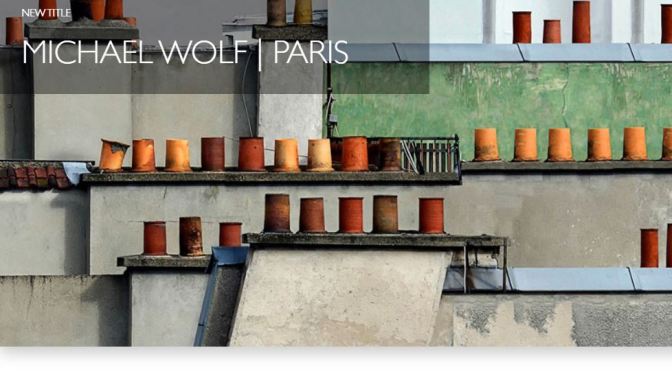
 Michael Wolf achieved fame when he won the 2005 World Press Photo with his China, Factory of the World project, and the 2010 World Press Photo with his Tokyo Compression. The present book offers his personal take on the French capital. Singling out typical architectural features of the Parisian landscape he renders the seemingly banal immortal, as only he knows how.
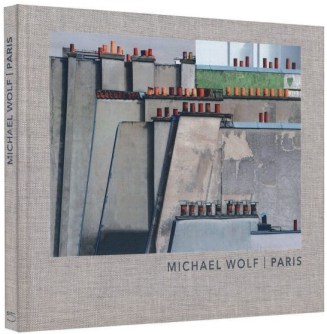 This dreamlike journey into a Paris viewed from the rooftops is underlined in the second part of the book. The shadows of trees decorate the façades of various buildings, creating a visual poetry and prompting an intimate dialogue where, in the absence of all human presence, nature and architecture blend into one another.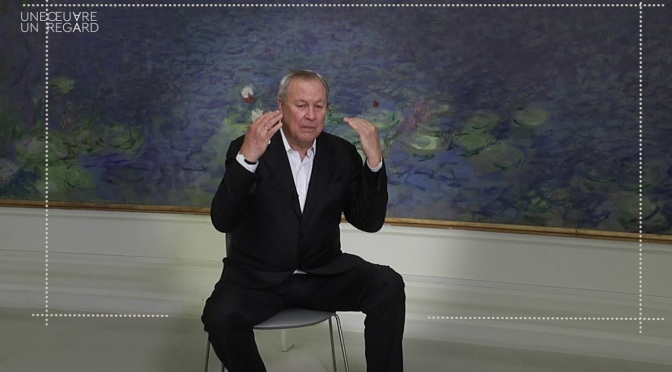
 Hailed as “a towering figure in the world of experimental theater” by the New York Times Waco, Texas-born Robert Wilson has created singular works in the realms of opera, performance, video art, glass, architecture, and furniture design since 1963. Prolific yet exacting in his approach to staging, light, and direction, Wilson has been honored with numerous awards for excellence including a Pulitzer Prize nomination, the Golden Lion of the Venice Biennale, and an Olivier Award. He is also the founding director of The Watermill Center, a laboratory for the arts and humanities in Water Mill, New York.
 Boomers Daily