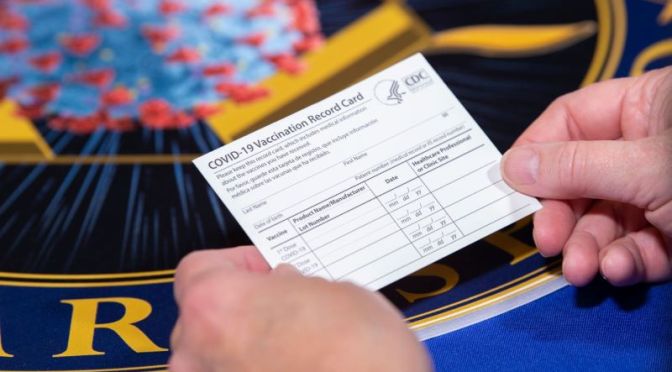
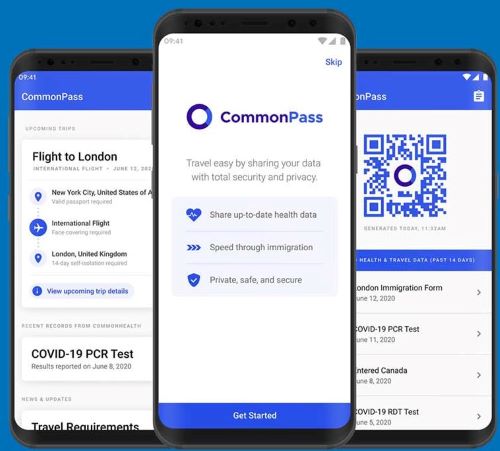
In the coming weeks, major airlines including United, JetBlue and Lufthansa plan to introduce a health passport app, called CommonPass, that aims to verify passengers’ virus test results — and soon, vaccinations. The app will then issue confirmation codes enabling passengers to board certain international flights. It is just the start of a push for digital Covid-19 credentials that could soon be embraced by employers, schools, summer camps and entertainment venues.
The advent of electronic vaccination credentials could have a profound effect on efforts to control the coronavirus and restore the economy. They could prompt more employers and college campuses to reopen. They may also give some consumers peace of mind, developers say, by creating an easy way for movie theaters, cruise ships and sports arenas to admit only those with documented coronavirus vaccinations.
The CommonPass, IBM and Clear apps, for instance, allow users to download their virus test results — and soon their vaccinations — to their smartphones. The apps can then check the medical data and generate unique confirmation codes that users can show at airports or other locations to confirm their health status.
But the health passes do not share specific details — like where and when a user was tested — with airlines or employers, developers said. The QR codes, they said, act merely as a kind of green light, clearing users for entry.
New York City’s Top of the Rock Observation Deck at Night (4K Silent Tour).
“The Top of the Rock Observation Deck at Rockefeller Center offers breathtaking 360-degree views of New York City. Explore three levels of indoor and outdoor viewing areas as you admire unforgettable sights of Central Park, Midtown, and iconic landmarks and skyscrapers. Experience the best views of Manhattan—70 floors above the city.”
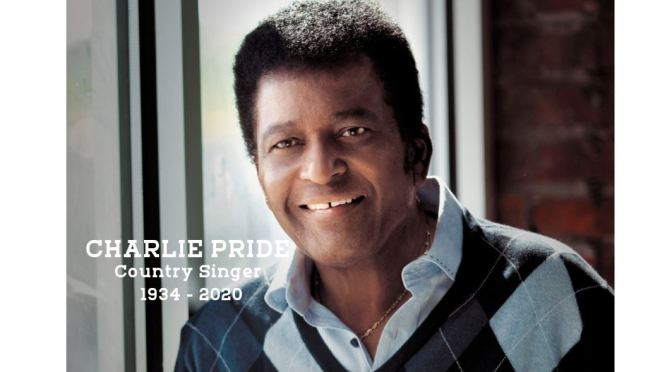
We remember Charley Pride, one of the first African Americans to become popular as a country artist. Pride died yesterday at the age of 86, of complications from COVID-19.
Charley Frank Pride (March 18, 1934 – December 12, 2020) was an American singer, guitarist, and professional baseball player. His greatest musical success came in the early to mid-1970s, when he was the best-selling performer for RCA Records since Elvis Presley.[1] During the peak years of his recording career (1966–87), he had 52 top 10 hits on the BillboardHot Country Songs chart, 30 of which made it to number one. He won the Entertainer of the Year award at the Country Music Association Awards in 1971.
While he was active in baseball, Pride had been encouraged to join the music business by country stars such as Red Sovine and Red Foley, and was working towards this career. In 1958, in Memphis, Pride visited Sun Studios and recorded some songs.[14]
He performed his music solo at clubs and with a four-piece combo called the Night Hawks during the time he lived in Montana.[11] His break came when Chet Atkins at RCA Victor heard a demonstration tape and got Pride a contract. In 1966, he released his first RCA Victor single, “The Snakes Crawl at Night”.[11] Nashville manager and agent Jack D. Johnson signed Pride. Atkins was the longtime producer at RCA Victor who had made stars out of country singers such as Jim Reeves, Skeeter Davis, and others. Pride was signed to RCA Victor in 1965. “The Snakes Crawl at Night” did not chart. On the records of this song submitted to radio stations for airplay, the singer was listed as “Country Charley Pride”. Pride disputes that the omission of a photo was deliberate; he stated that getting promoters to bring in a black country singer was a bigger problem: “people didn’t care if I was pink. RCA signed me… they knew I was colored…They decided to put the record out and let it speak for itself.”[11] While living in Montana, he continued to sing at local clubs, and in Great Falls had an additional boost to his career when he befriended local businessman Louis Allen “Al” Donohue, who owned radio stations including KMON, the first stations to play Pride’s records in Montana.[11]
Soon after the release of “The Snakes Crawl at Night”, Pride released another single called “Before I Met You”, which also did not chart. Not long afterwards, his third single, “Just Between You and Me”, was released. This song finally brought Pride success on the country charts. The song reached number nine on Hot Country Songs on February 25, 1967.[15]
According to a news item by the Associated Press, Pride made this comment in a 1992 interview: “They used to ask me how it feels to be the ‘first colored country singer’ .. Then it was ‘first Negro country singer;’ then ‘first black country singer.’ Now I’m the ‘first African-American country singer.’ That’s about the only thing that’s changed”. [16]
Career peak
“Pride’s amazing baritone—it hints at twang and melisma simultaneously, and to call it warm is to slight the brightness of its heat”
The success of “Just Between You and Me” was enormous. Pride was nominated for a Grammy Award for the song the next year. In the late summer of 1966, on the strength of his early releases, he was booked for his first large show, in Detroit‘s Olympia Stadium. Since no biographical information had been included with those singles, few of the 10,000 country fans who came to the show knew Pride was black, and only discovered the fact when he walked onto the stage, at which point the applause trickled off to silence. “I knew I’d have to get it over with sooner or later,” Pride later remembered. “I told the audience: ‘Friends, I realize it’s a little unique, me coming out here—with a permanent suntan—to sing country and western to you. But that’s the way it is.’ ”[18]
In 1971, Pride released what would become his biggest hit, “Kiss an Angel Good Mornin'”, a million-selling crossover single. The same year, he won the Country Music Association‘s entertainer of the year award, as well as its top male vocalist award in 1971 and 1972.[23]
“Kiss an Angel Good Mornin'” became Pride’s signature tune. Besides being a five-week country number one in late 1971 and early 1972, the song was also his only pop top-40 hit, hitting number 21, and reaching the top 10 of the Adult Contemporary charts, as well.
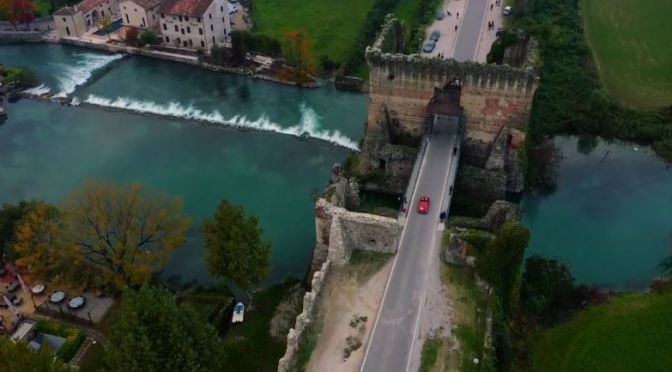
This year, the race had its own challenges, as the pandemic ripped across the world. The Mille Miglia usually takes place in May, but was postponed until October this time round — and many had feared it might be cancelled altogether. But the show must go on — and the sight of more than 400 stunning classic cars glinting in the autumn sun is one I will remember for a very long time.
The first Miglia Mille took place in 1927, founded by a group of car enthusiasts in the town of Brescia, Northern Italy — the race was their response to the region’s loss of the Italian Grand Prix to Monza, seven years earlier. A 1,000 mile loop around Northern Italy (hence the name), the race took place every year for three decades, save for a break during the Second World War. But the perilous, do-or-die nature of the contest led to many crashes and more than ten fatalities, and the final chequered flag fell in 1957. In the 1970s, the Mille Miglia was reborn as we know it today — more of a grand tour than a hotly-contested, breakneck race (although some drivers, even now, forget this from time to time.)
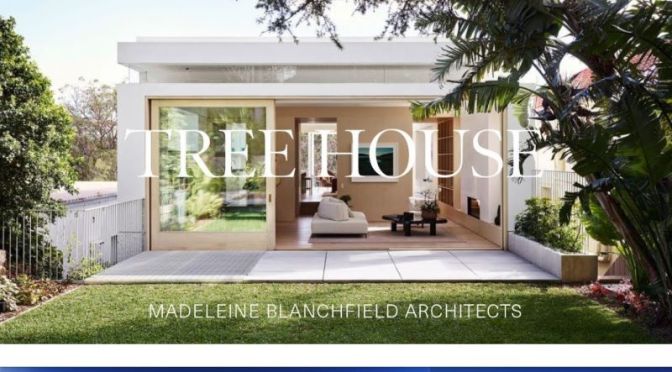
Tree House by Madeleine Blanchfield Architects is a light-filled family home near Bronte Beach in Sydney. As the architect’s own home, the project exemplifies the studio’s experiential design approach, which sees light, form and materiality coalesce to create an experience of place.
The architecture and interiors evoke mood and respond to the changes in light over the course of the day, while the elevated position within the treetops that gives Tree House its name creates a calming atmosphere. With the living space located at the top floor of the architect’s own home, a journey is created through the architecture via a sculptural staircase.
The sculptural forms created by the spiral staircase are balanced by the more pared back interiors, which take their cues from the natural setting. Pale timber, concrete and terracotta tiles, along with the careful approach to both natural and artificial light, reflect the design’s connection to the garden that surrounds it and the nearby beach. This use of few materials detailed to create a highly refined architectural response is characteristic of an architect’s own home.
It highlights how Madeleine Blanchfield Architects has created an experiential home in which simple elements such as materials, details, and changes in light can enhance the mood of a space, resulting in a family home whose architecture, interiors and garden work together to create a sense of lightness and calm.
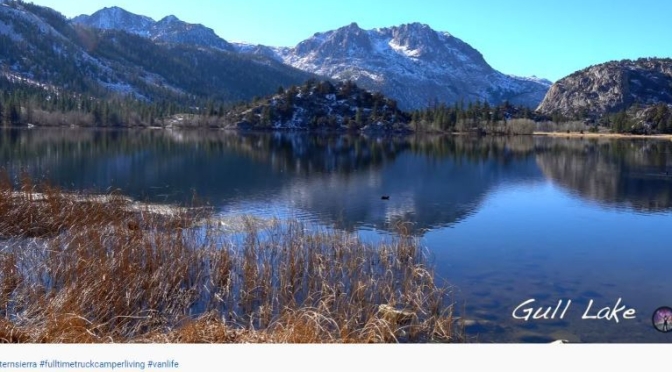
Come along on a road trip to the Eastern Sierra. I know that many viewers aren’t able to hike for varying reasons so I wanted to create a video of locations that are all accessible by vehicle (during the non heavy snow months). No hiking required. These are spots everyone can enjoy and all very beautiful….including 4 lakes within the June Lake Loop.
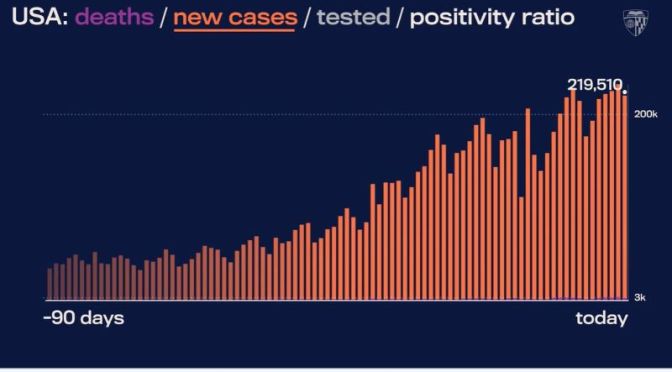
Video highlights of COVID-19 data trends as of December 13, 2020. This daily report shares critical data on the spread of COVID-19 over the last 24 hours.
For the latest news, trends, and expert insights on the coronavirus pandemic, visit the JHU Coronavirus Resource Center: https://coronavirus.jhu.edu/
Hello again from TURKEY! This is our last STREET FOOD IN TURKEY video from the series, and we had an AMAZING time here. Today, we are showing you the BEST Turkish food Cappadocia has to offer and also bring you on a hot air ballon flight, and take you to Göreme National Park for breathtaking views over this crazy place.
We are starting early in the morning for a hot air balloon flight with Voyager Balloons. We took their Ultra Comfort Flight (75 mins/8 people max.) and our pilot Ali was knowledgable, fun and kept us up to date with how high we were flying. The flight was SO smooth, the sunrise was gorgeous and it was a UNIQUE experience! We highly recommend Voyager Balloons!
After our flight, we were HUNGRY and ready to eat CAPPADOCIA FOOD. The local specialties are Mantı (Turkish dumplings) and Testi kebab (pottery kebab). The mantı were stuffed with beef, covered in a sour yogurt sauce and chili oil. Traditionally mantı are made to be extremely small. The testi kebab was sealed in a pottery vessel and lit on fire. The restaurant owner then cracks it open and pours out the DELICIOUS stew.
Beef, onions, tomatoes and tons of spices make up this dish. We tried testi kebab in other tourist restaurants in Cappadocia and it was terrible. YOU MUST check out THIS restaurant – the kebab was flavourful, the portion was large and service was very friendly! Next, we visit and explore the national park to see the fairy chimneys up close. It was a beautiful sight to see these landscapes. Before heading to our “cave room”, we stopped to pick up another local specialty – CAPPADOCIA WINE! Cappadocia is famous for their endemic grapes and the caves allow wine to be stored in ideal conditions, so the wine here is fantastic. We picked up a Kalecik Karası and enjoyed a glass from our private terrace of our cave room.






 Boomers Daily