


BBC Radio 4 (July 30, 2024): From the Hay Festival, James and a panel of experts explain what we can all do to help ourselves age well. We discover what’s going on in our bodies when we age, the difference between biological and chronological age, as well as getting the audience moving for a physical test.
James is joined by gerontologist Sarah Harper from the University of Oxford, biomedical scientist Georgina Ellison-Hughes from King’s College London, and doctor Norman Lazarus to understand how exercise, diet, and mental health all have a part to play in how we age.
Follow along with Sony Artisan Chris Burkard as he documents his incredible trip across Iceland, biking a route said once to be impassable.
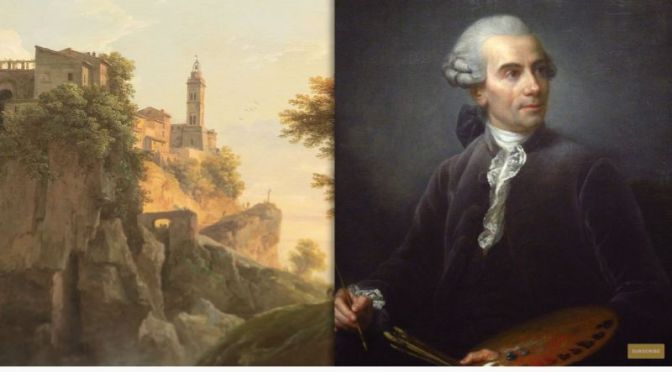
In the 18th century, Joseph Vernet was uncontestably the greatest landscape painter of his generation. In this episode of Anatomy of an Artwork, discover how the ambitious and poetic landscape of ‘View of Tivoli’ pays tribute to the Italy Vernet loved so dearly.
Claude-Joseph Vernet was the leading French landscape painter (with Hubert Robert) of the later 18th century. He achieved great celebrity with his topographical paintings and serene landscapes. He was also one of the century’s most accomplished painters of tempests and moonlight scenes.
Vernet was born at Avignon and trained there with his father, Antoine, and with the history painter Philippe Sauvan. He spent the years 1734 to 1752 in Rome, where he studied classical landscapes in the tradition of Claude and Gaspard Dughet, as well as the dramatic paintings of Salvator Rosa. In Rome he was influenced by the contemporary Roman topographical painter Giovanni Paolo Panini. He had many English clients and admirers in Rome, including Richard Wilson, whom Vernet is thought to have encouraged as a landscape painter.
Professional deep-sea diver Adrian Corrigall and his wife Megan plan to build their new family home in rural East Sussex almost entirely out of concrete, with construction involving cutting-edge technologies conceived in Switzerland and never used to build a house before. However, the perils of being a pioneer soon become evident, and with both schedule and budget under strain, Adrian is forced to resume work as a diver, taking him away from the project for a month at a time.

It has taken time — some say far too long — but medicine stands on the brink of an AI revolution. In a recent article in the New England Journal of Medicine, Isaac Kohane, head of Harvard Medical School’s Department of Biomedical Informatics, and his co-authors say that AI will indeed make it possible to bring all medical knowledge to bear in service of any case.

Properly designed AI also has the potential to make our health care system more efficient and less expensive, ease the paperwork burden that has more and more doctors considering new careers, fill the gaping holes in access to quality care in the world’s poorest places, and, among many other things, serve as an unblinking watchdog on the lookout for the medical errors that kill an estimated 200,000 people and cost $1.9 billion annually.
“I’m convinced that the implementation of AI in medicine will be one of the things that change the way care is delivered going forward,” said David Bates, chief of internal medicine at Harvard-affiliated Brigham and Women’s Hospital, professor of medicine at Harvard Medical School and of health policy and management at the Harvard T.H. Chan School of Public Health. “It’s clear that clinicians don’t make as good decisions as they could. If they had support to make better decisions, they could do a better job.”
We see terriers, collies, beagles, bloodhounds, poodles, small dogs, big dogs, show dogs, working dogs, and many more, featuring over 60 breeds photographed in both black-and-white and glorious Kodachrome.
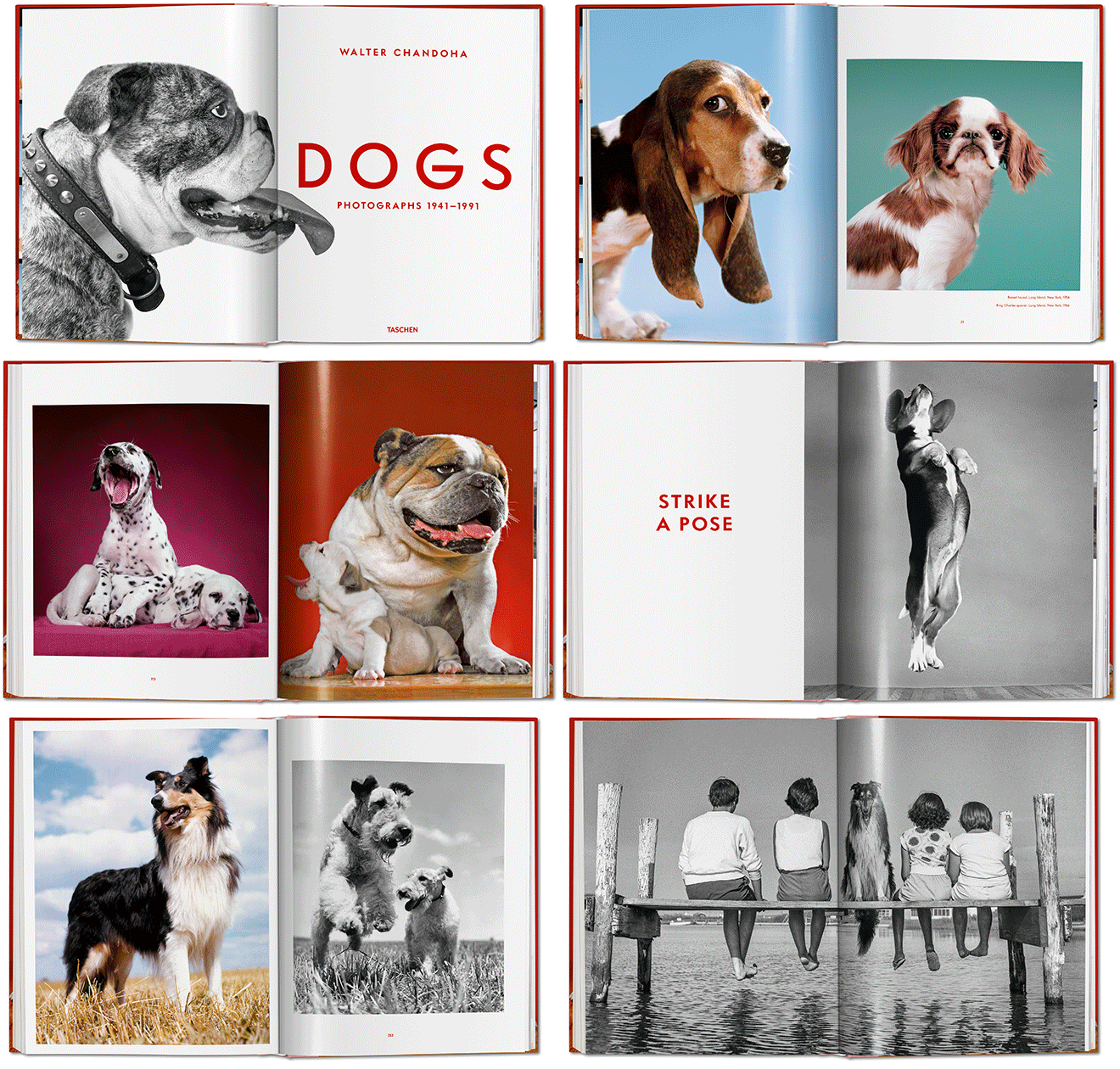
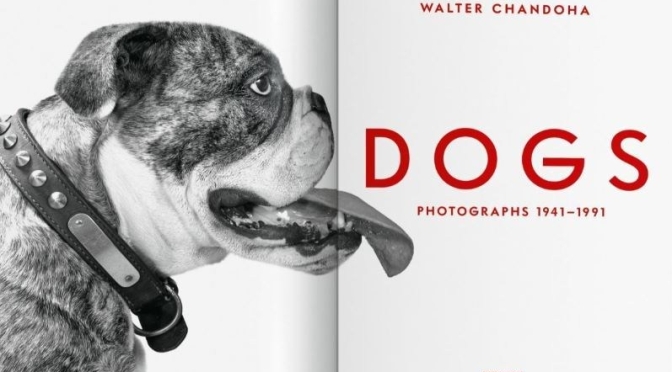
The world appears to be divided into cat and dog lovers, but fortunately Walter Chandoha, the 20th century’s greatest pet photographer found himself happily in the middle. He loved these intriguing creatures equally for their unique beauty and individualism, and as subjects to photograph in a career spanning over 70 years. While working on his critically acclaimed TASCHEN book Cats, Chandoha handpicked his favorite dog photos for a potential follow-up title, putting into carefully marked boxes hundreds of contact sheets, prints, and color transparencies, many unseen for at least 50 years, and some totally unseen.
Chandoha sadly passed away in 2019 at the age of 98, but his legacy lives on in this dashing sequel dedicated to man’s best friend. “Walter Chandoha’s photographs of dogs are compelling not just because dogs have an inherent charm, but because the person behind the camera was a master of his craft,” writes the photography critic Jean Dykstra in the book’s introduction.
Spanning a 50-year period, the book is divided into six sections, and each chapter reveals Chandoha’s exceptional combination of technique, versatility, and soul. The opening chapter “In the Studio” focuses on formal portraiture; next it’s “Strike a Pose” where our canine companions ham it up for the camera; in “Out and About” they get to roam and play, often photographed with Chandoha’s own children; next it’s “Best in Show” with Chandoha using his reportage skills to capture vintage dog shows from the Mad Men era; in “Tails from the City,” the dogs are hitting the streets of mid-century New York; and in the closing chapter “Country Dogs,” it’s back to nature, the fields, and the beaches. Dogs is an unleashed photographic tribute to these lovable and loyal creatures.
Walter Chandoha (1920–2019) was a combat photographer in the Second World War, before a chance encounter with a cat led him on a path that would shape his professional career. He is regarded as the world’s greatest domestic animal photographer with a career spanning over seven decades and an archive of more than 200,000 photographs. His photographs have appeared on over 300 magazine covers, thousands of advertisements, and were regularly featured in magazines such as Life, Look, and their equivalents around the world.
Reuel Golden is the former editor of the British Journal of Photography and the Photography editor at TASCHEN. His TASCHEN titles include: Mick Rock: The Rise of David Bowie, both London and New York Portrait of a City books, Andy Warhol. Polaroids, The Rolling Stones, Her Majesty, Football in the 1970s, the National Geographic editions, and The David Bailey SUMO.
Bremen is a city in northwest Germany located at the Weser River. The city is known for Hanseatic buildings around the Market Square. In Germany Bremen is also famous by the fairy tale “Bremer Stadtmusikanten” (Town Musicians of Bremen).
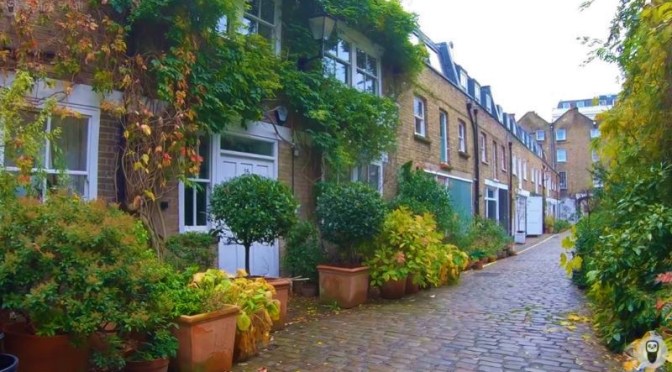
Paddington is home to some of the most beautiful residential properties and serviced apartments in Central London. As such, you can benefit from beautiful tree-lined streets bordered by old Victorian Stucco houses and gorgeous Georgian homes. Furthermore, Paddington is just a stone’s throw away from London best know Royal Park – Hyde Park. Hyde Park is beautifully landscaped and offers plenty of space for fitness enthusiasts and families days out. All Royal Parks in London also allow you to have your dog off the lead in case you’re relocating to the UK with pets.
Since its founding in 1984, the team behind Eagle has steadily worked their dedication into an obsession, with the outcome being the last word in the world of the Jaguar E-Type. Unlike many restoration specialists, Eagle keeps all the work in-house, and none of it is rushed.
Indeed Eagle CEO Henry Pearman says it takes the team nearly 4,000 hours to complete one of the company’s ground-up, full-on Eagle E-Types, and while they aren’t for those on a tight budget, there is clear evidence of the claim that the business is foremost driven by passion, not profits. A purely commercial endeavor would find ways to cut costs and hurry the process, but the completed cars—whether they be restorations or bespoke commissions—that leave Eagle’s countryside compound in Sussex are not just faultless E-Type specimens, they are examples of what can be achieved after decades of refinement and accumulated knowledge. Nobody knows these cars better, and in that same vein, nobody is building them better.






 Boomers Daily