
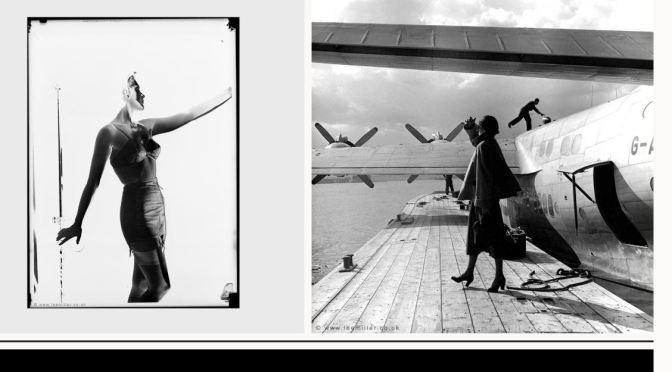
 The Surrealist eye informed everything Miller did, and her work presents the world in a way that encourages us to view it in a different manner. Written and collected by her son Antony, Surrealist Lee Miller amasses more than one hundred full-page images from throughout the artist’s life as an attestation to her wonderful way of seeing.
A Surrealist before she even knew of the movement, Lee Miller was one of the most original photographic artists of the twentieth century. David E. Scherman, LIFE photographer and Miller’s close friend, described her as “caustically brilliant, yet totally loyal, unpretentious, human and intolerant of sham.
She was a consummate artist and a consummate clown; at once an upstate New York hick and cosmopolitan grande dame; a cold, soignée fashion model and a hoyden. . . . She was the nearest thing I knew to a mid-20th century renaissance woman.”

 In the 2000s, California-based painter Wayne Thiebaud began focusing on a series of mountain paintings, a subject he had first addressed in the 1960s and 1970s. Rendered in his signature confectionary palette, these colorful works combine memories of mountains he had seen in childhood and observations of the summits of the Sierra Nevada Range in Yosemite. With their heroic, exaggerated proportions and unusual perspectives, these paintings seem to combine fiction and reality. Conveying a sense of the sublime and the vast magnitude of our surroundings, they draw upon the history of landscape painting of the American West.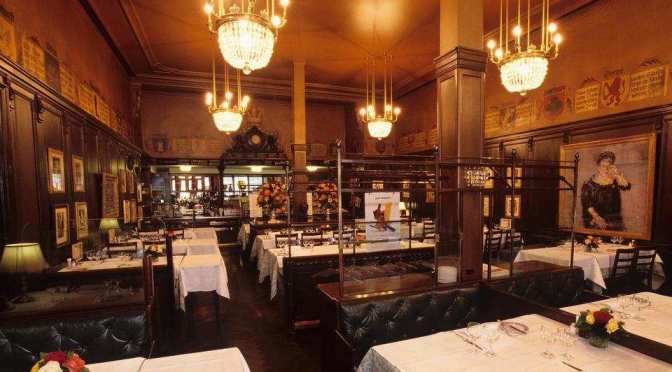
 In 1924, Hulda and Gottlieb Zumsteg took over the erstwhile “Hôtel de la Couronne” on Rämistrasse 4, at the corner of Bellevue in Zurich. They reopened as the Restaurant Kronenhalle. Under the skilled management of restaurateur Hulda Zumsteg it soon became the meeting point of writers and artists.
 The restaurant became popular with the local establishment and names such as Coco Chanel, Yves Saint Laurent, Pablo Picasso, Alberto Giacometti, James Joyce, Richard Strauss, Max Frisch and Friedrich Dürrenmatt also graced the guest list. The Kronenhalle owes as much to its renowned guests as to Gustav Zumsteg, Hulda’s son, who followed in his mother’s footsteps, while putting his own inimitable stamp on it. His passion for art contributed to the Kronenhalle’s considerable prominence. Since 2005, his estate is being administered by the Hulda und Gustav Zumsteg foundation according to his last will.
 Avant2Go car sharing is an effective way to cut and manage your mobility expenses. Find an available car and reserve it using the Avant2Go mobile app. The first reservation (15 min) is free. Use the app to end your rental and settle the final cost. The rental price includes car registration, insurance, fuel*, running costs, vignette, loss of value, free parking at Avant2Go spots and more.



 This latest paper builds on previous Newcastle studies supported by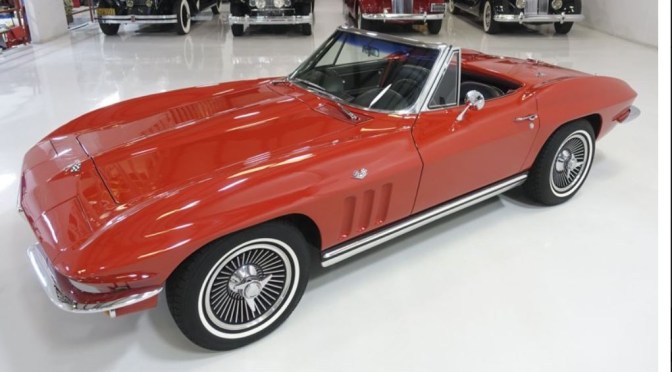
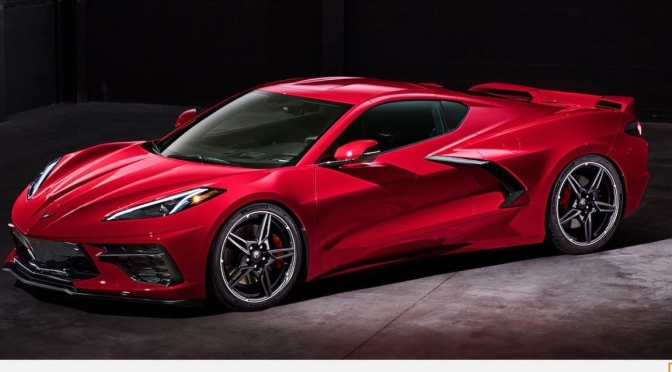
 For its third season, the 1965 Corvette Sting Ray further cleaned up style-wise and was muscled up with the addition of an all-new braking system and larger powerplants. 1965 styling alterations were subtle, confined to a smoothed-out hood now devoid of scoop indentations, a trio of working vertical exhaust vents in the front fenders that replaced the previous nonfunctional horizontal “speedlines,” restyled wheel covers and rocker-panel moldings, and minor interior trim revisions. The 1965 Corvette Sting Ray became ferocious with the mid-year debut of the
  1965 also added another 350 hp small block engine (Option L79) which used hydraulic rather than solid lifters, a milder camshaft and a modestly redesigned smaller oil pan.
 Through the prisms of behavioral neurology and cognitive neuroscience, Scott Grafton brilliantly accounts for the design and workings of the action-oriented brain in synchronicity with the body in the natural world, and he shows how physical intelligence is inherent in all of us—and always in problem-solving mode. Drawing on insights gleaned from discoveries by engineers who have learned to emulate the sophisticated solutions Mother Nature has created for managing complex behavior, Grafton also demonstrates the relevance of physical intelligence with examples that each of us might face—whether the situation is mundane, exceptional, extreme, or compromised.

 Boomers Daily