

America and China are edging closer to signing a deal in the trade war. But that won’t mark the end—the issues at the heart of the conflict will be very difficult to resolve.
The world’s leading superpowers are locking horns. Over the past 16 months America and China have been trading blows through tariffs on goods. The impact is being felt on industries worldwide. But what is the story behind the America-China trade war? So the trade war, what have you guys been looking at? The US doesn’t like that China is growing so fast and set to overtake America as the biggest economy in the world if it hasn’t already by certain measures. Basically China and the US are caught in this race of imposing tariffs on each other so the US slaps a high tariff on certain products then China retaliates.
Read more here: https://econ.st/2qQItl6

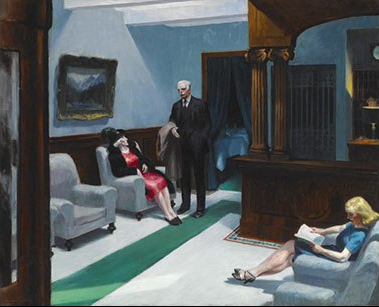 Isolation was a persistent theme in Hopper’s art and life. Was he dogged by isolation or did he pursue it? ‘Did anybody really know this silent, non-communicative man?’ asked Raphael Soyer in a 1981 interview, 14 years after Hopper’s death. His friends recollected a cynical and taciturn artist, self-doubting, introspective and distrustful of fame. But before Hopper became the painter of lonely figures in all-night diners, he was the illustrator of raucous party scenes and smiling couples waltzing together at summer fêtes.
 NPR’s Tamara Keith and Amy Walter of the Cook Political Report join Amna Nawaz to discuss the latest political news, including Pete Buttigieg’s surge in Iowa, former Vice President Joe Biden’s lead in South Carolina polls, Sen. Elizabeth Warren’s health care plan update and what another Democratic gubernatorial upset in Louisiana means for President Trump in 2020.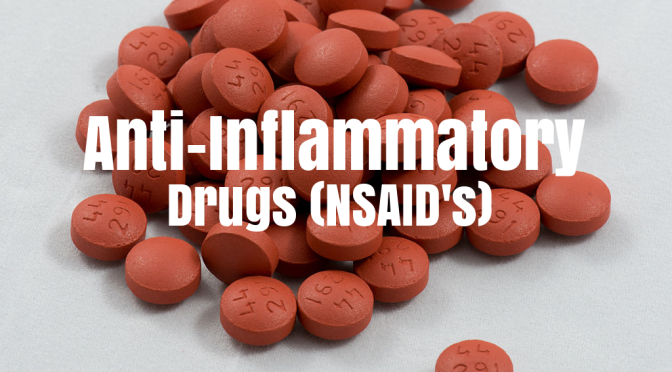
 Researchers matched 7,743 people with osteoarthritis with 23,229 healthy people who rarely or never took NSAIDs. People with osteoarthritis had a 42% higher risk of heart failure and a 17% higher risk of coronary artery disease compared with healthy people. After controlling for a range of factors that contribute to heart disease (including high body mass index, high blood pressure, and diabetes), they concluded that 41% of the increased risk of heart disease related to osteoarthritis was due to the use of NSAIDs.
 Since all of my paintings—almost every single one except for the figure paintings—are done from memory, I rely specifically on the memory of working in restaurants, or of visiting farms on which I worked as a young person. I try to recall the look and feel and love of what I have experienced.
 Having established our Simply Sartorial collection that offers a rainbow of strong, confident colours – and which remains our best seller – we have taken a playful approach to patterns and textures. We have added jacquards, herringbones, merinos and cashmeres to the range.

 In addition to the pop-up Worn Wear store, Patagonia also has Worn Wear mobile repair stations, which visit a variety of locations, including Patagonia stores, specialty retailers, ski resorts and colleges to offer up their refurbishment capabilities. The mobile stations have been to over 135 locations so far, according to the release, and will fix products from any brand.
 Patagonia on Thursday opened its first ever physical store for Worn Wear, Patagonia’s resale business. The store is a pop-up in Boulder, Colorado, which will stay open until February 2020, according to a press release emailed to Retail Dive.
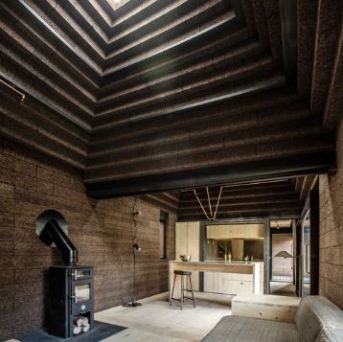 Cork House embodies a strong whole life approach to sustainability, from resource through to end-of-life. Expanded cork is a pure bio-material made with waste from cork forestry. The bark of the cork oak is harvested by hand every nine years without harming the tree or disturbing the forest.
 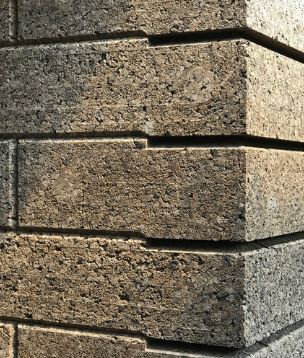 This gentle agro-industry sustains the Mediterranean cork oak landscapes, providing a rich biodiverse habitat that is widely recognised. This compelling ecological origin of expanded cork is mirrored at the opposite end of the building’s lifecycle. The construction system is dry-jointed, so that all 1,268 blocks of cork can be reclaimed at end-of-building-life for re-use, recycling, or returning to the biosphere.
 “These results show quite clearly that there’s a very specific part of the brain network that’s affected by inflammation,” noted Mazaheri. “This could explain ‘brain fog’.”
 The Crosstown Trail is a route connecting San Francisco neighborhoods, open spaces, and other major trails. It runs from Candlestick Point in the southeast corner of the city to Lands End in the northwest corner. The route is usable by both pedestrians and bicyclists, and it connects many parks, business districts, residential areas, and public transit.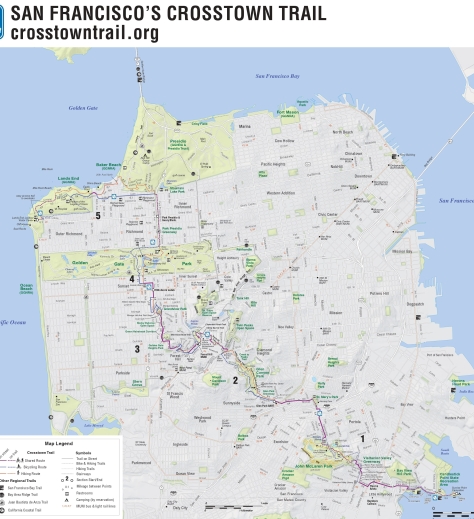
 Boomers Daily