
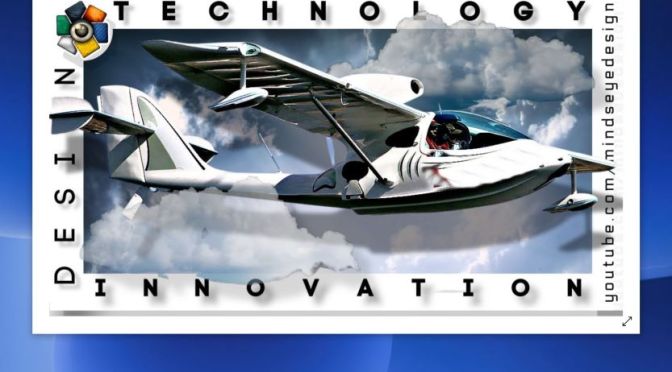
From aquatic planes to amphibious aircraft, taking off and landing on the water can be beneficial. Amphibious planes can be used for fishing, search and rescue, and even anti-submarine warfare. let’s take a look at the 10 most innovative amphibious planes.
Tag Archives: Reviews

Future Of Trucks: Inside The ‘Tesla Electric Semi’
The personal transportation industry has been shaken up over the past decade or so, with the introduction of electric cars proving to be more environmentally friendly, and importantly, cheaper to run, than their petrol or diesel counterparts. Bike manufacturers are also working on the transition in the motorcycle segment. While this change has been taking place, trucking has been continuing unchanged in the background. Our food, household goods, and even electric car parts, have been transported by diesel power just like they have been from the start, while the industry has grown to be worth $700 billion in the US alone, more than many of the world’s countries’ GDPs. With the huge weights involved, electrifying the trucking industry has taken a back seat due to the impracticality, but at the end of 2017, 3 years ago, Tesla announced plans to change this with the Semi, a fully electric truck designed to shake up the shipping industry. Why The Tesla Semi Is The Future of Trucks

Graphic Novels: ‘The Final Symphony – A Beethoven Anthology’ (Dec 2020)
A new original graphic novel, The Final Symphony: A Beethoven Anthology, celebrating Ludwig van Beethoven’s 250th birthday, has been published via Z2 Comics and Deutsche Grammophon.

The Final Symphony: A Beethoven Anthology, written by Brandon Montclare and Frank Marraffino, was inspired by the composer’s life and music. The graphic novel reimagines the life of the legendary composer through striking new visuals created by world-class artists. Readers will be able to experience both masterpieces and lesser-known gems in a brand new light. The deluxe edition will be accompanied by an exclusive double vinyl LP following the story through the composer’s own works.
Featuring Alice Sara Ott, Ezinma and Max Richter
Pianist Alice Sara Ott, violinist Ezinma and composer Max Richter, are all featured in their own chapters in The Final Symphony: A Beethoven Anthology. In the chapter featuring Alice Sara Ott, drawn by Creees Lee, the pianist invites the composer to hear one of his works played in a modern concert hall. The chapter featuring Ezinma, drawn by Jarrett Williams, celebrates Beethoven’s groundbreaking musical personality, and Max Richter has been transformed by artist Dave Chisholm, who also wrote the chapter.

Science: ‘Breakthrough Of The Year In 2020’ (Video)
Each year, editors and writers choose a top research achievement as Science’s Breakthrough of the Year. This year, that honor goes to the multiple COVID-19 vaccines that have succeeded in large human trials—and are now being deployed around the world. But there are a lot of other advances to talk about, from figuring out the origin of Fast Radio Bursts to the discovery of the earliest known figurative art. Check out a few of the runners-up candidates—and this year’s Breakthrough of the Year—in this video rundown. Read the stories here: https://scim.ag/37v20ds

Technology: ‘2021 CAnoo VAN’ – The Most Versatile Electric Delivery Vehicle
California EV startup Canoo has announced a new multipurpose electric vehicle aimed at last-mile deliveries and other small businesses, which starts at $33,000 but scales up in size and cost. It’s Canoo’s second vehicle, following the subscription-only van it debuted last year. Canoo still plans to make that EV — in fact, the new multipurpose vehicle is built on the same technological platform that Canoo developed for the van, and they share similar design features.
The new vehicle will initially be sold in two variants, though Canoo says more will eventually be offered. The smaller one (which is the one that starts at $33,000) is 14.4 feet long, 6.4 feet wide, and 6.2 feet tall, and has 230 cubic feet of cargo space. Canoo will offer three different battery pack options, too: 40kWh (with an estimated 130 miles of range), 60kWh (190 miles), and 80kWh (230 miles). The company will also make a larger version that is 17.1 feet long, 7.2 feet wide, and 8.4 feet tall, with 500 cubic feet of cargo space. The same battery pack options will be available, though the range estimates drop to 90 miles, 140 miles, and 190 miles, respectively, thanks to the extra weight.

Science Podcast: The Top Stories, Breakthroughs And Books Of 2020

Our last episode of the year is a celebration of science in 2020. First, host Sarah Crespi talks with Online News Editor David Grimm about some of the top online news stories of the year—from how undertaker bees detect the dead to the first board game of death. (It’s not as grim as it sounds.)
Sarah then talks with Online News Editor Catherine Matacic about the Breakthrough of the Year, scientific breakdowns, and some of the runners-up—amazing accomplishments in science achieved in the face of a global pandemic. Finally, Book Review Editor Valerie Thompson joins Sarah to discuss highlights from the books section—on topics as varied as eating wild foods to how the materials we make end up shaping us.

Road Tests: The New ‘Harley-Davidson Serial 1 Electric Bikes’ (Video)
Harley-Davidson’s new Serial 1 electric bikes are coming, and we got one of the first test rides. The bikes are gorgeous, with a clean, non cluttered design and an impressive spec sheet. And they are an absolute joy to ride. But are they worth $5,000? Learn more about the Harley-Davidson Serial 1: http://bit.ly/3gXZL5B

Reviews: TIME Magazine – Person Of The Year (2020)
The Biden-Harris ticket represents something historic. Person of the Year is not just about the year that was, but about where we’re headed.

Medical Reviews: Covid-19 & ‘Cytokine Storm’ (NEJM)




Art: ‘Autumn Rhythm’ – Jackson Pollock (Video)
Autumn Rhythm (Number 30) is a 1950 abstract expressionist painting by American artist Jackson Pollock in the collection of the Metropolitan Museum of Art in New York City. The work is a distinguished example of Pollock’s 1947-52 poured-painting style, and is often considered one of his most notable works.
 Boomers Daily