


 Contributing Correspondent Kai Kupferschmidt talks with host Sarah Crespi about countries planning a comeback from a coronavirus crisis. What can they do once cases have slowed down to go back to some sort of normal without a second wave of infection?
Contributing Correspondent Lizzie Wade joins Sarah to talk about water management and the downfall of the ancient Wari state. Sometimes called the first South American empire, the Wari culture successfully expanded throughout the Peruvian Andes 1400 years ago.
Also this week, Yon Visell of the University of California, Santa Barbara, talks with Sarah about his Science Advances paper on the biomechanics of human hands. Our skin’s ability to propagate waves along the surface of the hand may help us sense the world around us.
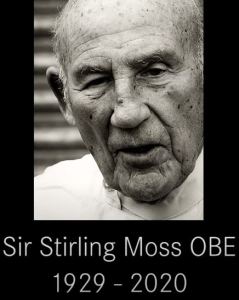 Paying tribute to a racing icon and sporting legend. Rest in peace, Sir Stirling Moss. We’ll miss you.
Sir Stirling Craufurd Moss, OBE was a British Formula One racing driver. An inductee into the International Motorsports Hall of Fame, he won 212 of the 529 races he entered across several categories of competition and has been described as “the greatest driver never to win the World Championship”.
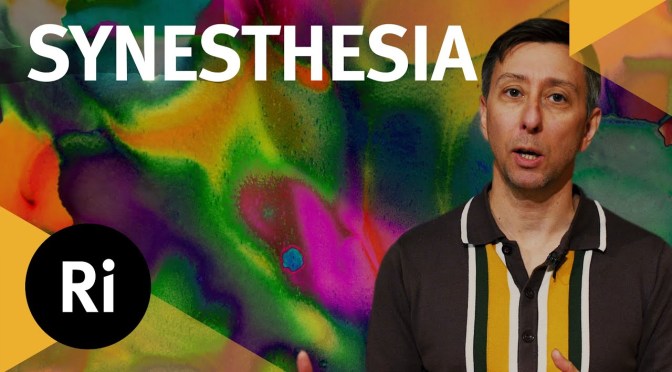
Can you imagine if each word had its own colour, or you could ‘see’ different types of music?
Synesthetes can experience the ordinary world in some pretty extraordinary ways. In this video Jamie Ward explains the variety of different ways in synesthesia can manifest itself, and what is happening in the brains of those who experience it.
Jamie Ward is Professor of Cognitive Neuroscience at the University of Sussex. He has written books a number of books about neuroscience and synesthesia.
Synesthesia is a perceptual phenomenon in which stimulation of one sensory or cognitive pathway leads to involuntary experiences in a second sensory or cognitive pathway. People who report a lifelong history of such experiences are known as synesthetes. Awareness of synesthetic perceptions varies from person to person.[7] In one common form of synesthesia, known as grapheme–color synesthesia or color–graphemic synesthesia, letters or numbers are perceived as inherently colored. In spatial-sequence, or number form synesthesia, numbers, months of the year, or days of the week elicit precise locations in space (for example, 1980 may be “farther away” than 1990), or may appear as a three-dimensional map (clockwise or counterclockwise). Synesthetic associations can occur in any combination and any number of senses or cognitive pathways.
From Wikipedia
From a Diabetologia online study release (April 15, 2020):
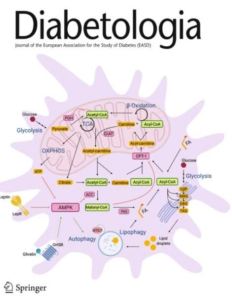 “Having normal body weight is crucial in the prevention of type 2 diabetes, regardless of genetic predisposition.”
“The results suggest that type 2 diabetes prevention by weight management and healthy lifestyle is critical across all genetic risk groups.”
“Overall, the results indicate that a favorable lifestyle should be universally recommended in the prevention of type 2 diabetes, regardless of genetic predisposition, thus supporting current public health guidelines,”
We examined the joint association of genetic predisposition, obesity and unfavourable lifestyle with incident type 2 diabetes using a case-cohort study nested within the Diet, Cancer and Health cohort in Denmark. The study sample included 4729 individuals who developed type 2 diabetes during a median 14.7 years of follow-up, and a randomly selected cohort sample of 5402 individuals.
Obesity (BMI ≥ 30 kg/m2) and unfavourable lifestyle were associated with higher risk for incident type 2 diabetes regardless of genetic predisposition (p > 0.05 for GRS–obesity and GRS–lifestyle interaction). The effect of obesity on type 2 diabetes risk (HR 5.81 [95% CI 5.16, 6.55]) was high, whereas the effects of high genetic risk (HR 2.00 [95% CI 1.76, 2.27]) and unfavourable lifestyle (HR 1.18 [95% CI 1.06, 1.30]) were relatively modest.
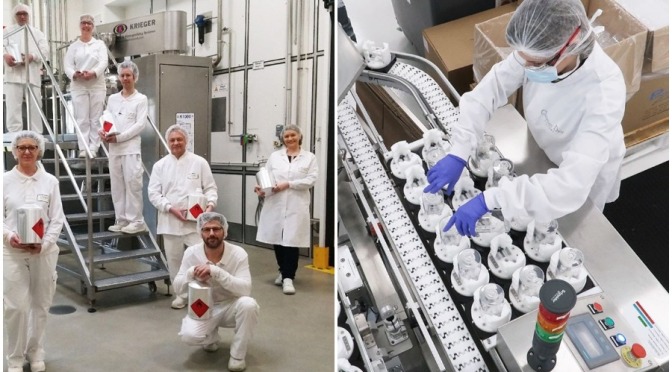
 Jamie Waters explains how the fashion industry emerged as a vital contributor in the fight against the pandemic. Many brands, big and small, have pivoted to make masks and other protective equipment.
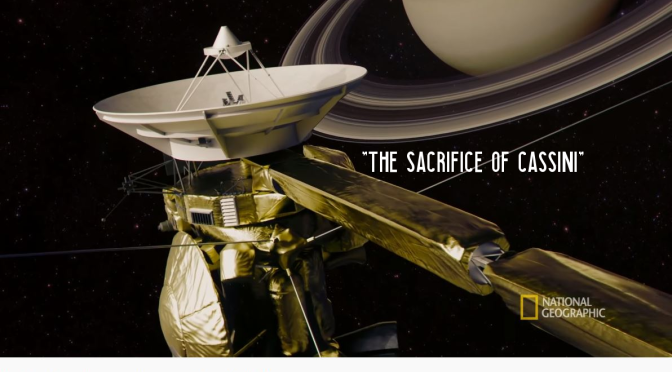
Explore the creation of planetary rings with Neil deGrasse Tyson and discover the fate of the Cassini space probe.
From The Guardian (April 16, 2020):
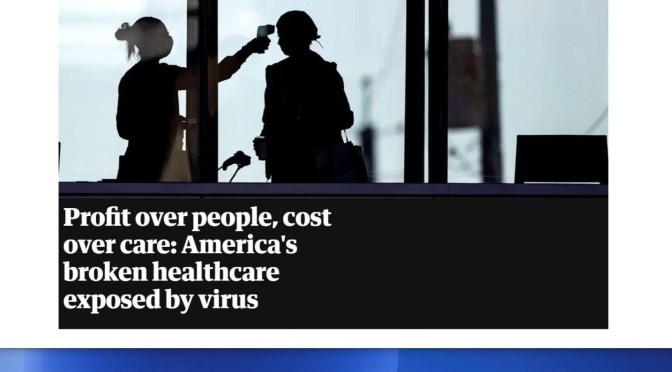
 “As this epidemic makes clear, at any moment, any of us could become sick, could become hospitalized, could be on a mechanical ventilator,” said Adam Gaffney, an ICU doctor in Boston. “And that, in the United States, could mean potentially ruinous healthcare costs.”
With over 21,000 people dead and more than a 547,000 infected with the coronavirus in the US the last question on a person’s mind should be how they will pay for life-saving treatment.
There were 27.9 million people without health insurance in 2018, and record-high unemployment will increase that figure by millions
But as the death toll mounted, a patient who was about to be put on a ventilator in one of New York City’s stretched to capacity intensive care units had a final question for his nurse: “Who’s going to pay for it?”
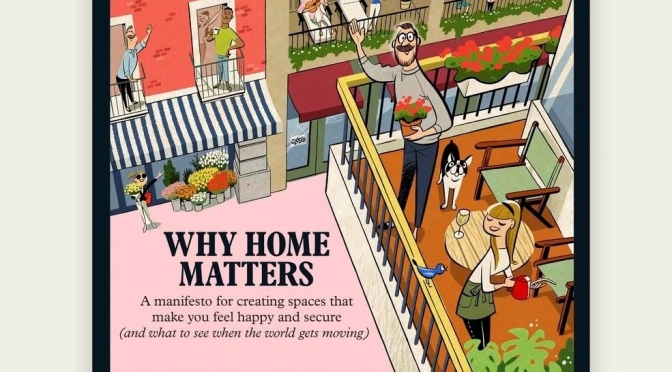
Monocle’s home-focused May issue goes beyond the dramatic headlines to look at how to create spaces that are apt to linger in.
We launch a manifesto for building better, look at the firms eyeing up the domestic market and profile a few elegant residences. Elsewhere, we examine the importance of keeping manufacturing onshore, decode the US political advertising industry and recommend the best media to hunker down with.
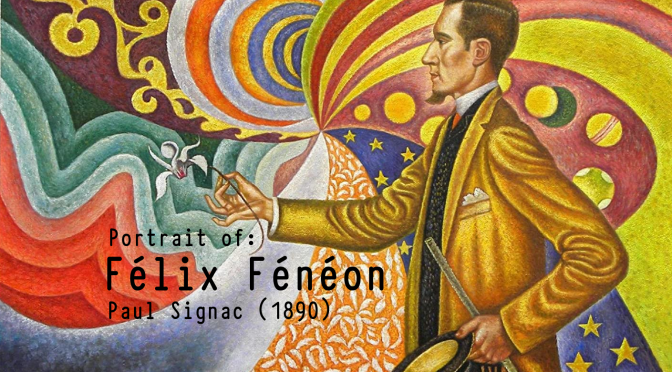
“It would not be a commonplace portrait at all, but a carefully composed picture, with very carefully arranged colors and lines. A rhythmic and angular pose. A decorative Félix, entering with his hat or a flower in his hand.”
With these words, in 1890, Paul Signac described to Félix Fénéon the extraordinary portrait he was dedicating to him. In it, Signac paid homage to Fénéon’s distinctive appearance, his generous but enigmatic personality, and his innovative approach to modernism.
This painting, a masterpiece in the Museum’s collection, will be the centerpiece of Félix Fénéon, the first exhibition dedicated to Fénéon (1861–1944). An art critic, editor, publisher, dealer, collector, and anarchist, Fénéon had a wide-ranging influence on the development of modernism in the late 19th and early 20th centuries.
In the late 1880s, he played a key role in defining the new movement known as Neo-Impressionism, a term he coined himself, whose artists, including Signac, used tiny dabs of color that would mix in the eye of the viewer. Over the next five decades, he championed the careers of artists from Georges-Pierre Seurat and Signac to Pierre Bonnard, Henri Matisse, and Amedeo Modigliani.
He amassed a renowned collection of paintings by these artists and many others, and he was also a pioneering collector of art from Africa and Oceania. The exhibition will feature some 130 objects, including major works that Fénéon admired, championed, and collected, as well as contemporary photographs, letters, and publications that trace key chapters in his biography. Together these works reveal the profound and lasting legacy of Fénéon’s keen eye and bold, forward-looking vision.



 Boomers Daily