

Excerpts from The Revolutionary Seymour, By Steven Heller:
 Seymour’s art was postmodern long before the term was coined. Yet it was resolutely modern in its rejection of the nostalgic and romantic representation, as in the acolytes of Norman Rockwell, that had been popular in mainstream advertising magazines at the time. Instead of prosaic or melodramatic tableau, Seymour emphasized clever concept. What makes the very best of his art so arresting, and so identifiable, is the tenacity of his ideas—simple, complex, rational, and even absurd ideas.
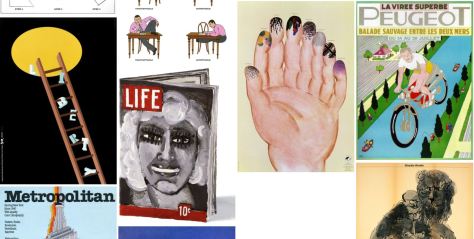
The illustrations for magazines, posters, advertisements, book jackets, record covers, product packages, and children’s books that he created after founding Push Pin Studios with Milton Glaser and Edward Sorel in 1954 directly influenced two generations (statistical fact) and indirectly inspired another two (educated conjecture) of international illustrators and designers to explore an eclectic range of stylistic an conceptual methods.
To read more: http://seymourchwastarchive.com/about/seymour/

 …the Yō no Ie re-imagines a life in suburban-rural areas, rather than urban-suburban. This reflects quiet yet significant social changes – or rather, shifts in life priorities of people and how they define happiness. In the 20th century, when society was excited about economic growth, everyone dreamed of living in cities, working at big companies by navigating a world of fierce competition, either spending an eye-popping amount of money on a small urban condo that quickly became a norm, or traveling hours to commute from a more affordable home in rapidly sprawling suburbs.
 The 1963 Sting Ray production car’s lineage can be traced to two separate GM projects: the Q-Corvette, and perhaps more directly, Mitchell’s racing
 “People want to see photography and right now there are not a lot of places to do that,” he says. Showing “the best photography in the world” remains Fotografiska’s core mission, Broman says.





 In people with Type 1 diabetes, the pancreas can’t make insulin. Those with the condition require several doses of insulin a day and spent $5,705 per person on it in 2016, an increase of $2,841, or 99%, per person since 2012, according to the nonprofit
  Costs continue to rise, so much so that almost half of people with diabetes have temporarily skipped taking their insulin, according to a 2018 survey by UpWell Health, a Salt Lake City company that provides home delivery of medications and supplies for chronic conditions.
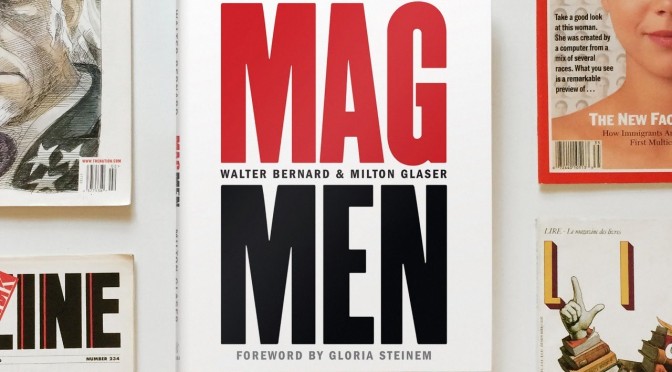
 For more than fifty years, Walter Bernard and Milton Glaser have revolutionized the look of magazine journalism. In Mag Men, Bernard and Glaser recount their storied careers, offering insiders’ perspective on some of the most iconic design work of the twentieth century. The authors look back on and analyze some of their most important and compelling projects, from the creation of New York magazine to redesigns of such publications as Time, Fortune, Paris Match, and The Nation, explaining how their designs complemented a story and shaped the visual identity of a magazine.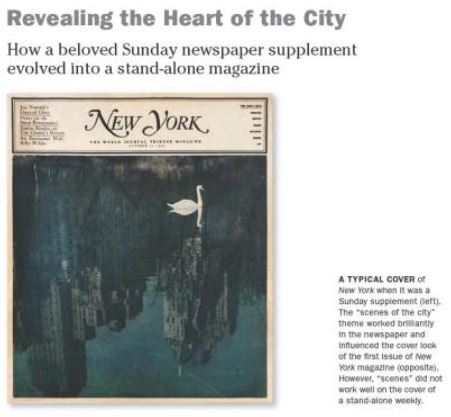
 Boomers Daily