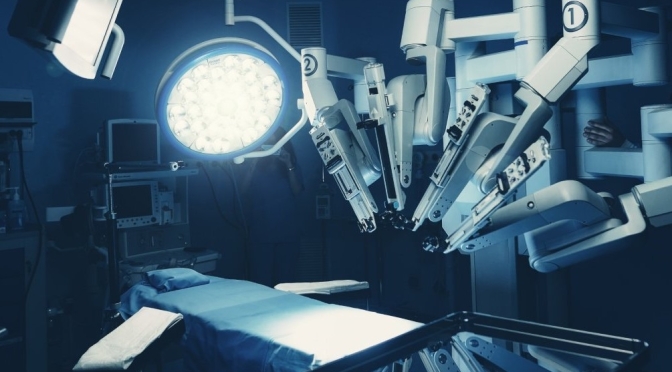
Freethink – Robotics are helping make minimally invasive surgeries even less invasive. Case in point: single-port robotic surgery, a relatively new type of approach where a robotic system controlled by a human surgeon executes the procedure by making only one incision into the patient.
Although still relatively uncommon, single-port surgery has been gaining momentum in recent years. The benefits are noticeable. Compared to traditional surgery, single-port surgery might leave patients with shorter recovery times, less scarring, and overall better outcomes.
The technique is also transforming how surgeons think about and execute surgery itself. “It’s allowing us to do surgeries differently than we do with [multi-port surgery],” said Michael Stifelman, M.D., director of robotic surgery at Hackensack University Medical Center. “What every patient wants is to get back to their life. Single-port robotics is allowing us to get them to that point more quickly.”
Learn more about the future of single-port surgery in this episode of “Operation: Reimagine Surgery,” a Freethink original series produced in partnership with Intuitive, which created the world’s first commercially available robotic surgery system in the 1990s.
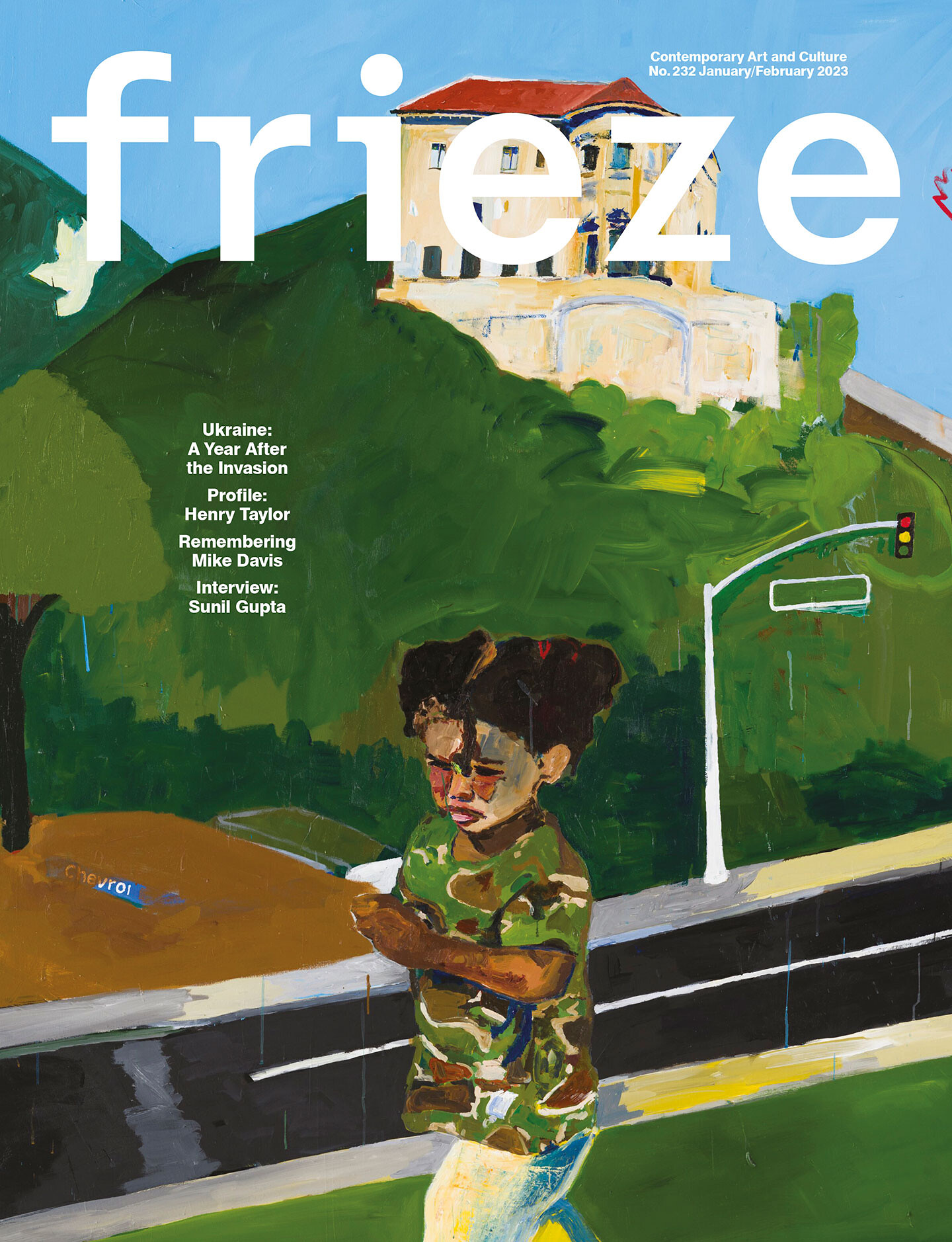
In the January/February issue of frieze, Terence Trouillot profiles artist Henry Taylor ahead of shows at The Fabric Workshop and Museum, Philadelphia, and The Museum of Contemporary Art, Los Angeles. Plus, one year after Russia declared war on Ukraine, artists and writer respond to the crisis in a dossier, including: a personal essay by painter and writer Kateryna Aliinyk; Adam Mazur profiles Taras Gembik, an artist and performer organising picnics to raise money for Ukraine in Warsaw, Poland; Nikita Kadan on what art can mean in a time of war; editor-in-chief Andrew Durbin interviews Olha Honchar, the director of Territory of Terror Museum, which documents war crimes, and the coordinator for the Museum Crisis Center, an organization helping Ukrainian museums rescue their holdings from occupied zones.
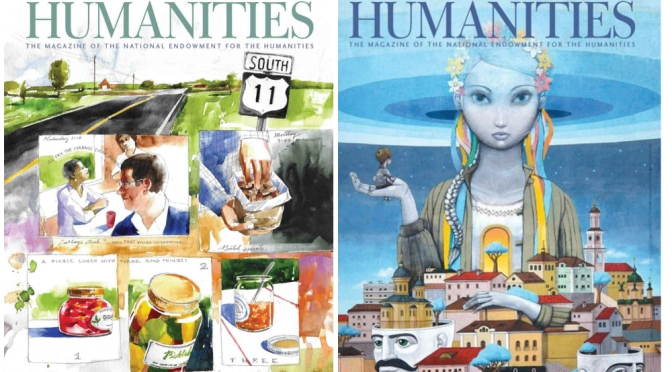
Profile: Henry Taylor “I became the observer because I was trying to understand my own life and that’s why I started making pictures. I just like looking at people.” Terence Trouillot considers how Henry Taylors oeuvre goes far beyond the canvas.
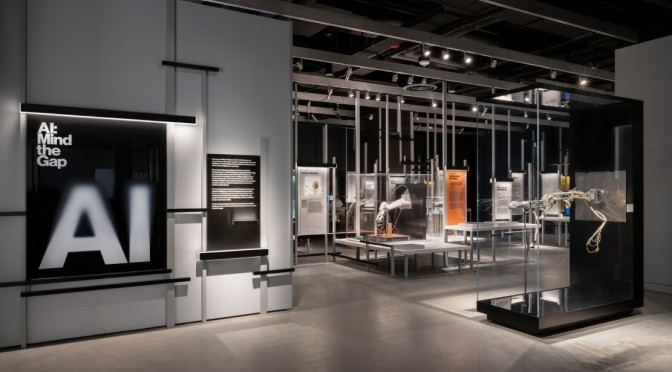
PBS NewsHour – Artificial intelligence, robotics and gene sequencing are the stuff of headlines, science fiction and sometimes even our worst fears. It’s all on view at the new MIT Museum. A place where the latest scientific advancements fill galleries, but only really work with your input. Special correspondent Jared Bowen of GBH Boston looks at this artistic frontier for our arts and culture series, “CANVAS.”
From AI in the home to robots in the workplace, the presence of AI all around us compels us to question its potential and recognize the risks. What has become clear is that the more we advance AI technology and consider machine ability versus human ability, the more we need to mind the gap.
EU nations consider restrictions on travellers from China as Beijing eyes countermeasures. Plus: How the pandemic and war in Europe have contributed to India’s economic ascent, Burkina Faso expels the French ambassador and Russia’s weaponisation of culture in its war on Ukraine.
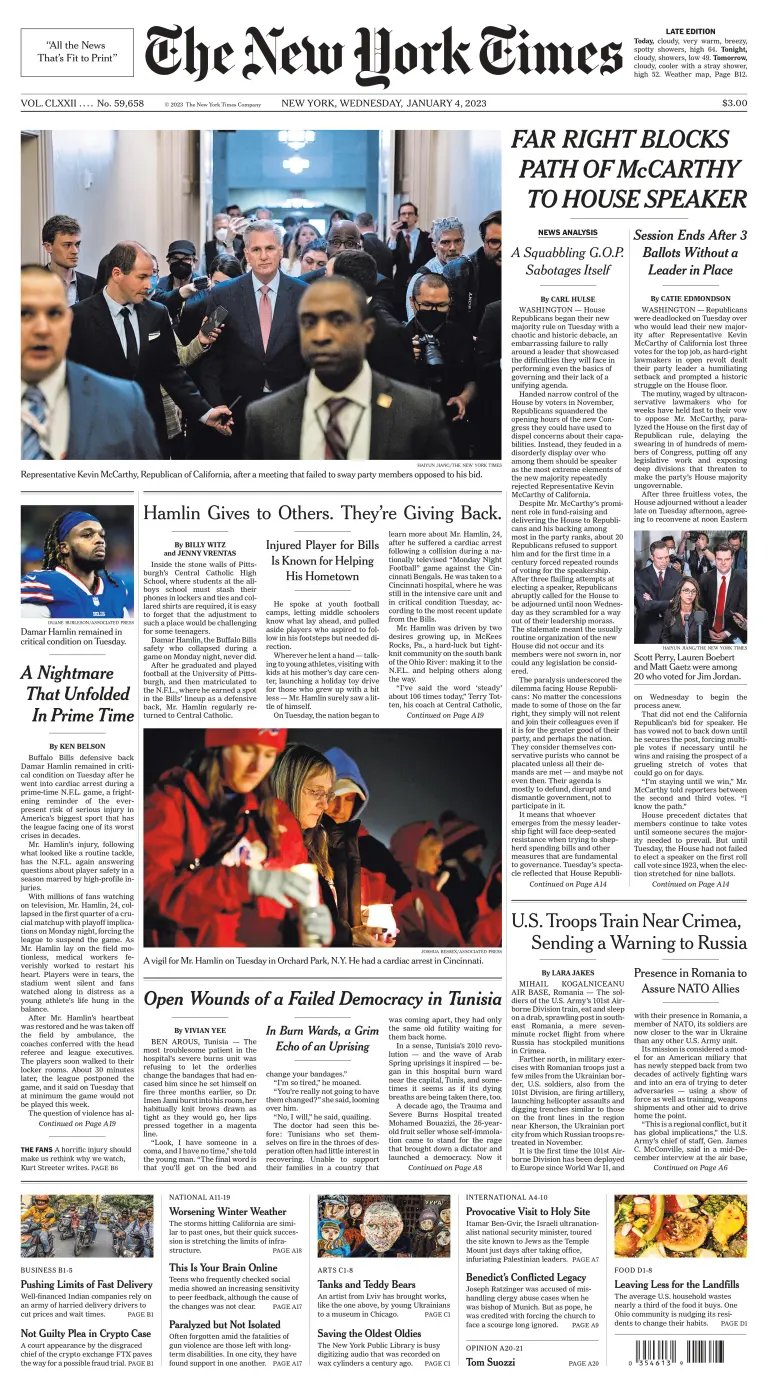
On the first day of the new Congress, Representative Kevin McCarthy fell short repeatedly in his bid to become speaker as a right-wing rebellion prompted a historic floor fight.
An uncle of Damar Hamlin, a Bills safety who went into cardiac arrest during Monday’s game, said Tuesday night that doctors were working to get his nephew breathing on his own without a ventilator.
Hamlin, a Buffalo Bills safety who went into cardiac arrest during a game Monday night, asserted himself as a leader in high school — and kept going back to help others after he graduated.
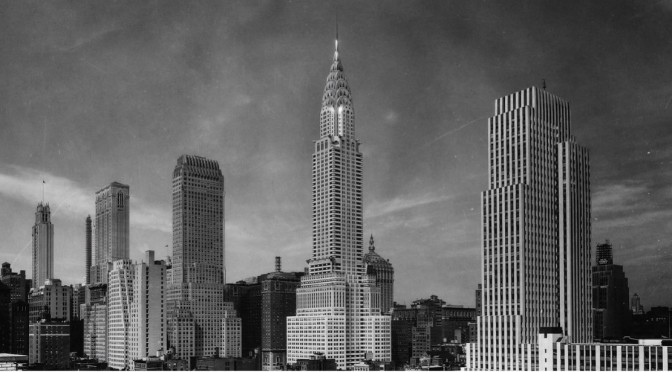
Today Michael Wyetzner of Michielli + Wyetzner Architects returns to Architectural Digest for a deep, detail-oriented break down of New York City’s singular Chrysler Building. From its unmistakable Art Deco design to the hidden details that echo its automotive inspiration, see why the Chrysler Building is an iconic staple of the Manhattan skyline.
HISTORY
The story of the Chrysler Building began in 1928, when automotive titan Walter P. Chrysler, founder of Chrysler Corporation, bought the property from Coney Island developer William H. Reynolds for $2 million. Chrysler hired architect William Van Alen, who had previously designed a skyscraper for Reynolds on the site, to create the world’s tallest tower. Construction on Chrysler’s project began in 1929 and was completed in 1930. Reaching a height of 1,048 feet, including its 125-foot steel spire, the Chrysler Building surpassed the Woolworth Building and 40 Wall Street in Lower Manhattan in a “Race to the Sky” to claim the tallest building in the world–a title it held until 1931. The Chrysler Building still reigns as the world’s most famous skyscraper, playing prominent roles in film and television from Godzilla and Spider-Man to Sex and the City.
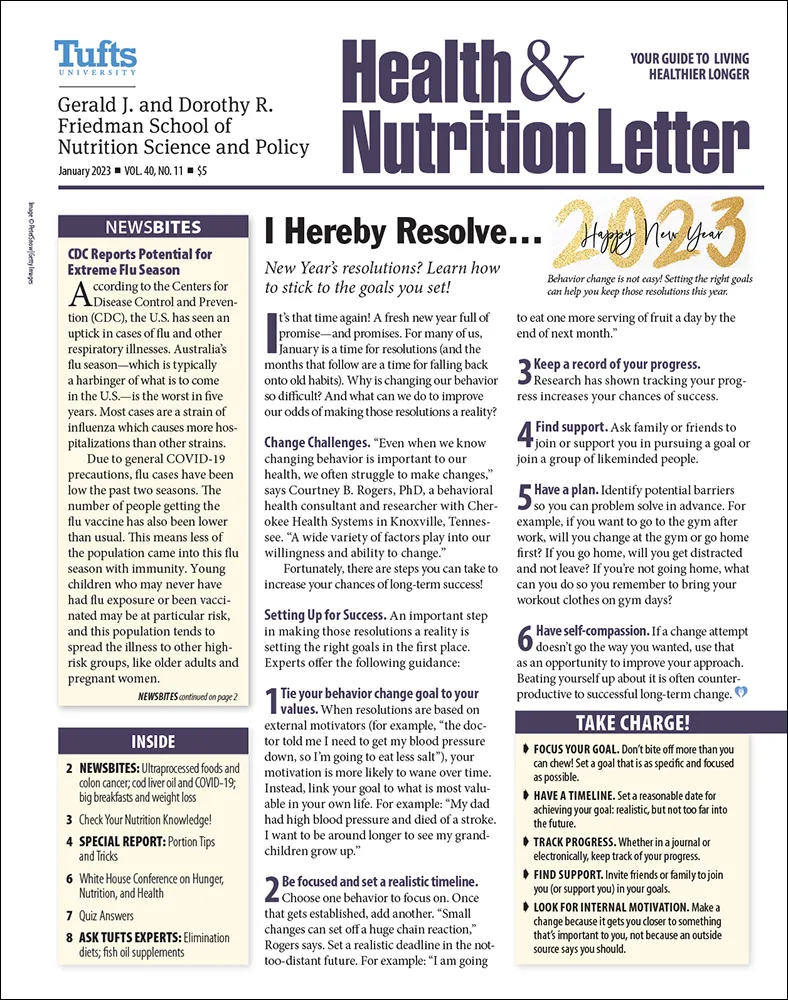
Q: What is an elimination diet? Can it be used for weight loss?
A: Alicia Romano, MS, RD, CSNC, a registered dietitian/nutritionist with the Frances Stern Nutrition Center who specializes in gastrointestinal diseases and food allergies, answers: “I’m glad you asked this question! Elimination diets are sometimes used as diagnostic or treatment tools. They are not for weight loss.















 Boomers Daily