

Radio News 24/7 reports: Russia rolls out its Sputnik vaccine, a 6-year Japanese space mission returns sample from an asteroid, and other top world news.

Radio News 24/7 reports: Russia rolls out its Sputnik vaccine, a 6-year Japanese space mission returns sample from an asteroid, and other top world news.
Cromer is a coastal town and civil parish on the north coast of the English county of Norfolk. It is approximately 23 miles north of the county town of Norwich, 116 miles north-northeast of London and 4 miles east of Sheringham on the North Sea coastline.
Cromer is a traditional Victorian seaside resort, with a sand and shingle beach popular for swimming and surfing. Many of the buildings in the town date back to the Victorian era, although the town has expanded rapidly in the last fifty years. Some shelter is provided by the pier, which houses a theatre and gardens.Cromer beach and pier are part of the quintessentially Victorian seaside resort of Cromer, on the popular North Norfolk coast. Just along the road from Sheringham and West Runton, and just around the corner from Overstrand, Cromer beach, just like many other Norfolk beaches, has so much to offer, from the little fun fair on the promenade to a museum on the beach front, to the wonderful iconic Pier with its Pavilion Theatre and lifeboat station at the end. Never a dull moment.
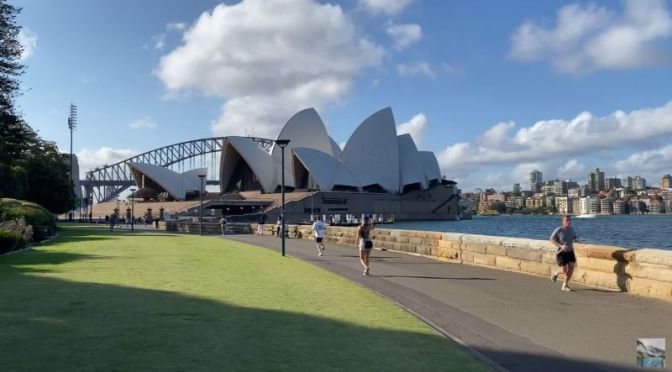
Filmed on November 24th, 2020 in Sydney, Australia.
【Locations】 00:00 Preview 00:24 Starting Point 00:32 Royal Botanic Garden Sydney 26:47 Sydney Opera House
The Royal Botanic Garden, Sydney is a heritage-listed major 30-hectare botanical garden, event venue and public recreation area located at Farm Cove on the eastern fringe of the Sydney central business district, in the City of Sydney local government area of New South Wales, Australia.
The St. Regis Venice combines historic legacy with modern luxury in a privileged location beside the Grand Canal surrounded by views across some of Venice’s most iconic monuments. Avant-garde in outlook and revolutionary in design, the hotel is an expression of the cultural curiosity of Venice and the innovation of modern-day against a pedigreed backdrop.
In this video, we show highlights of a memorable Cruise trip between Spiez and Interlaken West in the autumn season. Recording- Oct 22, 2020.
Lake Thun is an Alpine lake in Switzerland’s Bernese Oberland region. Its shore is dotted with towns, including Thun, and Romanesque churches. In Thun’s old town, 12th-century Thun Castle houses a museum exhibiting prehistoric and medieval artifacts. To the south, Schadau Park has the Thun Panorama, a 19th-century 360-degree painting of the town. Farther south is Spiez Castle, with furnished 15th-century courtrooms.
Aptera Motors has introduced the first solar electric vehicle (sEV) that requires no charging for most daily use and boasts a range of up to 1,000 miles per full charge, shattering industry performance achievements to date. Aptera leverages breakthroughs in lightweight structures, low-drag aerodynamics and cooling, material science, and manufacturing processes to deliver the most efficient vehicle ever made available to consumers. Aptera’s Never Charge is built into every vehicle and is designed to harvest enough sunlight to travel over 11,000 miles per year in most regions.
Learn more about Aptera: https://www.aptera.us
Syndicated columnist Mark Shields and New York Times columnist David Brooks join Judy Woodruff to discuss the week in politics, including the Biden’s team’s transition to the White House and the impact of Trump’s election fraud claims.
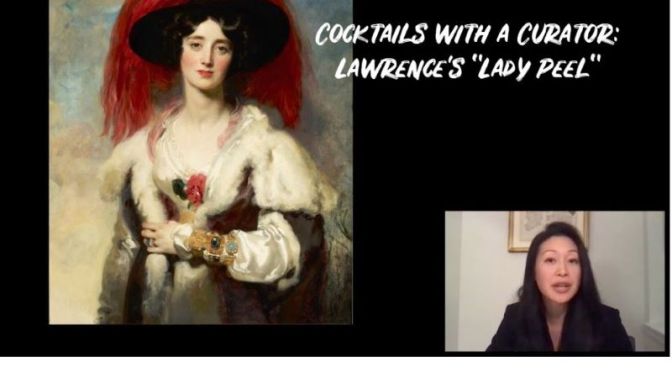
In this week’s episode of “Cocktails with a Curator,” Curator Aimee Ng explores the history behind Sir Thomas Lawrence’s celebrated portrait of Julia, Lady Peel. When it was shown at the Royal Academy, in 1827, this painting was hailed as Sir Thomas’s greatest portrait—and one of the great works of modern art at the time.
It’s easy to see why: the sitter projects authority, confidence, and ease despite her flamboyant, over-the-top outfit. Sir Thomas’s depiction of Lady Peel is closely related to Peter Paul Rubens’s famous “Chapeau de Paille,” which had recently entered the collection of her husband, Sir Robert Peel. In recognition of the lavish bracelets and rings worn by the sitter, this week’s complementary cocktail is the Bijou (French for “jewel”).
To view this painting in detail, please visit our website: https://www.frick.org/ladypeel

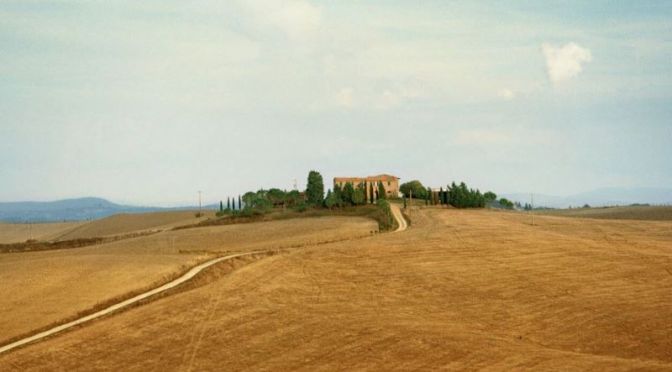
Even now, the approach to the 1,200-acre property is just as it must have been centuries ago: a long, winding ride through pale, undulating fields, leading to a dignified hilltop retreat. The three-story ivy-wrapped building is ringed by 20-foot obelisk-like cypress trees — a private citadel entered through a wrought-iron gate. Beyond the vista of olive groves, another fortresslike outcropping is visible in the distance: the mottled russet city of Siena, three miles away.
WHEN RENÉ CAOVILLA, the 82-year-old Venetian shoe designer, was first shown the Tuscan villa he bought in 1977, he fell in love with it instantly. He wasn’t only taken with the house, a 15th-century red brick monastery that had undergone a slow transformation into an austere 20-bedroom private home in the 17th century, but the Chianti landscape as well — the whole of classical history evoked in a flash.

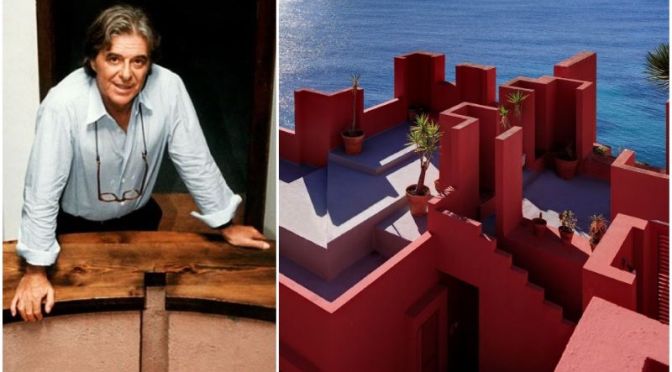
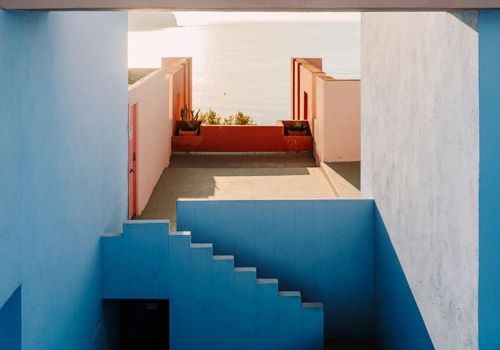
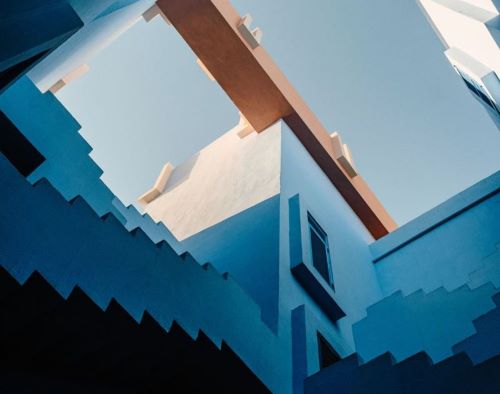
What Bofill creates with exceptional mastery are spaces or the sense of space. He describes this ability, probably jokingly, as being an escape from the claustrophobia of his childhood in Barcelona, living in bourgeois apartments crammed floor to ceiling with decorative objects.
Postmodernity in the work of Bofill does not have to be the abolishing of rules or the death of history. In his own words, postmodernity “breaks with cultural hegemony to adapt models to different cultures, considering the place and its history.” It is more of a reaction against the uniformity of modern architecture.
Ricardo Bofill was born on December 5, 1939, in Barcelona. The son of a contractor, in the dullest hours of the Franco regime. As he explains himself, the feeling of being, not in the middle of the world but the outskirts, in a periphery—a Catalonia that was not just physically isolated from the cultural capitals but also far from national, political decision-making—sparked dreams of freedom and faraway lands, and was probably what later inspired his nomadic lifestyle. The importance of the vernacular, it’s engagement with classicism, Bofill’s sense of atemporal elegance—all find their roots in this early period.








 Boomers Daily