In rural towns across the U.S. hospitals are in crisis. Since 2010, 121 rural hospitals have closed. And, the National Rural Health Association says more than one-third of all rural hospitals in the U.S. are at serious risk of shutting down.
But not all hospitals are losing money. A series of mergers and acquisitions that began in the 1990’s has created massive hospital groups. Many of these hospital consortiums are turning huge profits every year by offering high priced services to well insured patients.
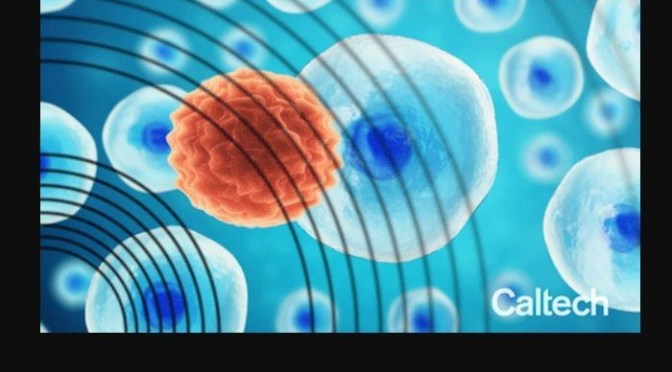
The hope, Lee says, is that ultrasound will kill cancer cells in a specific way that will also engage the immune system and arouse it to attack any cancer cells remaining after the treatment.
A new technique could offer a targeted approach to fighting cancer: low-intensity pulses of ultrasound have been shown to selectively kill cancer cells while leaving normal cells unharmed.
Ultrasound waves—sound waves with frequencies higher than humans can hear—have been used as a cancer treatment before, albeit in a broad-brush approach: high-intensity bursts of ultrasound can heat up tissue, killing cancer and normal cells in a target area. Now, scientists and engineers are exploring the use of low-intensity pulsed ultrasound (LIPUS) in an effort to create a more selective treatment.
A study describing the effectiveness of the new approach in cell models was published in Applied Physics Letters on January 7. The researchers behind the work caution that it is still preliminary—it still has not been tested in a live animal let alone in a human, and there remain several key challenges to address—but the results so far are promising.
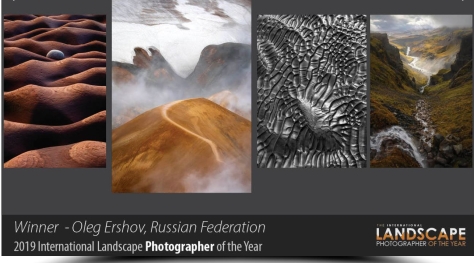
From website: Congratulations to Oleg Ershov, Russian Federation, the International Landscape Photographer of the Year 2019!
And to all the other winners and, most importantly, all the Top 101 photographers! It was a huge year and one of the toughest yet – the quality continues to get better and better!
The prize winners are:
Oleg Ershov, Russian Federation, the International Landscape Photographer of the Year 2019
光 杨 (Yang Guang), China, The International Landscape Photographer of the Year 2019 – Second Place
Blake Randall, Canada, The International Landscape Photographer of the Year 2019 – Third Place
From a British Medical Journal (BMJ) Open Heart online article:
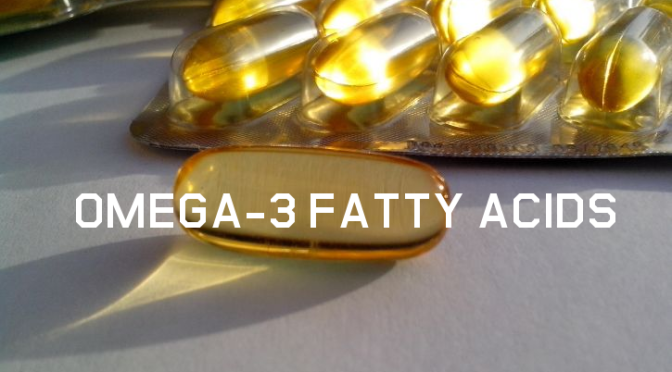
The intake of marine omega-3s has consistently been found to have antiarrhythmic effects. When marine omega-3s are consumed, there is an increase in cellular membrane fluidity, inhibition of L-type calcium channels and a reduction in the chance of arrhythmic events during susceptible times. Prospective data suggest that maintaining an omega-3 index of about 8%, which requires consuming seafood rich in omega-3 up to five times per week or consuming over 3 g of EPA and DHA per day, may provide the greatest protection against arrhythmic events.
Marine omega-3s for the prevention of arrhythmias
Omega-3s have been theorised to increase membrane fluidity by reducing compression of the acyl chains of membrane phospholipid fatty acids, which can lead to a reduction in the ‘spring-like’ tension on membrane ion channels. This spring-like tension can reduce the ability of ions to freely move in and out of the ion channel and hence reduce its conductance. This is known as the ‘Andersen membrane spring-like tension hypothesis’ and is just one way marine omega-3s may prevent arrhythmias.
Dietary omega-3s are mainly consumed as triglycerides, which are absorbed as free fatty acids and monoglycerides. These fats then get rapidly resynthesised in the intestine and liver back to triglycerides with subsequent integration into chylomicrons, very low-density lipoprotein and low-density lipoprotein (LDL) (LDL can actually deliver omega-3s to tissues via LDL receptors).
From a New Yorker online article (February 5, 2020):
He was the real thing, the last of the great middle-European intellectual journeyers, one with Benjamin and Cioran and the other exiles, for whom books were the one constant country and reading them a matter of life and death. With him gone, we can only reread his writing, determined to honor the intensity of his commitment by intensifying our own.
The word “awesome” is most easily used by adolescents these days, but the range of learning that the critic and novelist George Steiner possessed was awesome in the old-fashioned, grown-up sense: truly, genuinely awe-inspiring. Steiner, who died on Monday, at the age of ninety, knew modern languages, ancient languages, classical literature, and modern literature. He had memorized the rhymes of Racine and he could elucidate the puns in Joyce and he could tell you why both were, in his thorny but not cheaply won view, superior to the prolixities of Shakespeare. He was what many people call a human encyclopedia—not in the American sense, a blank vault of facts, but in the French Enlightenment one: a critical repository of significant knowledge.
This Spanish region is home to many large-scale producers, but at Castillo de Cuzcurrita things are done differently. Vintner Ana Martin Onzain unveils how their aged wines – grown and made exclusively in this small village – bring people together.
HISTORY: Little is known of its history of Cuzcurrita prior to the 14th century. On 15 November 1367, King Enrique II of Castile rewarded the Alcalde Mayor of the Hijosdalgo of Castile, Juan Martínez de Rojas by granting him the title of Feudal Lord of Cuzcurrita with all its lands and rights.
In the 16th century, during the reign of Philip II, the 9th Lord of Cuzcurrita, Pedro Velasco, bastard son of Bernardino de Velasco and the wife of Pedro Suárez de Figueroa, established the entailed estate by marrying Marta de Rojas y Osorio, carving his coat of arms over the entrance to the castle.The fortress, which had been erected by the Suárez Figeroa family between the 14th and 15th centuries, remained in the hands of the Velasco-Rojas family until the last century, subsequently passing through various hands until it was bought by the Sáinz de Incháustegui family, Counts of Alacha, in 1947, who went on to restore it and make it their family home.
Within the irregular square floor plan of this fortress stands the keep, one of the most characteristic of its kind in La Rioja due to the harmony of its dimensions and its few arched openings. This square tower rises from right in the middle of the castle with small, rectangular openings.
Join UCLA nephrologist Anjay Rastogi, MD, for an overview of high blood pressure and ways to manage the condition. We will discuss relevant treatment modalities including medications and lifestyle changes.
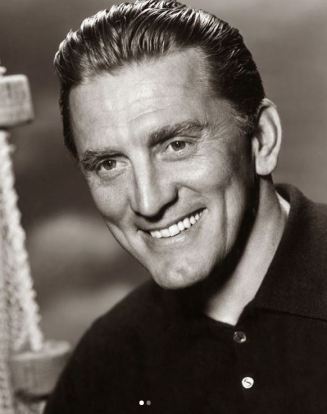
“It is with tremendous sadness that my brothers and I announce that Kirk Douglas left us today at the age of 103. To the world he was a legend, an actor from the golden age of movies who lived well into his golden years, a humanitarian whose commitment to justice and the causes he believed in set a standard for all of us to aspire to.
But to me and my brothers Joel and Peter he was simply Dad, to Catherine, a wonderful father-in-law, to his grandchildren and great grandchild their loving grandfather, and to his wife Anne, a wonderful husband.
Kirk’s life was well lived, and he leaves a legacy in film that will endure for generations to come, and a history as a renowned philanthropist who worked to aid the public and bring peace to the planet.
Let me end with the words I told him on his last birthday and which will always remain true. Dad- I love you so much and I am so proud to be your son.”
Featuring articles on lung-cancer screening in the NELSON trial, ribociclib and fulvestrant in metastatic breast cancer, vitamin D in pregnancy and asthma, treatment thresholds for neonatal hypoglycemia, and CAR-NK cells in anti-CD19 lymphoid tumors; a review article on placebo and nocebo effects; a Clinical Problem-Solving describing a rapid change in pressure; and Perspective articles on altruism in Extremis, on abuses of FDA regulatory procedures, and on joining forces against delirium.
A “mesmerizing” re-imagination of the final months of World War II (Kate Quinn, author of The Alice Network), Hannah’s War is an unforgettable love story about an exceptional woman and the dangerous power of her greatest discovery.
.
Berlin, 1938. Groundbreaking physicist Dr. Hannah Weiss is on the verge of the greatest discovery of the 20th century: splitting the atom. She understands that the energy released by her discovery can power entire cities or destroy them. Hannah believes the weapon’s creation will secure an end to future wars, but as a Jewish woman living under the harsh rule of the Third Reich, her research is belittled, overlooked, and eventually stolen by her German colleagues. Faced with an impossible choice, Hannah must decide what she is willing to sacrifice in pursuit of science’s greatest achievement.
New Mexico, 1945. Returning wounded and battered from the liberation of Paris, Major Jack Delaney arrives in the New Mexican desert with a mission: to catch a spy. Someone in the top-secret nuclear lab at Los Alamos has been leaking encoded equations to Hitler’s scientists. Chief among Jack’s suspects is the brilliant and mysterious Hannah Weiss, an exiled physicist lending her talent to J. Robert Oppenheimer’s mission. All signs point to Hannah as the traitor, but over three days of interrogation that separate her lies from the truth, Jack will realize they have more in common than either one bargained for.
Hannah’s War is a thrilling wartime story of loyalty, truth, and the unforeseeable fallout of a single choice.


 The hope, Lee says, is that ultrasound will kill cancer cells in a specific way that will also engage the immune system and arouse it to attack any cancer cells remaining after the treatment.
 Ultrasound waves—sound waves with frequencies higher than humans can hear—have been used as a cancer treatment before, albeit in a broad-brush approach: high-intensity bursts of ultrasound can heat up tissue, killing cancer and normal cells in a target area. Now, scientists and engineers are exploring the use of low-intensity pulsed ultrasound (LIPUS) in an effort to create a more selective treatment.


 The intake of marine omega-3s has consistently been found to have antiarrhythmic effects. When marine omega-3s are consumed, there is an increase in cellular membrane fluidity, inhibition of L-type calcium channels and a reduction in the chance of arrhythmic events during susceptible times. Prospective data suggest that maintaining an omega-3 index of about 8%, which requires consuming seafood rich in omega-3 up to five times per week or consuming over 3 g of EPA and DHA per day, may provide the greatest protection against arrhythmic events.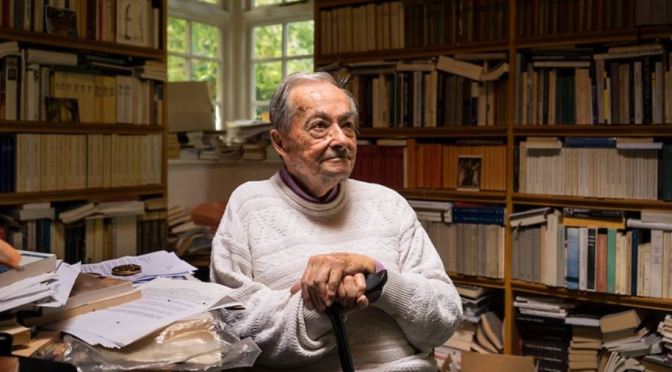
 He was the real thing, the last of the great middle-European intellectual journeyers, one with Benjamin and Cioran and the other exiles, for whom books were the one constant country and reading them a matter of life and death. With him gone, we can only reread his writing, determined to honor the intensity of his commitment by intensifying our own.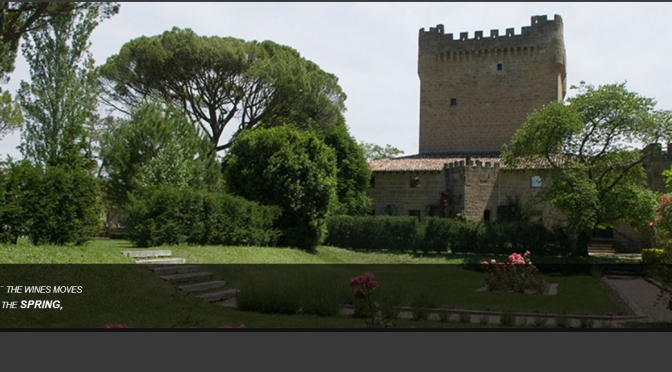
 This Spanish region is home to many large-scale producers, but at Castillo de Cuzcurrita things are done differently. Vintner Ana Martin Onzain unveils how their aged wines – grown and made exclusively in this small village – bring people together.
 HISTORY: Little is known of its history of Cuzcurrita prior to the 14th century. On 15 November 1367, King Enrique II of Castile rewarded the Alcalde Mayor of the Hijosdalgo of Castile, Juan Martínez de Rojas by granting him the title of Feudal Lord of Cuzcurrita with all its lands and rights.

 “It is with tremendous sadness that my brothers and I announce that Kirk Douglas left us today at the age of 103. To the world he was a legend, an actor from the golden age of movies who lived well into his golden years, a humanitarian whose commitment to justice and the causes he believed in set a standard for all of us to aspire to.
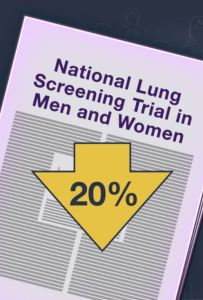 Featuring articles on lung-cancer screening in the NELSON trial, ribociclib and fulvestrant in metastatic breast cancer, vitamin D in pregnancy and asthma, treatment thresholds for neonatal hypoglycemia, and CAR-NK cells in anti-CD19 lymphoid tumors; a review article on placebo and nocebo effects; a Clinical Problem-Solving describing a rapid change in pressure; and Perspective articles on altruism in Extremis, on abuses of FDA regulatory procedures, and on joining forces against delirium.

 A “mesmerizing” re-imagination of the final months of World War II (Kate Quinn, author of The Alice Network), Hannah’s War is an unforgettable love story about an exceptional woman and the dangerous power of her greatest discovery.
 Boomers Daily