
Medicare for All? ACA? Another option? This event will explore health insurance proposals during the 2020 Presidential election year. Webcast, Jan 13, noon-1pm ET.

Medicare for All? ACA? Another option? This event will explore health insurance proposals during the 2020 Presidential election year. Webcast, Jan 13, noon-1pm ET.
Follow director Brad Bestelink as he captures the lives of hippos, a task that few filmmakers have attempted before.
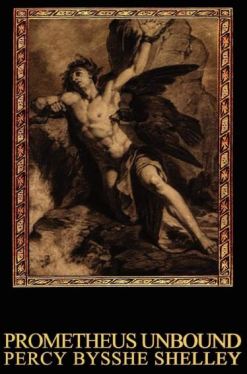 Prometheus Unbound is a four-act lyrical drama by Percy Bysshe Shelley, first published in 1820. It is concerned with the torments of the Greek mythological figure Prometheus, who defies the gods and gives fire to humanity, for which he is subjected to eternal punishment and suffering at the hands of Zeus. It is inspired by the classical Prometheia, a trilogy of plays attributed to Aeschylus. Shelley’s play concerns Prometheus’ release from captivity, but unlike Aeschylus’ version, there is no reconciliation between Prometheus and Jupiter (Zeus). Instead, Jupiter is abandoned by his supportive elements and falls from power, which allows Prometheus to be released.
Excerpt:
As you speak, your words
Fill, pause by pause, my own forgotten sleep
With shapes. Methought among these lawns together
We wandered, underneath the young gray dawn,
And multitudes of dense white fleecy clouds
Were wandering in thick flocks along the mountains
Shepherded by the slow, unwilling wind;
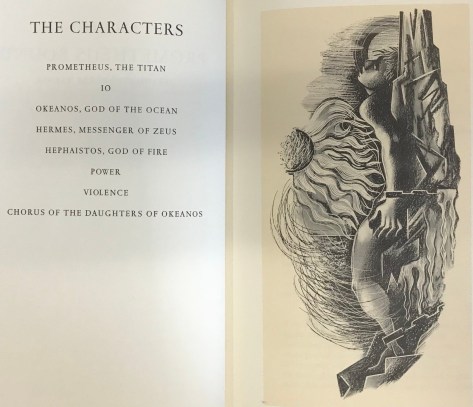
Political – Prometheus, then, is also Shelley’s answer to the mistakes of the French Revolution and its cycle of replacing one tyrant with another. Shelley wished to show how a revolution could be conceived which would avoid doing just that, and in the end of this play, there is no power in charge at all; it is an anarchist’s paradise.
Shelley finishes his “Preface” to the play with an evocation of his intentions as a poet:
My purpose has hitherto been simply to familiarize the highly refined imagination of the more select classes of poetical readers with beautiful idealisms of moral excellence; aware that, until the mind can love, and admire, and trust, and hope, and endure, reasoned principles of moral conduct are seeds cast upon the highway of life which the unconscious passenger tramples into dust, although they would bear the harvest of his happiness.
From Wikipedia
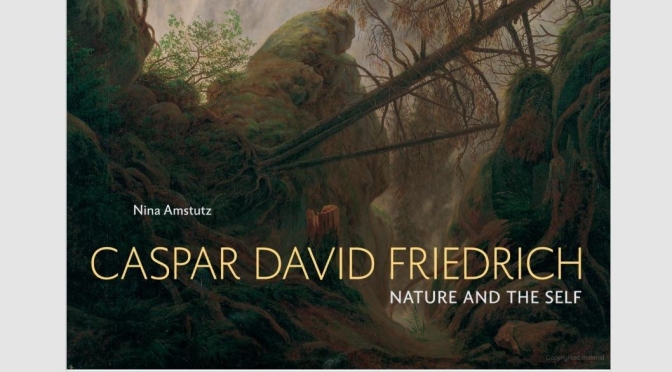
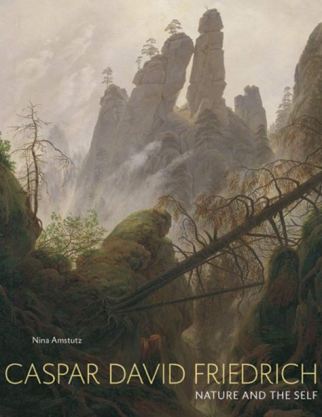 In this revelatory book, Nina Amstutz combines fresh visual analysis with broad interdisciplinary research to investigate the intersection of landscape painting, self-exploration, and the life sciences in Friedrich’s mature work. Drawing connections between the artist’s anthropomorphic landscape forms and contemporary discussions of biology, anatomy, morphology, death, and decomposition, Amstutz brings Friedrich’s work into the larger discourse surrounding art, nature, and life in the 19th century.
Best known for his atmospheric landscapes featuring contemplative figures silhouetted against night skies and morning mists, Caspar David Friedrich (1774–1840) came of age alongside a German Romantic philosophical movement that saw nature as an organic and interconnected whole. The naturalists in his circle believed that observations about the animal, vegetable, and mineral kingdoms could lead to conclusions about human life. Many of Friedrich’s often-overlooked later paintings reflect his engagement with these philosophical ideas through a focus on isolated shrubs, trees, and rocks. Others revisit earlier compositions or iconographic motifs but subtly metamorphose the previously distinct human figures into the natural landscape.
Nina Amstutz is assistant professor in the history of art and architecture at the University of Oregon.
Named after the late Frederic Mohs, M.D., Mohs micrographic surgery is a highly precise excision technique in which the cancer is removed in stages, one tissue layer at a time. After each removal step, the layer is examined under a microscope to determine whether cancer remains in the patient’s skin and, if present, where exactly it is located so that the surgeon can pinpoint where to remove the remaining skin cancer. This allows for the smallest scar and best cosmetic result.
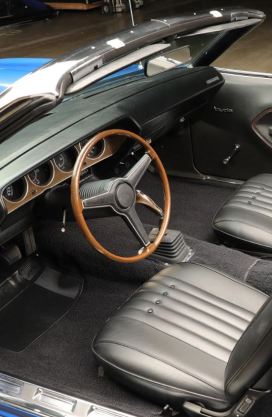 The Plymouth Barracuda is a two-door pony car manufactured by Plymouth from 1964 to 1974.
The third generation, offered from 1970 to 1974, was no longer based on the A-body, but on the Chrysler E-body. The completely new design was similar to the Dodge Challenger and available in hardtop and convertible body styles. The Barracuda was discontinued after the 1974 model year.
 The redesign for the 1970 Barracuda removed all its previous commonality with the Valiant. The original fastback design was deleted from the line and the Barracuda now consisted of coupe and convertible models. The all-new model, styled by John E. Herlitz, was built on a shorter, wider version of Chrysler’s existing B platform, called the E-body. Sharing this platform was the newly launched Dodge Challenger; however no exterior sheet metal interchanged between the two cars, and the Challenger, at 110 inches (2,794 mm), had a wheelbase that was 2 inches (51 mm) longer than the Barracuda.
The E-body Barracuda was now “able to shake the stigma of ‘economy car’.”
From Wikipedia
Filmed and Edited by: Joerg Daiber
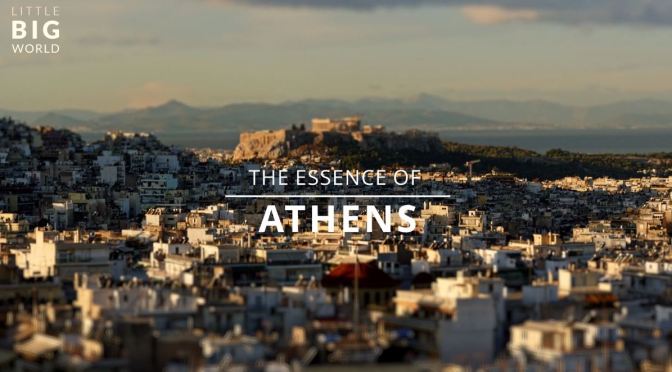
Athens is the capital and largest city of Greece. The heritage of the classical era is still evident by ancient monuments and works of art, the most famous of all being the Parthenon on the Acropolis.
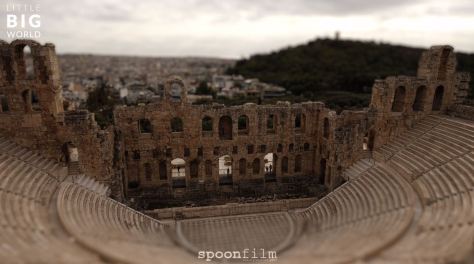
The incredible amount of Monuments and tourists in this city make it feel like you are walking through an open air museum at some times in the city center. However it is still an amazing place to visit.
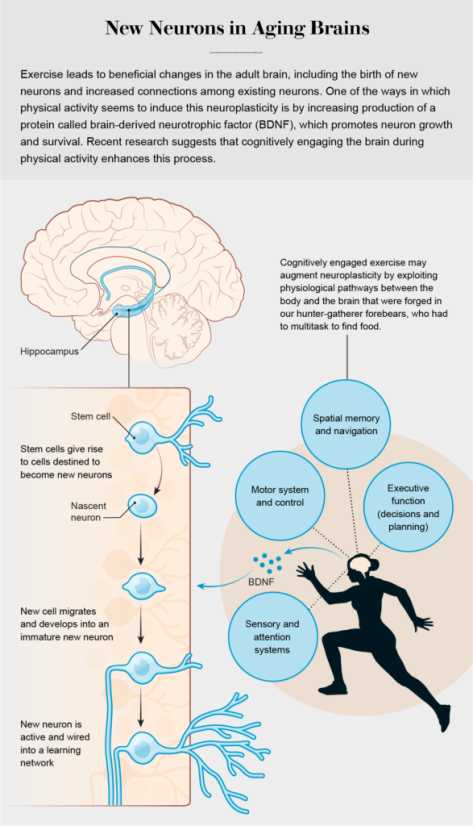

Researchers have also documented clear links between aerobic exercise and benefits to other parts of the brain, including expansion of the prefrontal cortex, which sits just behind the forehead. Such augmentation of this region has been tied to sharper executive cognitive functions, which involve aspects of planning, decision-making and multitasking—abilities that, like memory, tend to decline with healthy aging and are further degraded in the presence of Alzheimer’s. Scientists suspect that increased connections between existing neurons, rather than the birth of new neurons, are responsible for the beneficial effects of exercise on the prefrontal cortex and other brain regions outside the hippocampus.
Filmed and Edited by: Martin Heck
Home to the darkest and cleanest skies in the world, the Atacama Desert offers views to the nightsky like no other. 2 years after the very successful first video “Nox Atacama” we return to this magnificent region and get rewarded with uncountable numbers of stars and fantastic nebulae in one of the most quiet a empty places on earth. Not a single noise distracts from the grand show the nightsky has to offer.

Filmed over a month in Mar/April 2019, I worked in freezing temperatures, altitudes up to 5200m/17000ft, salt lakes and icy slopes. The Atacama is not welcoming to life and equipment. The lack of oxygen makes it tough to get anything done in these high altitudes. But it provides without doubt for epic and vast vistas of one of the greatest landscapes on earth.
MUSIC: “Back to Earth” and “Gamma Ray” – Hector Posser
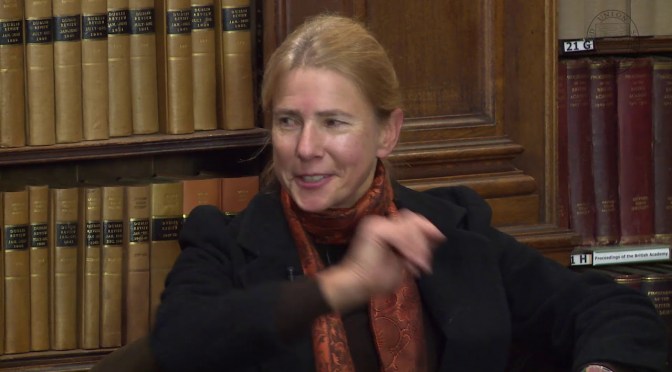
Lionel Shriver (born Margaret Ann Shriver; May 18, 1957) is an American journalist and author who lives in the United Kingdom. She is best known for her novel We Need to Talk About Kevin, which won the Orange Prize for Fiction in 2005 and was adapted into the 2011 film of the same name, starring Tilda Swinton.
Shriver has written for The Wall Street Journal, the Financial Times, The New York Times, The Economist, contributed to the Radio Ulster program Talkback and many other publications. In July 2005, Shriver began writing a column for The Guardian, in which she has shared her opinions on maternal disposition within Western society, the pettiness of British government authorities, and the importance of libraries (she plans to will whatever assets remain at her death to the Belfast Library Board, out of whose libraries she checked many books when she lived in Northern Ireland). She currently writes regularly for The Spectator.
In online articles, she discusses in detail her love of books and plans to leave a legacy to the Belfast Education and Library Board.
From Wikipedia





 Boomers Daily