Category Archives: Reviews

Analysis: Are Delivery Apps Good For Restaurants?

While indoor dining has dropped way down during the pandemic, food delivery has grown considerably. DoorDash and Uber Eats, the two largest delivery apps by market share both saw their sales double from the end of 2019 to the end of 2020.

But while it might be an easy decision for customers to use these third-party delivery apps, the decision for restaurants is not so easy. There is a lot to consider, and it’s not a one-size-fits-all solution.

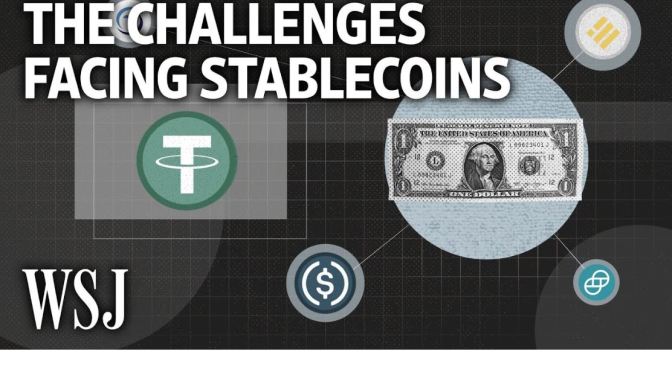
Cryptocurrency: The Challenges Facing New ‘Stablecoins’ (WSJ Video)

Bitcoin’s volatility has limited its adoption for payments, so entrepreneurs created stablecoins: cryptocurrencies pegged to assets such as the U.S. dollar. But the recent settlement of a probe into the most popular stablecoin, tether, shows the need for transparency in the growing industry. Photo illustration: Sharon Shi/WSJ

Analysis: How ‘Physics’ & Rising Tides Freed Cargo Ship In The Suez Canal

It took seven days, heavy machinery and an international team of salvage workers, but it the end it was a force of nature – rising tides – that helped finally free the #Ever#Given​ cargo ship a week after it got stuck in the #Suez#Canal​ and blocked one of the world’s busiest waterways.

Cancer: ‘Understanding And Treating ‘Lymphoma’

Lymphoma is a cancer of the lymphatic system, which is part of the body’s germ-fighting network. The main two subtypes are Hodgkin lymphoma and non-Hodgkin lymphoma. Because of breakthrough research, this once fatal diagnosis has been transformed into a curable condition. In this Mayo Clinic Minute, Dr. Stephen Ansell, a Mayo Clinic hematologist, discusses the different treatment options.

Biotechnology: ‘mRNA Could Change The World’

The dream of mRNA persevered in part because its core principle was tantalizingly simple, even beautiful: The world’s most powerful drug factory might be inside all of us.

Like so many breakthroughs, this apparent overnight success was many decades in the making. More than 40 years had passed between the 1970s, when a Hungarian scientist pioneered early mRNA research, and the day the first authorized mRNA vaccine was administered in the United States, on December 14, 2020. In the interim, the idea’s long road to viability nearly destroyed several careers and almost bankrupted several companies.

Read full article in The Atlantic

INTERNATIONAL ART: ‘APOLLO MAGAZINE – APRIL 2021’

INSIDE THE ISSUE
 FEATURES | Glenn Adamson on Alice Neel’s compassionate portraits; Antony Gormley interviewed by Gabrielle SchwarzChristopher Turner on the Surrealist houses of Edward James; Morgan Falconer on Jessica Morgan’s ambitious vision for the Dia Art Foundation; Kaywin Feldman on cultural leadership in 2021
REVIEWS | Eve M. Kahn on the opening of the Frick Madison; Sukhdev Sandhu on ‘Grief and Grievance’ at the New Museum; Christopher Baker on friendship and portraiture in 18th-century France; Michael Prodger on art museums in the 21st century
 
MARKET | Susan Moore previews spring auctions and reviews sales in Paris and Brussels; Emma Crichton-Miller on collecting Tiffany glass; Samuel Reilly on Frieze New York and gallery reopenings in London
 
PLUS | Kirsten Tambling on satirical images of Robert Walpole; Tim Smith-Laing on Baudelaire’s cantankerous art criticism; Emilie Bickerton in Eugène Atget’s ParisEmma Crichton-Miller on single-artist museums in Switzerland; Will Wiles on the future of department storesThomas Marks on the Georgian feasts of Niko Pirosmani; Robert O’Byrne on Spain before the Civil War

Top Design: Hariana Tech Smart Ultimate Bed (Video)

This futuristic bed is the ultimate enclosure system that comes with everything you need in a room, ALL IN ONE. It features a massage chair with a remote, built in Bluetooth speakers, a bookshelf, reading lamp, and a desk for those who need a laptop in their bed. Never leave bed with a low battery, this has a built in charging station perfect for night owls. Adjust the top headrests to get maximum comfort in your bed.

Access an ottoman for guests that is stored under the conditioning unit. If you would rather laydown on the side of the bed and watch TV, do not fret. There is a massage chaise attached just for you. This adult playground is revolutionary for many reasons. The frame is made of pine wood for long lasting quality. Available in multiple colored leather options. Only make one purchase, and everything you need is at your disposal.

Website

Art: ‘Hurricane Paintings’ Of Chinese-French Painter Zao Wou-Ki (1921 – 2013)

Zao Wou-Ki was a Chinese-French painter. He was a member of the Académie des Beaux-Arts in Paris. Zao Wou-Ki graduated from the China Academy of Art in Hangzhou, where he studied under Fang Ganmin and Wu Dayu.

Master artist Zao Wou-Ki was one of the titans of Chinese art in the post- war period. His energetic painting ‘13.02.62’, offered in our upcoming auction Beyond Legends: Modern Art Evening Sale (18 April | Hong Kong), is from the artist’s powerful ‘Hurricane Period’ when he arrived at the pinnacle of his career. Discover how Zao perfectly fused Eastern culture with Western modernism, bringing dynamic inspiration to this work.

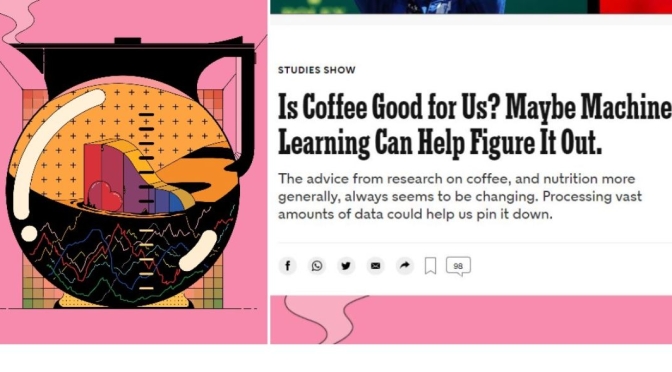
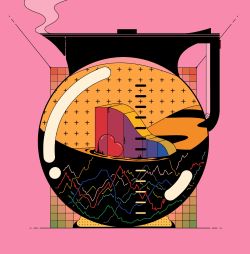
Studies: ‘Coffee’ – Machine Learning Review Shows Benefits Of Drinking It

“It may be good for you,” says Dariush Mozaffarian, dean of the Friedman School of Nutrition Science and Policy at Tufts University. “I think we can say with good certainty it’s not bad for you.” (Additives are another story.)

After the link appeared between coffee intake and a reduced risk of heart failure in the Framingham data, Kao confirmed the result by using the algorithm to correctly predict the relationship between coffee intake and heart failure in two other respected data sets. Kosorok describes the approach as “thoughtful” and says that it “seems like pretty good evidence.”

Should you drink coffee? If so, how much? These seem like questions that a society able to create vaccines for a new respiratory virus within a year should have no trouble answering. And yet the scientific literature on coffee illustrates a frustration that readers, not to mention plenty of researchers, have with nutrition studies: The conclusions are always changing, and they frequently contradict one another.

Read full article in the New York Times