Category Archives: History

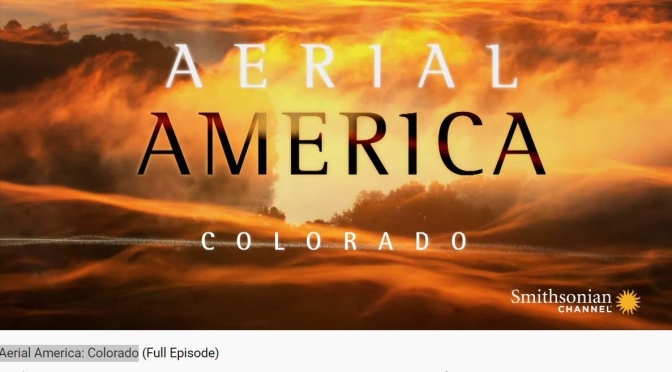
Top Travel Videos: “Aerial America – Colorado” (Smithsonian Channel)

Get ready for a Rocky Mountain adventure over the state that boasts some of the highest peaks, tallest sand dunes and largest single-site brewery in America. Every year Colorado attracts music lovers, ski buffs, and sports fans drawn to its Red Rocks, Aspen slopes and the Broncos’ Mile High Stadium. But it is also a state with a history, marked by war, a gold rush and legendary bank robberies. Through it all, Colorado remains a feast for the eyes.

Website

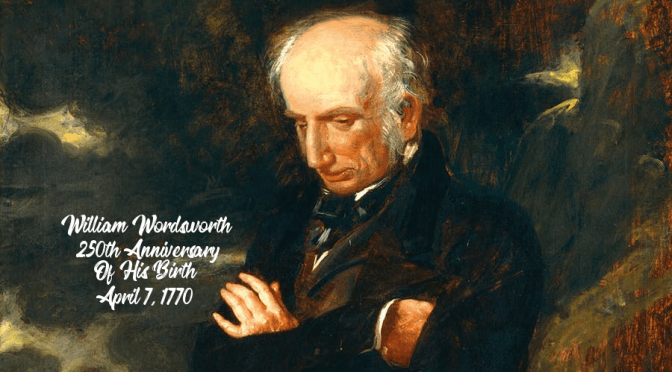
Today: 250th Anniversary Of William Wordsworth’s Birth – “That Inward Eye”

From an Apollo Magazine article (April 7. 2020):

‘They flash upon that inward eye
 Which is the bliss of solitude’
.
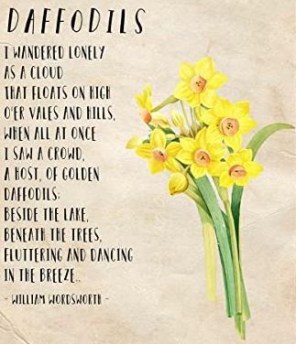
William Wordsworth Daffodils - I Wandered Lonely As A Cloud - Amazon photo‘We are fond of tracing the resemblance between Poetry and Painting,’ wrote William Wordsworth  (1770–1850) in the famous ‘Preface’ to Lyrical Ballads (1800), ‘and, accordingly, we call them Sisters.’ To speak of the ‘sister arts’ was indeed a critical platitude of the age, though as it happens Wordsworth’s attitude towards painting wasn’t normally very sisterly. 


Apollo Magazine logoWhen, in 1840 or so, a well-meaning houseguest called Margaret Gillies made a drawing of the 70-year old Mrs Wordsworth, everyone agreed that it was an excellent likeness; but her kind act was rewarded with a testy and somewhat ungracious sonnet from the sitter’s husband. He preferred to visualise Mary in her salad days: ‘’tis a fruitless task to paint for me, / Who, yielding not to changes Time has made, / By the habitual light of memory see / Eyes unbedimmed, see bloom that cannot fade, / And smiles that from their birth-place ne’er shall flee / Into the land where ghosts and phantoms be’.
.
All she possesses, as a painter, is the outward eye: ‘that inward eye’ is the poet’s hallmark, as of course Miss Gillies would have known from Wordsworth’s most famous poem, the one about the daffodils – ‘They flash upon that inward eye / Which is the bliss of solitude’. By chance we know (because Wordsworth left it on record, saying they were the best thing in the poem) that those two lines were actually contributed by Mary, so the uxoriousness of the thing is double: not only does she evade the merely visual but she also possesses the innate genius to be able to name the imaginative power that so transcends it.
.

Travel & History Books: “Great Camps Of The Adirondacks” – Gorgeous Updated 2nd Edition (2020)

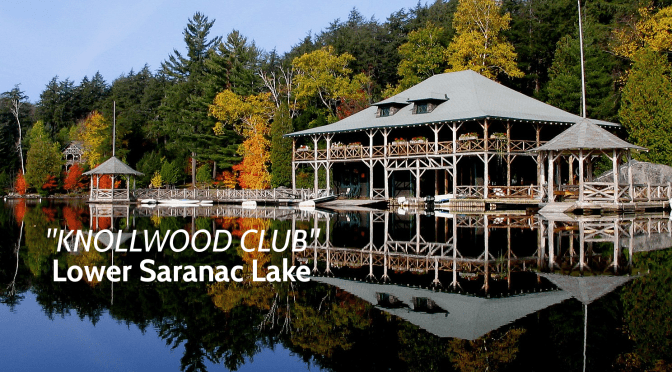
The foremost guide to the historic camps of the Adirondacks―a unique vernacular style of rustic architecture designed to complement the land. Now available in a Great Camps of the Adirondacks Harvey H Kaiser 2020second and enlarged edition, here is the foremost guide to the historic camps within America’s spectacular forest preserve, the six million acre Adirondack Park.

When first published in 1982, Great Camps of the Adirondacks launched a campaign for the preservation of these architectural treasures while also sparking a trend in great camp-inspired home design, a cohesive approach to building that author Harvey H. Kaiser named Adirondack Rustic Style.

Great Camps of the Adirondacks - Harvey Kaiser 2020

In this second edition, preservationists will find a success story. Designers and builders will discover page after page of inspiration. All readers will see the history of a region unfold as Americans from the mid-1870s to the late-1930s, including the very wealthiest New Yorkers, sought out the wilderness. The camps they built as private seasonal retreats are distinguished both as architectural responses to the Adirondack environment in the use of logs and stone, and as successful examples of buildings blended into the forest and the natural contours of the mountains and lakes―homes built to serve as beautiful complements to the land itself.

Harvey H. Kaiser served as the Senior Vice President for Facilities Administration and University Architect at Syracuse University between 1972 and 1995. His 1982 book Great Camps of the Adirondacks popularized the term “Great Camps” to refer to the grand summer residences that wealthy families built in the Adirondack Mountains in the nineteenth century, and revitalized interest in these sites. Several studies on western national park architecture culminated in his 2008 book The National Park Architecture Sourcebook.


Steven Engelhart is the executive director of Adirondack Architectural Heritage (AARCH) located in Keeseville, New York. AARCH is a private, nonprofit. historic preservation organization for New York State’s Adirondack Park, whose mission is to promote better public understanding, appreciation, and stewardship of the region’s architecture, communities, and historic sites.

Read more or purchase

Top New Books: “The Art Of Earth Architecture – Past, Present, Future” (Mar 2020)

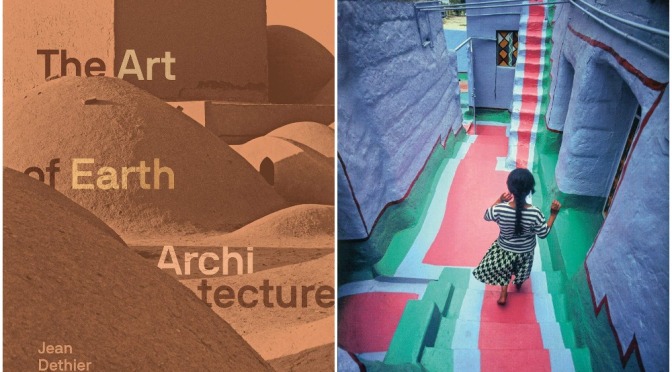
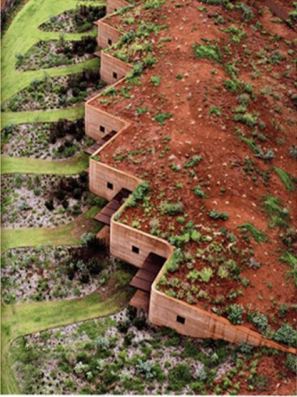
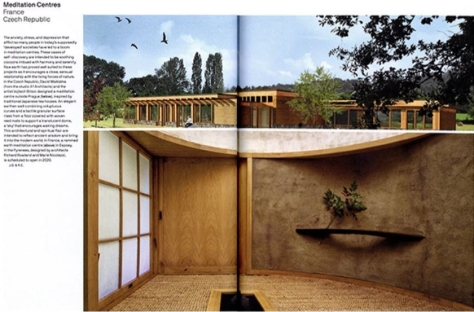
The Art of Earth Architecture Past, Present, Future Jean Dethier March 2020The Art of Earth Architecture demonstrates the wide-ranging applications and sustainability of this building material, while presenting a manifesto for its ecological significance. Featuring raw-earth masterpieces, monumental structures, and little known works, the book includes the temples and palaces of Mesopotamia, the Great Wall of China, large-scale urban developments in Tenochtitlan in Mexico, the medinas of Morocco, and housing in Marrakech and Bogota.

For almost ten thousand years, unbaked earth has been used to build remarkable structures, from simple dwellings to palaces, temples, and fortresses both grand and durable. Jean Dethier spent fifty years researching this landmark global survey, which spans five continents and 250 sites.

This definitive reference features many UNESCO World Heritage sites and contains essays on the historical, technical, and cultural aspects of raw-earth construction from twenty experts in the field, as well as hundreds of photographs, illustrations, and architectural drawings.
The Art of Earth Architecture Past, Present, Future Jean Dethier March 2020

Jean Dethier has dedicated his life to the research, safeguarding, and development of earth structures around the world. Dethier worked at the Centre Pompidou as a curator of influential architectural exhibits for thirty years. Winner of the prestigious Grand Prix national de l’architecture, he sat on the jury of the 2016 Terra Award, the first international prize for contemporary earthen structures.

Read more

Travel & Surrealism: “Jungle Xanadu – The Story Of Las Pozas” (2020)

Filmed, Edited and Written by: Bob Krist

Narrated by: Fabiola Stevenson

Jungle Xanadu - The Story of Las Pozas Short Film by Bob Krist March 26 2020

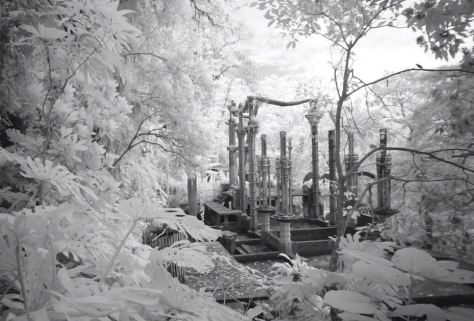
Edward James, a rich eccentric and patron of artists Salvador Dali and Rene Magritte, built a surreal sculpture park in the jungles of the Sierra Gorda in Xilitla, Mexico. The project took 35 years, spreads over 80 acres, and is accessible to the public. This piece is filmed in black & white infrared, a technique that reacts to heat as well as visible light.

Website

Art: “Van Gogh In Paris, 1886” (Hammer Galleries)

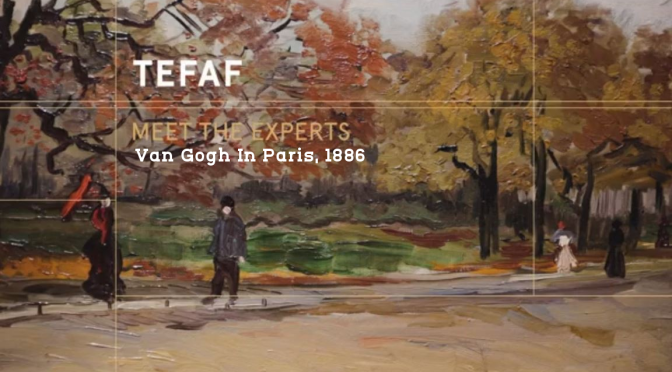
TEFAF’s Meet the Experts presents Howard Shaw from Hammer Gallery shares what Van Gogh would have most likely seen when he visited Paris in 1886. This period of Van Gogh’s life is pivotal to his works as an artist.

History: “European Castle Ruins” Digitally Restored By NeoMam Studios

From AtlasObscura.com (March 26, 2020):

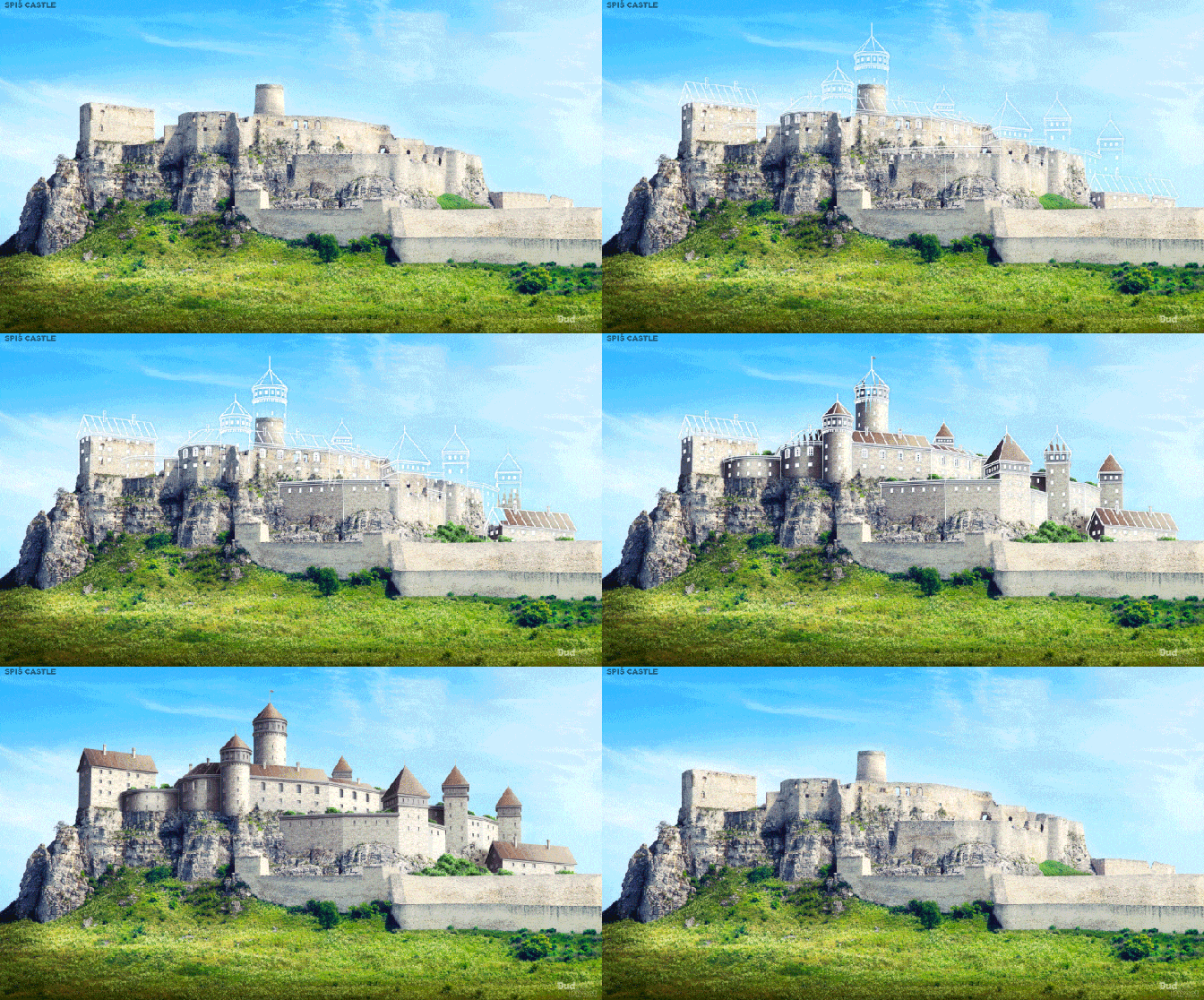
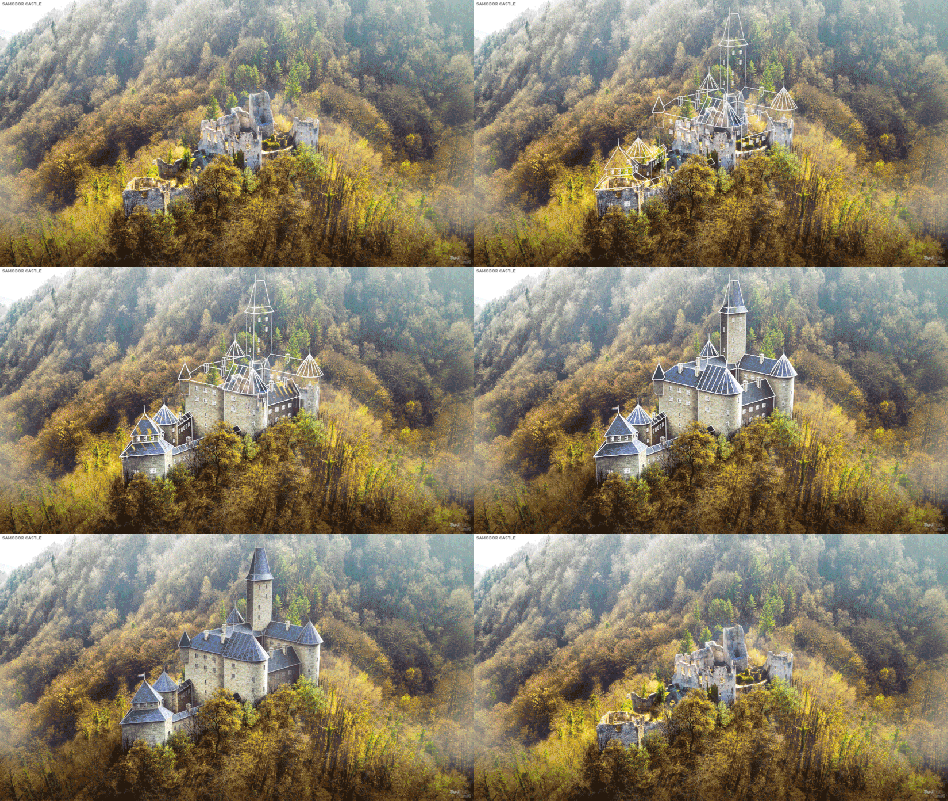
…a team of designers recently looked at the now-ruined castles of Middle Ages Europe, lifting the fortifications up from their dilapidated states and digitally reimagining the structures as they were in their heyday.

Samobor Castle Croatia - Digital Enhancement by NeoMam Studios March 2020

Seven European castles were virtually rebuilt, restoring them from their keeps to their baileys. Architects pored over old paintings, blueprints, and other research documents that describe the strongholds, then offered their opinions to the NeoMam Studios design team, which digitally revived the structures from the ground up.

NeoMam Studios website

Read full article


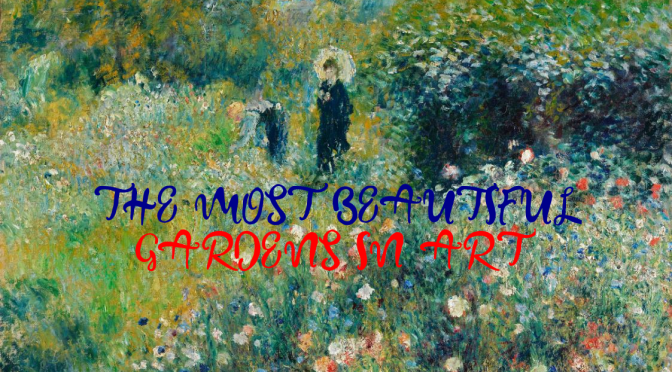
Art: “The Most Beautiful Gardens In Art” (Christie’s)

From a Sotheby’s Online Magazine (March 26, 2020):

From Sargent to Sorolla, Jonas Wood to Winston Churchill, Berkshire to Bali — how artists have found solace and inspiration in gardens the world over.

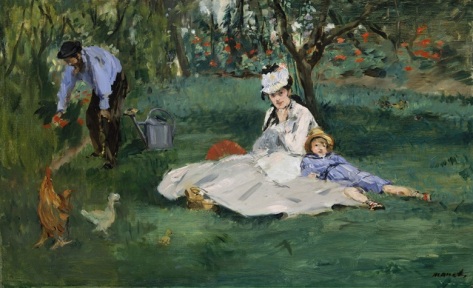
Edouard Manet The Monet Family In Their Garden at Argenteuil 1874 - Christie's Online Magazine

Edouard Manet The Monet Family in Their Garden At Argenteuil 1874

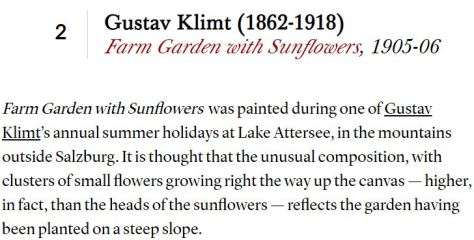
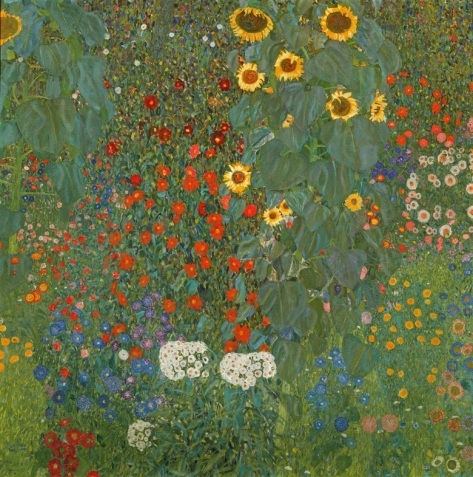
Gustav Klimt Farm Garden with Sunflowers 1905-06 - Christie's Online Magazine

Gustav Klimt Farm Garden with Sunflowers 1905-06 Christie's Online Magazine

Christie's Online Magazine

Read more

Art Videos: “El Greco: Ambition And Defiance” (Art Institute Chicago)

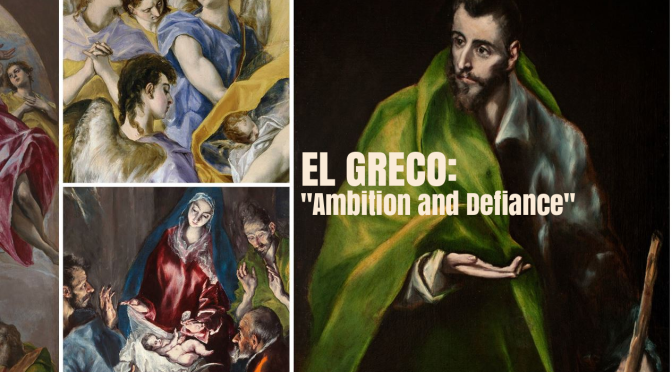
Art Institute ChicagoExplore the exhibition “El Greco: Ambition and Defiance” with curator Rebecca Long and research associate Jena Carvana. Follow along as they lead you through the galleries and share some of the reasons El Greco and his work continue to fascinate us.

Website

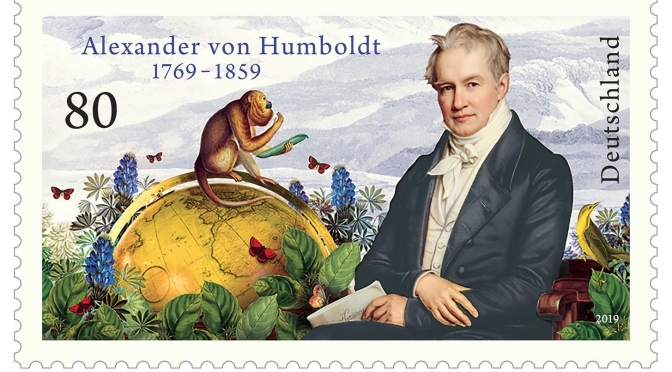
Top Podcasts: Alexander Von Humboldt – “The Last Man Who Knew It All”

Smithsonian Sidedoor PodcastAlexander von Humboldt might not be a name you know, but you can bet you know his ideas. Back when the United States were a wee collection of colonies huddled on the eastern seaboard, colonists found the wilderness surrounding them scary. 
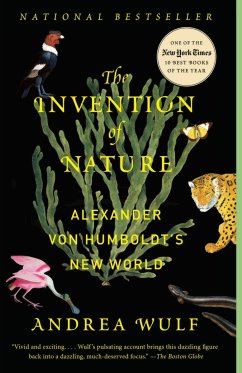
It took a zealous Prussian explorer with a thing for barometers to show the colonists what they couldn’t see: a global ecosystem, and their own place in nature. In this The Invention of Nature Alexander von Humborldt's New World Andrea Wulfepisode, we learn how Humboldt—through science and art—inspired a key part of America’s national identity.

More fascinating Humboldt facts:

  • He strongly opposed slavery in the early 19th century, calling it the “greatest of all the evils which have afflicted mankind.”
  • He was the first to theorize human caused climate change by changing how water flows through a landscape, on a local level, and warned about deforestation.
  • He invented isotherms, the lines on a weather map that we still use today. He used them to show which parts of the world were experiencing similar temperatures.
  • He made the world’s most detailed map of Mexico and the American west.
  • He nearly summited what was then thought to be the world’s tallest mountain (while wearing 18th century wools, no less.).
  • Another thing Humboldt and Jefferson bonded over? Mastodons. Humboldt was the first to discover remains of a species now known as Cuvieronius hyodon in Ecuador, which were similar to the “giant elephants” being found in Ohio. The teeth Humboldt found were the clue that these weren’t modern elephants; they looked pretty different. And because these teeth looked sharp, Jefferson and some American scientists thought they were for meat eating! Eventually Georges Cuvier, a French scientist who was friends with Humboldt, proved that these were different from Indian and African elephants, and even woolly mammoths—and the species eventually ended up renamed after him. One of the few eponymous misses for our friend Humboldt!

If you’re interested in learning more about the life and times of Alexander von Humboldt, I’d recommend reading Andrea Wulf’s book The Invention of Nature: Alexander von Humboldt’s New World.