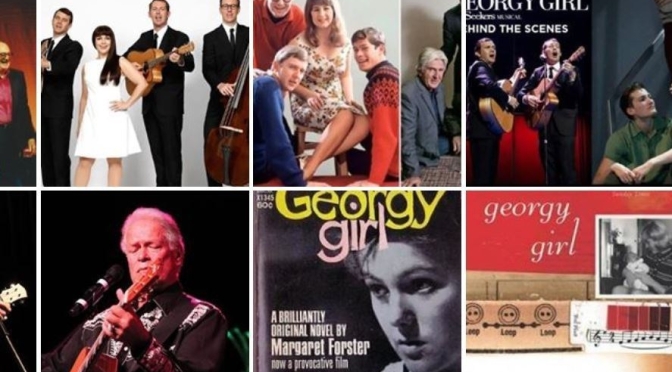
Soundtrack/theme music from the 1966 Silvio Narizzano film “Georgy Girl,” with Lynn Redgrave, James Mason, Alan Bates & Charlotte Rampling.

Soundtrack/theme music from the 1966 Silvio Narizzano film “Georgy Girl,” with Lynn Redgrave, James Mason, Alan Bates & Charlotte Rampling.
From Wallpaper.com:
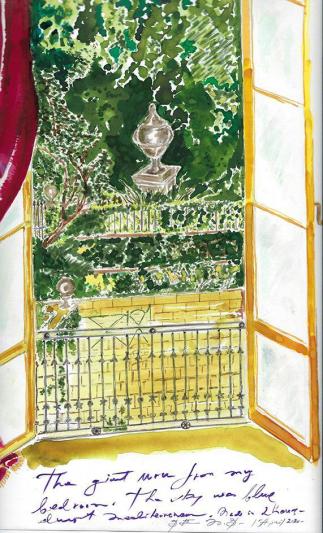
As fashion designers have acclimatised to this new, four wall-defined way of life, from Beijing to Berlin, London to Longiano, we’ve invited those within our creative community to document by hand what they can see from their work desk or window. Here we present our rooms with a view.
From Manolo Blahnik to Margaret Howell, we’ve invited fashion designers to document by hand what they can see from their work desk or window, be it a view of a verdant garden landscape, or an urban snapshot of baroque architecture.
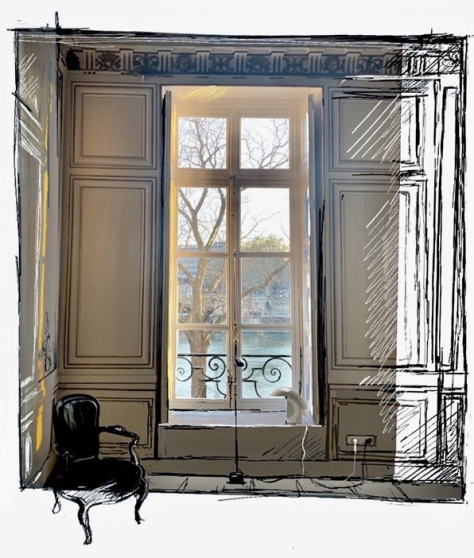
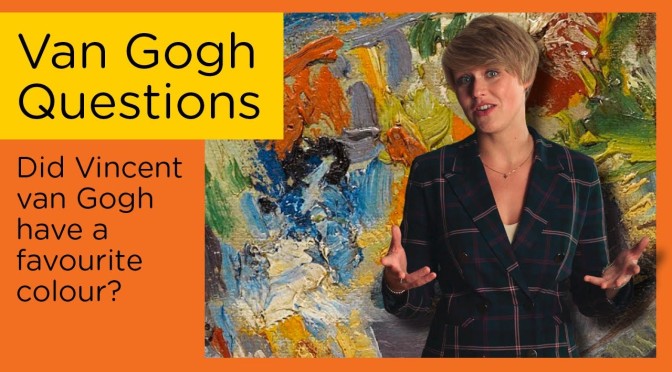
In Van Gogh Questions, our researcher Bregje Gerritse answers the most frequently asked questions about Vincent van Gogh.
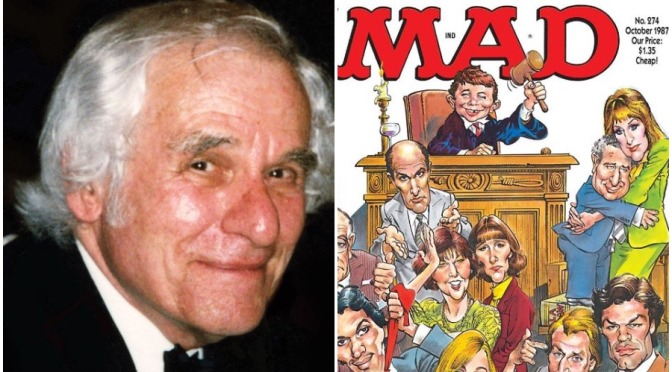
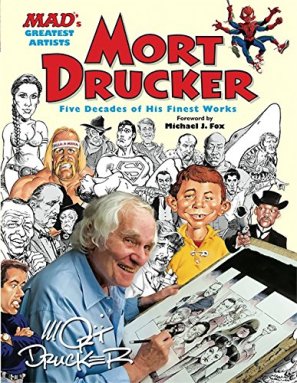 MAD Magazine and DC Comics mourn the loss of Mort Drucker, whose artwork proved that parody is the sincerest form of flattery. “Mort was one of the best—maybe the best—caricature artists in the world,” said DC Chief Creative Officer and Publisher Jim Lee. “His work will continue to entertain for generations.”
Mort entered the comics field when he was 18, working as a production artist for DC. His first original piece of art was a one-pager titled “Tinker Tom Shows You How to Make Fancy Western Duds,” published in All-American Western #117 in December 1950. In 1956, Mort met with MAD publisher Bill Gaines during a Dodgers vs. Yankees World Series game. “If the Dodgers win, you’re hired,” said Gaines. They did win, and Mort began a career at MAD that would span the next five decades, and most notably brought to life the magazine’s infamous parodies of TV shows and films.
Mort won numerous awards and honors for his work, including the Reuben Award for Outstanding Cartoonist of the Year in 1987. He was inducted into the Will Eisner Hall of Fame in 2011, and in 2015 became the inaugural recipient of the National Cartoonists Society’s Medal of Honor. He received an honorary Doctorate in Fine Arts from the Art Institute of Boston, and his TIME Magazine covers hang in the National Portrait Gallery.
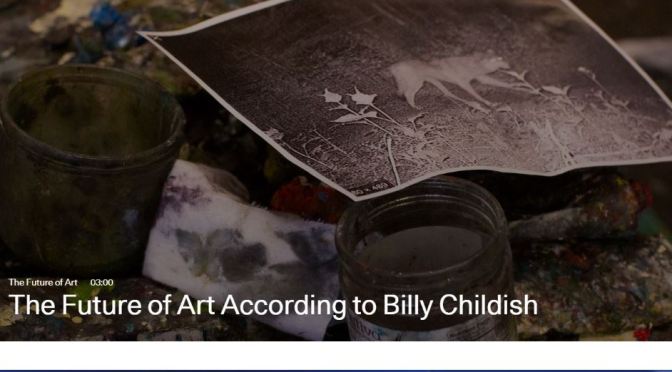
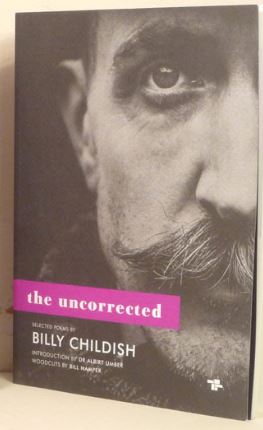 “The art world is the same as the rest of the world,” says British artist, writer, and punk-rocker Billy Childish. “What it requires is new, more, and now.” Childish has worked defiantly and prolifically outside of the mainstream since his expulsion from art school in the early 1980s. To the polymath—whose paintings, poems, novels, and music draw heavily from his autobiography—art is a deeply personal experience that should not rely on external validation, whether from critics or audiences. From his painting studio located on a historic dockyard in Kent, United Kingdom, Childish speaks passionately about the freedom that comes with self-validation. When asked about his perspective on the future of art, he demurs. “People think we’re continually ascending a mountain to success or to enlightenment,” he says. “It’s here and now and this is it.”
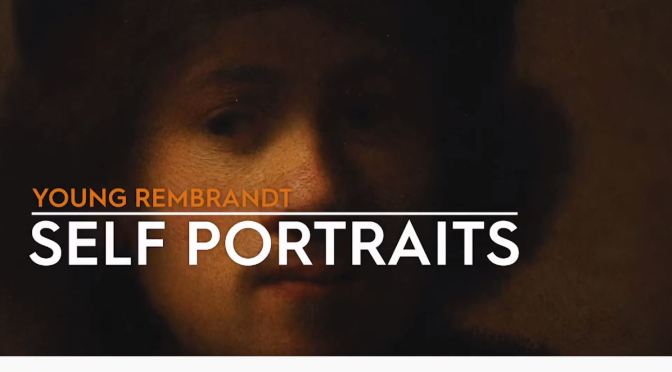
Curator An Van Camp tells us about Rembrandt’s obsession with self portraits and how he improved his skill throughout his life.
Rembrandt Harmenszoon van Rijn; 15 July 1606 – 4 October 1669) was a Dutch draughtsman, painter, and printmaker. An innovative and prolific master in three media, he is generally considered one of the greatest visual artists in the history of art and the most important in Dutch art history. Unlike most Dutch masters of the 17th century, Rembrandt’s works depict a wide range of style and subject matter, from portraits and self-portraits to landscapes, genre scenes, allegorical and historical scenes, and biblical and mythological themes as well as animal studies. His contributions to art came in a period of great wealth and cultural achievement that historians call the Dutch Golden Age, when Dutch art (especially Dutch painting), although in many ways antithetical to the Baroque style that dominated Europe, was extremely prolific and innovative and gave rise to important new genres. Like many artists of the Dutch Golden Age, such as Jan Vermeer of Delft, Rembrandt was also an avid art collector and dealer.
From Wikipedia
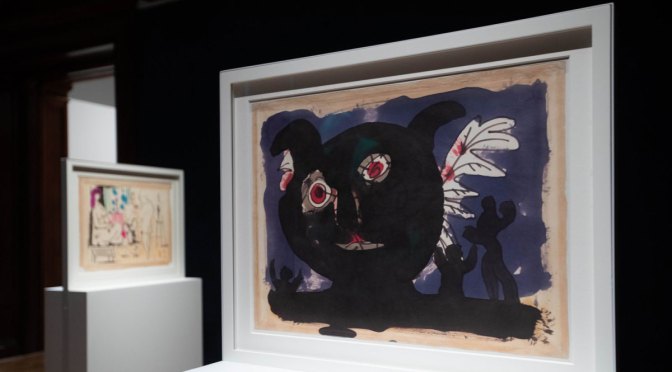
Experience our Picasso and Paper exhibition from your own home in this video tour of the galleries, created before the Royal Academy had to close its doors due to coronavirus.
Picasso didn’t just draw on paper — he tore it, burnt it, and made it three-dimensional. From studies for ‘Guernica’ to a 4.8-metre-wide collage, this exhibition brings together more than 300 works on paper spanning the artist’s 80-year career.
Installation views of the Picasso and Paper exhibition at the Royal Academy of Arts. © Succession Picasso/DACS 2020. Exhibition organised by the Royal Academy of Arts, London and the Cleveland Museum of Art in partnership with the Musée national Picasso-Paris.
Depot Boijmans Van Beuningen (in Rotterdam, Netherlands) is the first art storage facility in the world that offers access to a museum’s complete collection. The Depot has a different dynamic to that of the museum: there are no exhibitions, but you can browse amongst 151,000 artworks, alone or with a guide, and get behind-the-scenes glimpses of – among other things – conservation and restoration.
The design – a reflective round volume – responds to its surroundings, Rotterdam’s Museumpark in which it will be completed in 2020, doors will open in 2021.


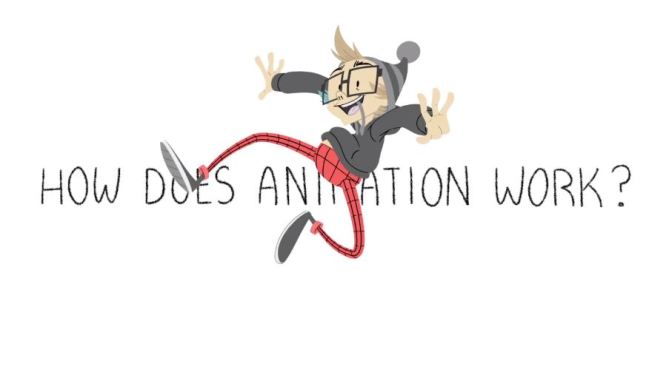
Created, Animated and Directed by: Tyler Pacana
An overview of how animation is made with traditional, 2D-rigged, stop-motion, and CG techniques.
Music: Hub World – Yotam Perel
Produced at Sheridan College [2020].
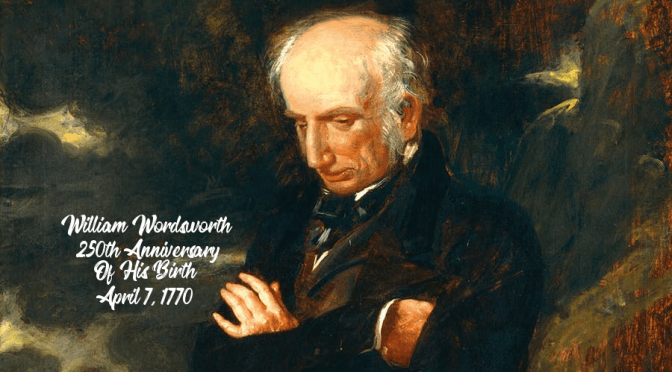
From an Apollo Magazine article (April 7. 2020):
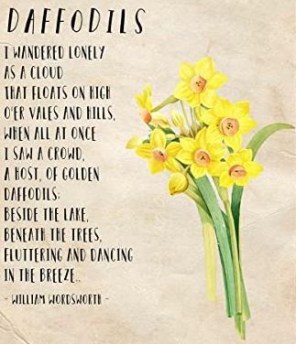 ‘We are fond of tracing the resemblance between Poetry and Painting,’ wrote William Wordsworth (1770–1850) in the famous ‘Preface’ to Lyrical Ballads (1800), ‘and, accordingly, we call them Sisters.’ To speak of the ‘sister arts’ was indeed a critical platitude of the age, though as it happens Wordsworth’s attitude towards painting wasn’t normally very sisterly.
 When, in 1840 or so, a well-meaning houseguest called Margaret Gillies made a drawing of the 70-year old Mrs Wordsworth, everyone agreed that it was an excellent likeness; but her kind act was rewarded with a testy and somewhat ungracious sonnet from the sitter’s husband. He preferred to visualise Mary in her salad days: ‘’tis a fruitless task to paint for me, / Who, yielding not to changes Time has made, / By the habitual light of memory see / Eyes unbedimmed, see bloom that cannot fade, / And smiles that from their birth-place ne’er shall flee / Into the land where ghosts and phantoms be’.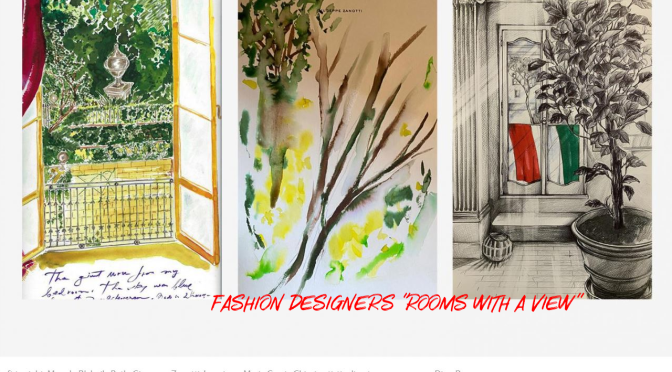

 Boomers Daily