Category Archives: Arts & Literature

New Art & Nature Books: “What It’s Like To Be A Bird” – David Allen Sibley (2020)

While its focus is on familiar backyard birds–blue jays, nuthatches, chickadees–it also examines certain species that can be fairly easily observed, such as the What It's Like To Be A Bird David Allen Sibley Cover April 15 2020seashore-dwelling Atlantic puffin. David Sibley’s exacting artwork and wide-ranging expertise bring observed behaviors vividly to life. 

The bird book for birders and nonbirders alike that will excite and inspire by providing a new and deeper understanding of what common, mostly backyard, birds are doing–and why.

“Can birds smell?” “Is this the same cardinal that was at my feeder last year?” “Do robins ‘hear’ worms?” In What It’s Like to Be a Bird, David Sibley answers the most frequently asked questions about the birds we see most often. This special, large-format volume is geared as much to nonbirders as it is to the out-and-out obsessed, covering more than two hundred species and including more than 330 new illustrations by the author.

What It's Like To Be A Bird David Allen Sibley April 15 2020

And while the text is aimed at adults–including fascinating new scientific research on the myriad ways birds have adapted to environmental changes–it is nontechnical, making it the perfect occasion for parents and grandparents to share their love of birds with young children, who will delight in the big, full-color illustrations of birds in action. Unlike any other book he has written, What It’s Like to Be a Bird is poised to bring a whole new audience to David Sibley’s world of birds.

Author Website

DAVID ALLEN SIBLEY is the author and illustrator of the series of successful guides to nature that bear his name, including The Sibley Guide to Birds. He has contributed to Smithsonian, Science, The Wilson Journal of Ornithology, Birding, BirdWatching, North American Birds, and The New York Times. He is a recipient of the Roger Tory Peterson Award for Promoting the Cause of Birding from the American Birding Association and the Linnaean Society of New York’s Eisenmann Medal. He lives and birds in Massachusetts.

Read more or purchase

New Museum Exhibitions: “Andy Warhol” At The Tate Modern, London (Video)

Although our galleries are temporarily closed we wanted to share the Andy Warhol exhibition at Tate Modern with you. Join Tate curators Gregor Muir and Fiontán Moran as they discuss Warhol through the lens of the immigrant story, his LGBTQI identity and concerns with death and religion.

Meet the man behind the brand. It’s a Warhol you might not know, with some artworks you may not have seen before.

Find out more about the exhibition here


Top Artist Documentary: ‘PHYLLIDA’ – A Portrait Of The 76-Year Old British Sculptor Phyllida Barlow

This documentary is an intimate portrait of British sculptor Phyllida Barlow during her preparation for the major survey ‘cul-de-sac’ at the Royal Academy last Phyllida Barlow Cul-de-Sac Royal Academyyear. Directed by Cosima Spender, this film maps the roots of Barlow’s oeuvre, as she revisits childhood memories, domestic and urban spaces, and their subsequent role in her creative process.

Phyllida Barlow began studying at Chelsea College of Art in 1960, and went on to study and teach at Slade School of Art for more than twenty years, becoming Emerita Professor in 2009. She was elected a Royal Academician in 2011, and represented Great Britain in the 2017 Venice Biennale, where she created the ambitious installation, ‘folly’.

Hauser & Wirth Phyllida Barlow 2020

Watch this evolution and the artist’s influences in ‘PHYLLIDA’. ‘I want the work to be traversed in a way that your memory of it is tested, so that you keep forgetting what you’ve seen’, Barlow explains, ‘I think that is the nature of sculpture – not something that can be held as a whole image in your head, only as fragments… The spaces, the silences in between, are as much a component of the work as the thing itself.”

‘PHYLLIDA’ is produced by Hauser & Wirth, in association with Third Channel and Peacock Pictures.

Website

Tribute: Architect-Author Michael Sorkin – “City Air Makes You Free” (1948-2020)

From an Apollo Magazine online article (March 31, 2020):

Michael Sorkin All Over The MapUltimately he was a humane critic of the contemporary city, a serious, funny and poetic voice defending the powerless against big capital and an articulator of how architecture should be used as a tool of resistance. He is indelibly associated with New York, a city he loved with a fervour despite its faults, and of which he defended every inch as a public good. Number 210 in his list was the medieval German phrase ‘Stadtluft macht frei’ – ‘city air makes you free’. He will survive through his magical writing, which makes us all a little freer.

Michael Sorkin, who died last week of complications due to Covid-19, gained his reputation as the architecture critic of The Village Voice in New York, which, in the 1980s, was a publication with a formidable reach and impact on a city just beginning to boom again. He launched fierce attacks against the banality of the contemporary city, the rapacity and greed of developers (notably the current president, including in a 1985 piece entitled ‘Dump the Trump’) and the loss of great landmarks. But he was no nostalgist; he revelled in the potential of architecture to catalyse change and excoriated his contemporaries for caving in to big business, for building prisons and being complicit in a denuded public realm.

Read full article

Interviews: 66-Year Old American Author Erik Larson On Writing “The Splendid And The Vile”

Erik Larson, #1 New York Times bestselling author, shares his writing process.

In The Splendid and the Vile, Erik Larson shows, in cinematic detail, how Churchill taught the British people “the art of being fearless.” It is a story of political brinkmanship, but it’s also an intimate domestic drama, set against the backdrop of Churchill’s prime-ministerial country home, Chequers; his wartime retreat, Ditchley, where he and his entourage go when the moon is brightest and the bombing threat is highest; and of course 10 Downing Street in London. 

Erik Larson Books

Drawing on diaries, original archival documents, and once-secret intelligence reports—some released only recently—Larson provides a new lens on London’s darkest year through the day-to-day experience of Churchill and his family: his wife, Clementine; their youngest daughter, Mary, who chafes against her parents’ wartime protectiveness; their son, Randolph, and his beautiful, unhappy wife, Pamela; Pamela’s illicit lover, a dashing American emissary; and the advisers in Churchill’s “Secret Circle,” to whom he turns in the hardest moments.

Erik Larson is the author of eight books, six of which became New York Times bestsellers. His latest books, The Splendid and the Vile: A Saga of Churchill, Family, and Defiance During the Blitz and Dead Wake: The Last Crossing of the Lusitania, both hit no. 1 on the list soon after launch. His saga of the Chicago World’s Fair of 1893, The Devil in the White City, was a finalist for the National Book Award, and won an Edgar Award for fact-crime writing; it lingered on various Times bestseller lists for the better part of a decade.

New Art Books: “Edward Hopper: A New Perspective on Landscape” (April 2020)

Edward Hopper A New Perspective on Landscape April 2020Edward Hopper’s world-famous, instantly recognizable paintings articulate an idiosyncratic view of modern life, unfolding in a world of lonely lighthouses, gas stations, movie theaters, bars and hotel rooms. With his impressive subjects, independent pictorial vocabulary and virtuoso play of colors, Hopper’s work continues to this day to color our memory and imaginary of the United States in the first half of the 20th century.

A fresh look at Hopper’s iconic vision of the American landscape—its gas stations, diners and highways.

Hopper began his career as an illustrator and became famous around the globe for his Edward Hopper Landscape Paintingsoil paintings. These paintings testify to the artist’s great interest in the effects of color and his mastery in depicting light and shadow, at work whether the artist was painting alienated figures in dreamlike interiors or desolate American landscapes.

Edward Hopper: A New Perspective on Landscape is published to accompany a major exhibition at the Fondation Beyeler of Hopper’s iconic images of the vast American landscape. The catalog gathers together paintings, watercolors and drawings made by the artist between the 1910s and the 1960s, and supplements them with essays by Erika Doss, David Lubin and Katharina Rüppell, focused on the subject of depicting the landscape.

Edward Hopper (1882–1967) was the master of American Realism. His paintings captured the mood and atmosphere of his era. His style of painting and subject matter became the stylistic foundation for a distinct type of American modernism. A source of inspiration for countless painters, photographers and filmmakers, Hopper’s body of work continues to be influential to this day.

Read more or purchase

Literature: A Reading Of “Letters Of John Keats To His Family And Friends” – “Inside His Brilliant Mind”

Letters of John Keats to His Family and Friends by John KEATS (1795 – 1821) and Sidney COLVIN (1845 – 1927)

Read by: Nemo and Eva Davis

Chapters: 00:00:00  – 00 – Preface 00:21:11 – 01 – Letter 1 – to Charles Cowden Clarke 00:22:21 – 02 – Letter 2 – to Benjamin Robert Haydon 00:24:06 – 03 – Letter 3 – to Benjamin Robert Haydon 00:25:00 – 04 – Letter 4 – to Charles Cowden Clarke 00:26:57 – 05 – Letter 5 – to John Hamilton Reynolds 00:28:25 – 06 – Letter 6 – to John Hamilton Reynolds 00:29:52 – 07 – Letter 7 – to George and Thomas Keats 00:34:17 – 08 – Letter 8 – to John Hamilton Reynolds 00:42:14 – 09 – Letter 9 – to Leigh Hunt 00:50:13 – 10 – Letter 10 – to Benjamin Robert Haydon 01:00:31 – 11 – Letter 11 – to Messrs. Taylor and Hessey 01:03:50 – 12 – Letter 12 – to Messrs. Taylor and Hessey 01:06:07 – 13 – Letter 13 – to Mariane and Jane Reynolds 01:10:34 – 14 – Letter 14 – to Fanny Keats 01:18:27 – 15 – Letter 15 – to Jane Reynolds 01:26:44 – 16 – Letter 16 – to John Hamilton Reynolds 01:34:49 – 17 – Letter 17 – to Benjamin Robert Haydon 01:37:39 – 18 – Letter 18 – to Benjamin Bailey 01:43:58 – 19 – Letter 19 – to Benjamin Bailey 01:51:33 – 20 – Letter 20 – to Benjamin Bailey 01:54:19 – 21 – Letter 21 – to Charles Wentworth Dilke 01:55:20 – 22 – Letter 22 – to Benjamin Bailey 02:05:23 – 23 – Letter 23 – to John Hamilton Reynolds 02:11:23 – 24 – Letter 24 – to George and Thomas Keats 02:16:25 – 25 – Letter 25 – to George and Thomas Keats 02:26:06 – 26 – Letter 26 – to Benjamin Robert Haydon 02:28:19 – 27 – Letter 27 – to John Taylor 02:29:30 – 28 – Letter 28 – to George and Thomas Keats 02:35:45 – 29 – Letter 29 – to John Taylor 02:37:09 – 30 – Letter 30 – to George and Thomas Keats 02:45:42 – 31 – Letter 31 – to Benjamin Bailey 02:53:40 – 32 – Letter 32 – to John Taylor 02:55:38 – 33 – Letter 33 – to John Hamilton Reynolds 03:00:19 – 34 – Letter 34 – to John Hamilton Reynolds 03:09:32 – 35 – Letter 35 – to John Taylor 03:10:23 – 36 – Letter 36 – to George and Thomas Keats 03:14:06 – 37 – Letter 37 – to John Hamilton Reynolds 03:20:52 – 38 – Letter 38 – to George and Thomas Keats 03:25:16 – 39 – Letter 39 – to John Taylor 03:28:39 – 40 – Letter 40 – to Messrs. Taylor and Hessey 03:29:39 – 41 – Letter 41 – to Benjamin Bailey 03:39:27 – 42 – Letter 42 – to John Hamilton Reynolds 03:46:04 – 43 – Letter 43 – to Benjamin Robert Haydon 03:51:10 – 44 – Letter 44 – to Messrs. Taylor and Hessey 03:52:54 – 45 – Letter 45 – to James Rice 03:58:59 – 46 – Letter 46 – to John Hamilton Reynolds 04:06:50 – 47 – Letter 47 – to Benjamin Robert Haydon 04:12:07 – 48 – Letter 48 – to John Hamilton Reynolds 04:17:53 – 49 – Letter 49 – to John Hamilton Reynolds 04:20:39 – 50 – Letter 50 – to John Taylor 04:24:29 – 51 – Letter 51 – to John Hamilton Reynolds 04:29:41 – 52 – Letter 52 – to John Hamilton Reynolds 04:46:49 – 53 – Letter 53 – to Benjamin Bailey 04:52:06 – 54 – Letter 54 – to Benjamin Bailey 04:57:26 – 55 – Letter 55 – to John Taylor 04:59:14 – 56 – Letter 56 – to Thomas Keats 05:08:57 – 57 – Letter 57 – to Fanny Keats 05:18:23 – 58 – Letter 58 – to Thomas Keats 05:28:49 – 59 – Letter 59 – to Thomas Keats 05:39:49 – 60 – Letter 60 – to John Hamilton Reynolds 05:48:19 – 61 – Letter 61 – to Thomas Keats 06:01:55 – 62 – Letter 62 – to Benjamin Bailey 06:16:12 – 63 – Letter 63 – to Thomas Keats 06:30:05 – 64 – Letter 64 – to Thomas Keats 06:43:57 – 65 – Letter 65 – to Mrs. Wylie 06:50:42 – 66 – Letter 66 – to Fanny Keats 06:53:45 – 67 – Letter 67 – to Fanny Keats 06:55:12 – 68 – Letter 68 – to Jane Reynolds 06:56:23 – 69 – Letter 69 – to Charles Wentworth Dilke

These are the letters of John Keats, as written to family, close friends and others during his brief, eventful years as an artist. (However, the editor chose to exclude love letters to Fanny Brawne, respecting their private nature.) The celebrated Keats letters were written between 1816-1820, and include those colorful entries penned during his 44-day tour with Charles Brown as they rambled through England, Ireland and Scotland. Also included are the famous, lengthy ‘journal letters,’ written to his brother George and sister-in-law in America. Not only a poetic genius, Keats shines in epistolary form. His letters brim with the emotion, wit and intelligence he routinely shared with intimates. – Summary by NemoR

Artist Profiles: 66-Year Old American Painter Dan Graziano – “Beauty In A Vanishing America”

Artist Dan Graziano
Artist Dan Graziano

“In my paintings, I try to capture the hidden beauty found in the unexpected places and fleeting moments of everyday life.  I continue to be intrigued by the urban landscapes of inner cities – their active streets, time worn buildings and multiple layers of decay, renewal and adaptation – that proudly display the effects of age and use, which I see as testaments to strength, character and authenticity in contrast with modern society’s demand for newness, imitation, disposability and easy duplication.  

Dan Graziano is an award winning, nationally exhibited artist whose paintings capture the hidden beauty found in the unexpected places and fleeting moments of everyday life.  Incorporating dramatic light, shadow, color and perspective, his compositions feature a diversity of subjects – from a simple still life to rugged coastlines, active urban life, lively cafes and bars, small rural towns and forgotten roadside relics.  His work has been featured in numerous publications and is in the collections of private and corporate collectors throughout the world.

Dan Graziano Street Paintings - Website

His artistic vision began taking shape in the 60’s, during America’s explosive political, cultural and artistic awakening.  His first formal training focused on advertising and illustration, but a career opportunity in architecture and urban planning altered his original direction.

When he returned to painting, he was drawn to the rich complexity of the urban landscape – inspired by Edward Hopper and other urbanist painters. As an accomplished blues guitarist (his other great passion), he found the city streets, time worn buildings and multiple layers of decay and repair a visual parallel to the spirit and culture of the music.

“My work is influenced by the American realists such as Sargent, Hopper and the three generations of Wyeths along with California painters Wayne Thiebaud and Richard Diebenkorn.”

Website

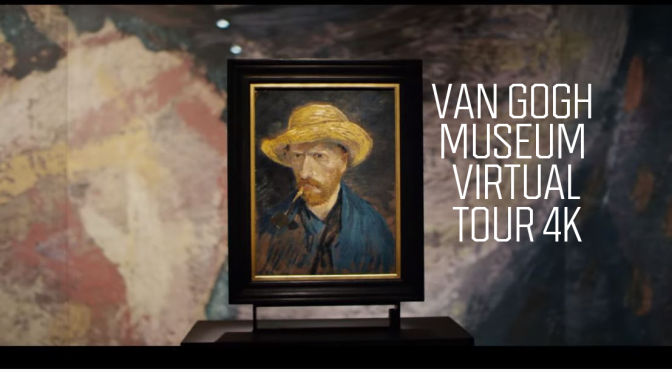
FINE ARTS: 4K VIDEO TOUR – THE VAN GOGH MUSEUM “Artistic Flourishing”

Van Gogh Museum Tour in 4K. Have you always wanted to be alone in the Van Gogh Museum? Step into Vincent’s world and enjoy the private video tour. Episode 4: Van Gogh Museum Amsterdam.

Website

New Literary Podcasts: Author James Shapiro On “Shakespeare And Plagues”

Octavian Report Rostrum PodcastsOctavian Report “Rostrum” spoke with him about a major theme in Shakespeare’s work and life: disease. Specifically, pandemic plagues, which ravaged London repeatedly throughout Shakespeare’s career, shuttering the theaters, and which appear (obliquely and otherwise) in some of his greatest plays.

The latest episode of the Rostrum’s coronavirus series features James Shapiro, the Larry Miller professor of English and comparative literature at Columbia University, and a leading expert on Shakespeare. Shapiro has published widely on this subject, most recently Shakespeare in a Divided America. He is also an advisor to the Royal Shakespeare Company and to the Public Theater.

Website

James S. Shapiro (born 1955) is Professor of English and Comparative Literature at Columbia University who specialises in Shakespeare and the Early Modern period. Shapiro has served on the faculty at Columbia University since 1985, teaching Shakespeare and other topics, and he has published widely on Shakespeare and Elizabethan culture.