Today AD brings you to Vail, Colorado to tour 165 Forest Avenue, a massive ultra-modern mansion nestled in the Rocky Mountains. From the linear fireplace in the living room, to Italian marble surfaces in the kitchen, each space in the home is an invigorating expression of timeless luxury. The interior elegance is only surpassed by the natural beauty seen through the home’s glass walls, which slide apart granting access to over 6,500 sq. ft. of heated exterior space.
UC Davis Health scientists Simon Cherry and Ramsey Badawi spent 15 years developing the world’s first total-body PET scanner, called EXPLORER. This imaging machine scans a patient’s entire body at one time, delivering breathtaking image quality that improves patient diagnoses and disease research.
Voiceover by Ólafur Darri Ólafsson
Music by Tim Tregonning
Sound by Morgan Johnson
Color by Mike Rossiter
Aerial by Wade Sedgwick
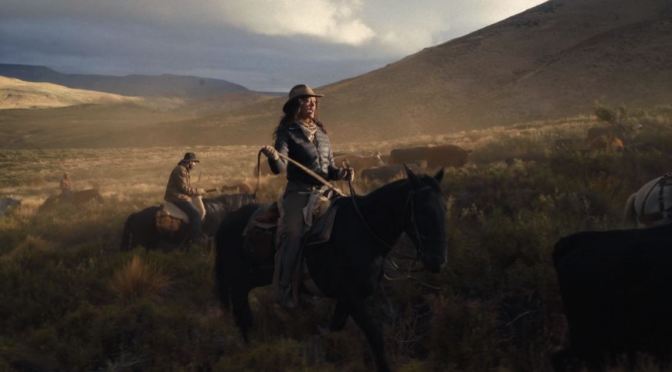
In early 2019 I spent four months living in a tent at Estancia Ranquilco, a remote horse and cattle ranch nestled deep in the foothills of the Andean mountains in Northern Patagonia, Argentina. Largely stripped of modern conveniences and offering a chance to experience off-grid, communal living, it is both a gentle, and harsh, return to primitiveness.
Yet the magnetic pull from Ranquilco reaches far beyond the realms of sentimentalism. It is not merely a vague summation of its parts. Of earth, water, sun, grass and trees. It is the past as well as the present, built into the stonework and in the footsteps of the worn paths on the last edges of land, hanging on the horizon.
For those devoted to this way of life, it is simply a return to the familiar.
Four different jerseys to battle for and an almost indistinguishable array of flags on arms and across chests — but what do they all mean and how does a rider earn the right to wear one?
These loyal ‘servants’ to their leaders will rarely win a race, though will often be seen at the front of the pack. But what exactly do they do and how does this help their team’s challenge for honours?
What is grimpeur, and what are the key characteristics of these flyweight climbers that excel when to road heads high above the treeline?
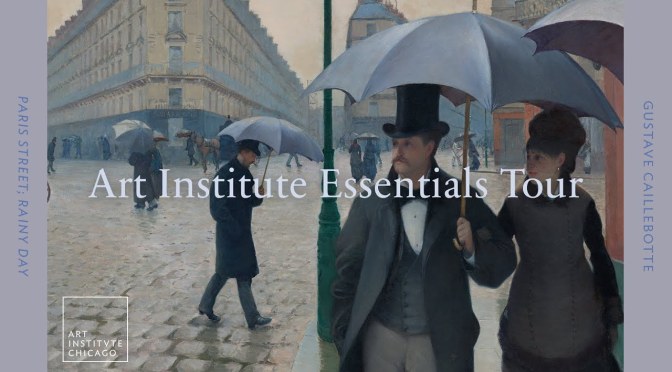
On this episode of Art Institute Essentials Tour, take a closer look at Paris Street; Rainy Day, painted by Gustave Caillebotte in 1877. This complex intersection represents in microcosm the changing urban milieu of late nineteenth-century Paris. Considered the artist’s masterpiece, Caillebotte strikingly captured a vast, stark modernity, complete with life-size figures strolling in the foreground and wearing the latest fashions.
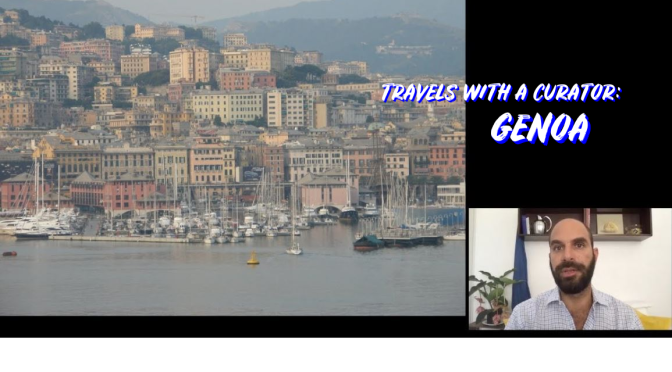
In this week’s episode of “Travels with a Curator,” join Deputy Director and Peter Jay Sharp Chief Curator Xavier F. Salomon on a journey to Genoa, one of his favorite cities in Italy. A rich maritime and financial center in the 17th century, Genoa was a natural draw for artists at the time, including the great Flemish painter Anthony van Dyck. The Frick owns three portraits painted by Van Dyck while he resided in Genoa, allowing viewers to peek into the past at a flourishing city at the height of its power and influence.
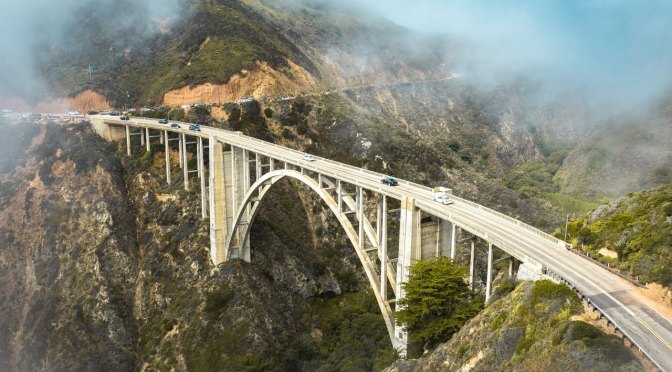
I documented a solo trip to Big Sur last year, encountering gossamer fog that rolled over hairpin curves high above azure swells then at sunset transformed into pink cotton candy. My dream is to live cliff side as a hermitic cat lady novelist. Calgon, take me away!
Big Sur is a rugged stretch of California’s central coast between Carmel and San Simeon. Bordered to the east by the Santa Lucia Mountains and the west by the Pacific Ocean, it’s traversed by narrow, 2-lane State Route 1, known for winding turns, seaside cliffs and views of the often-misty coastline. The sparsely populated region has numerous state parks for hiking, camping and beachcombing.
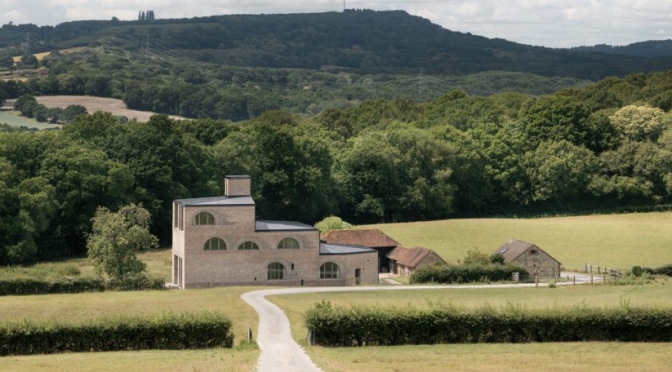
Last year, architect Adam Richards revealed Nithurst Farm, his self-designed family home in the South Downs National Park. We’re pleased to share a new film exploring the far-reaching ideas and references that informed the convention-defying design of the house, as well as the intimate realities of daily life in the space, one year on.
Head of his namesake practice, based in Sussex and London, Richards oversees his studio’s work on residential and cultural projects that have most notably included the Ditchling Museum of Art + Craft and the Gardens Learning Centre and Café at Walmer Castle. The handling of such buildings by ARA is one they define as an approach that seeks ‘to transform the deeper themes within its projects into engaging critical, spatial, social and structural propositions.’ This often translates to an engagement with the historical context of a site, so that an extension to a neo-classical Georgian townhouse in Notting Hill takes the form of an abstracted Greek temple, or a refurb to Arundel Lido is informed by a nearby Roman villa.
When it came to designing his own home, Richards had the freedom of a blank page. The brief was to create a new-build home for him and his family on a site at the bottom of a valley, surrounded by the woodlands and farmland of West Sussex. With creative freedom came the incorporation of seemingly disparate sources of inspiration, everything from the cinematic tactility of Andrei Tarkovsky’s 1979 Soviet art house hit, Stalker, to the classical plan of Andrea Palladio’s Renaissance masterpiece, Villa Barbaro, and Robert Mangold’s 1970s minimalist work of geometric abstractions. The resulting building is one that plays with time, style and detail in surprising and unexpected ways, to appear as a “Roman ruin wrapped around a modern concrete house,” according to Richards.

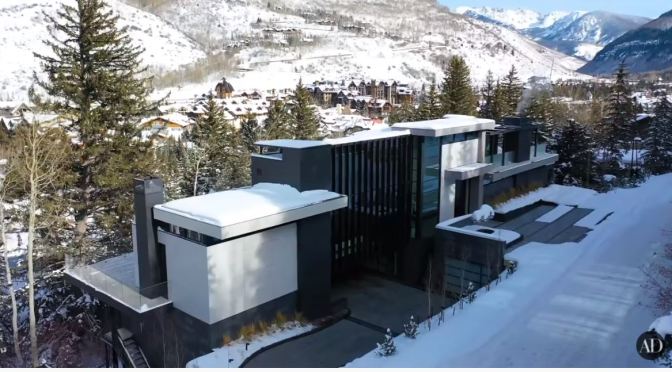
 mansion nestled in the Rocky Mountains. From the linear fireplace in the living room, to Italian marble surfaces in the kitchen, each space in the home is an invigorating expression of timeless luxury. The interior elegance is only surpassed by the natural beauty seen through the home’s glass walls, which slide apart granting access to over 6,500 sq. ft. of heated exterior space.



 Boomers Daily