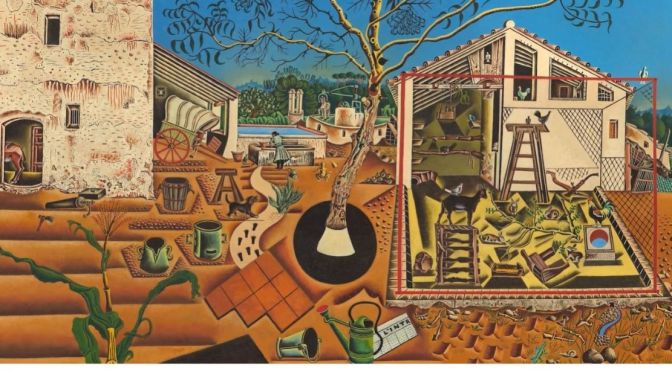
National Gallery of Art – Joan Miró finished “The Farm,” his first masterpiece, 100 years ago. To celebrate, curator Harry Cooper and Joan Punyet Miró, Miró’s grandson, get together to tell the tale of this seminal painting from their perches at the National Gallery of Art in Washington, D.C. and Miró’s farm in Mont-roig del Camp, Spain. From Pablo Picasso in Paris to Earnest Hemingway in Cuba, you won’t want to miss the epic journey of Miró and his beloved “The Farm.”
Joan Miró i Ferrà was a Spanish painter, sculptor and ceramicist born in Barcelona. A museum dedicated to his work, the Fundació Joan Miró, was established in his native city of Barcelona in 1975, and another, the Fundació Pilar i Joan Miró, was established in his adoptive city of Palma in 1981.
Three Musicians, 1921 by Pablo Picasso Three Musicians is a large painting measuring more than 2 meters wide and high. It is painted in the style of Synthetic Cubism and gives the appearance of cut paper. Picasso paints three musicians made of flat, brightly colored, abstract shapes in a shallow, boxlike room.
Gooding & Company proudly presents this beautifully restored and exceptionally original Grand Prix Bugatti. Considered by many to be the finest racing car of its period and one of the most enduring automotive designs of all time, the Type 35 Grand Prix is the definitive Bugatti. Carefully preserved by three Belgian collectors over the past six decades, and benefiting from a comprehensive, yet seemingly invisible mechanical restoration by marque specialist Ivan Dutton Ltd,. this Bugatti Grand Prix remains in wonderfully undisturbed condition, retaining its original body work and serial-numbered components. A glorious artifact from the golden age of Grand Prix racing, this 1928 Bugatti Type 35C Grand Prix will be available for sale on 5 September at our Passion of a Lifetime auction.
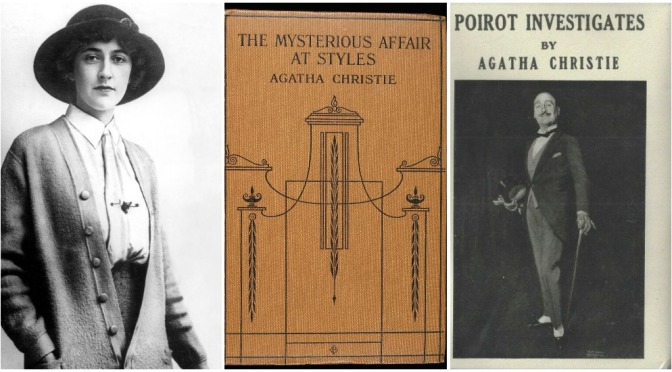
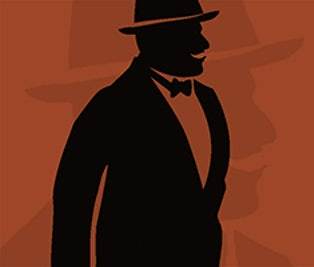
And with The Mysterious Affair at Styles (published a 100 years ago, in 1920) Christie would introduce readers to Monsieur Hercule Poirot, an old Belgian detective who resembled Holmes superficially (‘eccentric detective, stooge assistant’, as the author would admit in her autobiography later) but whose psychological insights and near-mystical idiosyncrasies would make him arguably the most successful and beloved literary sleuth of all time.
IN 1916, THE 26-year-old Agatha Christie finished writing her first detective novel at Dartmoor, a quiet upland in Devon, UK, known for its beautiful granite hilltops. Sir Arthur Conan Doyle had published The Hound of the Baskervilles, in 1902, which would become one of the most widely read Sherlock Holmes adventures—and the story was set in this same corner of the world, Dartmoor.
Books like Murder on the Orient Express (1934), The Murder of Roger Ackroyd (1926) and Death on the Nile (1937) remain some of the bestselling murder mysteries in the world today, over eight decades after their original publication (Christie’s net sales for all of her books combined are over two billion now).
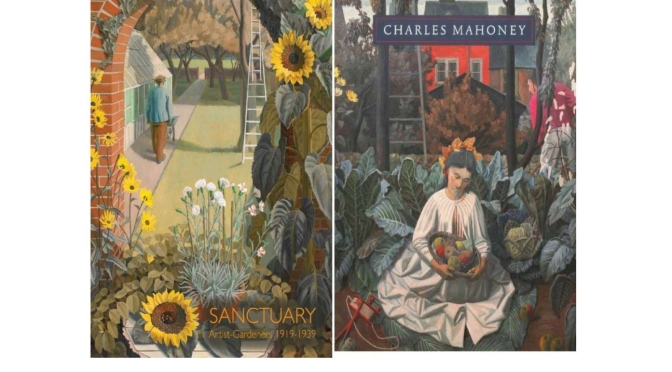
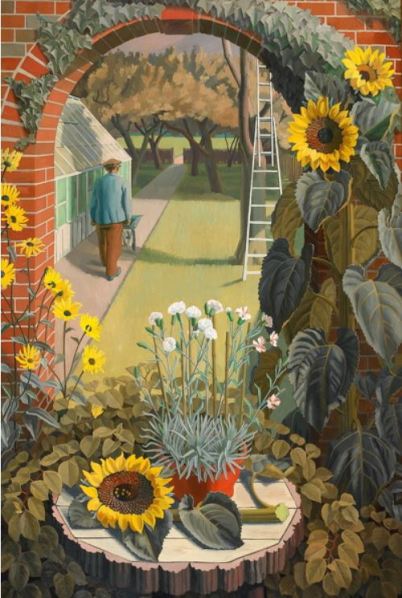
Charles Mahoney,(18 November 1903 – 11 May 1968): Painter, muralist, draughtsman and teacher, born Cyril Mahoney in London – his fellow-student Barnett Freedman re-christened him Charlie at the Royal College of Art, which he attended 1922-6 after a period at Beckenham School of Art under Percy Jowett. Early on, Mahoney established a reputation as a conscientious teacher.
He was at the Royal College 1928-53, from 1948-53 as a painting tutor, and was noted there for his concern for academic discipline.
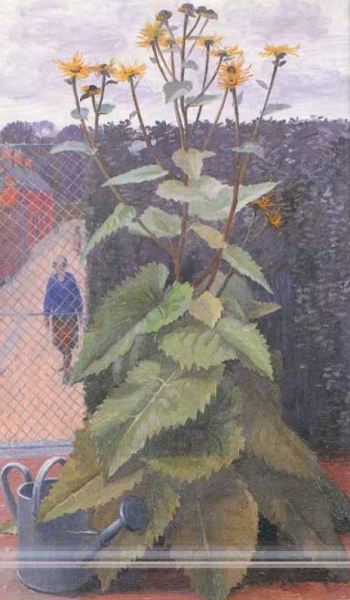
Charles Mahoney, Composite Plant 1954
His portrait is included in Rodrigo Moynihan’s celebrated Teaching Staff of the Painting School at the Royal College of Art, 1949-50. From 1954 to 1963 he taught at the Byam Shaw School of Drawing and Painting and from 1961 to 1968 at the Royal Academy Schools. He painted murals at Morley College 1928-30 with his colleagues Eric Ravillious and Edward Bawden.
Unfortunately these murals were destroyed during World War II. The work led to further murals: at Brockley School, Kent, with Evelyn Dunbar; and at Campion Hall Lady Chapel, Oxford. His oil paintings are frequently of a religious nature. He was a skilled botanist, and many of his drawings depict his garden at Wrotham, Kent.
He exhibited at NEAC and the RA, being made an RA elect in 1968. He is represented in the Tate Gallery and other public collections. The Ashmolean Museum, Oxford, held a memorial exhibition in 1975. Exhibitions were held in 2000 at the Harris Museum and Art Gallery, Preston, Royal Museum and Art Gallery, Canterbury, and the Fine Art Society plc in association with Liss Fine Art.
Born in Victoria, Australia, Martin Lewis was a printmaker who is known for his scenes of urban life in New York during the 1920s and 1930s. As a youth Lewis held a variety of jobs that ranged from working on cattle ranches in the Australian Outback, in logging and mining camps, to being a sailor. In 1898, he moved to Sydney for two years where he received his only formal art training. During this period he may have been introduced to printmaking; a local radical paper, The Bulletin, published two of his drawings.
Lewis left Australia in 1900 and first settled in San Francisco. He eventually worked his way eastward to New York. Little is known about his life during the following decade except that he made a living as a commercial artist and produced his first etching in 1915. Lewis’ skill as an etcher was noticed by Edward Hopper, who became a lifelong friend. In 1920, dissatisfied with his job, Lewis used his entire savings to study art and to sketch in Japan. He returned to New York after a two-year stay and resumed his commercial art career, but also pursued his own work as a painter and printmaker.
During the Depression, Lewis moved to Newtown, Connecticut, but later returned to Manhattan, where he helped establish a school for printmakers. From 1944-1952 Lewis taught a graphics course at the Art Students League in New York.
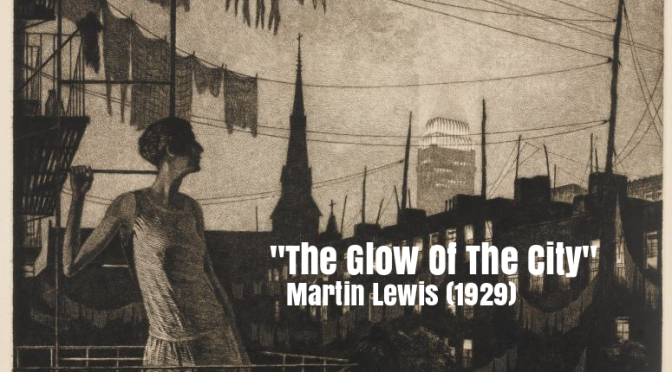
During his thirty-year career, Lewis made about 145 drypoints and etchings. His prints, like Shadow Dance and Stoops in Snow, were much admired during the 1930s for their realistic portrayal of daily life and sensitive rendering of texture. The artist’s skill in composition and his talent in the drypoint and etching media have received renewed attention in recent years. Lewis is one of the few printmakers of this era who specialized in nocturnal scenes. Some scholars consider his print Glow of the City his most significant work because of the subtlety of handling. A minute network of dots, lines, and flecks scratched onto the plate creates the illusion of transparent garments hanging in the foreground, while the Chanin Building, an art deco skyscraper, towers over the nearby tenements.
In February, 1925, Rea Irvin, The New Yorker’s first art editor, designed the cover of the magazine’s inaugural issue. That cover’s central character, a dandy peering at a butterfly through a monocle, would come to be known as Eustace Tilley, and he has graced the cover of the magazine nearly every February in the ninety-five years since. This is all a matter of historical record—but Barry Blitt, in this year’s Anniversary Issue, tells a different origin story. We recently talked to Blitt about drawing a familiar face.
You’ve drawn many a Eustace Tilley. Is there something pleasing about revisiting familiar forms?
Well, certain familiar forms are probably traumatic to revisit, but Tilley is a joy to draw repeatedly. All the hard work has been done for you—it’s a beautifully designed image. Hard to make a mess of those shapes and colors, though I give it the old college try.
Gooding & Company is proud to present three stunning Bugattis from the Passion of a Lifetime Auction, a bespoke sale at Somerset House in central London on 1 April 2020.
This collection features 16 of the most coveted and valuable examples of European sports and racing automobiles of the 20th century. Visit the link below for event details and the complete list of vehicles presented at this exclusive auction event!
Beneath his smooth, genial, almost inhumanly productive and evasive surface, there were turbulent waters. His very name, for all its air of Ivy League ease, represents a burdened legacy. The Porters were his difficult, scapegrace father’s family; the Coles were his mother’s rich and ambitious Indiana family. He was a Porter by birth but, if his mother had anything to do with it, would be a Cole for life.
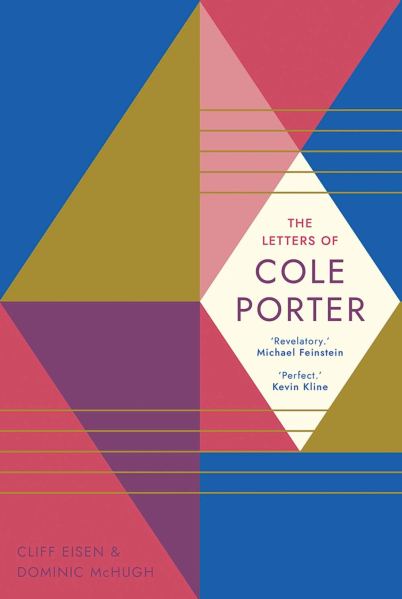
Certainly, Porter’s ghost could not ask for better care than he has been given in “The Letters of Cole Porter” (Yale), edited by Cliff Eisen, a professor of music history at King’s College London, and Dominic McHugh, a musicologist at the University of Sheffield (and the editor of Alan Jay Lerner’s letters). Laid out with a meticulous scholarly apparatus, as though this were the correspondence of Grover Cleveland, every turn in the songwriter’s story is deep-dived for exact chronology, and every name casually dropped by Porter gets a worried, explicatory footnote.






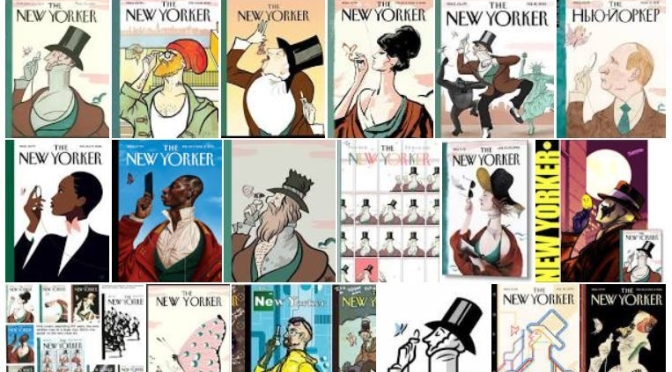
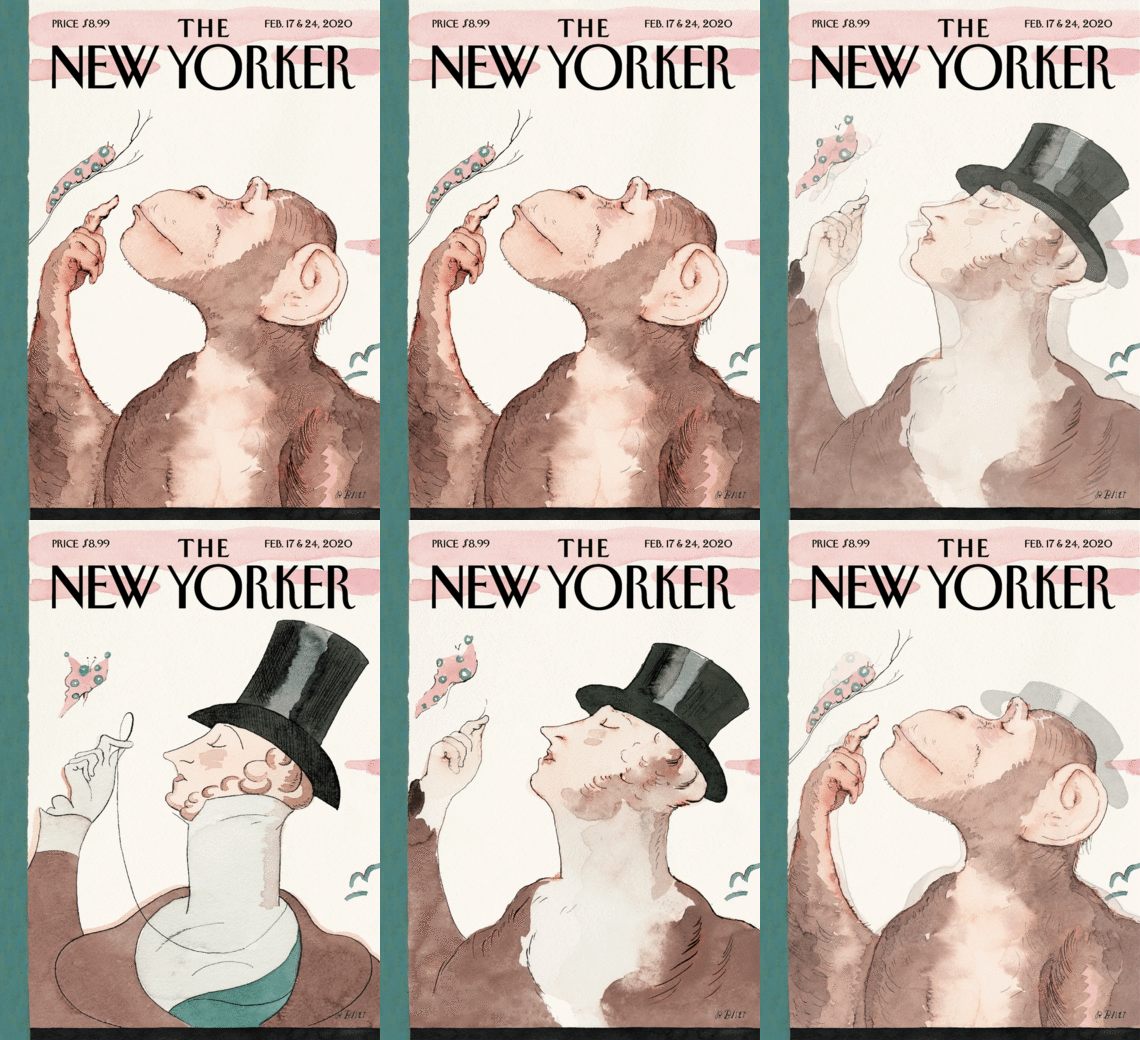 In February, 1925, Rea Irvin, The New Yorker’s first art editor, designed the cover of the magazine’s inaugural issue. That cover’s central character, a dandy peering at a butterfly through a monocle, would come to be known as Eustace Tilley, and he has graced the cover of the magazine nearly every February in the ninety-five years since. This is all a matter of historical record—but Barry Blitt, in this year’s Anniversary Issue, tells a different origin story. We recently talked to Blitt about drawing a familiar face.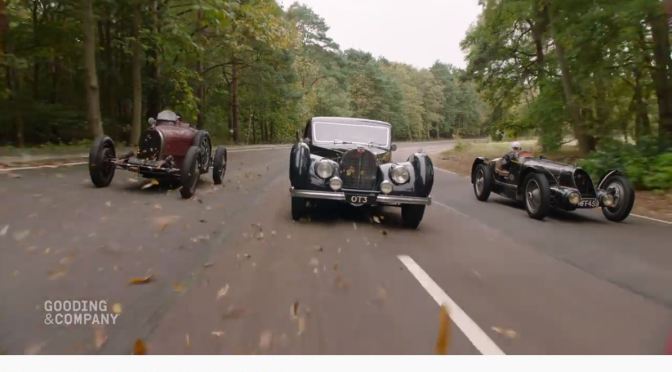
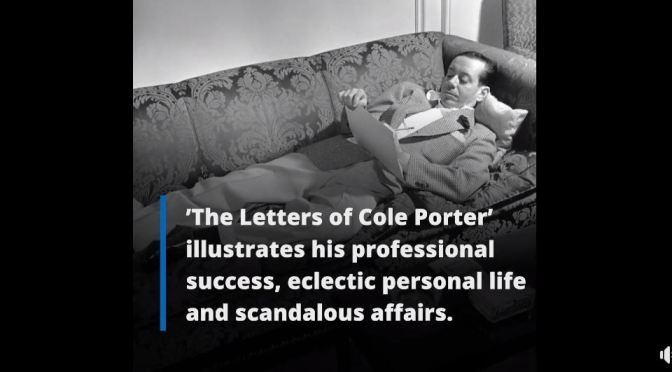
 Beneath his smooth, genial, almost inhumanly productive and evasive surface, there were turbulent waters. His very name, for all its air of Ivy League ease, represents a burdened legacy. The Porters were his difficult, scapegrace father’s family; the Coles were his mother’s rich and ambitious Indiana family. He was a Porter by birth but, if his mother had anything to do with it, would be a Cole for life.
 Boomers Daily