Category Archives: Fiction

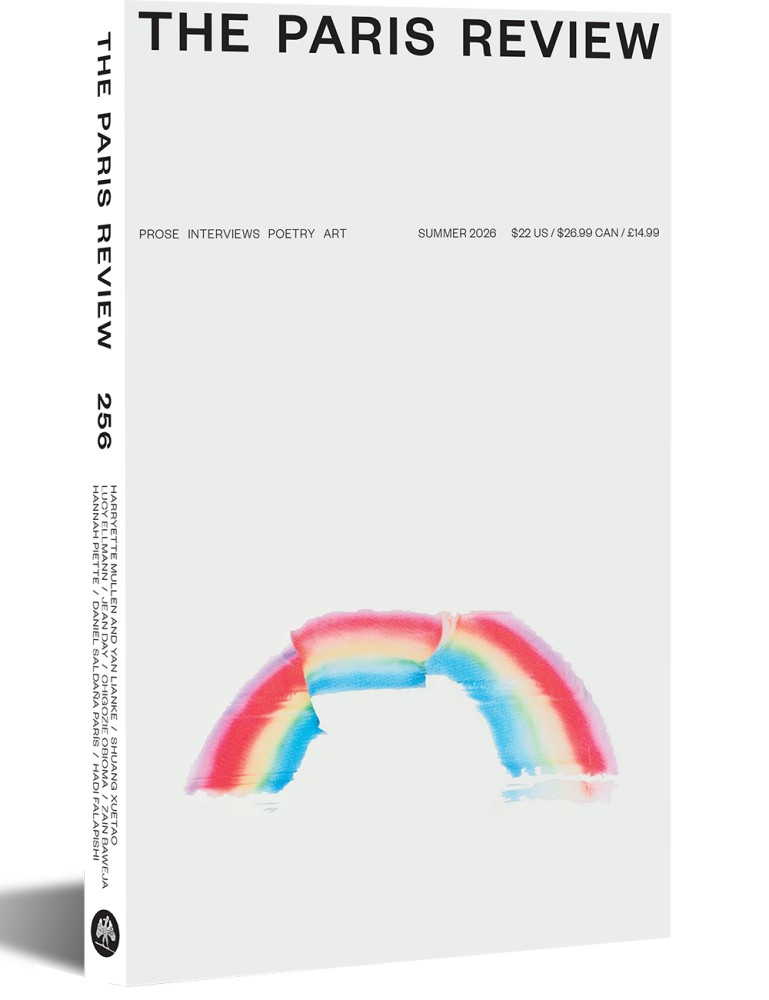
THE PARIS REVIEW —- SUMMER 2026 ISSUE

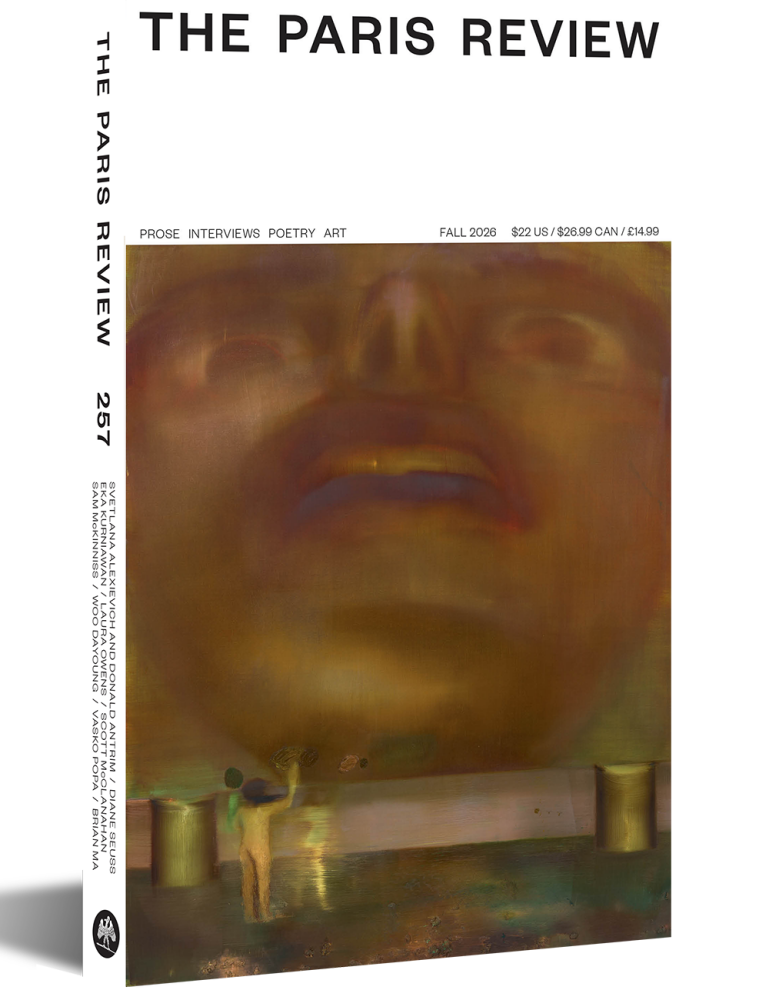
THE PARIS REVIEW : The latest features Interviews, Prose, Poetry and Art….

Harryette Mullen on the Art of Poetry: “I knew I would exhaust myself as subject matter, but I could take something and turn it upside down, inside out, add a few doodads, and that way it would become inexhaustible.”

Yan Lianke on the Art of Fiction:  “I personally didn’t think there was anything anti-war in writing about how an individual might be terrified of battle. I was really writing about my own fear.”

Prose by Lucy Ellmann, Chad Fore, Daisy Hildyard, Chigozie Obioma, Daniel Saldaña París, and Shuang Xuetao.

Poetry by Zain Baweja, Jean Day, Hannah Piette, Frederick Seidel, Shamsher Bahadur Singh, Katana Smith, and Tran Hang My.

Art by Hadi Falapishi, Andrew Kuo, and Hannah Tishkoff; cover by Alex Da Corte.

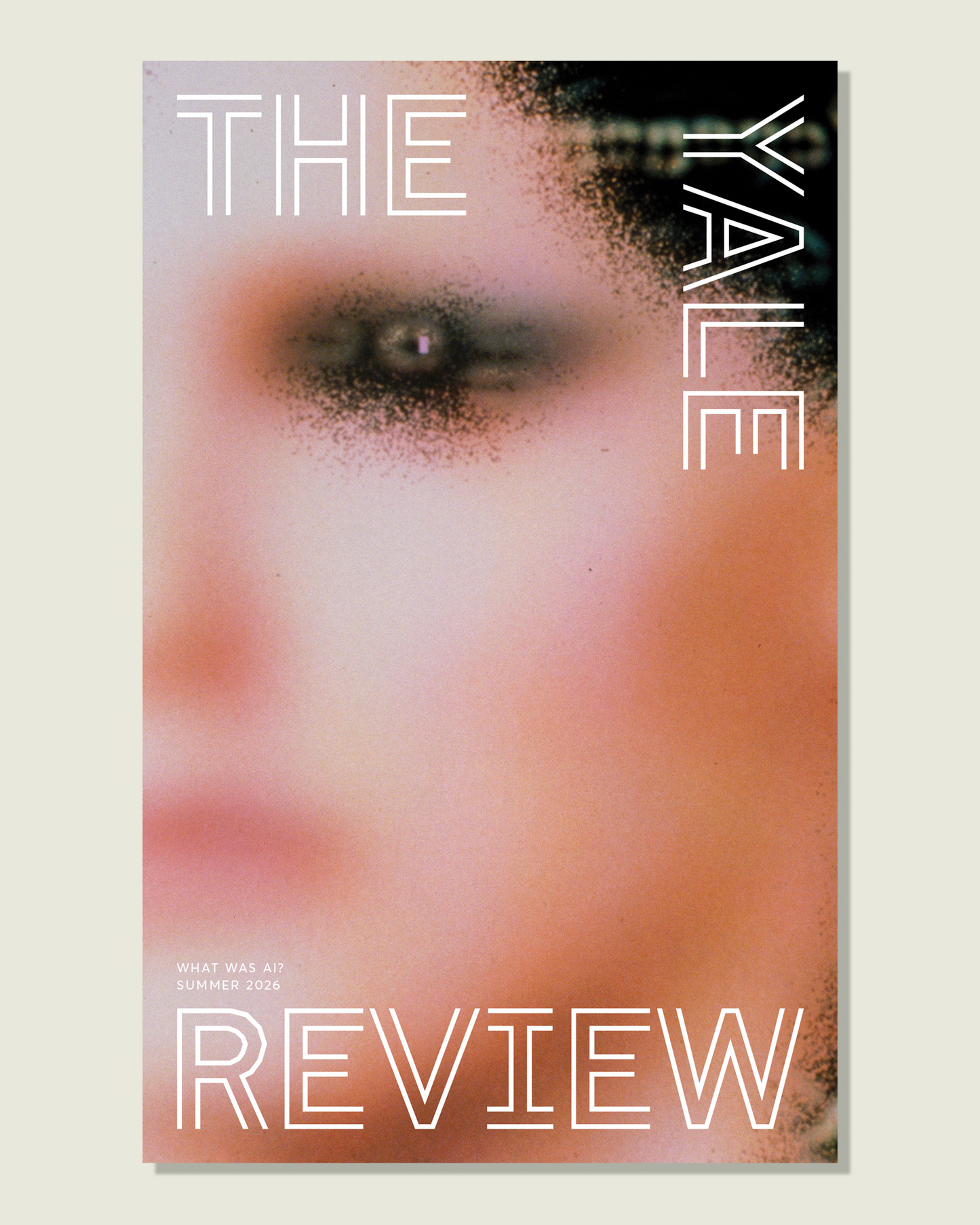
THE YALE REVIEW JOURNAL – SUMMER 2026 PREVIEW

The Yale Review Store

THE YALE REVIEW (March 11, 2025): The latest issue features a central folio, “What Was AI?,” exploring artificial intelligence through essays from Lauren Oyler, Christopher Sorrentino, and Melanie Mitchell. The issue also includes new memoirs and essays from Annie Ernaux and Namwali Serpell, alongside a visual portfolio by Vera Molnár.

Jagged Intelligence

The dangerous unknowns at the heart of LLMs by Melanie Mitchell

Reading the Declaration of Independence as Holy Text

How the American creed emerged—and evolved—over 250 years by Kathryn Lofton

Is the Twenty-First Century a Creative Void?

Critics mourn a bygone cultural era. But nostalgia for the new isn’t new by Audrey Wollen

The Birthday Party No One Wants

Why Americans aren’t celebrating the semiquincentennial by Samuel Moyn

I am back in writing hell. As if each time I start writing, I have to go through the same hell again. Annie Ernaux Unpublished journal entries

Zyzzyva Magazine —– Spring 2026 Preview

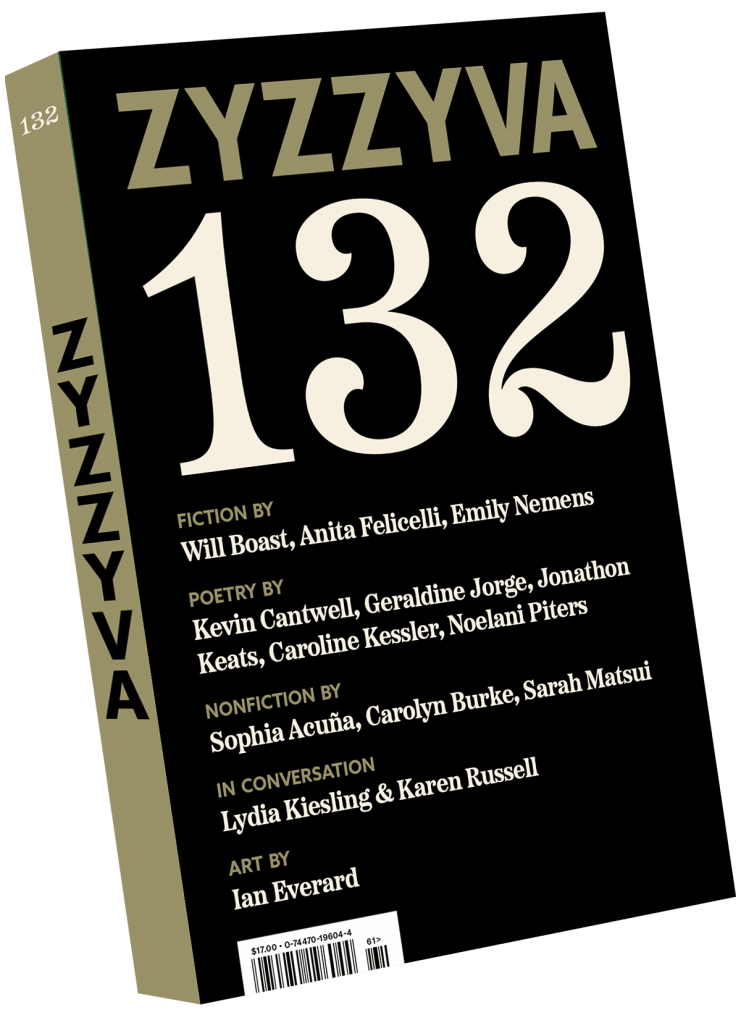
ZYZZYVA Magazine: The latest issue features…

Nonfiction

“Saguaro in the Sea” by Sophia Acuña: on surfing and indigeneity in Southern California, told through collage.

“Care Directive” by Sarah Matsui: a daughter’s attempt to keep her aging father in Hawaii from all sorts of calamity, but having to monitor him from the mainland.

“Triptych: A Biographer’s Sketchbook” by Carolyn Burke: “The Baroness was lively, curious, and still blond at eighty-five. She received me in a flurry of franglais, the mingling of two languages in which we would converse, and put us at ease with pink champagne, her favorite.”

Fiction

“Decoys” by Will Boast: goofing around working at the town supermarket, burning through the days till it all comes to head.

“Lilac Mud” by Anita Felicelli: A Bay Area artist in Amsterdam is approached one night by a man claiming to be a former student, leading to a crisis of identity and purpose.

“Grote geplumaceerde” by Emily Nemens: “Afterward, staring hard at her phone, which was her radio, which was the bearer of bad news, she wondered what mattered at all.”

Poetry

Kevin Cantwell, Geraldine Jorge, Jonathon Keats, Caroline Kessler, and Noelani Piters.

In Conversation

Lydia Kiesling talks to acclaimed author Karen Russell about Russell’s latest novel, The Antidote, and about Russell’s “fascination with foundational myths, the things we choose to know, and the things we choose to ignore or forget.”

Art

Ian Everard

THE PARIS REVIEW-SPRING ’26

THE PARIS REVIEW : The Spring 2026 issue features Interviews, Prose, Poetry and Art….

  • Sarah Schulman on the Art of Nonfiction: “I like to have my say, obviously. And if people would have just let me talk, some of these books wouldn’t have had to be written.”
  • Darryl Pinckney on the Art of Nonfiction:  “There are moments when you run up against a white wall—there’s a white man, white man, white man, white man—and the story somehow has to be uncovered.”
  • Prose by Ingeborg Bachmann, Dan Bevacqua, Patrick Cottrell, Zans Brady Krohn, Tao Lin, David Szalay, and Yu Hua.
  • Poetry by Inger Christensen, Rachel Lapides, Enrique Lihn, Joyelle McSweeney, Nakahara Chuya, and Asiya Wadud.
  • Art by Cecily Brown, Tom Fairs, and Cauleen Smith; cover by Cecily Brown.

Zyzzyva Magazine – WINTER 2025-2026

ZYZZYVA Magazine: The latest issue features…

Nonfiction

“The Fighters” by Joe Donnelly: on being transplanted as a boy from New Jersey to Ireland, and the grim school days spent at Willow Park primary school in Dublin.

“Fire Watching” by Harmony Holiday: a mediation on Los Angeles, its devastating fires, and finding meaning.

“The Deer” by Raia Small: “I have never killed anyone, so I can say that I don’t understand. But I am getting to know my own cruelties …”

Fiction

“A Long Line of Violence” by Tomas Moniz: A duo travels from the Mission District to Lassen Volcanic National Park to return a rifle to its battleground.

“Plums” by Feroz Rather: A young man steals as much time as he can with his beloved among the orchards and buses of his town in Kashmir.

“Viable” by Suzanne Rivecca: “The person I call in situations like this is Colette, the city government version of me, an abstinent ex-junkie disliked by the mayor, with a soft spot for schizophrenics, a love for lancing abscesses, and zero work/life balance.”

Poetry

Brian Ang, Nica Giromini, Kelly Gray, Michael Kennedy Costa, Kayla Krut, Maw Shein Win, Jared Stanley, and John Yau.

In Conversation

Chris Feliciano Arnold talks to Venezuelan scholar, journalist, and poet Boris Muñoz about literature, authoritarianism, and the importance of cronistas.

THE PARIS REVIEW ———- WINTER 2025/2026

THE PARIS REVIEW : The latest issue features Art of Criticism, Art of Poetry, Prose, Poetry and Art…

Hélène Cixous on the Art of Criticism: “There’s a feminist discourse that women can’t do it all. This is what many women experience, and it’s very difficult. But I am not like that.”

Alice Oswald on the Art of Poetry: “You come at poetry with the momentum of having failed. It’s only when other communication is absolutely impossible that a poem has to exist.”

Prose by Eve Babitz, Marlene Morgan, Alec Niedenthal, Gwendoline Riley, and Elias Rodriques.

Poetry by Millicent Borges Accardi, Monzer Masri, Alice Oswald, Jana Prikryl, and Ed Roberson.

Art by Ali Banisadr, Pippa Garner, Joan Jonas, and Mieko Meguro; cover by Adebunmi Gbadebo.

The London Magazine – October/November 2025

THE LONDON MAGAZINE (April 2, 2025): The latest issue features…. 

Essay | The Aesthetic Life by Zsófia Paulikovics

Essays

‘Several broadly millennial acquaintances confess that reading the book made them feel a sort of sickening recognition.’

Essay | No Designated Venue: An Oral History of London’s Music and Poetry Scenes

Yasmina Snyder spoke to writers, poets, musicians and event organisers based in London about the connections between live music and poetry, and the spaces that host them.

Essay | Why Magazines Fail by Tristram Fane Saunders

‘There’s big trouble in the world of little magazines. In the last two years, an alarming number have vanished into that second-hand bookshop in the sky. Each leaves the world a little quieter, a little poorer.’

HOWL AND HUSH

Jack London and Ernest Hemingway meet in a speculative broadcast, sparring over wolves, wounds, and the fragile myths of survival.

By Michael Cummins, Editor, September 28, 2025

In a virtual cabin where the fire crackles on loop and wolves pace behind the glass, London and Hemingway return as spectral combatants. One howls for the wild, the other hushes in stoic silence. Between them, an AI referee calls the fight—and reveals why, in an age of comfort and therapy, we still burn for their myths of grit, grace, and flame.

The lights dim, the crowd hushes, and Howard McKay’s voice rises like a thunderclap from another century. He is no man, not anymore, but an aggregate conjured from the cadences of Cosell and Jim McKay, the echo of every broadcast booth where triumph and ruin became myth. His baritone pours into the virtual cabin like an anthem: “From the frozen Yukon to the burning Gulf Stream, from the howl of the wolf to the silence of the stoic, welcome to the Wild World of Men. Tonight: Jack London and Ernest Hemingway. Two titans of grit. One ring. No judges but history.”

The myths of rugged manhood were supposed to have thawed long ago. We live in an age of ergonomic chairs, curated therapy sessions, artisanal vulnerability. Masculinity is more likely to be measured in softness than in stoicism. And yet the old archetypes remain—grinning, wounded, frostbitten—appearing on gym walls, in startup manifestos, and in the quiet panic of men who don’t know whether to cry or conquer. We binge survival shows while sipping flat whites. We stock emergency kits in suburban basements. The question is not whether these myths are outdated, but why they still haunt us.

Jack London and Ernest Hemingway didn’t invent masculinity, but they branded its extremes. One offered the wolf, the sled, the primordial howl of instinct. The other offered silence, style, the code of the wounded stoic. Their ghosts don’t just linger in literature; they wander through the way men still imagine themselves when no one is watching. So tonight, in a cabin that never was, we summon them.

The cabin is an elaborate fiction. The fire crackles, though the sound is piped in, a looped recording of combustion. The frost on the window is a pixelated map of cold, jagged if you stare too long. Wolves pace beyond the glass, their movements looping like a highlight reel—menace calculated for metaphor. This is not the Yukon but its simulacrum: ordeal rendered uncanny, broadcast for ratings. McKay, too, belongs to this stagecraft. He is the voice of mediated truth, a referee presiding over existential dread as if it were the third round of a heavyweight bout.

London arrives first in the firelight, massive, broad-shouldered, his beard glistening as though it remembers brine. He smells of seal oil and smoke, authenticity made flesh. Opposite him sits Hemingway, compressed as a spring, scars arranged like punctuation, his flask gleaming like a ritual prop. His silences weigh more than his words. McKay spreads his hands like a referee introducing corners: “London in the red—frostbitten, fire-eyed. Hemingway in the blue—scarred, stoic, silent. Gentlemen, touch gloves.”

Civilization, London growls, is only veneer: banks, laws, manners, brittle as lake ice. “He had been suddenly jerked from the heart of civilization and flung into the heart of things primordial,” he says of Buck, but it is himself he is describing. The Yukon stripped him bare and revealed survival as the only measure. Hemingway shakes his head and counters. Santiago remains his emblem: “A man can be destroyed but not defeated.” Survival, he argues, is not enough. Without grace, it is savagery. London insists dignity freezes in snow. Hemingway replies that when the body fails, dignity is all that remains. One howls, the other whispers. McKay calls it like a split decision: London, Nietzsche’s Overman; Hemingway, the Stoic, enduring under pressure.

The fire cracks again, and they move to suffering. London’s voice rises with the memory of scurvy and starvation. “There is an ecstasy that marks the summit of life, and beyond which life cannot rise.” Agony, he insists, is tuition—the price for truth. White Fang was “a silent fury who no torment could tame,” and so was he, gnawing bacon rinds until salt became torment, watching his gums bleed while his notebook filled with sketches of men and dogs broken by cold. Pain, he declares, is refinement.

Hemingway will not romanticize it. Fossalta remains his scar. He was nineteen, a mortar shell ripping the night, carrying a wounded man until his own legs gave out. “I thought about not screaming,” he says. That, to him, is suffering: not the ecstasy London names, but the composure that denies agony the satisfaction of spectacle. Santiago’s wasted hands, Harry Morgan’s quiet death—pain is humility. London exults in torment as crucible; Hemingway pares it to silence. McKay leans into the mic: “Suffering for London is capital, compounding into strength. For Hemingway, it’s currency, spent only with composure.”

Violence follows like a body blow. For London, it is honesty. The fang and the club, the law of the trail. “The Wild still lingered in him and the wolf in him merely slept,” he reminds us, violence always waiting beneath the surface. He admired its clarity—whether in a sled dog’s fight or the brutal marketplace of scarcity. For Hemingway, violence is inevitable but sterile. The bull dies, the soldier bleeds, but mortality is the only victor. The bullfight—the faena—is ritualized tragedy, chaos given rules so futility can be endured. “One man alone ain’t got no bloody chance,” Harry Morgan mutters, and Hemingway nods. London insists that without violence, no test; without test, no truth. Hemingway counters that without style, violence is only noise.

Heroism, too, divides the ring. London points to Buck’s transformation into the Ghost Dog, to the pack’s submission. Heroism is external dominance, myth fulfilled. Hemingway counters with Santiago, who returned with bones. Heroism lies not in conquest but in fidelity to one’s own code, even when mocked by the world. London scoffs at futility; Hemingway scoffs at triumph that cheats. McKay narrates like a replay analyst: London’s hero as Ozymandias, monument of strength; Hemingway’s as Sisyphus, monument of effort. Both doomed, both enduring.

McKay breaks in with the cadence of a mid-bout analyst: “London, born in Oakland, forged in the Yukon. Fighting weight: one-ninety of raw instinct. Signature move: The Howl—unleashed when civilization cracks. Hemingway, born in Oak Park, baptized in war. Fighting weight: one-seventy-five of compressed silence. Signature move: The Shrug—delivered with a short sentence and a long stare. One man believes the test reveals the truth. The other believes the truth is how you carry the test. And somewhere in the middle, the rest of us are just trying to walk through the storm without losing our flame.”

Biography intrudes on myth. London, the socialist who exalted lone struggle, remains a paradox. His wolf-pack collectivism warped into rugged individualism. The Yukon’s price of entry was a thousand pounds of gear and a capacity for starvation—a harsh democracy of suffering. Hemingway, by contrast, constructed his trials in realms inaccessible to most men. His code demanded a form of leisure-class heroism—the freedom to travel to Pamplona, to chase big game, to transform emotional restraint into a portable lifestyle. London’s grit was born of necessity; Hemingway’s was an aesthetic choice, available to the wealthy. Even their sentences are stances: London’s gallop like sled dogs, breathless and raw; Hemingway’s stripped to the bone, words like punches, silences like cuts. His iceberg theory—seven-eighths submerged—offered immense literary power, but it bequeathed a social script of withholding. The silence that worked on the page became a crushing weight in the home. McKay, ever the showman, raises his arms: “Form is function! Brawn against compression! Howl against hush!”

Then, with the shameless flourish of any broadcast, comes the sponsor: “Tonight’s bout of the Wild World of Men is brought to you by Ironclad Whiskey—the only bourbon aged in barrels carved from frozen wolf dens and sealed with Hemingway’s regrets. Not for sipping, for surviving. With notes of gunpowder, pine smoke, and frostbitten resolve, it’s the drink of men who’ve stared down the void and asked it to dance. Whether you’re wrestling sled dogs or your own emotional repression, Ironclad goes down like a fist and finishes like a scar. Distilled for the man who doesn’t flinch.” The fire hisses as if in applause.

Flashbacks play like highlight reels. London chewing frozen bacon rinds, scribbling by the dim flare of tallow, every line of hunger an autobiography. Hemingway at Fossalta, nineteen, bleeding into dirt, whispering only to himself: don’t scream. Even the piped-in fire seems to know when to hold its breath.

Their legacies wander far beyond the cabin. Krakauer’s Chris McCandless chased London’s frozen dream but lacked his brutal competence. His death in a bus became the final footnote to To Build a Fire: will alone does not bargain with minus sixty. Hollywood staged The Revenant as ordeal packaged for awards. Reality shows manufacture hardship in neat arcs. Silicon Valley borrows their vocabulary—“grit,” “endurance,” “failing forward”—as if quarterly sprints were marlin battles or Yukon trails. These echoes are currency, but counterfeit.

McKay drops his voice into a near whisper. “But what of the men who don’t fit? The ones who cry without conquest, who break without burning, who survive by asking for help?” London stares into looped frost; Hemingway swirls his glass. Their silence is not absence but tension, the ghosts of men unable to imagine another myth.

The danger of their visions lingers. London’s wolf, applied carelessly, becomes cruelty mistaken for competence, capitalism as fang and claw. Hemingway’s stoic, misused, becomes toxic silence, men drowning in bottles or bullets. One myth denies compassion; the other denies expression. Both are powerful; both exact a cost.

And yet, McKay insists, both are still needed. London growls that the man who forgets the wolf perishes when the cold comes. Hemingway replies that the man who forgets dignity perishes even if he survives. The fire glows brighter, though its crackle is only a recording. London’s flame is a blast furnace, demanding constant fuel. Hemingway’s is a controlled burn, illuminating only if tended with restraint. Both flames are fragile, both exhausting.

The wolves fade to shadow. The storm eases. The fire loops, oblivious. McKay lowers his voice into elegy, his cadence a final sign-off: “Man is nothing, and yet man is flame. That flame may be survival or silence, howl or whisper. But it remains the work of a lifetime to tend.”

The cabin collapses into pixels. The wolves vanish. The storm subsides. The fire dies without ash. Only the coals of myth remain, glowing faintly. And somewhere—in a quiet room, in a frozen pass—another man wonders which flame to keep alive.

The myths don’t just shape men; they shape nations. They echo in campaign slogans, locker-room speeches, the quiet panic of fathers trying to teach strength without cruelty. Even machines, trained on our stories, inherit their contours. The algorithm learns to howl or to hush. And so the question remains—not just which flame to tend, but how to pass it on without burning the next hand that holds it.

THIS ESSAY WAS WRITTEN AND EDITED UTILIZING AI

THE PARIS REVIEW – FALL 2025

THE PARIS REVIEW : The latest issue features interviews with Maggie Nelson and Eliot Weinberger, prose by Bud Smith and Yan Lianke, poetry by Patricia Lockwood and Ishion Hutchinson, art by Martha Diamond and Talia Chetrit, a cover by Issy Wood, and more…

Eliot Weinberger on the Art of the Essay: “I have no interest in first-person investigation. Personally, I’ve never found myself an interesting person.”

Maggie Nelson on the Art of Nonfiction: “It’s important to notice when the spark of magic or curiosity is there and what snuffs it out, and being around too many writers, for me, snuffs it out.”

Prose by Anne Carson, Renny Gong, Aurora Huiza, Jordy Rosenberg, Bud Smith, and Yan Lianke.

Poetry by Roque Dalton, Ishion Hutchinson, Patricia Lockwood, Mariano Melgar, Eileen Myles, Katie Peterson, and authors unknown.

Art by Talia Chetrit, Martha Diamond, and Jamian Juliano-Villani; cover by Issy Wood.

GRANTA MAGAZINE – SUMMER 2025 PREVIEW

GRANTA MAGAZINE SUMMER 2025: The new issue features ‘Badlands’, traversing inhospitable landscapes, from troubled childhoods to drone-infested Ukraine.

Badlands

‘There are badlands of the Earth, but also badlands of memory – whited-out areas that the mind fills in as best it can.’ By Thomas Meaney

Drones and Decolonization

‘Brody was rich in fresh flowers and fresh grief.’ By William T. Vollmann