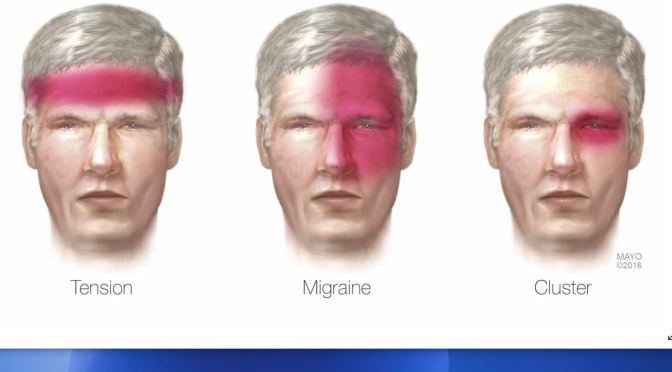
On the Mayo Clinic Radio program, Dr. Beth Robertson, a Mayo Clinic neurologist, discusses headaches and treatment for migraines.
This interview originally aired Feb. 22, 2020. Learn more about headaches: https://www.mayoclinic.org/diseases-c…

On the Mayo Clinic Radio program, Dr. Beth Robertson, a Mayo Clinic neurologist, discusses headaches and treatment for migraines.
This interview originally aired Feb. 22, 2020. Learn more about headaches: https://www.mayoclinic.org/diseases-c…
From Cell.com “Trends In Ecology & Evolution” (Feb 22, 2020):
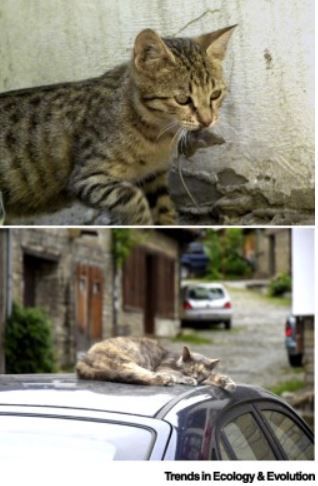 The value of domestic cats as predators-in-residence certainly played a significant part in their global spread, as they were employed for rodent control on trade ships and in the outbuildings of emerging civilisations.
They are predisposed to form attachments with people during early developmental stages, tolerate the presence of humans, other cats, and other domestic animals far better than wilder felids, and exhibit distinctive behavioural traits (including vocalisations and body language) that facilitate effective interspecies communication…
Cats share a long history with humans but are remarkable among domesticated species in largely retaining behavioural and reproductive independence from people. In many societies, the cat maintains liminal status as both a domestic and a wild animal. An adaptive push-and-pull between wild and domestic traits corresponds with dual roles as companions and pest controllers, and with conflicted treatment in husbandry, management, law, and public discourse. To move forward, we must proceed by understanding that cats are not exclusively pets or pests, but both a central component of human societies and an important, often adverse, influence on ecosystems. Developing a collaborative ‘companion animal ecology’, in which human–animal domestic relations link to ecological processes, will enable sustainable management of this wild companionship.
On the Mayo Clinic Radio program, Dr. Todd Miller, a Mayo Clinic cardiologist, explains how exercise affects the heart. This interview originally aired Feb. 22, 2020. Learn more about exercise and the heart: https://www.mayoclinic.org/healthy-li…
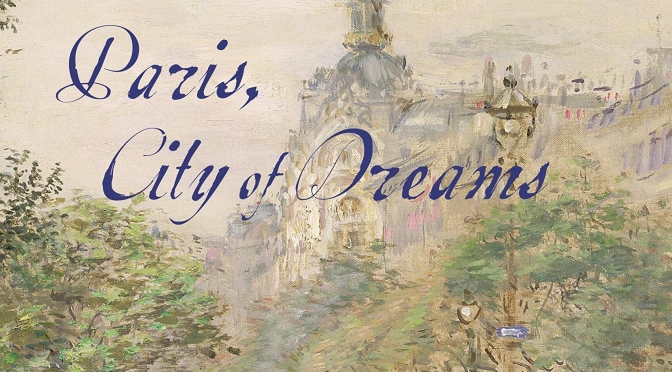
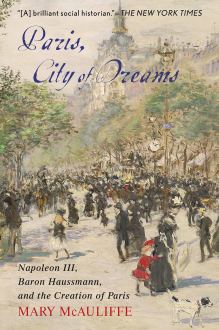 Paris, City of Dreams traces the transformation of the City of Light during Napoleon III’s Second Empire into the beloved city of today. Together, Napoleon III and his right-hand man, Georges Haussmann, completely rebuilt Paris in less than two decades—a breathtaking achievement made possible not only by the emperor’s vision and Haussmann’s determination but by the regime’s unrelenting authoritarianism, augmented by the booming economy that Napoleon fostered.
Acclaimed historian Mary McAuliffe vividly recaptures the Paris of Napoleon III, Claude Monet, and Victor Hugo as Georges Haussmann tore down and rebuilt Paris into the beautiful City of Light we know today.
McAuliffe follows the lives of artists such as Edouard Manet, Berthe Morisot, and Claude Monet, as well as writers such as Emile Zola, Gustave Flaubert, and the poet Charles Baudelaire, while from exile, Victor Hugo continued to fire literary broadsides at the emperor he detested.
McAuliffe brings to life a pivotal era encompassing not only the physical restructuring of Paris but also the innovative forms of banking and money-lending that financed industrialization as well as the city’s transformation. This in turn created new wealth and lavish excess, even while producing extreme poverty. More deeply, change was occurring in the way people looked at and understood the world around them, given the new ease of transportation and communication, the popularization of photography, and the emergence of what would soon be known as Impressionism in art and Naturalism and Realism in literature—artistic yearnings that would flower in the Belle Epoque.
Napoleon III, whose reign abruptly ended after he led France into a devastating war against Germany, has been forgotten. But the Paris that he created has endured, brought to vivid life through McAuliffe’s rich illustrations and evocative narrative.
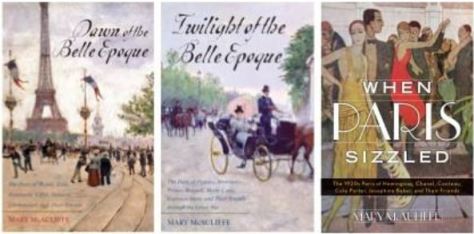
Mary McAuliffe holds a PhD in history from the University of Maryland, has taught at several universities, and has lectured at the Smithsonian Institution, the Barnes Foundation, and the Frick Pittsburgh. She has traveled extensively in France, and for many years she was a regular contributor to Paris Notes. Her books include Clash of Crowns, Dawn of the Belle Epoque, Twilight of the Belle Epoque, When Paris Sizzled, and Paris on the Brink. She lives in New York City with her husband.
 Antonio Taveira’s family breathes new life into the illustrious Noble & Murat brand whose tradition as a port house started over a century and half ago in 1831 as one of the first bottlers to mention “LBV” on their label.
The family has a long history of precision hand-harvesting, distinguished sourcing and methodical vinification. For decades they have provided grapes for Taylor’s, Croft, Sandeman’s among others, but now they have decided to keep the best grapes for their own wines.

From a JAMA Network Open online release (February 21, 2020):
 Across the 6 studies of 8699 participants, mean age ranged between 70 and 74 years and mean gait speed ranged between 1.05 and 1.26 m/s. Incident dementia ranged from 5 to 21 per 1000 person-years. Compared with usual agers, participants with only memory decline had 2.2 to 4.6 times higher risk for developing dementia…
Those with only gait decline had 2.1 to 3.6 times higher risk. Those with dual decline had 5.2 to 11.7 times the risk…
Impaired mobility, such as slow gait, is associated with an increased risk of dementia, but the effect size of this association is generally modest.1–6 Identifying persons who experience both mobility decline and memory decline, a main symptom in the early stage of dementia, may have a greater prognostic value in assessing risk of dementia because the combination could identify a group in whom gait speed decline is at least in part caused by neurodegenerative pathologic conditions of the central nervous system rather than local musculoskeletal problems, such as sarcopenia or osteoarthritis.7–9 A recent study of 154 participants with mild cognitive impairment reported that those who declined in both cognition and gait speed had the highest risk of dementia.
Syndicated columnist Mark Shields and New York Times columnist David Brooks join Judy Woodruff to discuss the latest political news, including how the Las Vegas debate changed the 2020 Democratic race, new reports of Russian election interference and President Trump’s response to them, the sentencing of Trump ally Roger Stone and the outcry over Trump’s flurry of pardons and commutations.
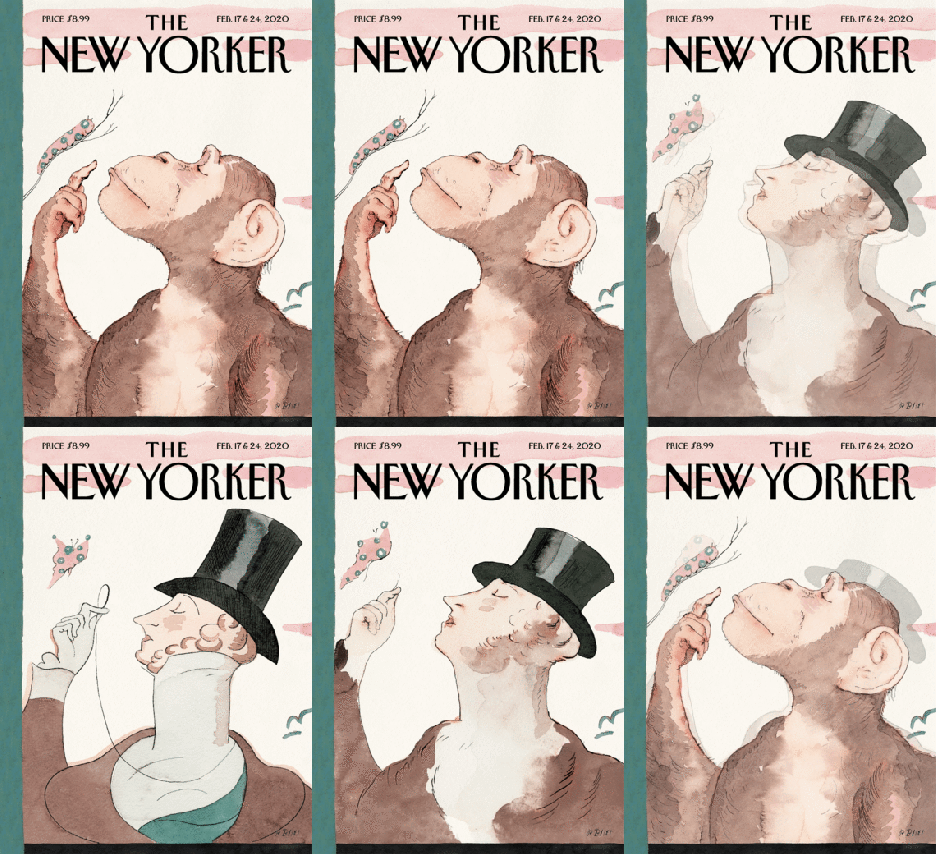 In February, 1925, Rea Irvin, The New Yorker’s first art editor, designed the cover of the magazine’s inaugural issue. That cover’s central character, a dandy peering at a butterfly through a monocle, would come to be known as Eustace Tilley, and he has graced the cover of the magazine nearly every February in the ninety-five years since. This is all a matter of historical record—but Barry Blitt, in this year’s Anniversary Issue, tells a different origin story. We recently talked to Blitt about drawing a familiar face.
You’ve drawn many a Eustace Tilley. Is there something pleasing about revisiting familiar forms?
Well, certain familiar forms are probably traumatic to revisit, but Tilley is a joy to draw repeatedly. All the hard work has been done for you—it’s a beautifully designed image. Hard to make a mess of those shapes and colors, though I give it the old college try.
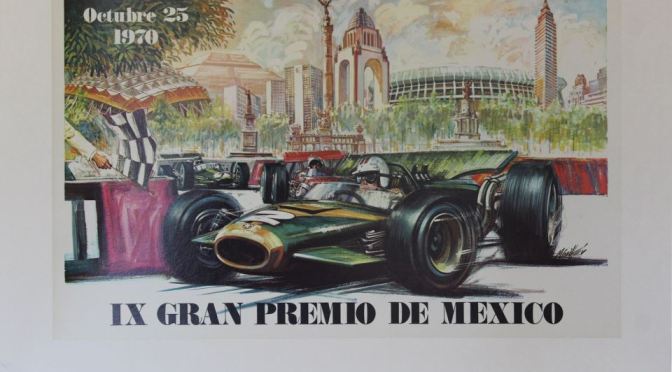
 In motor racing, a win or podium finish is often immortalized with the reward of a trophy but to foster and create the enthusiasm leading up to the race and attract the masses of racing enthusiasts and fans to witness many of the world’s greatest historic motoring races, it was often the beautifully executed imagery that drove people to the tracks.

Often a work of art in itself, historic motor racing posters manage to capture the very spirit of each race, venue, marques and their respective drivers best. What better way to celebrate heritage of motor racing then through this outstanding offering of nearly 60 original posters and artwork, all offered without reserve.
From a Wall Street Journal online article (Feb 21, 2020):
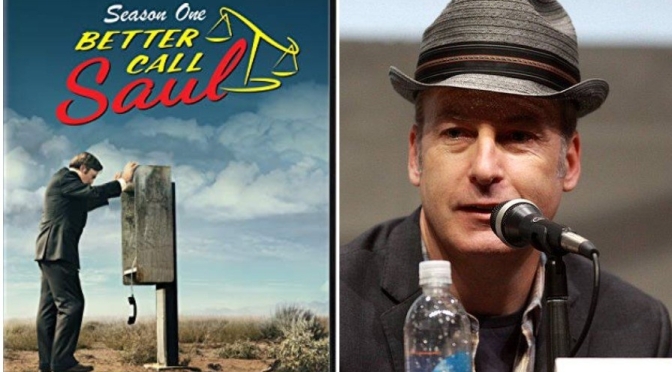
 “I don’t have this precious career as an actor that I had to preserve. I’m an older guy, I’ve had a career, and the most personal thing I’ve ever done was Mr. Show, so, in a way I’ve said my piece, so I just don’t have all that much to lose really compared to somebody who’s an actor for a living and dreaming of their own show. My daughter asked me this question. This was a kid who grew up in Hollywood. She said, “If it’s bad, how bad would it be?” And I thought, Well, it’s Vince Gilligan and Peter Gould. The worst thing it would be, would be an experiment that just didn’t pan out, but an interesting one at the very least.”
It’s fair to say that in 1998, no one who saw Bob Odenkirk perform a Mr. Show sketch buck naked on the stage of Radio City Music Hall for Comic Relief VIII—a cupped hand his only nod to decency—would have predicted his turn to drama. Odenkirk is now critically celebrated for his portrayal of greasy lawyer Saul Goodman in AMC’s Better Call Saul.
The 57 year-old stars on the fifth and penultimate season of the show, which premieres this weekend and has moved far away from its first season branding as “a Breaking Bad spinoff.”





 Boomers Daily