

 Between 13 December 1954 and 14 February 1955, Picasso painted a series of fifteen canvases based on Eugène Delacroix’s masterwork Les femmes d’Alger, each of which he assigned an identifying letter from A to O. Together, these paintings constitute Picasso’s single greatest achievement in the decades following the end of the Second World War. They represent his first comprehensive appropriation and thoroughgoing exploration of an important painting by an earlier artist, as well as the most focused analysis he had done since the war years of the female figure set within a specific spatial environment.
Picasso painted the present Femmes d’Alger, Version F on 17 January 1955, around the halfway point in the cycle. It is the culminating, most fully resolved canvas from the first phase of the series, when Picasso favored medium-sized formats for his protean explorations.



 The Modular Water Dwellings incorporate standardised components that provide efficiency in manufacturing, while still allowing a variety of internal layouts for occupants’ individual requirements. The Dwellings can be orientated and spaced in different ways, responding to varying site contexts, local conditions, light sources and primary views. They also maximise the use of durable and non-corroding materials, such as concrete and glass, ensuring a long design life that anticipates multiple occupants.
 Alexander Vreeland, grandson of fashion journalist Diana Vreeland, tells us about his new book, ‘Bon Mots: Words of Wisdom from the Empress of Fashion’.
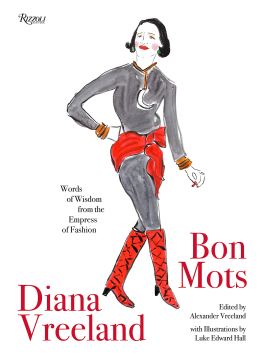 Diana Vreeland’s insightful edicts and evocative aphorisms remain her strongest legacy. She looked at life as a romantic and lived through dreams and imagination. Showing leadership, vision, and timeless wit, this book celebrates her visionary words that not only transformed the world of fashion, but also gave us sage advice to live by.
 One of the largest canvases from Thiebaud’s groundbreaking early period, it depicts a row of arcade machines, decorated in a vibrant mix of oranges and yellows…With their foreshortened bodies, the machines press towards the picture plane like the cakes and hot dogs in Thiebaud’s other works, inviting the viewer to reach in and taste.


 “The whole lesson of this pandemic, and the whole lesson of 9/11, is we can’t ignore the world, or if we do ignore the world, it’s at our peril,” Haass says. “These oceans that surround us are not moats. We’ve got to pay attention to the world and we’ve got to fix things here at home.”
 We take a look back over the past six months of the pandemic, and discuss how far the world has come. It’s been a period of turmoil and science has faced an unprecedented challenge. What lessons can be learned from the epidemic so far to continue the fight in the months to come?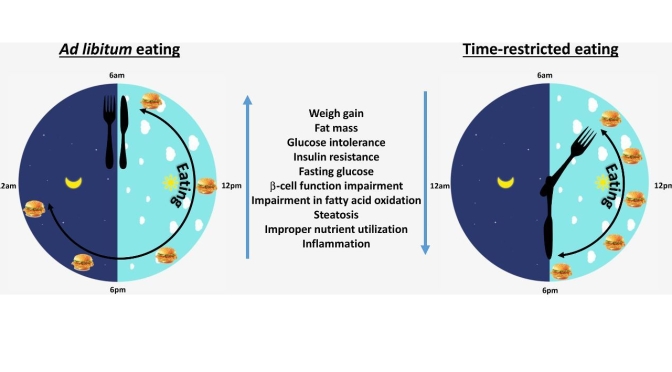
 …the beneficial effects of TRE are dose dependent, with greater reductions in body weight, fat mass, and improvement in glucose tolerance when a 9-h protocol was implemented versus 12 and 15 h. The optimal TRE time frame to recommend for people has not been tested. Clear improvements have been noted after 6-, 8-, 9-, and 10-h protocols. It is likely that the greater time restriction would result in greater weight losses, which may maximize the metabolic benefits.
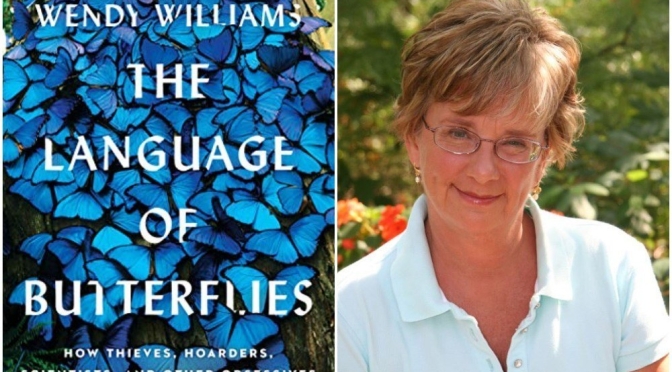
 Butterflies are one of the world’s most beloved insects. From butterfly gardens to zoo exhibitions, they are one of the few insects we’ve encouraged to infiltrate our lives. Yet, what has drawn us to these creatures in the first place? And what are their lives really like? In this groundbreaking book, New York Times bestselling author and science journalist Wendy Williams reveals the inner lives of these “flying flowers”—creatures far more intelligent and tougher than we give them credit for.
 Boomers Daily