Tag Archives: Non-Fiction

THE NEW YORK REVIEW OF BOOKS – MAY 28, 2026

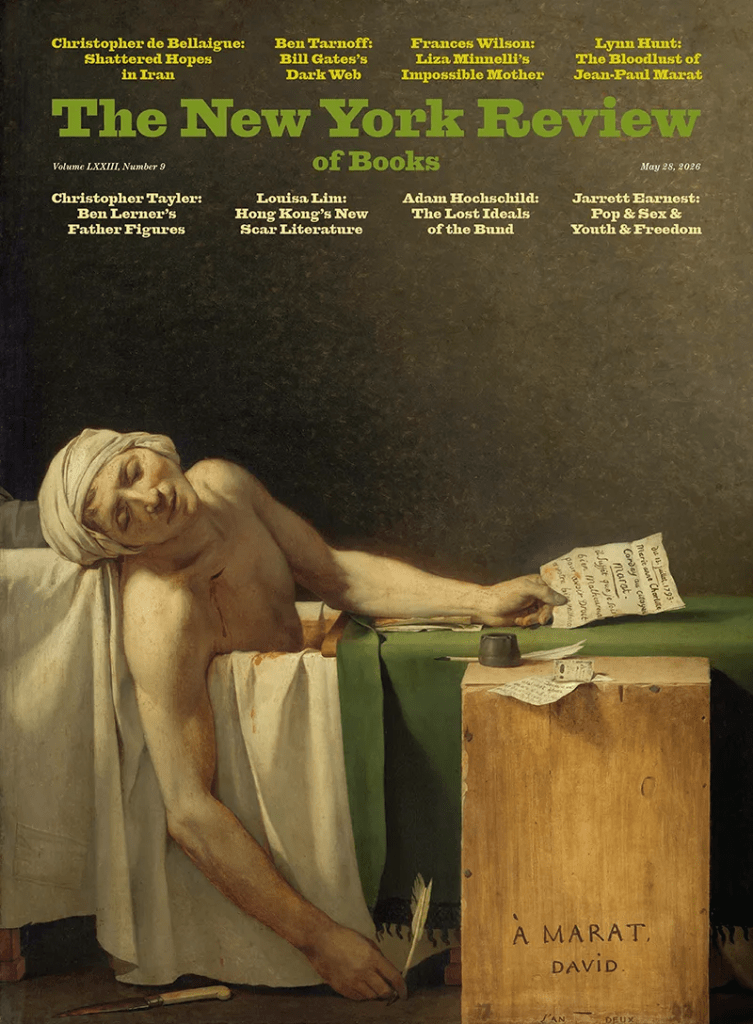
THE NEW YORK REVIEW OF BOOKS: The latest issue features Ben Tarnoff on Silicon Valley’s paterfamilias, Christopher de Bellaigue on Iran’s political future, Frances Wilson on Liza (with a “Z”), Christopher Tayler on Ben Lerner, Lynn Hunt on Marat’s afterlife, Charlie Lee on John Gregory Dunne’s descent into Vegas, Adam Hochschild on the dream of the Bundists, Nina Siegal on the real-life Hoosier Indiana Jones, Louisa Lim on contemporary Hong Kong literature, poems by Dan Chiasson and Emily Berry, and much more.

Whither the Nerd-Bully?

Bill Gates was the monopolistic father figure who Silicon Valley’s young founders rebelled against—and, in so rebelling, became.

Billionaire, Nerd, Savior, King: Bill Gates and His Quest to Shape Our World by Anupreeta Das

Source Code: My Beginnings by Bill Gates

Iran’s New Winter

The US-Israeli war against Iran, far from encouraging a popular uprising, has strengthened the regime’s grip and set back the cause of Iranian freedom indefinitely.

Don’t Call It Entertainment

In Everthing Is Now, J. Hoberman chronicles a radical avant-garde’s attempts to jostle New York City out of its postwar complacency and moral retrenchment.

Everything Is Now: The 1960s New York Avant-Garde—Primal Happenings, Underground Movies, Radical Pop by J. Hoberman

The Sage of Washington

Walter Lippmann was the most influential political commentator of his generation, but behind his preternatural confidence was a far more complicated and unsettled character.

Walter Lippmann: An Intellectual Biography by Tom Arnold-Forster

Zyzzyva Magazine —– Spring 2026 Preview

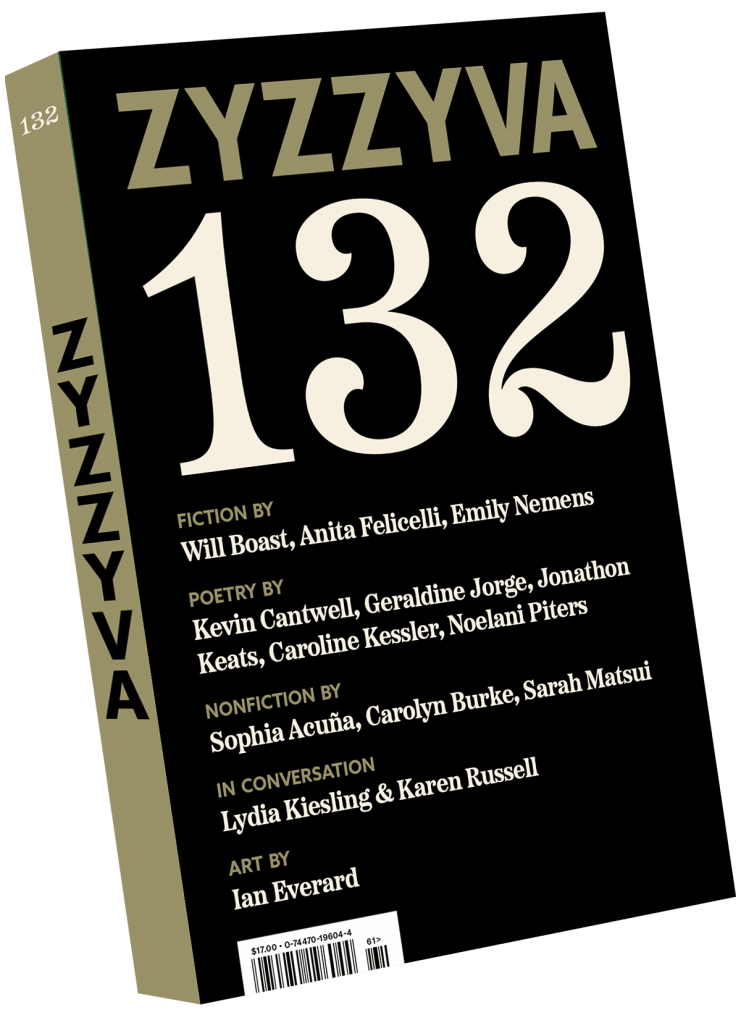
ZYZZYVA Magazine: The latest issue features…

Nonfiction

“Saguaro in the Sea” by Sophia Acuña: on surfing and indigeneity in Southern California, told through collage.

“Care Directive” by Sarah Matsui: a daughter’s attempt to keep her aging father in Hawaii from all sorts of calamity, but having to monitor him from the mainland.

“Triptych: A Biographer’s Sketchbook” by Carolyn Burke: “The Baroness was lively, curious, and still blond at eighty-five. She received me in a flurry of franglais, the mingling of two languages in which we would converse, and put us at ease with pink champagne, her favorite.”

Fiction

“Decoys” by Will Boast: goofing around working at the town supermarket, burning through the days till it all comes to head.

“Lilac Mud” by Anita Felicelli: A Bay Area artist in Amsterdam is approached one night by a man claiming to be a former student, leading to a crisis of identity and purpose.

“Grote geplumaceerde” by Emily Nemens: “Afterward, staring hard at her phone, which was her radio, which was the bearer of bad news, she wondered what mattered at all.”

Poetry

Kevin Cantwell, Geraldine Jorge, Jonathon Keats, Caroline Kessler, and Noelani Piters.

In Conversation

Lydia Kiesling talks to acclaimed author Karen Russell about Russell’s latest novel, The Antidote, and about Russell’s “fascination with foundational myths, the things we choose to know, and the things we choose to ignore or forget.”

Art

Ian Everard

THE NEW YORK REVIEW OF BOOKS – MAY 14, 2026

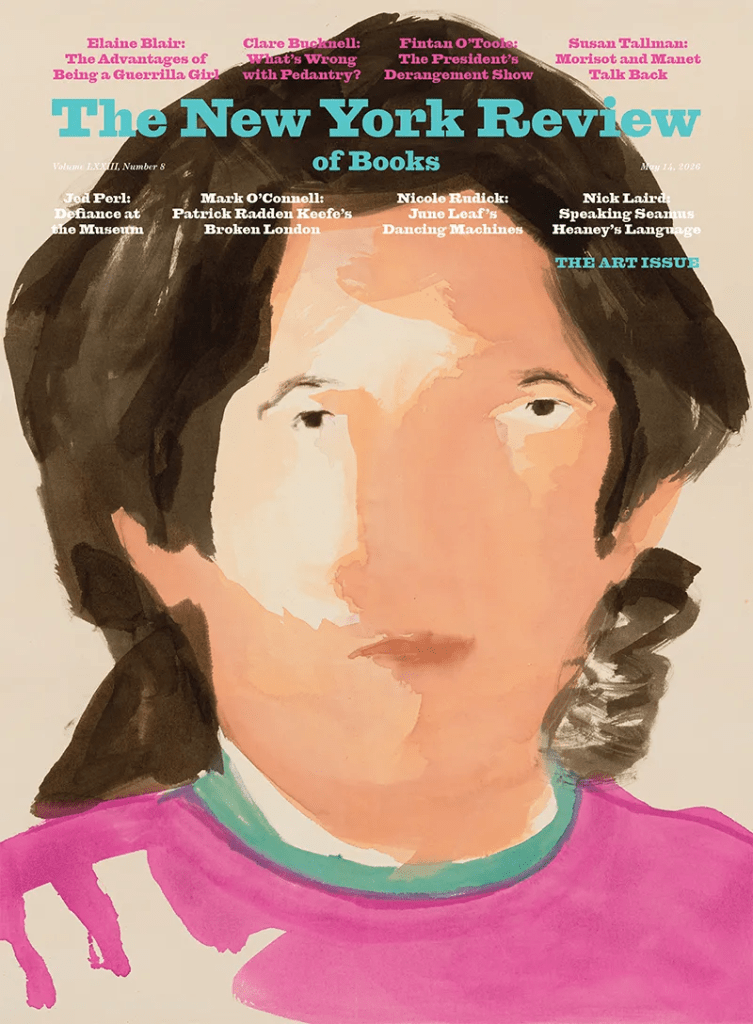
THE NEW YORK REVIEW OF BOOKS: The latest issue features Jed Perl on the Whitney Biennial, Fintan O’Toole on the president’s precarious sanity, Nicole Rudick on June Leaf’s unique vision, Clare Bucknell on know-it-alls, Julian Bell on Joseph Wright of Derby, Dennis Lim on low-resolution cinema, Elaine Blair on the Guerrilla Girls, Mark O’Connell on a death in London, Martin Filler on David Adjaye’s demons, Nick Laird on the complete Seamus Heaney, Rosa Lyster on the evaporating salt lakes, Susan Tallman on Manet and Morisot, poems by Paul Muldoon and Fiona Sze-Lorrain, and much more.

‘The Right Amount of Crazy’

In Trump’s strategy of feigning madness to get what he wants, there is no longer any border between pretense and actual irrationality. By Fintan O’Toole

Charlatans & Bores

The profile of the pedant has changed surprisingly across time periods and cultures, but what’s constant is that nobody wants to be called one.

On Pedantry: A Cultural History of the Know-It-All by Arnoud S.Q. Visser

‘The Music of What Happens’

Seamus Heaney’s complete poems, following on editions of his letters, prose, and translations, confirm the extent of his achievement.

The Poems of Seamus Heaney edited by Rosie Lavan and Bernard O’Donoghue, with Matthew Hollis

Manet and Morisot: Game On

An important exhibition showcases a painterly repartee that altered the trajectory of the two artists’ work and, by extension, modern art itself.

Manet and Morisot – an exhibition at the Legion of Honor, San Francisco, October 11, 2025–March 1, 2026, and the Cleveland Museum of Art, March 29–July 5, 2026

THE NEW YORK REVIEW OF BOOKS – APRIL 23, 2026

THE NEW YORK REVIEW OF BOOKS: The latest issue features a dispatch from Tehran, Jed Perl on Morgan Meis’s funky kind of art criticism, Francine Prose on MAGA fiction, Caroline Fraser on the dump, Michael Gorra on Civil War diaries, David Cole on the constitutional guarantee of birthright citizenship, Hermione Lee on Virginia Woolf’s letters, Trevor Jackson on American “retirement,” Kathryn Hughes on Tennyson’s cosmos, Colm Tóibín on Irish reunification, a collage by Lucy Sante, poems by Andrea Cohen and Timmy Straw, and much more.


From the Rooftops of Tehran

We in Iran own our grief, mourning all by ourselves.

Living Through the Civil War

George Templeton Strong’s diaries provide the North’s best record of daily passions and woes during its struggle against the South.

George Templeton Strong: Civil War Diaries edited by Geoff Wisner

‘A Vast Symphony of Stone’

In his renovation of Notre-Dame, Eugène Viollet-le-Duc projected his own Romantic vision of the Middle Ages onto the Gothic cathedral.

Viollet-le-Duc: Drawing Worlds an exhibition at the Bard Graduate Center Gallery, New York City, January 28–May 24, 2026

The Aging Class

Retirement, like so much of the American economy, is a broken system that benefits private interests and exploits the most vulnerable people.

Golden Years: How Americans Invented and Reinvented Old Age by James Chappel

Work, Retire, Repeat: The Uncertainty of Retirement in the New Economy by Teresa Ghilarducci, with a foreword by E. J. Dionne Jr.

THE NEW YORK REVIEW OF BOOKS – APRIL 9, 2026

THE NEW YORK REVIEW OF BOOKS: The latest issue features geopolitical analyses of the Iran conflict by Fintan O’Toole and Pankaj Mishra, alongside cultural explorations of literature and art. Key contributions include discussions on the economic dualities of Shenzhen, China, and critiques of historical narratives regarding the Allied firebombing of Japan. 

A Bitter Education

In its quiescence to the West’s war on Iran, India is squandering a precious legacy.

Shenzhen Express

In Shenzhen, the successes and failures of China’s remarkable new economy are on full display.

Breakneck: China’s Quest to Engineer the Future by Dan Wang

House of Huawei: The Secret History of China’s Most Powerful Company by Eva Dou

Who Built France?

A new history explores France’s empire from the perspective of the indigenous and enslaved people who participated, willingly or not, in its creation.

By Flesh and Toil: How Sex, Race, and Labor Shaped the Early French Empire by Mélanie Lamotte

A Man-Made Disaster

There has never been a moral and historical reckoning with the horrors inflicted by the Allied firebombing of Japan during World War II.

Black Snow: Curtis LeMay, the Firebombing of Tokyo, and the Road to the Atomic Bomb by James M. Scott

The Bomber Mafia: A Dream, a Temptation, and the Longest Night of the Second World War by Malcolm Gladwell

THE NEW YORK REVIEW OF BOOKS – MARCH 26, 2026

THE NEW YORK REVIEW OF BOOKS: The latest issue features Anne Enright on a day in Jeffrey Epstein’s life, Jacob Weisberg on the Great Crash, Ingrid D. Rowland on Giorgia Meloni alla fresco, Robert G. Kaiser on Citizen Bezos, Marilynne Robinson on two-party tyranny, Catherine Nicholson on the first diarist, Nathan Thrall on a lost Hebrew classic about the Nakba, David Cole on the fate of affirmative action, Aaron Matz on satire, Orville Schell on Chiang Kai-shek, Mark Lilla on a nineteenth-century protofascist, a poem by Patricia Lockwood, and much more.

‘The Devil Himself’

Sifting through a single day of Jeffrey Epstein’s emails reveals a surprising amount about the man and his many enablers.

Tick, Tick…Boom!

Andrew Ross Sorkin’s history of the 1929 stock market crash reminds us that financial bubbles are inevitable—and that another one may be about to pop.

1929: Inside the Greatest Crash in Wall Street History—and How It Shattered a Nation by Andrew Ross Sorkin

Post Mortem

When Jeff Bezos bought The Washington Post in 2013 and promised to find inventive ways to make journalism profitable in the digital age, he seemed like a godsend. He wasn’t.

Rembrandt’s DNA

The Leiden Collection—one of the largest private collections of Dutch art in the world—was conceived as a “lending library for Old Masters,” animated by the humanist spirit found in Rembrandt’s paintings.

Art and Life in Rembrandt’s Time: Masterpieces from the Leiden Collection – an exhibition at the H’ART Museum, Amsterdam, April 9–August 24, 2025, and the Norton Museum of Art, West Palm Beach, Florida, October 25, 2025—March 29, 2026

The Leiden Collection Online Catalogue, Fourth Edition edited by Arthur K. Wheelock Jr. and Elizabeth Nogrady

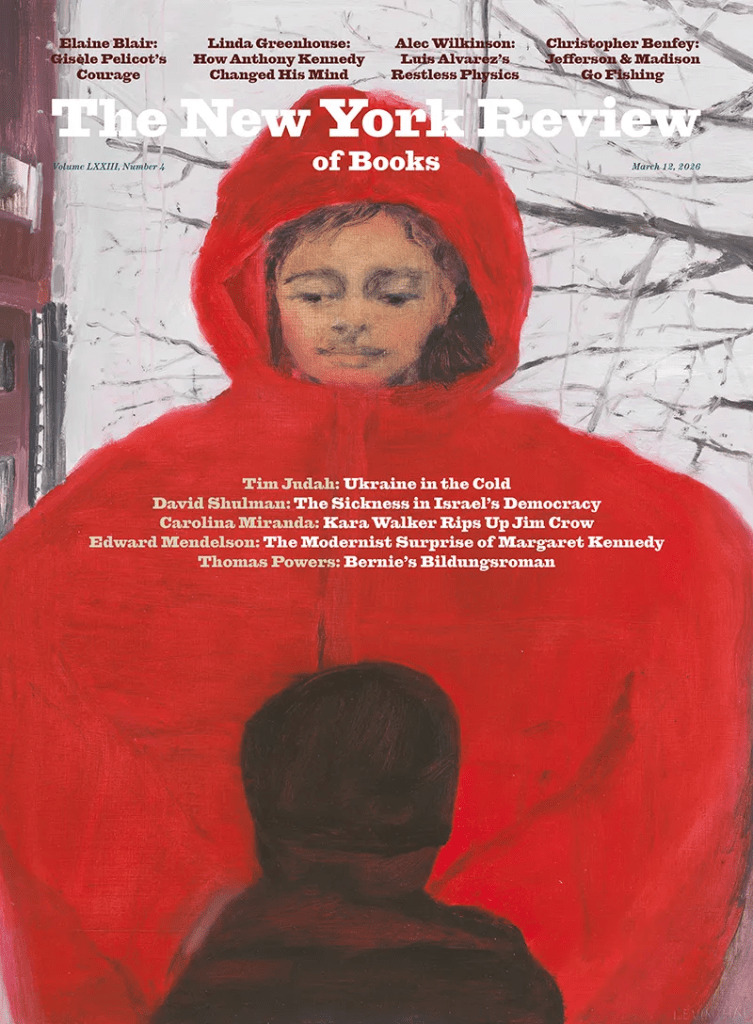
THE NEW YORK REVIEW OF BOOKS – MARCH 12, 2026

THE NEW YORK REVIEW OF BOOKS: The latest issue features

If These Walls Could Talk

In A House for Miss Pauline, the Jamaican novelist Diana McCaulay examines her family’s shadowy history by telling the story of a woman who builds her house with the remains of the manor of a former slave plantation.

A House for Miss Pauline by Diana McCaulay

A Bitter Winter in Ukraine

Four years after their full-scale invasion, the Russians are trying to freeze Ukraine into submission by relentlessly attacking the country’s energy grid.

A Real Live Socialist

What Bernie Sanders brought to the job of mayor of Burlington and what he did with it help explain what matters to him and how he fits into American political argument.

Bernie for Burlington: The Rise of the People’s Politician and the Transformation of One American Place by Dan Chiasson

THE NEW YORK REVIEW OF BOOKS – FEBRUARY 26, 2026

THE NEW YORK REVIEW OF BOOKS: The latest issue features Fintan O’Toole on the murders in Minneapolis, Trevor Jackson on the problem with central banks, Ingrid D. Rowland on Fra Angelico, Namwali Serpell on Toni Morrison’s sense of humor, Julian Gewirtz on the new microchip race, Vivian Gornick on Arundhati Roy, Joy Neumeyer on Poland’s far right, Ian Tattersall on all creatures great and small, Maurice Samuels on escaping the Nazis in Vichy France, Ben Rhodes on Robert McNamara’s sins, poems by Mary Jo Salter and James Arthur, and much more.

The Crime of Witness

Fintan O’Toole

Renee Good and Alex Pretti were murdered for daring to interfere with the Trump administration’s efforts to normalize abductions and state violence.


The Struggle for the Fed

Trevor Jackson

The Fed is under attack. Can it be both protected and held accountable?

Our Money: Monetary Policy As If Democracy Matters by Leah Downey

Private Finance, Public Power: A History of Bank Supervision in America by Peter Conti-Brown and Sean H. Vanatta

Our Dollar, Your Problem: An Insider’s View of Seven Turbulent Decades of Global Finance, and the Road Ahead by Kenneth Rogoff

When the Chips Are Down

President Trump’s reversal of a ban on sales of advanced semiconductors to China undercut the strategic logic behind years of American policy that was meant to keep the US ahead in the race to develop AI systems.

The Gilded Cage: Technology, Development, and State Capitalism in China by Ya-Wen Lei

The Thinking Machine: Jensen Huang, Nvidia, and the World’s Most Coveted Microchip by Stephen Witt

The Nvidia Way: Jensen Huang and the Making of a Tech Giant by Tae Kim

THE NEW YORK REVIEW OF BOOKS – FEBRUARY 12, 2026

Table of Contents - February 12, 2026 | The New York Review of Books

THE NEW YORK REVIEW OF BOOKS: The latest issue features Alma Guillermoprieto on the US’s mad invasion of Venezuela; Fintan O’Toole on the nightmare of Trumpian imperialism; Hermione Lee on Gertrude Stein; Ian Frazier on the sea of chicken; Jérôme Tubiana on the crisis in Darfur; Jenny Uglow on precious stones; Beatrice Radden Keefe on Gothic fever; Aryeh Neier and Gara LaMarche on the dire state of philanthropy in Trump’s America; Regina Marler on Jane DeLynn; Laurence H. Tribe on Jill Lepore; poems by Fernando Pessoa, Ben Lerner, and Kathleen Ossip; and much more.

A More Pliant Chavista

President Trump’s decision to support Delcy Rodríguez as Venezuela’s new leader makes clear that oil, not democracy, is his main concern.

Whose Hemisphere?

The US capture of Venezuelan president Nicolás Maduro reinforces the Trump administration’s capacity to invent any pretext to justify the use of armed force.

Epic Ambitions

A new life of Gertrude Stein treats her as a philosopher of language to trust, not explain—and gathers force from archival discoveries and intriguing plots of her reception and reputation.

Gertrude Stein: An Afterlife by Francesca Wade

Is the Constitution ‘Dead, Dead, Dead’?

The difficulty of amending the Constitution does not mean that it is a flawed and outdated relic of a distant past.

We the People: A History of the US Constitution by Jill Lepore

THE NEW YORK REVIEW OF BOOKS – JANUARY 15, 2026

THE NEW YORK REVIEW OF BOOKS: The latest issue features Susan Tallman – Fairness for the Dispossessed; Kevin Power – David Szalay’s Wretched Men; Jeremy Donk – How Erik Satie Freed the Notes…

‘Minimum Victory’

Weary of war and staring down the likelihood of an unjust peace, Ukrainian intellectuals are plotting out a road map for the future. 

East Side Story

Josh Safdie’s new film, starring Timothée Chalamet, is both a character study of monomania and a moving fable of how the American century of table tennis was lost.

L’Affaire Carlson

Concern over antisemitism on the right has split the conservative world in two—and GOP gatekeepers have lost the ability to contain it.

‘They Killed Our People’

More than a century after white mobs in Elaine, Arkansas, murdered hundreds of black sharecroppers in 1919, the massacre’s memory remains contested. 

‘The Ancient and Long-Forgotten Language of Cinematography’

If the movies are dead, why does Bi Gan’s Resurrection feel so alive?