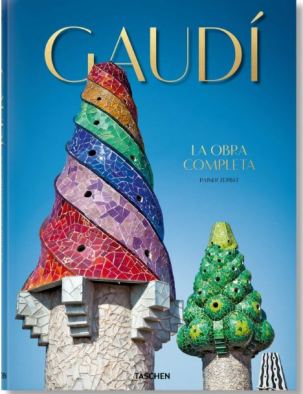
 Through brand-new photography, plans and drawings by Gaudí himself, historical photos, as well as an appendix detailing all his works—from buildings to furniture, decor to unfinished projects—this book presents Gaudí’s universe like never before. Like a personal tour through Barcelona, we discover how the “Dante of architecture” was a builder in the truest sense of the word, crafting extraordinary constructions out of minute and mesmerizing details, and transforming fantastical visions into realities on the city streets.
The life of Antoni Gaudí (1852–1926) was full of complexity and contradictions. As a young man he joined the Catalonian nationalist movement and was critical of the church; toward the end of his life he devoted himself completely to the construction of one single spectacular church, La Sagrada Familia. In his youth, he courted a glamorous social life and the demeanor of a dandy. By the time of his death in a tram accident on the streets of Barcelona his clothes were so shabby passersby assumed he was a beggar.
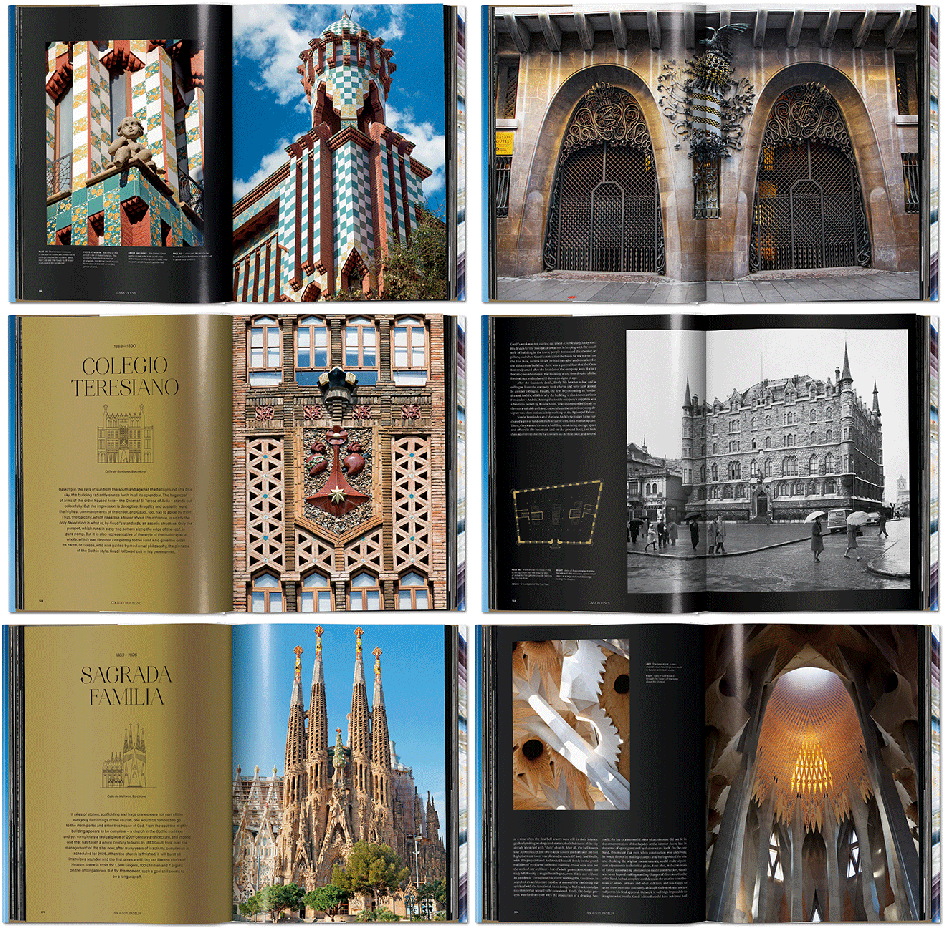
 Gaudí’s incomparable architecture channels much of this multifaceted intricacy. From the shimmering textures and skeletal forms of Casa Batlló to the Hispano-Arabic matrix of Casa Vicens, his work merged the influences of Orientalism, natural forms, new materials, and religious faith into a unique Modernista aesthetic. Today, his unique aesthetic enjoys global popularity and acclaim. His magnum opus, the Sagrada Familia, is the most-visited monument in Spain, and seven of his works are UNESCO World Heritage Sites.
The author
Rainer Zerbst studied modern languages at the University of Tübingen and in Wales from 1969 to 1975. From 1976 to 1982 he worked as a research assistant in the Department of English at the University of Tübingen. Since completing his doctorate in 1982, Zerbst has been active as a critic in the fields of art, literature, and theater.
To read more or purchase



 While all their Proseccos are exceptional, it’s their Brut that blows everyone away. It recaptures a tantalising hint of the yeast I so loved from the Rifermentato in Bottiglia, all sharp apples and sourdough.
 WHO’s definition of health is famously “a state of complete physical, mental, and social well-being and not merely the absence of disease or infirmity”. One of the oldest medical texts we know of, The Science of Medicine attributed to Hippocrates, sets out the goal of medicine in comparable terms: “the complete removal of the distress of the sick”.
 Psycholinguist Jean Berko Gleason is a professor emerita at Boston University and a pioneer in the field of children’s language. Even as a child, Berko Gleason loved and connected with language. It also made a big impression on her how much her older brother, who suffered from cerebral palsy, struggled to be understood. Berko Gleason shares her Brief But Spectacular take on language.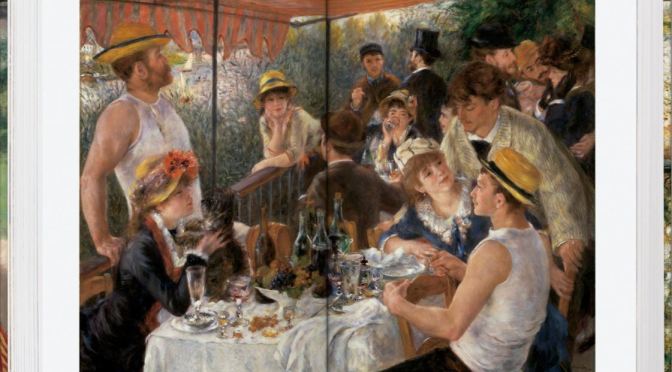
 In an incisive text tracing the artist’s career and stylistic evolution, Gilles Néret shows how Renoir reinvented the painted female form, with his everyday goddesses and their plump forms, rounded hips and breasts. Renoir’s later phase, marked by his return to the simple pleasure of the female nude in his baigneuses series, was his most innovative and stylistically influential, and would inspire such masters as Matisse and Picasso.
 happiness, love, and beauty. Derived from our large-format volume, the most comprehensive retrospective of his work published to date, this compact edition examines the personal history and motivation behind the legend. Though he began by painting landscapes in the Impressionist style, Renoir found his true affinity in portraits, after which he abandoned the Impressionists altogether. Though often misunderstood, Renoir remains one of history’s most well-loved painters—undoubtedly because his works exude such warmth, tenderness, and good spirit.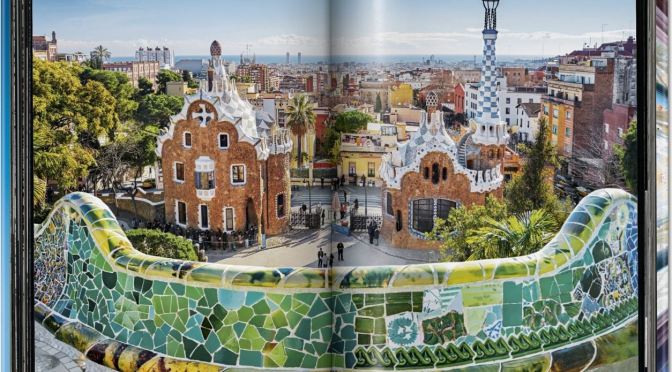


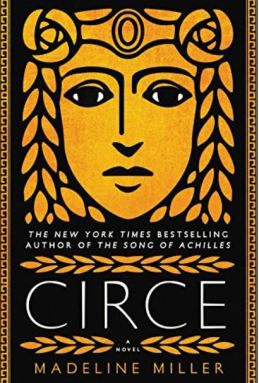 In the house of Helios, god of the sun and mightiest of the Titans, a daughter is born. But Circe is a strange child–not powerful, like her father, nor viciously alluring like her mother. Turning to the world of mortals for companionship, she discovers that she does possess power–the power of witchcraft, which can transform rivals into monsters and menace the gods themselves.
 In 1959, Plymouth introduced the Sport Fury as its top model, and the Fury as its second from the top model to replace the Plymouth Belvedere at the top of the Plymouth line-up. The Fury range was now available as a four-door sedan and station wagon, as well as a two-door hardtop and sedan. The Sport Fury series had only a two-door hardtop and convertible. The Sport Fury was dropped at the end of 1959, but was reintroduced in mid-1962 and discontinued in 1971.
 The Plymouth Fury is a model of automobile which was produced by Plymouth from 1955 to 1989. It was introduced for the 1956 model year as a sub-series of the Plymouth Belvedere, becoming a separate series one level above the contemporary Belvedere for 1959. The Fury was a full-size car from 1959 to 1961, then a mid-size car from 1962 to 1964, again a full-size car from 1965 to 1974, and again a mid-size car from 1975 to 1978. From 1975 to 1977 the Fury was sold alongside the full-size Plymouth Gran Fury.
 cardiovascular events.
 Boomers Daily