From a Wall Street Journal online profile (March 3, 2020):
I had a handful of school friends, including Francis Ford Coppola, who was in the grade behind me. He was known then as Frank. He directed school plays, such as “Finian’s Rainbow.” That’s where I fell in love with the girl. She was a dancer in the cast.
Painting, music and poetry all spoke to me, especially music. I applied to the New England Conservatory of Music in Boston.
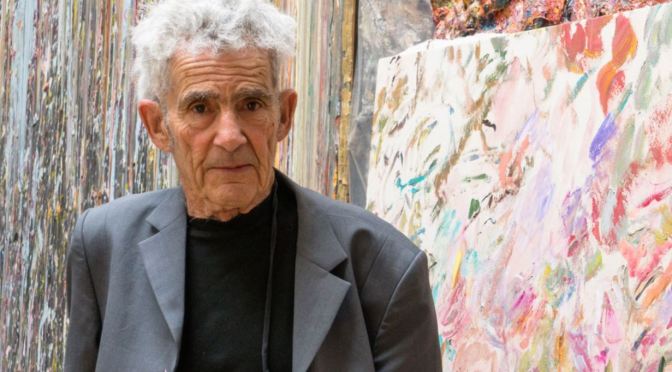
Larry Poons, 82, is an abstract painter best known for his “dot” and “throw” paintings. “Larry Poons” (Abbeville), a book-length monograph of his work from the 1950s to the present, will be published in September. He spoke with Marc Myers.
The first time I painted on canvas board, I was lovesick. I had a crush on a girl in high school and had just finished reading Irving Stone’s Van Gogh biographical novel, “Lust for Life.”
I took my easel to a nearby park and painted trees. As I worked the paint with a small brush, it helped get my feelings out.
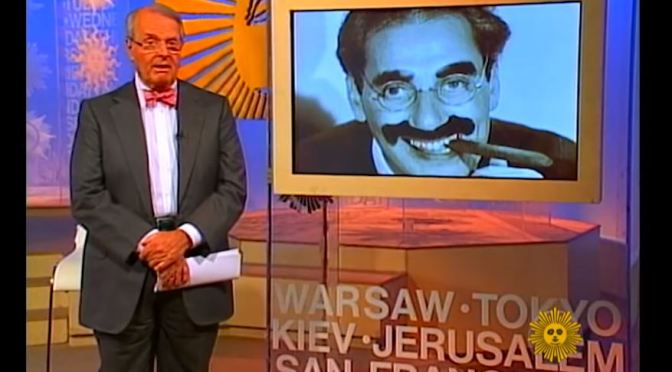
In this report first broadcast on August 19, 2007, thirty years after the death of comedian Groucho Marx, “Sunday Morning” host Charles Osgood looks back at the life of the ringleader of the Marx Brothers, who starred in such classics as “Animal Crackers,” “Duck Soup” and “A Night at the Opera.”
Osgood speaks with Marx Brothers fans Elliott Gould, David Steinberg, Frank Ferrante (who played Groucho on stage), Washington Post columnist Harold Meyerson, and Charlotte Chandler, author of the book “Hello, I Must Be Going: Groucho and His Friends.”
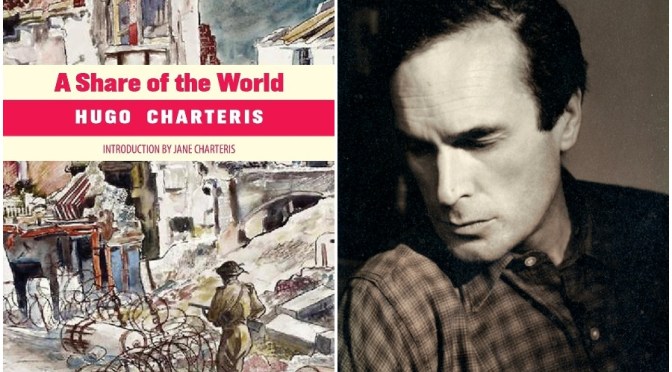
Alan Ross, for forty years The London Magazine’s editor, found Charteris “one of the most original, quirky and shrewd explorers of the behaviour of the landed gentry . . . and at a time when prose was plain, his was idiosyncratically stylish.”
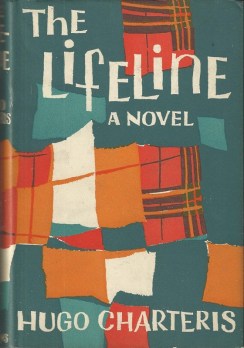
When Hugo Charteris’s first novel, the haunting A Share of the World, was published in 1953 to the praise of Rosamond Lehmann (who helped to get it published), Peter Quennell, Evelyn Waugh, and Francis Wyndham (Charteris’s relation and consistent supporter), the author, just turned thirty-one, seemed set for lasting fame. It hasn’t worked that way in the almost five decades since his death of cancer in 1970, aged only forty-seven.
Nowadays, few people seem to know his name. This is true among not only the ever-growing majority who pay little attention to novels and novelists, but also the enlightened minority who do.
Excerpts from a Christie’s online article (Feb 28, 2020):
Joan Miró
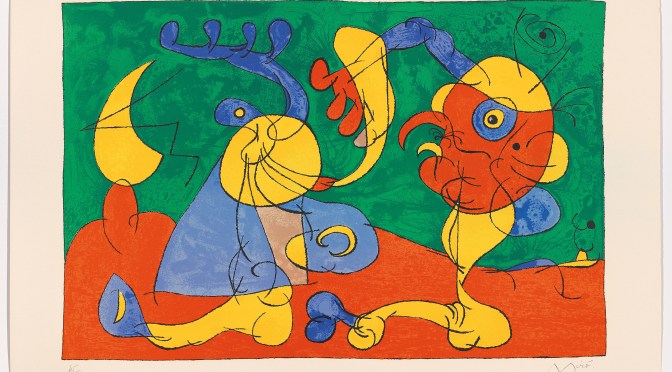
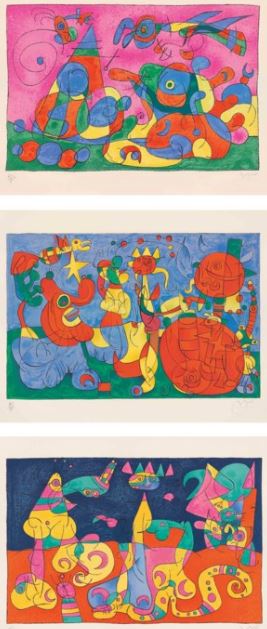
Like Pablo Picasso, his compatriot and peer, Miró had an unwavering commitment to printmaking. Also like Picasso, he created more than 2,000 works in the medium. It’s often said that Miró’s fondness for calligraphic lines — such a distinctive feature of his paintings — lent itself naturally to graphic work.
‘In terms of both the quality and quantity of his output, Joan Miró was one of the most important printmakers of the 20th century,’ says Murray Macaulay, Head of Prints at Christie’s in London.
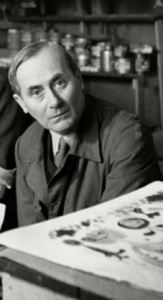
The son of a watchmaker, Joan Miró was born in Barcelona in 1893. He moved to Paris in the early 1920s and soon joined the Surrealist movement. He also befriended a host of avant-garde writers, such as Max Jacob, Tristan Tzara, Antonin Artaud, André Breton and Paul Eluard.
The first prints Miró ever made were illustrations for Tzara’s 1930 book of poems, L’arbre des Voyageurs. Literary sources would prove to be a constant inspiration for him, with notable examples including Alfred Jarry’s play, Ubu Roi; Stephen Spender’s poem, Fraternity; and the mystic, medieval text, Canticle of the Sun, by St Francis of Assisi.
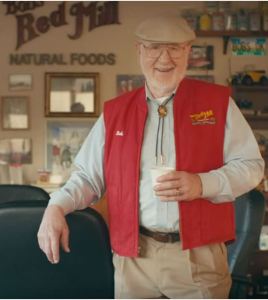
At 91, Bob Moore is an unexpected celebrity in the natural and organic foods industry, as the face of the company he founded, Bob’s Red Mill. He talks with correspondent Luke Burbank about his recipe for success.
Bob’s Red Mill is a brand of whole-grain foods marketed by employee-owned American[3] company Bob’s Red Mill Natural Foods of Milwaukie, Oregon. The company was established in 1978 by Bob and Charlee Moore.
Bob’s Red Mill Natural Foods is a producer of natural, certified organic, and gluten-free milled grain products, billing itself as the “nation’s leading miller of diverse whole-grain foods.” Its products are distributed throughout the United States, Canada, and a number of other locations such as the Caribbean. It produces over 400 products, primarily whole grains that are ground with quartz millstones which come from several 120-year-old mills, as well as baking mixes, beans, seeds, nuts, dried fruits, spices, and herbs. They are sold through seventy natural food and specialty grocery distributors in the United States and Canada, their online store, and the company’s factory store and restaurant.
Antonio Taveira’s family breathes new life into the illustrious Noble & Murat brand whose tradition as a port house started over a century and half ago in 1831 as one of the first bottlers to mention “LBV” on their label.
The family has a long history of precision hand-harvesting, distinguished sourcing and methodical vinification. For decades they have provided grapes for Taylor’s, Croft, Sandeman’s among others, but now they have decided to keep the best grapes for their own wines.
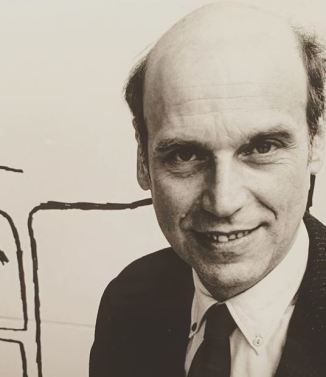
“After 96 years on this earth, Yona has moved up to build a Spatial City and install some Space Chains in the sky. The Fonds de Dotation Denise and Yona Friedman, which he founded last year, will continue his work.”
From an Instagram post (02/21/20)
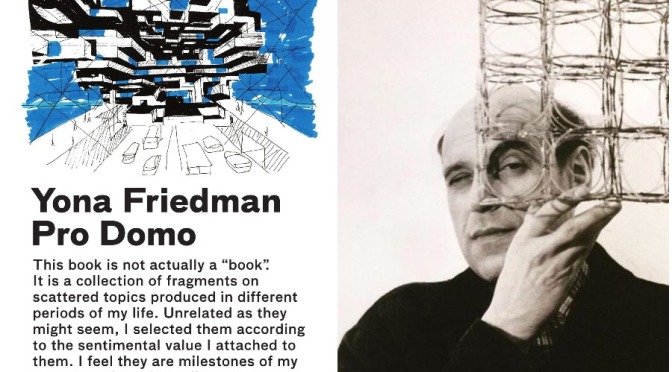
Yona Friedman (5 June 1923 – 21 February 2020) was a Hungarian-born French architect, urban planner and designer. He was influential in the late 1950s and early 1960s, best known for his theory of mobile architecture.
In 1958, Yona Friedman published his first manifesto : “Mobile architecture”. It described a new kind of mobility not of the buildings, but for the inhabitants, who are given a new freedom.
Mobile architecture is the “dwelling decided on by the occupant” by way of “infrastructures that are neither determined nor determining”. Mobile architecture embodies an architecture available for a “mobile society”. To deal with it, the classical architect invented “the Average Man”. The projects of architects in the 1950s were undertaken, according to Friedman, to meet the needs of this make-believe entity, and not as an attempt to meet the needs of the actual members of this mobile society.
The teaching of architecture was largely responsible for the “classical” architect’s under-estimation of the role of the user. Furthermore, this teaching did not embrace any real theory of architecture. Friedman proposed then teaching manuals for the fundamentals of architecture for the general public.
The spatial city, which is a materialization of this theory, makes it possible for everyone to develop his or her own hypothesis. This is why, in the mobile city, buildings should :
touch the ground over a minimum area
be capable of being dismantled and moved
and be alterable as required by the individual occupant.
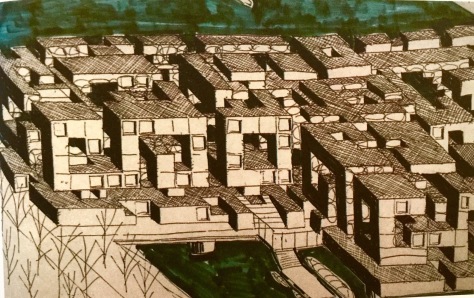
The Spatial City is the most significant application of “mobile architecture”. It is raised up on piles which contains inhabited volumes, fitted inside some of the “voids”, alternating with other unused volumes, making it look aesthetically pleasant. The basis of its design is that of trihedral elements which operate as “neighbourhoods” where dwellings are distributed without a price.
This structure introduces a kind of merger between countryside and city (compare to Paolo Soleri’s Arcology concept) and may span:
certain unavailable sites,
areas where building is not possible or permitted (expanses of water, marshland),
areas that have already been built upon (an existing city),
above farmland.
This spanning technique which includes container structures ushers in a new development in town-planning. Raised plans increase the original area of the city becoming three-dimensional. The tiering of the spatial city on several independent levels, one on top of the other, determines “spatial town-planning” both from the functional and from the aesthetic viewpoint. The lower level may be earmarked for public life and for premises designed for community services as well as pedestrian areas. The piles contain the vertical means of transport (lifts, staircases). The superposition of levels should make it possible to build a whole industrial city, or a residential or commercial city, on the same site. In this way, the Spatial City forms what Yona Friedman would call an “artificial topography”. This grid suspended in space outlines a new cartography of the terrain with the help of a continuous and indeterminate homogeneous network with a major positive outcome: this modular grid would authorize the limitless growth of the city.
The spaces in this grid are rectangular and habitable modular “voids”, with an average area of 25–35 square meters. Conversely, the form of the volumes included within the grid depends solely on the occupant, and their configuration set with a “Flatwriter” in the grid is completely free. Only one half of the spatial city would be occupied. The “fillings” which correspond to the dwellings only actually take up 50% of the three-dimensional lattice, permitting the light to spread freely in the spatial city. This introduction of elements on a three-dimensional grid with several levels on piles permits a changeable occupancy of the space by means of the convertibility of the forms and their adaptation to multiple uses.
In Yona Friedman’s own words “The city, as a mechanism, is thus nothing other than a labyrinth : a configuration of points of departure, and terminal points, separated by obstacles”.
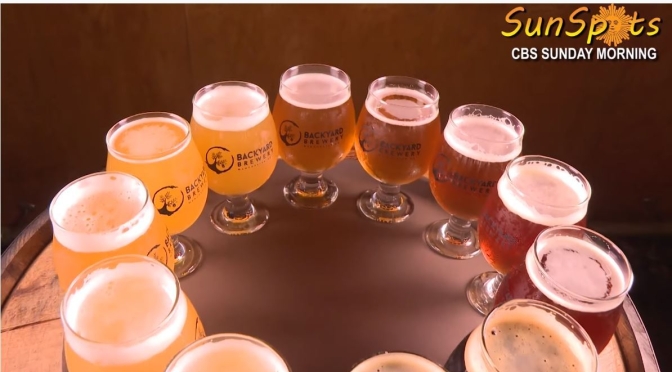
Domestic sales of craft beers have grown to more than $27 billion annually, representing about a quarter of the American beer market. “Sunday Morning” producer Sara Kugel talked with Marcus Doucet, who opened Manchester, N.H.’s Backyard Brewery, one of more than 7,000 craft breweries in the U.S.
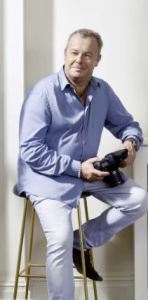
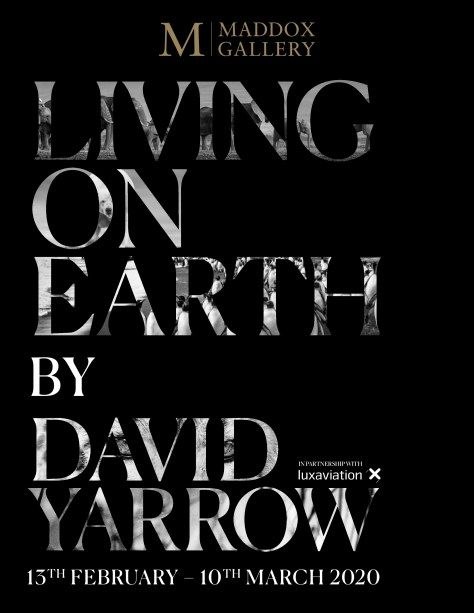
For more than two decades, legendary British photographer David Yarrow has been putting himself in harm’s way to capture immersive photography of the world’s most revered and endangered species.
Featuring a selection of Yarrow’s most iconic photographs, ‘Living On Earth’ highlights the beauty of the endangered planet and the art of narrative as conveyed by one of the most relevant fine art photographers in the world.
‘WHITE HORSES’
David Yarrow’s commitment to ‘capturing the splendour of what remains wild and free in our world’ allowed him to transcend wildlife photography and become one of the world’s leading fine art photographers. He has travelled pole to pole, to the world’s most remote habitats to allow us a glimpse of the truly untamed. The resulting images are unerringly iconic and connect with us on a primal level; of curiosity, desire, and fear.

 Alan Ross, for forty years
  almost five decades since his death of cancer in 1970, aged only forty-seven.
 The son of a watchmaker, Joan Miró was born in Barcelona in 1893. He moved to Paris in the early 1920s and soon joined the Surrealist movement. He also befriended a host of avant-garde writers, such as Max Jacob, Tristan Tzara, Antonin Artaud, André Breton and Paul Eluard.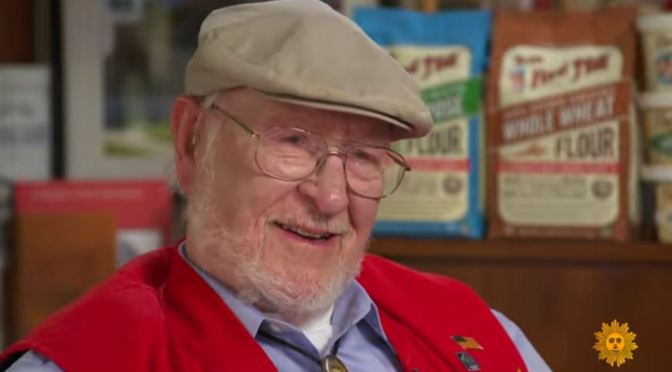
 Bob’s Red Mill Natural Foods is a producer of natural, certified organic, and gluten-free milled grain products, billing itself as the “nation’s leading miller of diverse whole-grain foods.” Its products are distributed throughout the United States, Canada, and a number of other locations such as the Caribbean. It produces over 400 products, primarily whole grains that are ground with quartz millstones which come from several 120-year-old mills, as well as baking mixes, beans, seeds, nuts, dried fruits, spices, and herbs. They are sold through seventy natural food and specialty grocery distributors in the United States and Canada, their online store, and the company’s factory store and restaurant.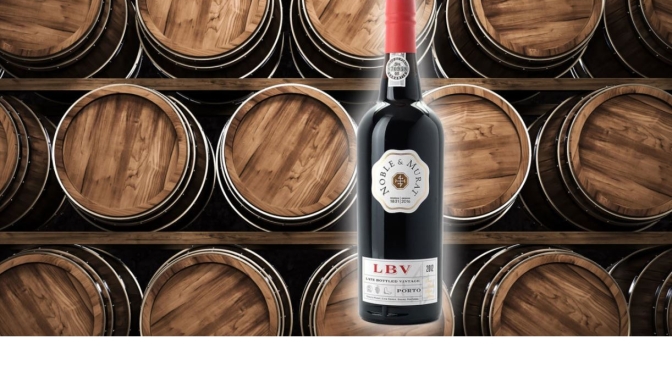
 Antonio Taveira’s family breathes new life into the illustrious Noble & Murat brand whose tradition as a port house started over a century and half ago in 1831 as one of the first bottlers to mention “LBV” on their label.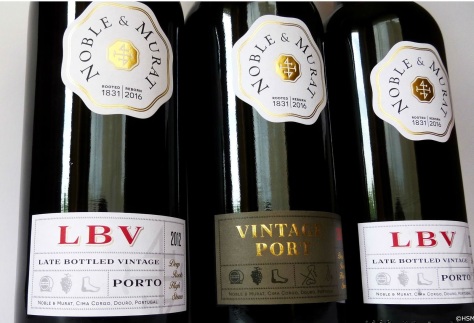


 Boomers Daily