The true story of the suicidal mission of British forces to overrun the Imperial Russian fortifications with a courageous but foolhardy mass charge.
The Charge of the Light Brigade was a failed military action involving the British light cavalry led by Lord Cardigan against Russian forces during the Battle of Balaclava on 25 October 1854 in the Crimean War.
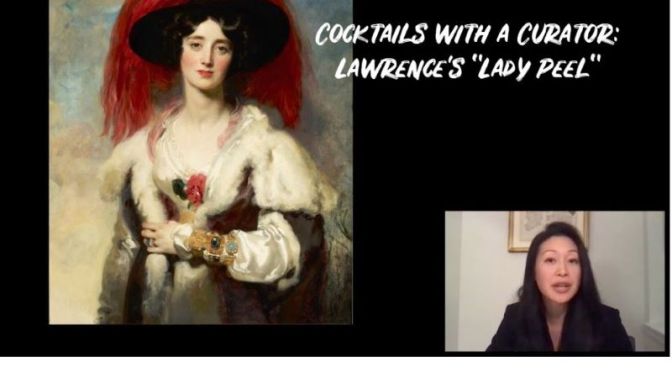
In this week’s episode of “Cocktails with a Curator,” Curator Aimee Ng explores the history behind Sir Thomas Lawrence’s celebrated portrait of Julia, Lady Peel. When it was shown at the Royal Academy, in 1827, this painting was hailed as Sir Thomas’s greatest portrait—and one of the great works of modern art at the time.
It’s easy to see why: the sitter projects authority, confidence, and ease despite her flamboyant, over-the-top outfit. Sir Thomas’s depiction of Lady Peel is closely related to Peter Paul Rubens’s famous “Chapeau de Paille,” which had recently entered the collection of her husband, Sir Robert Peel. In recognition of the lavish bracelets and rings worn by the sitter, this week’s complementary cocktail is the Bijou (French for “jewel”).
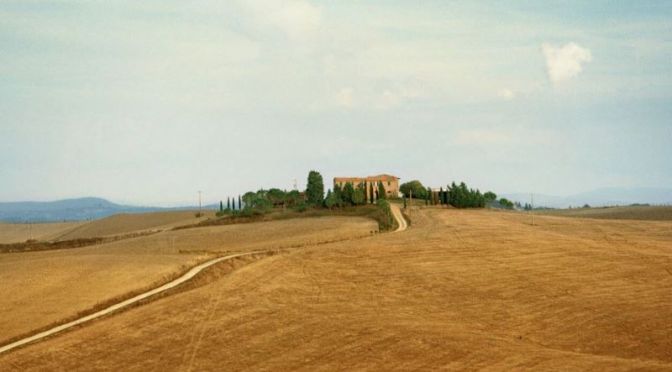
Even now, the approach to the 1,200-acre property is just as it must have been centuries ago: a long, winding ride through pale, undulating fields, leading to a dignified hilltop retreat. The three-story ivy-wrapped building is ringed by 20-foot obelisk-like cypress trees — a private citadel entered through a wrought-iron gate. Beyond the vista of olive groves, another fortresslike outcropping is visible in the distance: the mottled russet city of Siena, three miles away.
WHEN RENÉ CAOVILLA, the 82-year-old Venetian shoe designer, was first shown the Tuscan villa he bought in 1977, he fell in love with it instantly. He wasn’t only taken with the house, a 15th-century red brick monastery that had undergone a slow transformation into an austere 20-bedroom private home in the 17th century, but the Chianti landscape as well — the whole of classical history evoked in a flash.
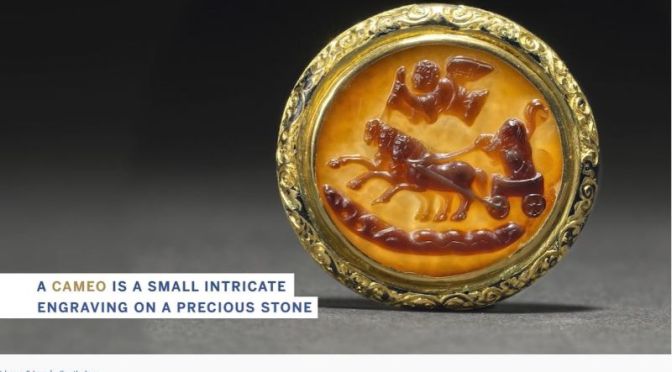
This intricately delicate cameo features a very detailed story of the prophet Elijah ascending to heaven. In this episode of Sotheby’s Stories, discover how this delightful miniature work of art is part of a very small group of rare cameos which feature Hebrew inscriptions. Learn how it was crafted by Jewish artisans in the court of a 13th century Holy Roman Emperor.
Autumn Rhythm (Number 30) is a 1950 abstract expressionist painting by American artist Jackson Pollock in the collection of the Metropolitan Museum of Art in New York City. The work is a distinguished example of Pollock’s 1947-52 poured-painting style, and is often considered one of his most notable works.
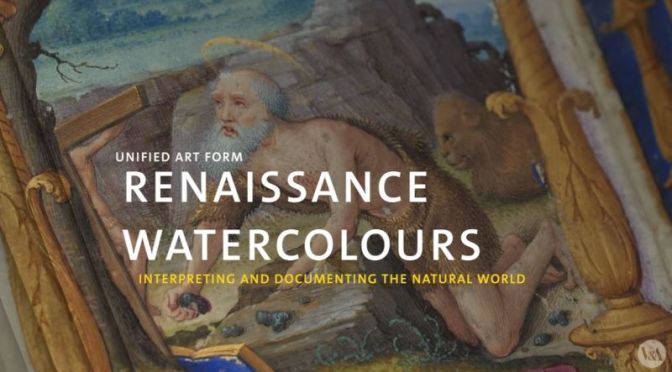
Focussing on the three types of object featured in the V&A display Renaissance Watercolours: illuminated manuscripts, portrait miniatures and coloured drawings, this film showcases the qualities that made watercolour the medium of choice for many artists during the Renaissance.
A modern-day painting of a pomegranate, using traditional watercolour techniques, by artist Lucy Smith, also demonstrates how watercolour painting remains a versatile medium, ideal for capturing life-like details that help us to record our diverse world.
The Pentagon is the headquarters building of the United States Department of Defense. As a symbol of the U.S. military, the phrase The Pentagon is also often used as a metonym for the Department of Defense and its leadership.
The Pentagon is the world’s largest office building, with about 6,500,000 square feet (150 acres; 0.60 km2) of floor space, of which 3,700,000 sq ft (85 acres; 0.34 km2) are used as offices.[7][8] Some 23,000 military and civilian employees,[8] and another 3,000 non-defense support personnel, work in the Pentagon. It has five sides, five floors above ground, two basement levels, and five ring corridors per floor with a total of 17.5 miles (28.2 km)[8] of corridors. The central five-acre (2.0 ha) pentagonal plaza is nicknamed “ground zero” on the presumption that it would be a prime target in a nuclear war.
Every legacy has a compelling origin. The soon-to-be-launched Landsat 9 is the intellectual and technical product of eight generations of Landsat missions, spanning nearly 50 years.
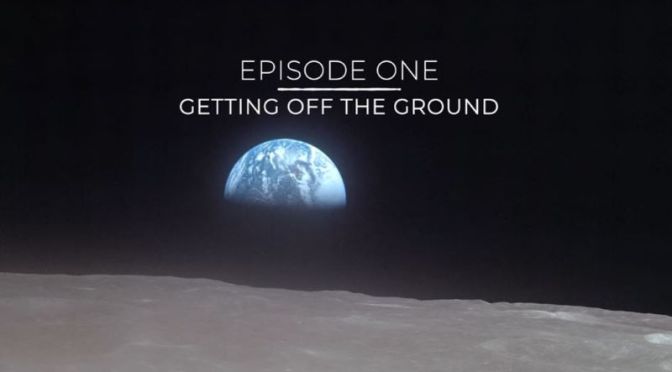
Episode One answers the question “why?” Why did the specific years between 1962 and 1972 call for a such a mission? Why did leadership across agencies commit to its fruition? Why was the knowledge it could reveal important to the advancing study of earth science?
In this episode, we’re introduced to William Pecora and Stewart Udall, two men who propelled the project into reality, as well as Virginia Norwood who breathed life into new technology. Like any worthwhile endeavor, Landsat encountered its fair share of resistance. Episode one explores how those challenges were overcome with the launch of Landsat 1, signifying a bold step into a new paradigm.
Additional footage courtesy of Gordon Wilkinson/Texas Archive of the Moving Image and the US Geological Survey. The Landsat Program is a series of Earth-observing satellite missions jointly managed by NASA and the U.S. Geological Survey (USGS). Landsat satellites have been consistently gathering data about our planet since 1972. They continue to improve and expand this unparalleled record of Earth’s changing landscapes for the benefit of all.
Music: “The Missing Star,” “Brazenly Bashful,” “Light Tense Weight,” “It’s Decision Time,” “Patisserie Pressure,” from Universal Production Music Credit: NASA’s Goddard Space Flight Center Matthew R. Radcliff (USRA): Lead Producer Ryan Fitzgibbons (USRA): Lead Producer Kate Ramsayer (USRA): Lead Producer LK Ward (USRA): Lead Writer Ryan Fitzgibbons (USRA): Lead Editor Jeffrey Masek (NASA/GSFC): Lead Scientist Marc Evan Jackson: Narrator Terry Arvidson (Lockheed Martin): Interviewee Aaron E. Lepsch (ADNET): Technical Support
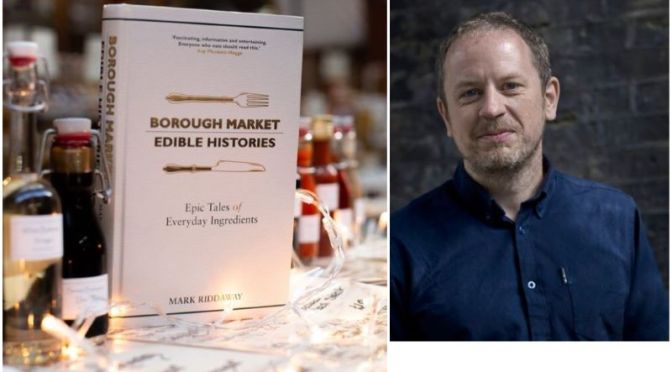
Award-winning food writer Mark Riddaway travels back through the centuries to tell the fascinating, surprising and often downright bizarre stories of some of the everyday ingredients found at London’s Borough Market.
Discover how the strawberries we eat today had their roots in a clandestine trip to South America by a French spy whose surname happened to be Strawberry, why three-quarters of Britain’s late-18th-century intake of tea was sold on the black market, and what Sigmund Freud found so fascinating about eel genitalia.
From the humble apples and onions that we’ve grown on these shores for centuries, to more exotic ingredients like cinnamon and bananas that travel from across the world to finesse our food, Borough Market: Edible Histories offers a chance to digest the charming stories behind every last morsel.
News, Views and Reviews For The Intellectually Curious








 Boomers Daily