

 In 1928 Maruni Wood Industry was born out of a fascination with the masterful carpentry in ancient shrines. Today its furniture is found in the Californian headquarters of Apple as well as airport lounges, galleries and restaurants around the world. We meet the company’s president to talk about the challenges of managing a family-run business.

Pioneering the industrial application of craft skills following establishment of the company in 1928
.
From building structures such as Buddhist temples and Shinto shrines through to private dwellings and the tools that we use in our everyday lives, Japan is a nation that has for many centuries cultivated traditions based on wood that occupy an important position in our daily lives. Takeo Yamanaka, the founder of Maruni Wood Industry, spent his childhood at Miyajima in Hiroshima Prefecture, a place that has a rich heritage of traditional crafts based on the use of wood.
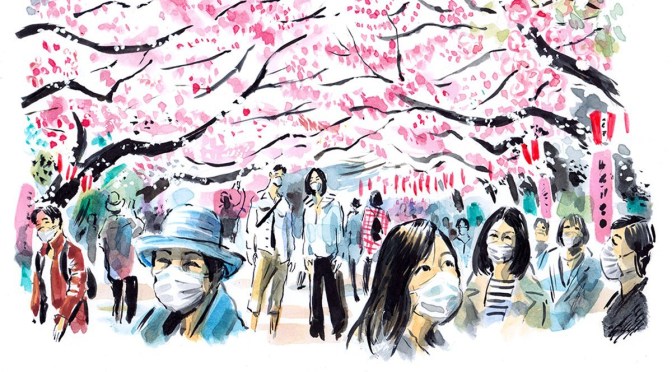
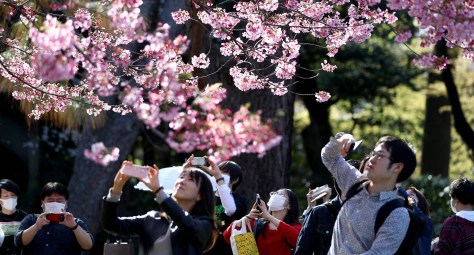
 EVERY MARCH and April trees along the banks of the Meguro river in Tokyo fleetingly erupt with fat pink and white cherry blossoms, heralding the arrival of spring. For a few glorious weeks, millions of people across the city flee the drudgery of the office and factory to spend an hour or two in places like this, eating and drinking under falling sakura petals. It is a ritual with ancient roots, with a chapter devoted to it in “The Tale of Genji”, a tenth-century work that is perhaps the world’s first novel.


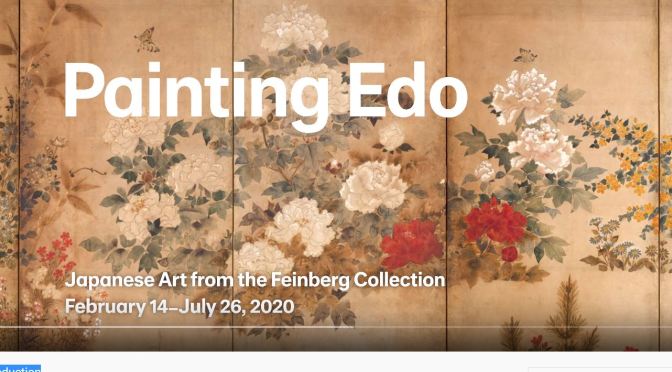
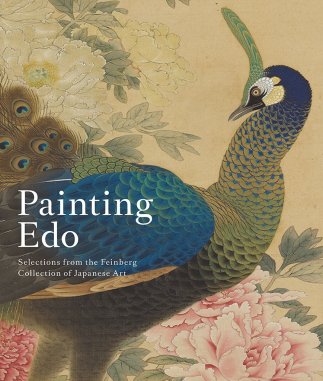 Painting Edo — the largest exhibition ever presented at the Harvard Art Museums — offers a window onto the supremely rich visual culture of Japan’s early modern era. Selected from the unparalleled collection of Robert S. and Betsy G. Feinberg, the more than 120 works in the exhibition connect visitors with a seminal moment in the history of Japan, as the country settled into an era of peace under the warrior government of the shoguns and opened its doors to greater engagement with the outside world. The dizzying array of artistic lineages and studios active during the Edo period (1615–1868) fueled an immense expansion of Japanese pictorial culture that reverberated not only at home, but subsequently in the history of painting in the West.




 Hundreds of miles south of Japan’s main islands, in the East China Sea, is a Jurassic Park of longevity, with a higher percentage of centenarians (people who live to 100 years old) than anywhere else on Earth.
  Boomers Daily