In this week’s episode of “Travels with a Curator,” Xavier F. Salomon, Deputy Director and Peter Jay Sharp Chief Curator, transports us to the Japanisches Palais (Japanese Palace) in Dresden, the original home of the Meissen “Great Bustard.” Augustus II rebuilt and enlarged the Japanese Palace to showcase his extraordinary collection of porcelain, but he died before the project was completed. This exquisite porcelain masterpiece became part of the Frick’s collection through the generosity of the late collector Henry H. Arnhold (1921–2018).
Detroit designers have always led the way in car design. The futuristic concept cars, roaring muscle cars, and sleek racers designed in and around the city shape our ideas of what a car can be. Working on paper, in clay, and in metal, their ideas drive American car culture and inform the way we get around every day.
This exhibit organized by the Detroit Institute of Arts will highlight the artistry and influence of Detroit car designers working between 1950 and the present day. It will bring together 12 coupes and sedans designed across that 70-year period to highlight significant achievements in style and technology.
The 12 cars include unique examples of experimental show cars created for display and iconic production models sold to the mass market. Design drawings and photographs will allow you to imagine the creative and innovative processes that bring a vehicle from the drawing board to the street.
1959 Corvette Stingray Racer
A selection of paintings and sculptures will highlight the conversation between the American art world and the car culture from the 1950s to the present day.
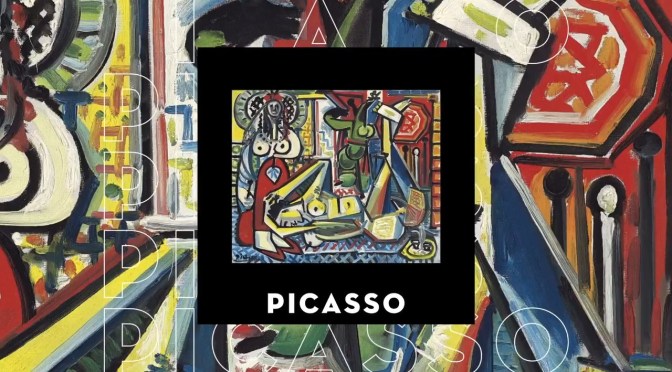
Between 13 December 1954 and 14 February 1955, Picasso painted a series of fifteen canvases based on Eugène Delacroix’s masterwork Les femmes d’Alger, each of which he assigned an identifying letter from A to O. Together, these paintings constitute Picasso’s single greatest achievement in the decades following the end of the Second World War. They represent his first comprehensive appropriation and thoroughgoing exploration of an important painting by an earlier artist, as well as the most focused analysis he had done since the war years of the female figure set within a specific spatial environment.
Picasso painted the present Femmes d’Alger, Version F on 17 January 1955, around the halfway point in the cycle. It is the culminating, most fully resolved canvas from the first phase of the series, when Picasso favored medium-sized formats for his protean explorations.
In this week’s episode of “Cocktails with a Curator,” join Deputy Director and Peter Jay Sharp Chief Curator Xavier F. Salomon as he considers the life of statesman Warren Hastings, who is depicted in a small watercolor from about 1791 by the prominent British artist George Stubbs. Explore the tumultuous career of Hastings, from his tenure as governor-general of India to a decade-long trial in Westminster Hall upon his return to England. This week’s complementary cocktail is a gin and tonic garnished with a slice of lime.
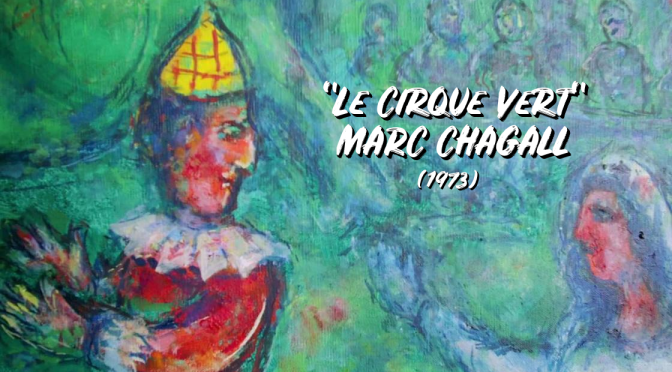
As a child, Marc Chagall would marvel at the traveling acrobatic troupes that passed through his Village. The animals, dancers and musicians of the circus seemed to conjure a distinct joy that would consistently manifest itself throughout the artist’s career. In this episode of Expert Voices, discover how Chagall was able to uniquely translate this fascination to canvas as Edith Eustis delves into the deep greens and brilliant reds of Marc Chagall’s Le Cirque Vert. Painted in 1973, this work captures the magical allure of the spectacle and incorporates many of the artist’s most iconic motifs. Le Cirque Vert will be offered as a highlight of Sotheby’s Impressionist & Modern Art Evening Sale in New York.
Marc Chagall (1887 – 1985) was a Russian-French artist of Belarusian Jewish origin. An early modernist, he was associated with several major artistic styles and created works in a wide range of artistic formats, including painting, drawings, book illustrations, stained glass, stage sets, ceramic tapestries and fine art prints.
Meet Pascale Lepeu, Curator of the Cartier Collection, and see the incredible trove of historic Cartier jewellery that is held within. From elegant diamond tiaras of the Belle Époque to remarkable Art Deco tutti frutti bracelets and more, discover the enormous influence that Cartier has had on the world of high jewellery. An extract from the Christie’s Education online course, History of Jewellery Design: 1880–Now.
Valerie Hansen explores these early economic and cultural exchanges and their long-term impact in her new book “The Year 1000: When Explorers Connected the World―and Globalization Began”, which originated as a college course co-taught with Mary Miller, director of the Getty Research Institute. In this episode, Hansen and Miller discuss the state of the world around the year 1000.
From celebrated Yale professor Valerie Hansen, a groundbreaking work of history showing that bold explorations and daring trade missions connected all of the world’s great societies for the first time at the end of the first millennium.
People often believe that the years immediately prior to AD 1000 were, with just a few exceptions, lacking in any major cultural developments or geopolitical encounters, that the Europeans hadn’t yet reached North America, and that the farthest feat of sea travel was the Vikings’ invasion of Britain. But how, then, to explain the presence of blonde-haired people in Maya temple murals at Chichén Itzá, Mexico? Could it be possible that the Vikings had found their way to the Americas during the height of the Maya empire?
Valerie Hansen, an award-winning historian, argues that the year 1000 was the world’s first point of major cultural exchange and exploration. Drawing on nearly thirty years of research, she presents a compelling account of first encounters between disparate societies, which sparked conflict and collaboration eerily reminiscent of our contemporary moment.
For readers of Jared Diamond’s Guns, Germs, and Steel and Yuval Noah Harari’s Sapiens, The Year 1000 is an intellectually daring, provocative account that will make you rethink everything you thought you knew about how the modern world came to be. It will also hold up a mirror to the hopes and fears we experience today.
As Alfa Romeo celebrates its 110th anniversary in 2020, discover and relive the brand’s signature moments, from its first car in 1910 and first F1 championship in 1950 to this year’s limited-edition Giulia GTA and future Tonale concept crossover.
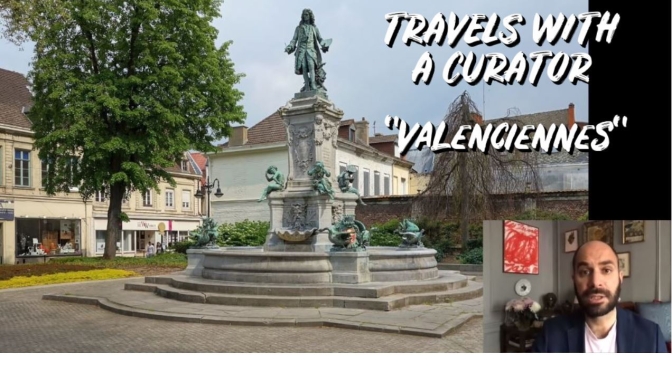
In this week’s episode of “Travels with a Curator,” travel with Xavier F. Salomon, Peter Jay Sharp Chief Curator, to Valenciennes, the birthplace of the Rococo painter Jean-Antoine Watteau. Delve into the historical events surrounding Watteau’s “Portal at Valenciennes” (ca. 1710–11), a scene of soldiers at rest near the ramparts of the town. Known for his depictions of garden frolics, Watteau seldom portrayed military life—“The Portal” is one of only three such paintings that survive today.
Valenciennes is a commune in the Nord department in northern France. It lies on the Scheldt river. Although the city and region experienced a steady population decline between 1975 and 1990, it has since rebounded.
The year 2020 marks the one-hundredth anniversary of the ratification of the 19th Amendment, which granted millions of women in the U.S. the right to vote. The Frick is celebrating with a series of videos honoring the stories of women who made, appeared in, collected, and took care of art in this collection.
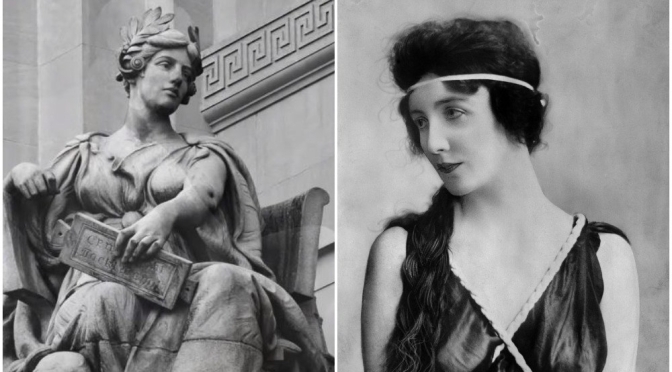
Frick Curator Aimee Ng continues the series with a look at the model, actress, dancer, writer, and artist known as “Miss Manhattan”—Audrey Munson.
Audrey Marie Munson was an American artist’s model and film actress, today considered “America’s First Supermodel.” In her time, she was variously known as “Miss Manhattan”, the “Panama–Pacific Girl”, the “Exposition Girl” and “American Venus.”
News, Views and Reviews For The Intellectually Curious



 Nov 15, 2020 — Jun 27, 2021: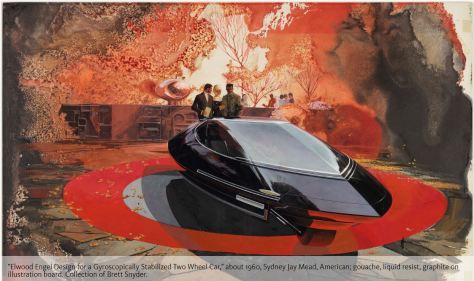

 Between 13 December 1954 and 14 February 1955, Picasso painted a series of fifteen canvases based on Eugène Delacroix’s masterwork Les femmes d’Alger, each of which he assigned an identifying letter from A to O. Together, these paintings constitute Picasso’s single greatest achievement in the decades following the end of the Second World War. They represent his first comprehensive appropriation and thoroughgoing exploration of an important painting by an earlier artist, as well as the most focused analysis he had done since the war years of the female figure set within a specific spatial environment.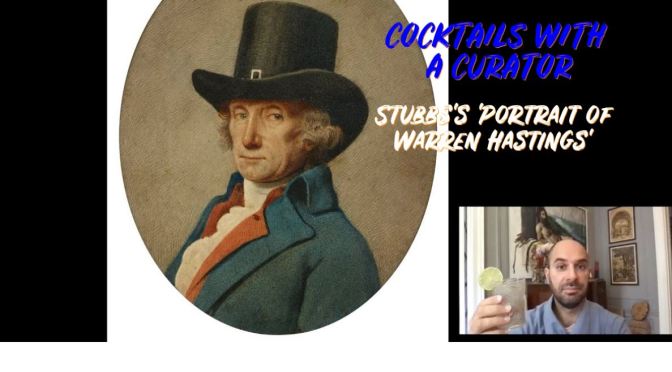
 As a child, Marc Chagall would marvel at the traveling acrobatic troupes that passed through his Village. The animals, dancers and musicians of the circus seemed to conjure a distinct joy that would consistently manifest itself throughout the artist’s career. In this episode of Expert Voices, discover how Chagall was able to uniquely translate this fascination to canvas as Edith Eustis delves into the deep greens and brilliant reds of Marc Chagall’s Le Cirque Vert. Painted in 1973, this work captures the magical allure of the spectacle and incorporates many of the artist’s most iconic motifs. Le Cirque Vert will be offered as a highlight of Sotheby’s Impressionist & Modern Art Evening Sale in New York.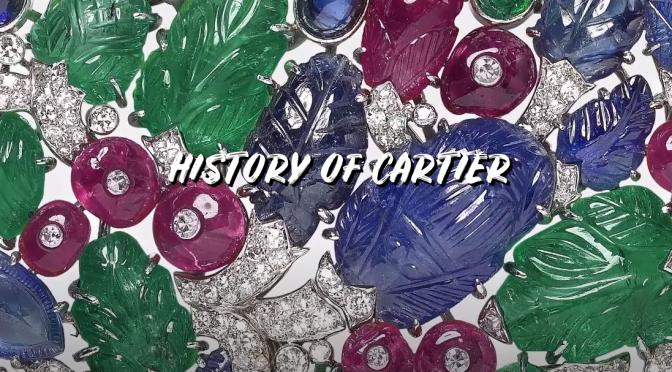
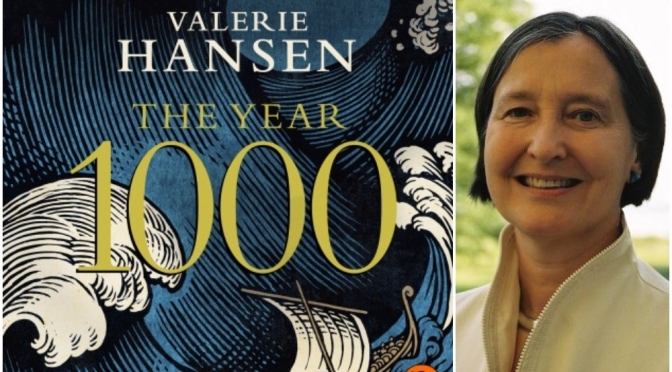
 Valerie Hansen explores these early economic and cultural exchanges and their long-term impact in her new book “The Year 1000: When Explorers Connected the World―and Globalization Began”, which originated as a college course co-taught with Mary Miller, director of the Getty Research Institute. In this episode, Hansen and Miller discuss the state of the world around the year 1000.
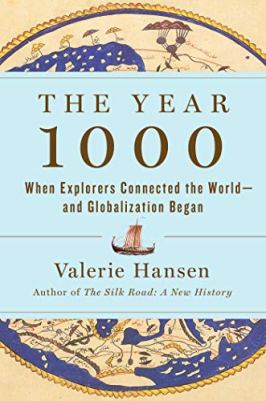 From celebrated Yale professor Valerie Hansen, a groundbreaking work of history showing that bold explorations and daring trade missions connected all of the world’s great societies for the first time at the end of the first millennium.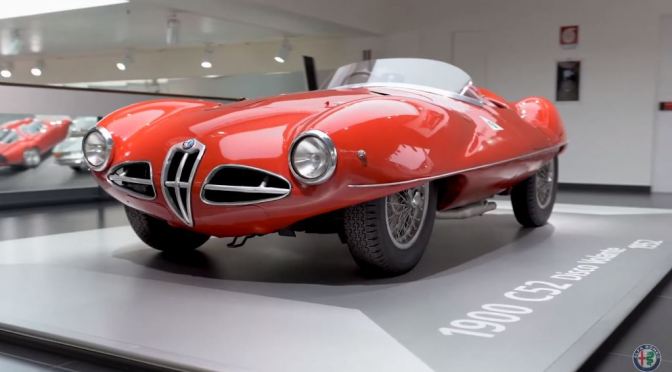
 Boomers Daily