Covid-19 Testing: First Rapid, Over-The-Counter Test Using Smartphone Is Approved By FDA

The patented detection method detects minute fluorescence signals using unique fluorescent nanoparticles and a sophisticated reader system to achieve accurate results from a clinical sample, overcoming the sensitivity limitations of typical lateral flow technology. The key elements of Ellume’s digital technology reduce the probability of false results, create new pathways to treatment, and optimize secure public health reporting. These unique features are critical to the approval, success and adoption of self-administered home testing.

Core Technology
Supercharged fluorescent immunochromatography using a quantum-dot based fluorescent particle

The Ellume COVID-19 Home Test’s core technology combines ultra-sensitive optics, electronics and proprietary software to leverage best-in-class digital immunoassay technology with next-generation multi-quantum dot fluorescence technology.

How it works
Safe, accurate and rapid self-test

The test includes a sterile Nasal Swab, a Dropper, Processing Fluid, and a Bluetooth® connected Analyzer for use with an app on the user’s smartphone. Utilizing the dedicated app, the user follows step-by-step video instructions to perform the test including a self-collected mid-turbinate nasal swab. The sample is analyzed, and results are automatically transmitted to the user’s smartphone via Bluetooth® in 15 minutes or less. Results can be shared with healthcare professionals to enable optimal therapy.

Through a secure cloud connection, Ellume’s COVID-19 Home Test can provide real-time reporting of test results to health authorities, employers, and educators, for efficient COVID-19 mapping.


Read more

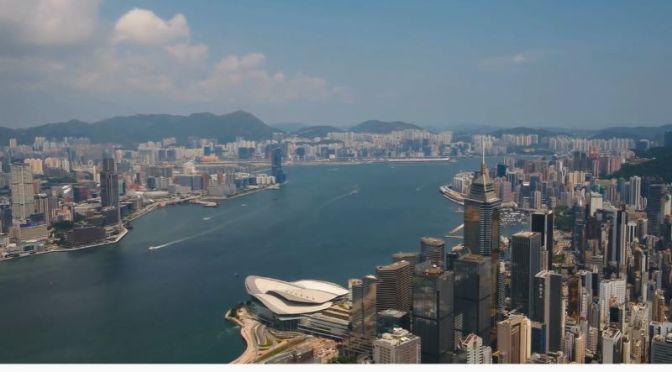
Aerial Travel: ‘Hong Kong’

Hong Kong, officially the Hong Kong Special Administrative Region of the People’s Republic of China, is a metropolitan area and special administrative region of the People’s Republic of China on the eastern Pearl River Delta of the South China Sea. 

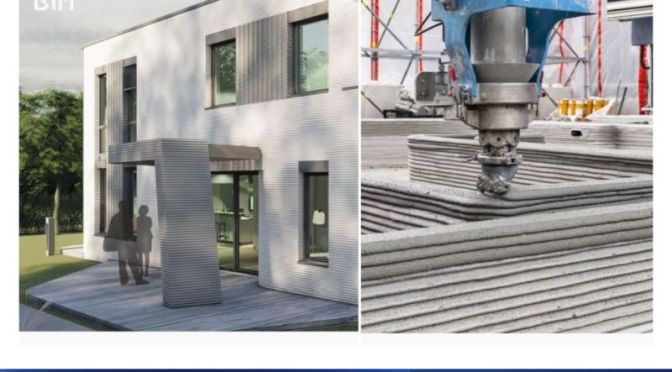
Future Of HomeBuilding: ‘3D-Printed HOmes’ Fully Certified In Germany

The impact of this 3D-printing breakthrough for construction and for the buildings we all use could be huge.

See more of PERI’s 3D-printing process – http://bit.ly/3gRCsus

Full story here – https://www.theb1m.com/video/why-this…

Aerial Travel: ‘United Kingdom’ (Video)

The United Kingdom, made up of England, Scotland, Wales and Northern Ireland, is an island nation in northwestern Europe. England – birthplace of Shakespeare and The Beatles – is home to the capital, London, a globally influential centre of finance and culture. England is also site of Neolithic Stonehenge, Bath’s Roman spa and centuries-old universities at Oxford and Cambridge.

Autumn Walking Tours: ‘Arashiyama Bamboo Grove’ In kyoto, Japan

The Arashiyama Bamboo Grove is one of Kyoto’s top sights and for good reason: standing amid these soaring stalks of bamboo is like being in another world.Arashiyama Bamboo Grove
Arashiyama Bamboo Grove

If you’ve been planning a trip to Kyoto, you’ve probably seen pictures of the Arashiyama Bamboo Grove – along with the torii tunnels of Fushimi-Inari-Taisha Shrine and Kinkaku-ji Temple, it’s one of the most photographed sights in the city. But no picture can capture the feeling of standing in the midst of this sprawling bamboo grove – the whole thing has a palpable sense of otherness that is quite unlike that of any normal forest we know of.

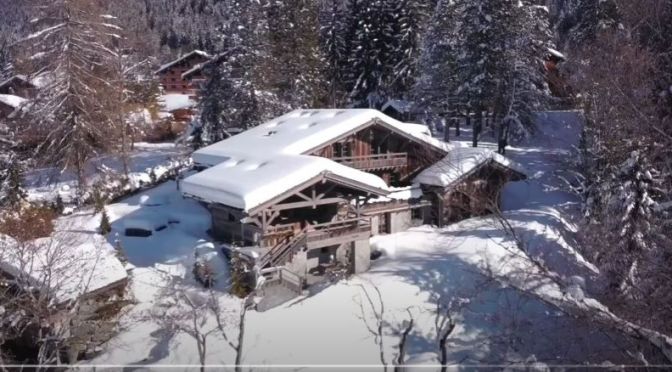
Home Tours: ‘Chalet Fleur Des Neiges’ In Villars-Sur-Ollon, Vaud, Switzerland

Located away from prying eyes, in the heart of the village, a few steps from the ski slopes and at the end of a private road, the Chalet Fleur des Neiges dominates with a breathtaking view of the Dents du Midi chain. Easy to access, it benefits from a privileged setting as well as an enchanting landscape with its generous wooded garden.

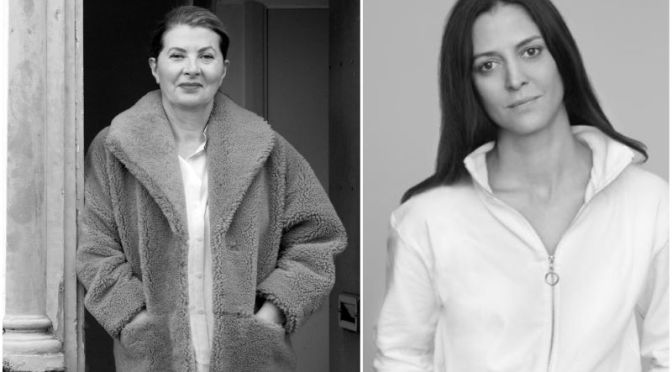
Interviews: Design And Architecture In 2020 – Ilse Crawford & Julia Watson

A look back at the year that was in design and architecture, featuring conversations with creative director Ilse Crawford and designer and author Julia Watson. 

Plus: Venice Biennale 2020 curator Hashim Sarkis.

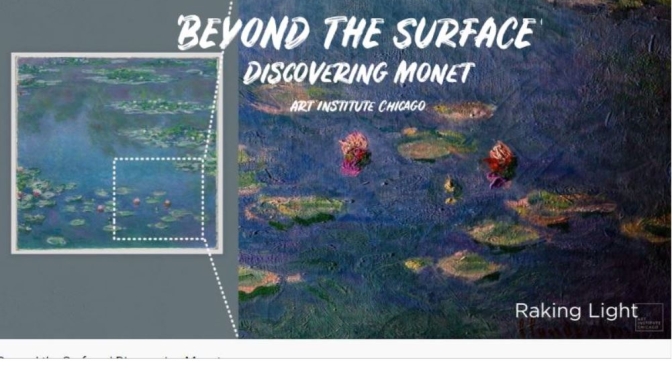
Art: ‘Beyond The Surface’ – Monet’s “Changing Light”

This video takes an in-depth look at Monet’s approach to painting in series, an approach that consumed his later years. From stacks of wheat in the French countryside to sites of foggy London to water lilies at his home garden in Giverny, Monet painted beloved subjects again and again, depicting changing light and atmospheric conditions in works that captivate us still today. New scientific discoveries, however, reveal that Monet’s genius goes well beyond what we see on the surface.

Read more

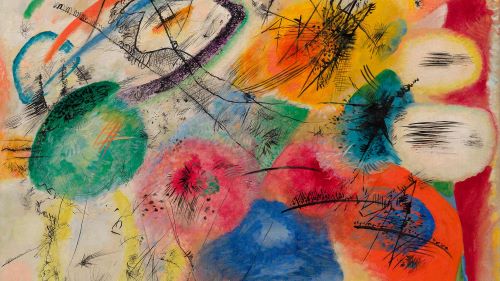
Exhibitions: ‘Kandinsky’ At The Guggenheim Bilbao In Spain (Nov ’20 To May ’21)

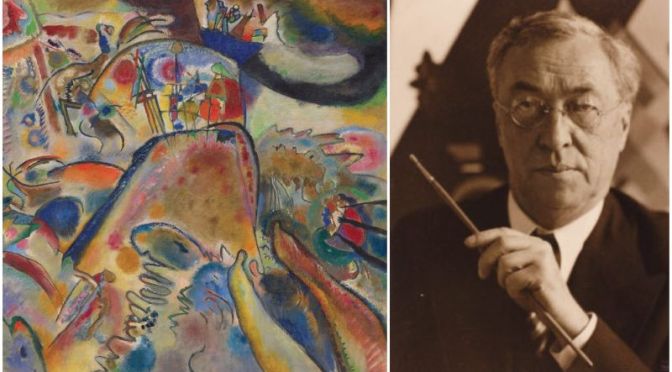
As a pioneer of abstraction and a renowned aesthetic theorist, Vasily Kandinsky (b. 1866, Moscow; d. 1944, Neuilly-sur-Seine, France) is among the foremost artistic innovators of the early twentieth century.

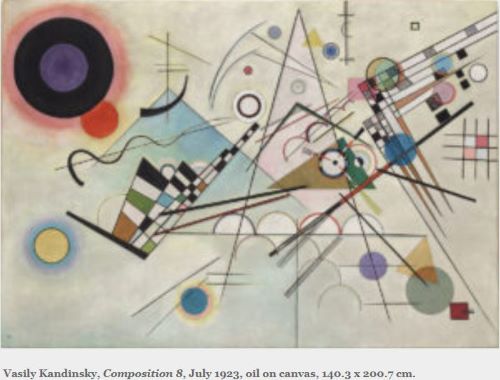
In his endeavor to free painting from its ties to the natural world, Kandinsky discovered a new subject matter based solely on the artist’s “inner necessity” that would remain his lifelong concern.

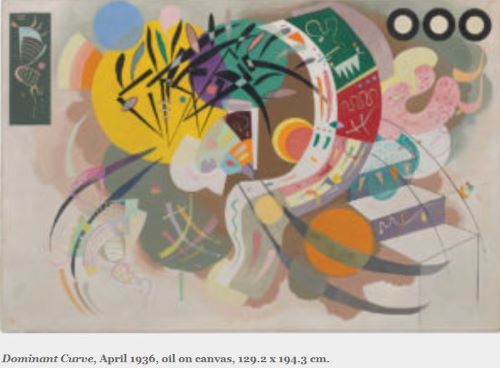
In Munich in the 1900s and early 1910s, Kandinsky began exploring the expressive possibilities of color and composition, but he was abruptly forced to leave Germany with the outbreak of World War I, in 1914. The artist eventually returned to his native Moscow, and there his pictorial vocabulary started to reflect the utopian experiments of the Russian avant-garde, who emphasized geometric shapes in an effort to establish a universal aesthetic language. Kandinsky subsequently joined the faculty of the Bauhaus, a German school of art and applied design that shared his belief in art’s ability to transform self and society. Compelled to abandon Germany again when the Bauhaus closed under Nazi pressure in 1933, he settled outside Paris, where Surrealism and the natural sciences influenced Kandinsky’s biomorphic imagery.

More so than any other artist, Kandinsky is intertwined with the history of the Solomon R. Guggenheim Foundation, established in New York in 1937. Industrialist and museum founder Solomon R. Guggenheim began collecting Kandinsky’s work in 1929 and met him at the Dessau Bauhaus the following year. This exhibition draws from the foundation’s extensive holdings to illustrate the full arc of Kandinsky’s seminal career.

Curator: Megan Fontanella

Organized by The Solomon R. Guggenheim Foundation, New York

Wassily Wassilyevich Kandinsky was a Russian painter and art theorist. Kandinsky is generally credited as the pioneer of abstract art. Born in Moscow, Kandinsky spent his childhood in Odessa, where he graduated at Grekov Odessa Art school. He enrolled at the University of Moscow, studying law and economics.

Website