

 NPR’s Tamara Keith and Amy Walter of the Cook Political Report join Judy Woodruff to discuss the latest political news, including whether two weeks of public impeachment hearings have shifted public opinion about President Trump and the investigation into his Ukraine policy, potential pressure on Republican lawmakers and the late entrance of Michael Bloomberg into the 2020 Democratic race.
Monthly Archives: November 2019

Media: “The Rise Of Netflix – An Empire Built On Debt” (The Guardian Podcasts)
 Netflix has risen from obscurity to be one of the most powerful media companies in the world with more than 150 million global subscribers. It has launched critically acclaimed hits such as House of Cards, The Crown and Unbelievable, as well as showcasing the back catalogues of popular television series. But as part of its rapid growth, the company has racked up huge debts.

Joining Anushka Asthana to discuss the long-term sustainability of Netflix are the TV critic Mark Lawson and the Guardian’s deputy business editor Dan Milmo.

Profiles: Remembering “Postmodernist” Theorist & Architecture Historian Charles Jencks (1939-2019)
From an Apollo Magazine article:
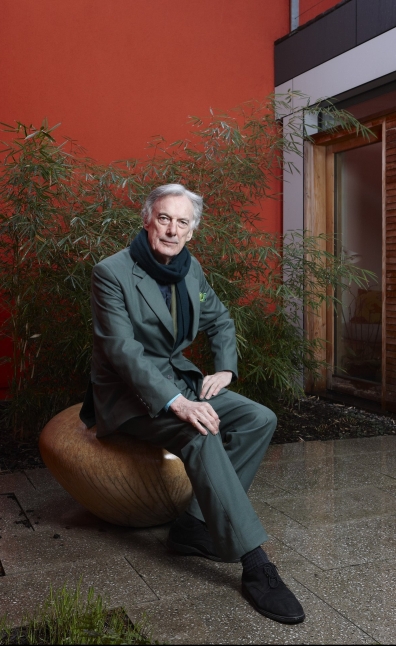 Jencks’s book grew out of his PhD thesis, supervised by Reyner Banham at the University of London in the late 1960s, and paved the way for his later, more explicitly polemical The Language of Post-Modern Architecture (1977). In this bestselling book, Jencks set out his stall for a pluralist architecture that rejected what he saw as modernism’s reductive ‘univalent’ approach, swapping it for a symbolically rich and historically engaged ‘multivalent’ postmodernism. For good or bad it became the defining book of its era, an unabashed rejection of mainstream modernism that ushered in a new architectural style.
 Modern Movements in Architecture (1973) by Charles Jencks was one of the first books on architecture I read, a birthday present given to me the summer before I started my degree. In some ways, it spoiled things: I thought all architecture books would be that much fun. Modern Movements in Architecture is a complex and sophisticated history, but it wears its learning lightly. It relates architecture to a wider cultural discourse and it is unafraid to be critical, even of some architects, such as Mies van der Rohe, who were previously considered to be above criticism.

Studies: High Usage Of Commonly Used Oral Antibiotics Increases Risk Of Parkinson’s Disease
From a Neuroscience News & Research online article:
 “The link between antibiotic exposure and Parkinson’s disease fits the current view that in a significant proportion of patients the pathology of Parkinson’s may originate in the gut, possibly related to microbial changes, years before the onset of typical Parkinson motor symptoms such as slowness, muscle stiffness and shaking of the extremities. It was known that the bacterial composition of the intestine in Parkinson’s patients is abnormal, but the cause is unclear. Our results suggest that some commonly used antibiotics, which are known to strongly influence the gut microbiota, could be a predisposing factor,” says research team leader, neurologist Filip Scheperjans MD, Ph.D. from the Department of Neurology of Helsinki University Hospital.
Higher exposure to commonly used oral antibiotics is linked to an increased risk of Parkinson’s disease according to a recently published study by researchers from the Helsinki University Hospital, Finland.
The strongest associations were found for broad-spectrum antibiotics and those that act against anaerobic bacteria and fungi. The timing of antibiotic exposure also seemed to matter.
The study suggests that excessive use of certain antibiotics can predispose to Parkinson’s disease with a delay of up to 10 to 15 years. This connection may be explained by their disruptive effects on the gut microbial ecosystem.

Automobile Nostalgia: “1963 Alfa Romeo Giulia – 1600 Sprint Speciale”
From a Classic Driver online article:
This extraordinary Alfa Romeo Giulia 1600 Sprint Special was delivered on 03.10.1963 in Pescara (Italy) and was home (city) of their time in Italy. The car was optimized for performance after delivery by Autodelta. Cylinder head, camshaft and manifold were changed and the output increased to 125 hp.

Boomers: “How Realistic Are Retirement Expectations In The USA?”



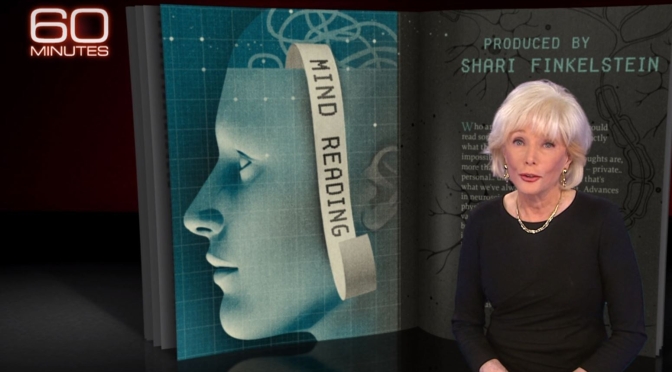
Brain Science Podcasts: MRI Scans Now Reveal “Thoughts And Feelings” (60 Minutes)
 Who among us hasn’t wished we could read someone else’s mind, know exactly what they’re thinking? Well that’s impossible, of course, since our thoughts are, more than anything else, our own. Private, personal, unreachable. Or at least that’s what we’ve always, well, thought.
Advances in neuroscience have shown that, on a physical level, our thoughts are actually a vast network of neurons firing all across our brains. So if that brain activity could be identified and analyzed, could our thoughts be decoded? Could our minds be read? Well, a team of scientists at Carnegie Mellon University in Pittsburgh has spent more than a decade trying to do just that. We started our reporting on their work 10 years ago, and what they’ve discovered since, has drawn us back.
To read more: https://www.cbsnews.com/news/functional-magnetic-resonance-imaging-computer-analysis-read-thoughts-60-minutes-2019-11-24/

Top Art Exhibitions: “Drape” Featuring Degas, Dürer At The Musée des Beaux-Arts in Lyon
From the Musée des Beaux-Arts in Lyon:
 How is a drapery put in place? For what reasons does this motive persist until today? How to explain its power of fascination? These are the questions that this exhibition intends to pose, in order to enter the “factory” of the drapery and to get closer to the artistic gesture. By showing the stages of making a drapery, the visitor will discover the singular practices of artists from the Renaissance to the second half of the 20th century.
November 30, 2019 – March 8, 2020, Museum of Fine Arts of Lyon
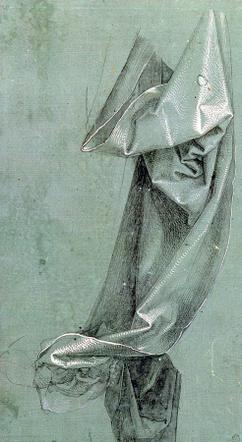 Albrecht Dürer, Drapery Study, 1508, Brush and Indian Ink, heightened white on dark green paper
The Musée des Beaux-Arts in Lyon retains an exceptional drawing by Albrecht Dürer studying a piece of drapery. This meticulous study reveals how the flexibility of a fabric lends itself to an infinity of folds, underlined by shadows and lights.
To read more: http://www.mba-lyon.fr/mba/sections/fr/expositions-musee/le-drape/exposition-le-drape

New Poetry & Art: “Giorgio De Chirico – Geometry Of Shadows” Translated By Stefania Heim
From a Hyperallergic.com online review:
 “Everywhere is the wait and the gathering,” concludes “Resort.” A kind of soporific haze has seeped into de Chirico’s imagination, asserted through evocations of sleeping and dreaming. Even the violence and ambiguous sexual imagery of “The Mysterious Night” yield to a final note of definitive somnolence: “Everything sleeps; even the owls and the bats who also in the dream dream of sleeping.”
“My room,” he writes, “is a beautiful vessel,” and from there he propels his imagination outward across space and time, geography and history. Indeed, “faraway” (lontani, lontano) is one of his favorite adjectives.  He daydreams of Mexico or Alaska and invokes a future-oriented “avant-city” and a distant day where he is immortalized, albeit in an old-fashioned mode as a “man of marble.”
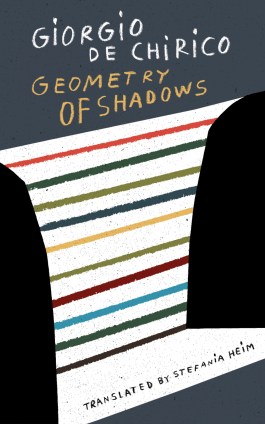
The paintings of Giorgio de Chirico invariably call to mind a cluster of adjectives: haunting, enigmatic, evocative, poetic. But unlike many artists whose poetry remains wordless and confined to the canvas, de Chirico was also a writer whose texts have been praised and even translated by such art-world luminaries as Louise Bourgeois and John Ashbery. A new collection provides us with more of de Chirico’s writings. Translated into English by Stefania Heim, Geometry of Shadows presents the relatively compact totality of the artist’s extant poems and poetic fragments written in Italian, complementing his memoirs and the novel Hebdomeros (in French), which have been available in English for some time.
To read more: https://hyperallergic.com/520898/geometry-of-shadows-by-giorgio-de-chirico/

Book Review Podcasts: “Margaret Thatcher – Herself Alone” By Charles Moore (New York Times)
 “I don’t think you can think about British politics or British history without thinking about her a very great deal,” Charles Moore, the authorized biographer of Margaret Thatcher, says of his subject on this week’s podcast. “And to some extent, you can’t think about the history of the modern West without thinking about her a very great deal.”
The third and concluding volume of Moore’s 2,700-page biography is titled “Herself Alone.”
Adrienne Brodeur visits the podcast this week to discuss her new book, “Wild Game: My Mother, Her Lover, and Me.” When Brodeur was 14, her mother confided in her about an extramarital affair she was conducting. “The temptation is to view a mother like this in sort of the ‘monster mother’ perspective, and the fact is, the most important thing for me in writing this book was to present a very nuanced portrayal of both her and of our relationship,” Brodeur says.
Also on this week’s episode, Alexandra Alter discusses the winners of this year’s National Book Awards; and Susan Dominus, A.O. Scott and John Williams talk about what people are reading. Pamela Paul is the host.
 Boomers Daily