
Scientists lead the way in repairing the cathedral, while discovering historical insights along the way.

Scientists lead the way in repairing the cathedral, while discovering historical insights along the way.
Filmed and Edited by: Janne Tanskanen
Savage Beauty light installation in Connemara Ireland (Lough Nafooey) March 2020. Savage Beauty by Kari Kola commissioned by Galway 2020 European Capital of Culture.
Music: Lawrence Hodge
Flung out into the Atlantic and shaped by the sheer force of the sea, Connemara’s islands are spectacular remnants of life long lost in other parts of Ireland. Staunchly proud of their traditions and as famous for their culture as their dramatic landscapes, Inishbofin and the Aran Islands are a patchwork of tiny, tightly packed fields, rambling stone walls, pristine beaches and craggy shores.
The islands’ relative isolation has fostered a profound sense of peace and protected a rich traditional heritage. They’re wonderful places to walk or cycle, and famous for their live music and traditional dances.
Situated in the choppy waters of Galway Bay, the three Aran Islands in the Gaeltacht region. The largest and most developed island is Inis Mór, a place blanketed in fissured limestone and snaking stone walls. The island’s most famous sight is Dún Aonghasa, a breathtaking semi-circular stone fort perched dramatically on top of a 100m cliff. Other prehistoric forts dot the island, as well as numerous early Christian remains. The heritage centre, Ionad Árann, gives a great insight into the island’s history and traditions but you’ll also see them first hand in the nightly music sessions, regular dances and impromptu storytelling.
 Monocle’s Charlie Jermyn talks us through the rich and varied culinary delights on offer in Ireland’s second city.
Cork is the second largest city in Ireland. Located in the south-west of Ireland, in the province of Munster, since an extension to the city’s boundary in 2019, its population is c.210,000.
The city centre is an island positioned between two channels of the River Lee which meet downstream at the eastern end of the city centre, where the quays and docks along the river lead outwards towards Lough Mahon and Cork Harbour, one of the largest natural harbours in the world.
Originally a monastic settlement, Cork was expanded by Viking invaders around 915. Its charter was granted by Prince John in 1185. Cork city was once fully walled, and the remnants of the old medieval town centre can be found around South and North Main streets. The third largest city by population on the island of Ireland, the city’s cognomen of “the rebel city” originates in its support for the Yorkist cause in the Wars of the Roses. Corkonians sometimes refer to the city as “the real capital”, a reference to its opposition to the Anglo-Irish Treaty in the Irish Civil War.
Filmed and Edited by: Jonas Høholt
‘Breath of the Seasons’ has been my personal project from early 2017 until early 2020.
Living around the Jutland peninsula in Denmark my entire life, what inspired me to make this film was the very difference between winter, spring, summer and autumn in the already diverse Jutlandic landscapes – and the visually beautiful story this has.
To show this cycle in nature through timelapse photography has been a mammoth task and a huge completion for me personally. It has driven me through all spectres emotionally; exhaustion, excitement, despair, joy and everything in between.
The countless hours spent on locations made me see and feel the difference of all four
seasons. It opened my eyes to how similar nature actually is to humans; As nature takes a single breath all four seasons play before our eyes until she’s ready for the next breath and it all starts over again. Energy is everywhere and nothing is at a standstill.
Directed and edited by: Mark Soetebier
The Dolomites are 10 years of Unesco, for this occasion I selected the most beautiful video frames on Vimeo to package this video, hoping that the Coronavirus will leave this beautiful world and life will resume its “better” path than before.

Let yourself be dazzled by the monumental beauty of the Italian Dolomites, with majestic pinnacles, pillars, spiers and rocky faces that change color at different points throughout the day. This short video documentary is a collection of the most beautiful frames on the Dolomites made by Vimeo photographers.
The video frames are by: Joren de Jager, Marius Winkler, Lumen Art Studio, Ales, David Perucchin, Stefan Kellner, Gaetan Piolot, Ski Center Latemar, Alvern Ariston, Suedtirolvideo.it, Coral Climb / Lucas Preti, Mark Soetebier
Music by: Generdyn, Luke Atencio, May, Daniel Deuche, Jordan Crut
 Monocle 24 “The Urbanist” discusses the impact that quarantines can have on cities and what lessons city planners can learn when an outbreak causes borders to close. Here is a report from the ground on the changing nature of city life in Milan.
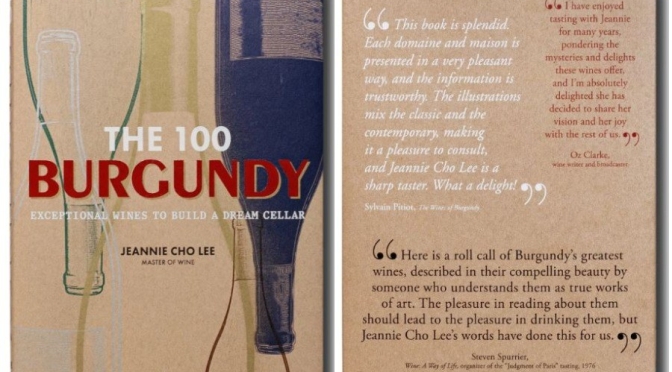
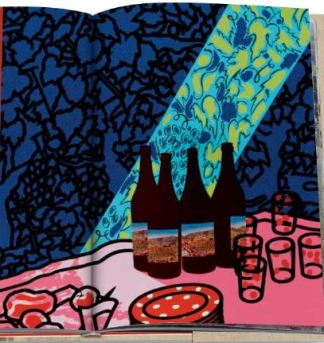 An exceptional Burgundy is not only well crafted and well balanced, it also must have essential qualities reflecting its own terroir as well as those unique to the particular vintage, distilling the very essence of the vine itself and the earth from which it springs.
Essential reading for all fine wine aficionados, whether curating a dream cellar or selecting the best Burgundy wines to experience with friends and family, The 100 Burgundy: offers a fresh perspective by a dedicated professional who visits the region regularly and recognizes the best it has to offer.
For wine enthusiasts discovering Burgundy—and those already smitten with the region’s seductive wines—The 100 Burgundy: is the first guide of its kind to the region’s best wines and makers, detailing the domaines and highlighting each chosen wine with tasting notes. Considering factors such as a wine’s quality, its ability to evolve and improve over time, and its ability to evoke emotion, Master of Wine Jeannie Cho Lee invites readers to explore 100 memorable Burgundy wines of the Côte d’Or, from benchmark domaines to rising stars.
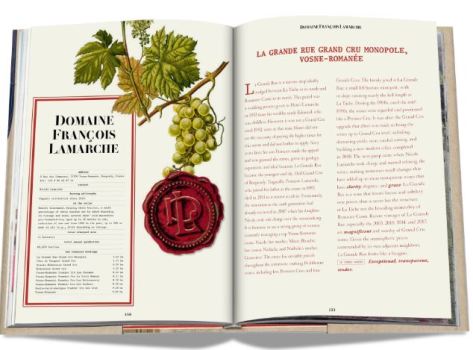
With a foreword by Lalou Bize-Leroy, owner of Domaine Leroy and co-owner of Domaine de la Romanée-Conti, this enlightening volume is a journey through the countryside of Burgundy, capturing the context, people, and history that inspire the creation of these masterful wines.
Jeannie Cho Lee is the first Asian Master of Wine (MW), an award-winning author, wine critic, judge, and educator. Currently a professor at Hong Kong Polytechnic University, where she helped launch the Master of Science program in International Wine Management, she is also a consultant for Singapore Airlines since 2009.
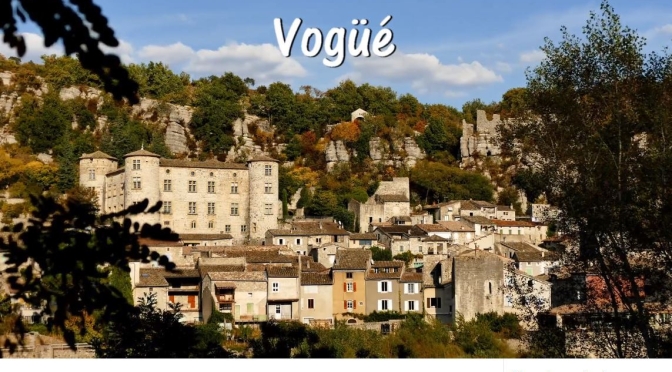
Ranked among the most beautiful villages in France, Vogüé takes place in the Auvergne-Rhône-Alpes region, in the department of Ardèche. Located in a limestone cliff, the town is today an important tourist site appreciated by visitors. English subtitles.
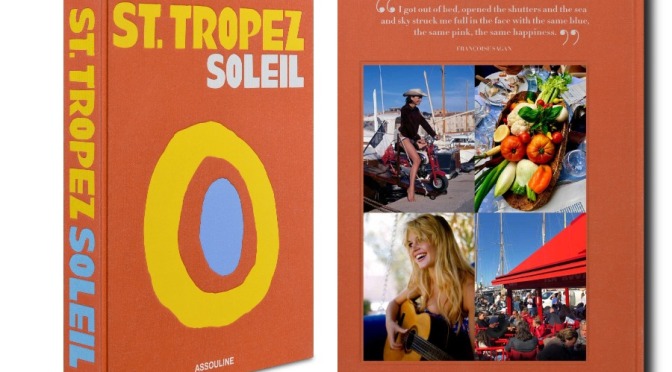
The legend of St. Tropez starts with a dog, a rooster, and a martyr; and it leads to movie stars, world-renowned artists and distinguished writers. Located on the sparkling French Riviera, St. Tropez has enjoyed the spotlight for more than half a century, for better or worse, with celebrities flocking to this idyllic locale for its beaches and a dose of Mediterranean sun.
A picturesque oasis, St. Tropez has served as inspiration for a who’s who of notable writers from Françoise Sagan to Colette; as well as renowned artists Paul Signac and Henri Matisse; and even filmmakers. However, St. Tropez would not be the same without then belle du jour Brigitte Bardot, her films and lovers and many other famous couples including Annabel and Bernard Buffet and Bianca and Mick Jagger.
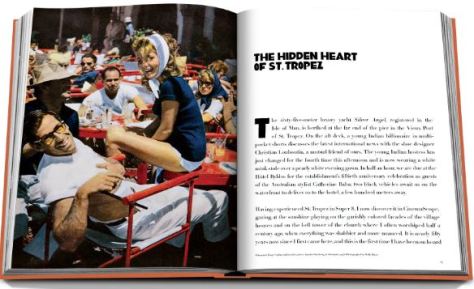
St. Tropez Soleil guides the reader through its storied past and ever-evolving present. Featuring annual mainstays such as Les Bravades and the Les Voiles de Saint-Tropez as well as exclusive events like a Chanel fashion show at the quintessentially Tropezian Sénéquier café and the White Party at Nikki Beach begun by Naomi Campbell. But despite all that changes, the spirit of St. Tropez remains the same and this volume is an ode to the unique joie de vivre that keeps everyone coming back.
Simon Liberati is an award-winning French writer and journalist. He has worked for publications such as Purple, Numéro, and 20 Ans and he frequently collaborates with Vogue. He has written ten books including Jayne Mansfield 1967 (2011), which won the prix Femina, and the best-selling Eva (2015).


 Boomers Daily