Tag Archives: Arts

Art Curator: “Why Did Michelangelo Use Red Chalk?” (Getty Museum)

From The Iris (Getty Museum – April 17, 2020):
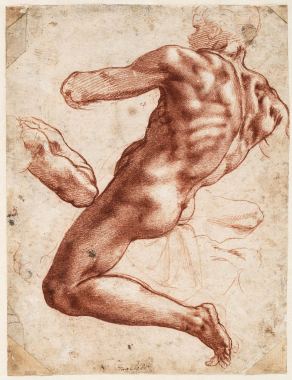
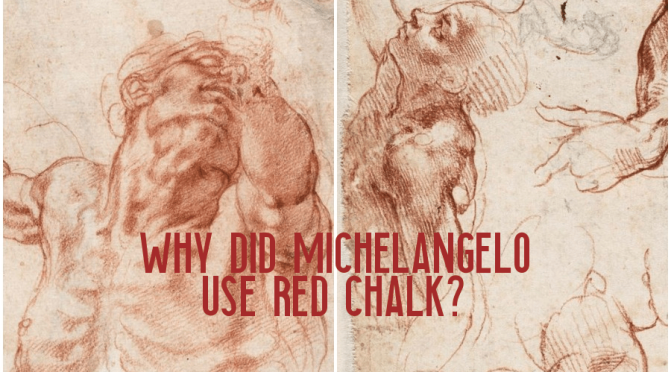
gm_374970EX1_1300To work out the details of all the figures in pen and ink would have been extremely labor-intensive, and sharpening quills and mixing inks would’ve added an additional distraction. Drawing in chalk necessitated great skill, but it also allowed Michelangelo a flexibility. He could create subtle tonal variations by applying more or less pressure onto the chalk or by wetting it. The red chalk also provided an immediate mid-tone on the paper and could be easily blended when modeling and shading forms. Being a naturally occurring material that was available to artists in sticks that could be sharpened as desired, it was also convenient and portable.

The Iris - Behind The Scenes at the Getty MuseumDuring his lifetime, Michelangelo likely produced tens of thousands of drawings. But being protective of his ideas, and to give an impression of effortless genius, he destroyed many of them. Today only about 600 drawings by the Renaissance artist survive. A Getty exhibition highlighted 28 of them, giving viewers a window into Michelangelo’s artistic process. “He used drawings to record his observations, to explore certain ideas, to further develop these ideas, to reconsider them entirely,” said Assistant Curator Edina Adam.

The exhibition included a relatively high number of drawings in red chalk, which prompted the question: Why did Michelangelo use this particular drawing material?
Website

1950’s Artwork: English Painter John Minton’s “Lavish” Food Book Covers

From Apollo Magazine article (April 13, 2020):

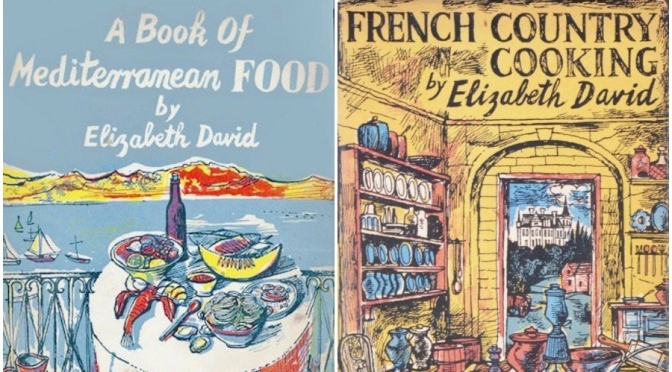
John Minton Illustration for French Cooking by Eizabeth DavidMinton had gone on to produce a series of spectacularly colourful oil paintings of Corsica on his return to London, exhibiting them at the Lefevre Gallery in 1949. Many of them depicted fruit and fish and other ingredients for Mediterranean cuisine, and so confirmed Minton as the obvious choice for the David commission. 
David delightedly recalled that: ‘In the shop windows [Minton’s] brilliant blue Mediterranean bay, his tables spread with white cloths and bright fruit, bowls of pasta and rice, a lobster, pitchers and jugs and bottles of wine, could be seen far down the street.’

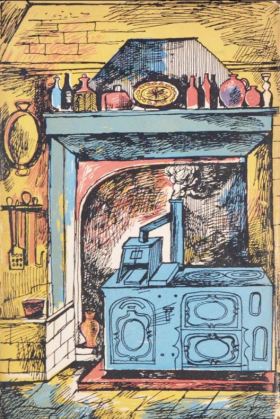
Variations on these two images were used for the double-page spread on which the title appeared in David’s second book, French Country Cooking (1951), while the wrap-around image on the dust jacket depicted the interior of a well-stocked kitchen, many of its utensils borrowed from the author to ensure accurate representation.

Read full article

Francis John Minton (25 December 1917 – 20 January 1957) was an English painter, illustrator, stage designer and teacher. After studying in France, he became a teacher in London, and at the same time maintained a consistently large output of works. In addition to landscapes, portraits and other paintings, some of them on an unusually large scale, he built up a reputation as an illustrator of books.

In the mid-1950s, Minton found himself out of sympathy with the abstract trend that was then becoming fashionable, and felt increasingly sidelined. He suffered psychological problems, self-medicated with alcohol, and in 1957 died by suicide.

From Wikipedia

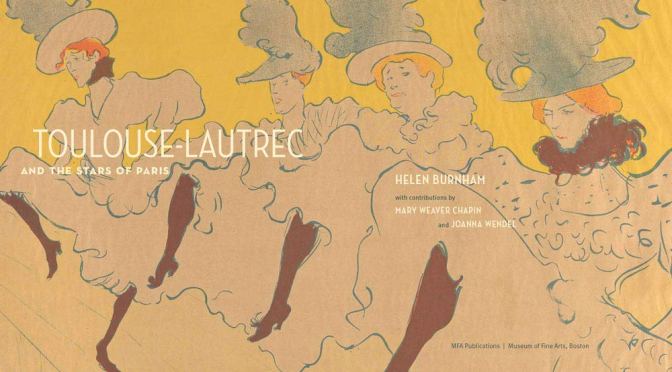
Art History: “Toulouse-Lautrec And The Stars Of Paris” (MFA, Boston Video)

Curator Helen Burnham, Pamela and Peter Voss Curator of Prints and Drawings, introduces us to the celebrities of 19th-century Paris made famous by Henri de Toulouse-Lautrec and his contemporaries. The exhibition features the rich holdings of the MFA and its organizing partner, the Boston Public Library.

Art History: “Emotional Expression” In Artwork Of Venetian Painter “Titian” (National Gallery Video)

The way Titian painted was unlike other artists of his day. With little in the way of preliminary drawings, Titian worked very freely straight onto the canvas. Watch artist Andy Pankhurst show us how Titian would have worked.

Website

Tiziano Vecelli or Vecellio, known in English as Titian, was an Italian painter during the Renaissance, considered the most important member of the 16th-century Venetian school. He was born in Pieve di Cadore, near Belluno. During his lifetime he was often called da Cadore, ‘from Cadore’, taken from his native region.

Creative Arts Video: “How Does Animation Work?”

Created, Animated and Directed by: Tyler Pacana

An overview of how animation is made with traditional, 2D-rigged, stop-motion, and CG techniques.

Music: Hub World – Yotam Perel

Produced at Sheridan College [2020].

Website

Lectures: “Beyond Gatsby: The Fabled Gardens of Long Island’s Gold Coast”

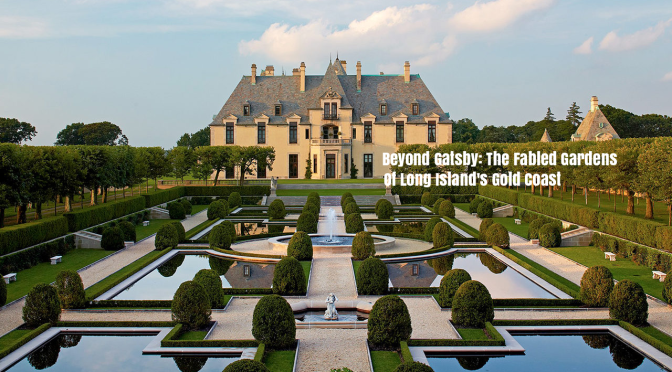
Originally comprising vast areas of the North Shores of Long Island, the Gold Coast was a favorite retreat of the rich and famous. Beginning around the turn of the century and through the 1920’s, the North Shore was the place to be for some of the most notable Americans. Along with grand houses, they built elaborate gardens, hiring such notable architects and landscape architects as Delano and Aldrich, Carrere and Hastings, the Olmsted Brothers, and Beatrix Farrand. Discover the gardens, as they were originally built, and learn about their history, landscape design, and present condition. This event was presented through the generous support of the Boston Design Center as part of the ICAA-NE Design Series.

CeCe Haydock graduated from Princeton University (BA English) and received a master’s degree in landscape architecture from the SUNY School of Environmental Science and Forestry. After working for the New York City Parks Department, she joined the firm, Innocenti and Webel in Locust Valley, NY, before starting her private practice. In 2007, she did research as a Visiting Scholar at the American Academy in Rome on Edith Wharton and Italian villas. She has lectured and written on historic Italian, French, and American gardens for Old Westbury Gardens, Maryland’s Ladew Topiary Gardens, Princeton University, and numerous garden and horticultural clubs. A trustee of Planting Fields Arboretum and a member of the International Council of The Preservation Society of Newport County, she is a visiting lecturer at the New York Botanic Garden and an adjunct professor at Long Island University. CeCe is currently expanding her private practice to include landscape sustainability.

Website

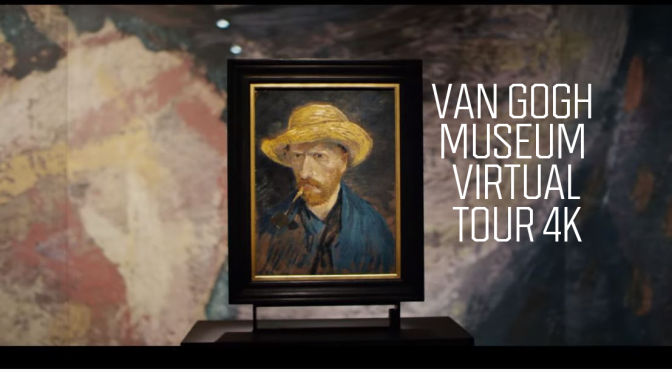
FINE ARTS: 4K VIDEO TOUR – THE VAN GOGH MUSEUM “ARTISTIC EXCHANGE”

Van Gogh Museum Tour in 4K. Have you always wanted to be alone in the Van Gogh Museum? Step into Vincent’s world and enjoy the private video tour.

Episode 5: Van Gogh Museum Amsterdam

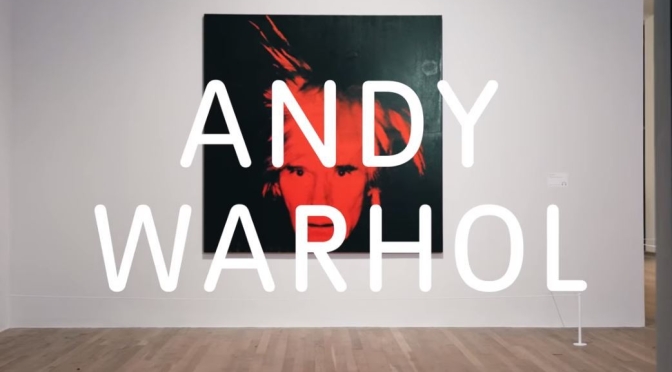
New Museum Exhibitions: “Andy Warhol” At The Tate Modern, London (Video)

Although our galleries are temporarily closed we wanted to share the Andy Warhol exhibition at Tate Modern with you. Join Tate curators Gregor Muir and Fiontán Moran as they discuss Warhol through the lens of the immigrant story, his LGBTQI identity and concerns with death and religion.

Meet the man behind the brand. It’s a Warhol you might not know, with some artworks you may not have seen before.

Find out more about the exhibition here


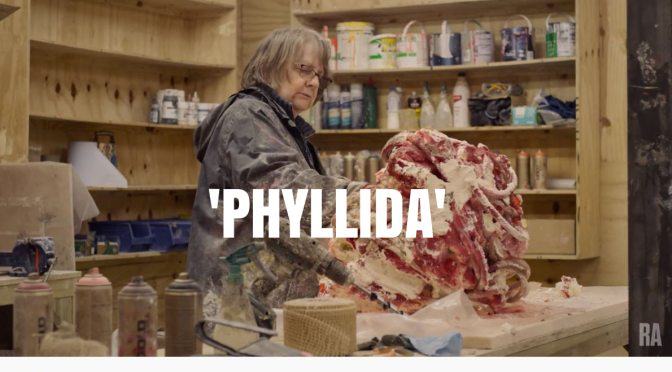
Top Artist Documentary: ‘PHYLLIDA’ – A Portrait Of The 76-Year Old British Sculptor Phyllida Barlow

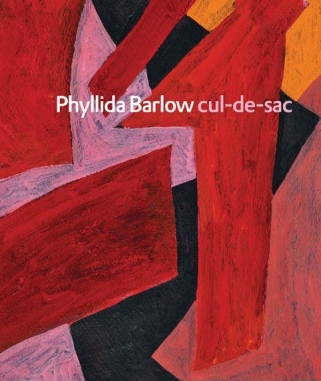
This documentary is an intimate portrait of British sculptor Phyllida Barlow during her preparation for the major survey ‘cul-de-sac’ at the Royal Academy last Phyllida Barlow Cul-de-Sac Royal Academyyear. Directed by Cosima Spender, this film maps the roots of Barlow’s oeuvre, as she revisits childhood memories, domestic and urban spaces, and their subsequent role in her creative process.
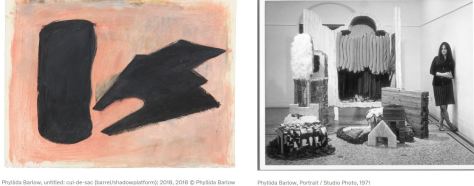
Phyllida Barlow began studying at Chelsea College of Art in 1960, and went on to study and teach at Slade School of Art for more than twenty years, becoming Emerita Professor in 2009. She was elected a Royal Academician in 2011, and represented Great Britain in the 2017 Venice Biennale, where she created the ambitious installation, ‘folly’.

Hauser & Wirth Phyllida Barlow 2020

Watch this evolution and the artist’s influences in ‘PHYLLIDA’. ‘I want the work to be traversed in a way that your memory of it is tested, so that you keep forgetting what you’ve seen’, Barlow explains, ‘I think that is the nature of sculpture – not something that can be held as a whole image in your head, only as fragments… The spaces, the silences in between, are as much a component of the work as the thing itself.”

‘PHYLLIDA’ is produced by Hauser & Wirth, in association with Third Channel and Peacock Pictures.

Website