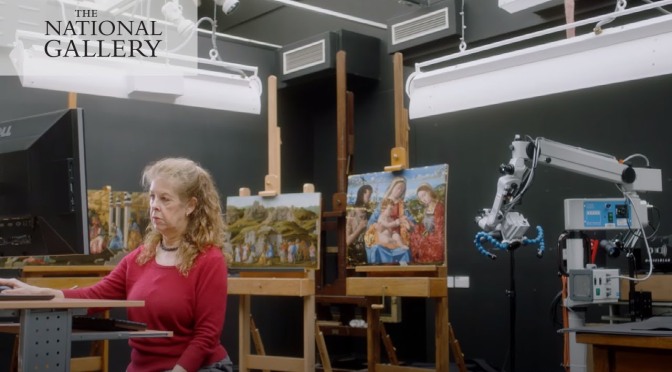
A look ‘beneath’ Titian’s canvases reveals the tweaks and changes he made as he worked over four hundred years ago. Find out more with Restorer Jill Dunkerton.

A look ‘beneath’ Titian’s canvases reveals the tweaks and changes he made as he worked over four hundred years ago. Find out more with Restorer Jill Dunkerton.
The Ashmolean’s 2020 Young Rembrandt exhibition is currently closed, but you can still visit virtually. Watch this introduction from exhibition curator An Van Camp, and explore the exhibition section by section at ashmolean.org
The Young Rembrandt exhibition charts the astonishing transformation of the Dutch master Rembrandt. Spanning the years 1624 to 1634, it traces how a young and unremarkable artist from Leiden became the superstar of 17th-century Amsterdam and one of the greatest artists of all time.
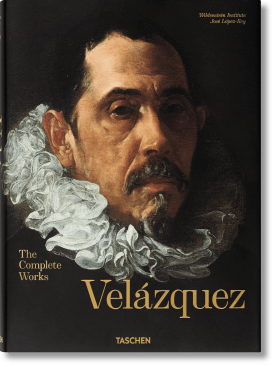 Manet called him “the greatest painter of all.” Picasso was so inspired by his masterpiece Las Meninas that he painted 44 variations of it. Francis Bacon painted a study of his portrait of Pope Innocent X. Monet and Renoir, Corot and Courbet, Degas and Dalí…for so many champions of art history, the ultimate soundboard was—and remains—Diego Rodríguez de Silva y Velázquez (1599-1660).

This updated catalog raisonné brings together Velázquez’s complete works, jaw-droppingly reproduced in extra-large format, with a selection of enlarged details and brand new photography of recently restored paintings, achieved through the joint initiative of TASCHEN and Wildenstein. The book’s dazzling images are accompanied by insightful commentary from José López-Rey on Velázquez’s interest in human life and his equal attention to all subjects, from an old woman frying eggs to a pope or king, as well as his commitment to color and light, which would influence the Impressionists over two centuries later.


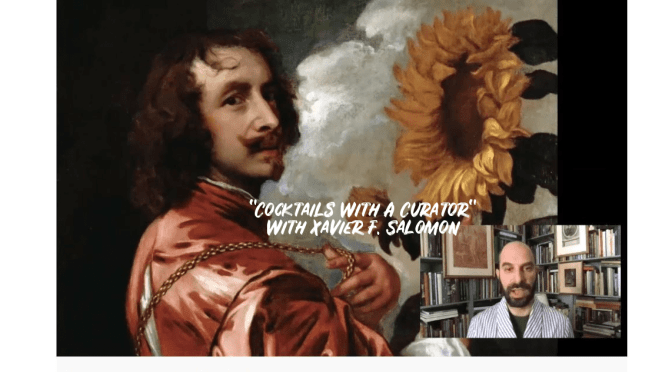
In this episode of “Cocktails with a Curator,” Xavier F. Salomon, Peter Jay Sharp Chief Curator, tells us the story of Sir John Suckling, the subject of Anthony van Dyck’s full-length portrait in The Frick Collection. Xavier has appropriately paired his story of art and literature with an English cocktail called Pink Gin.

Lucy Chiswell, the Curatorial Fellow for Paintings 1600-1800, explores a day in the countryside through paintings by Rubens, Constable and Corot.
Paintings mentioned
0:50 Peter Paul Rubens ‘An Autumn Landscape with a View of Het Steen in the Early Morning’ 🎨 https://www.nationalgallery.org.uk/pa…
4:19 John Constable, ‘The Hay Wain’ 🎨 https://www.nationalgallery.org.uk/pa…
8:03 Jean-Baptiste-Camille Corot ‘The Four Times of Day: Night’ 🎨 https://www.nationalgallery.org.uk/pa…
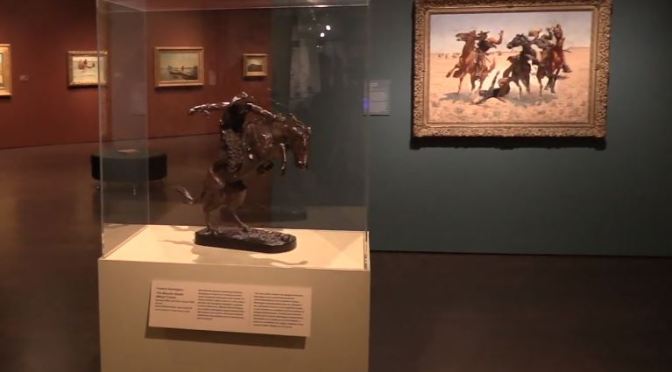
While the Denver Art Museum is temporarily closed, we are sharing this look at the Homer and Remington exhibition. Hear from DAM curators Thomas Brent Smith and Jennifer R. Henneman.
 In the summer of 1891, Claude Monet began to paint a row of poplar trees that lined the river Epte near his house at Giverny. The trees were auctioned off for timber shortly thereafter, but Monet made a deal with the purchaser to delay cutting them so he could continue to paint the trees through the autumn. Using a shallow rowboat that had slots in the bottom capable of holding several canvases at once, Monet painted twenty-four pictures of the poplars from his floating studio.
The resulting pictures reflect the view at different seasons and times of day and were known as the “Poplar Series” when they were exhibited in February 1892.
From Visual Pleasure Magazine (April 19, 2020):
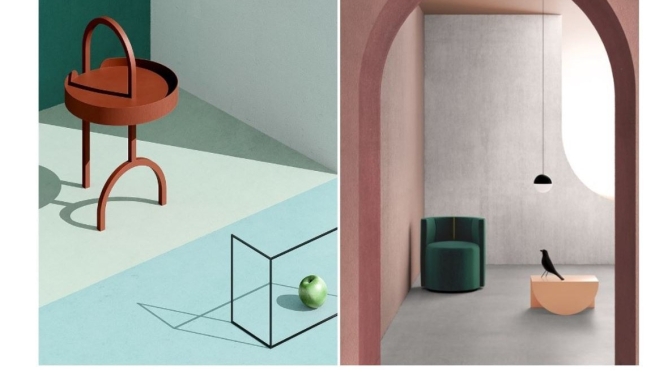
I often find myself observing classic paintings that can inspire compositions, or fashion that can inspire the choice of a color palette. At a certain point everything  is united in a very natural way in a creative concept. My artistic research is a constant blend between the worlds of architecture, painting, photography, graphic design, and fashion. At the base of my work, then, there is an artistic background very much linked to the Gestalt principles of visual perception. I try to avoid looking for inspiration only within the confines of my sector: I find that this often leads to a flattening of the creative result.
Having always been fascinated with sensational spaces, Cristina Lello now visualizes the most striking scenes that tell a clear story. As she describes herself, her studio “creates high-impact images from the intersection of interior styling, set design and 3D art.” After graduating with honors in Set Design at the Academy of Fine Arts of Venice, she also started a Master’s degree in Interactive Media for Interior Design while working for Elisa Ossino Studio.
From Christie’s article (April 16, 2020):
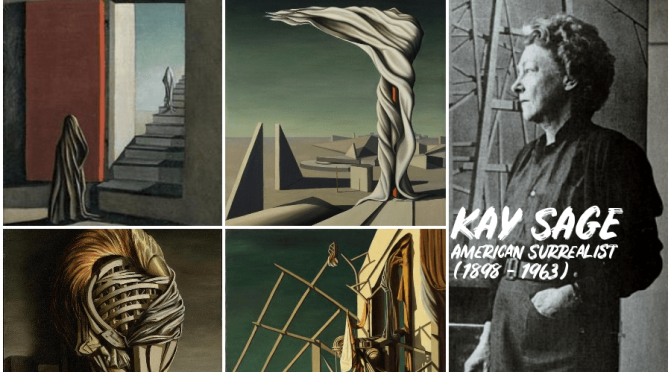
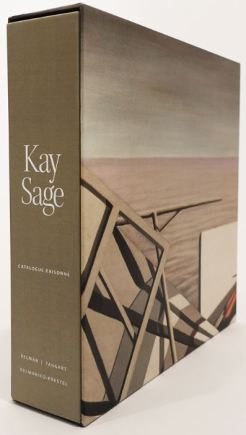 Sage is renowned for her empty, enigmatic, eerily lit landscapes. Human figures are markedly absent — their presence felt only by the monolithic, architectural structures and unidentifiable, draped objects they seem to have left behind. In this respect, 1945’s Other Answers is a quintessential Sage painting.
In 1939, with clouds of war hovering over Europe, Kay Sage returned to the United States after more than two decades away. Her lover and fellow Surrealist, Yves Tanguy, soon followed her across the Atlantic, despite the fact that both of them were married to other people. In Sage’s case to an Italian prince — her official title was La principessa di San Faustino.
 In the summer of 1940, Sage had her first solo show, at the influential Pierre Matisse Gallery in Manhattan. Then, in early 1943, she was part of the landmark Exhibition by 31 Women, curated and staged by Peggy Guggenheim in her Art of This Century Gallery.
In this episode of “Cocktails with a Curator,” Xavier F. Salomon, Peter Jay Sharp Chief Curator, hosts us again for happy hour at his apartment. The subject of tonight’s presentation is the mysterious “Polish Rider ” by Rembrandt, and the complementary cocktail is the Szarlotka, a Polish drink made with Żubrówka (vodka infused with bison grass).




 Boomers Daily