Tag Archives: Africa

Global News: Flattening The Climate Curve, Lifting Lockdowns & Arrest Of Africa’s Most Wanted Man

The Economist Editors Picks Podcast logoA selection of three essential articles read aloud from the latest issue of The Economist. This week, the chance to flatten the climate curve, when, why and how to lift coronavirus lockdowns (9:25) and the arrest of Africa’s most wanted man (17:25).  


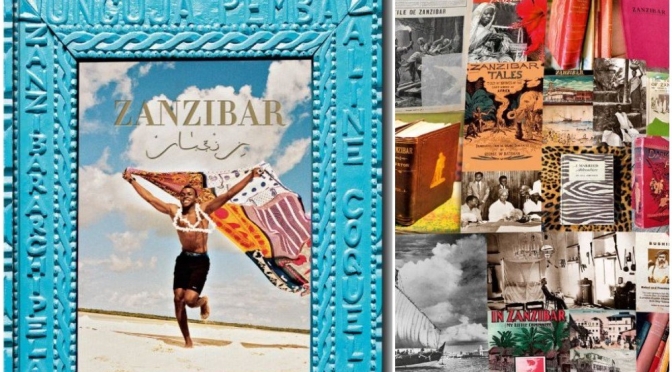
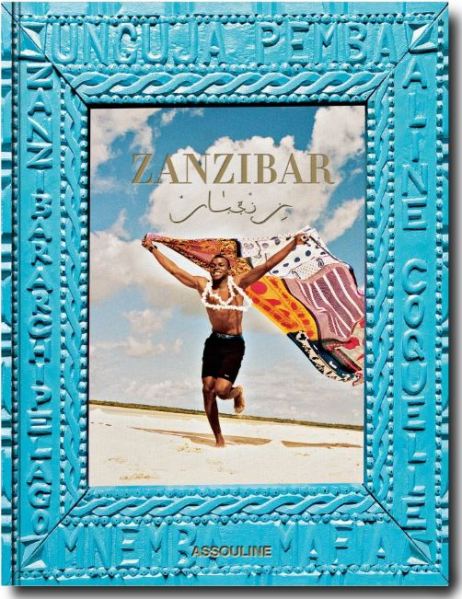
Top Photography Books: “Zanzibar” By Aline Coquelle (Assouline)

Zanzibar Travel & Photography Book - Assouline May 2020Off the coast of East Africa in the Indian Ocean sits an archipelago known as Zanzibar. It all started ten million years ago when the island of Pemba separated from mainland Africa and then ten thousand years ago, the island of Unguja followed suit. Thus, begins the legend of Zanzibar.

For centuries, Zanzibar has been the haven and gateway for explorers including Richard Burton and David Livingstone to penetrate the unknown African Continent. Forward to present day, and it is still possible to experience the unique wildlife whether that is by scuba diving off the coast of a private island, infinite lagoons, visiting mangroves or endemic wild forests; getting lost and immersing yourself into the historical labyrinthine streets of Stonetown.

Zanzibar Travel & Photography Book - Assouline May 2020

This cluster of islands is at a crossroads of cultures, featuring Omani architecture, Portuguese and British heritages as well as Swahili rituals.

Photographer Aline Coquelle shares an intimate portrait of a community bursting with life. With original photography, a disappearing, indigenous culture is preserved and celebrated. This volume invites the reader to experience the paradise that is Zanzibar.

With a degree in art history and anthropology, nomadic Parisian photographer Aline Coquelle has always traveled the world—she has lived and worked in Central and South America, Asia, and Africa and has been visiting Zanzibar for over twenty years. She contributes to prestigious international publications, and shoots marketing campaigns for luxury brands. Coquelle often works with silver film in order to keep alive the magic of old-time photography because she believes “transcending tradition is the new modernity” and her gelatin silver prints are sought by collectors worldwide. Her other books with Assouline are Palm Springs Style (2005); The Cartier Polo Games (2006); Polo: The Nomadic Tribe (2009); The Italian Dream: Wine, Heritage, Soul (2016); and Be Extraordinary, The Spirit of Bentley (2017).

Mirella Ricciardi is a renowned photographer and author. Her childhood in Kenya has inspired her work and she has published several volumes of photographs including Vanishing Africa (1971), African Saga (1981), and Vanishing Amazon (1991).

Read more or purchase

Travel & Culture Videos: “Ethiopia – Natural Utopia” By Florence Lepavec (2020)

Filmed and Edited: Florence Lepavec

.
Ethiopia, the ‘Roof of Africa’, the ’Cradle of Humanity’, the ‘Promised Land of Zion’…

It had been already given quite many designations.

Another one I also heard before going there for the first time, was ‘Ethiopia, the Africa for Beginners’. ??

Was it because, for the most part, Ethiopians are genuinely friendly, generous and rather naturally relax?
Was it because, as occidentals, we share a common religious identity, rooted in mutual values? Was it because
it is mainly safe for travellers?

For whatever reason it was, I did find the expression suiting me right down to the ground because apart
from Morocco, I had not yet stepped foot in deep Africa.

And actually, now that I am back, I could personally add another title: ‘Ethiopia, the Natural Utopia’.

Is that for its breath-taking Nature? For its colourful Spiritual Identity? For its beautiful People?
Or is that for all of these?

For this abundant land offering an incredible diversity of eco-systems and landscapes, going from arid
desert regions to Afroalpine up-lands breaking down into vertiginous abyss. A land combining peaks reaching
above 4000m and depressions as low as 125m below sea level. Mountains, forests, lakes, meadows, deserts and swamplands.

A diversity also found in the fauna, with some interesting endemic species like the Gelada, the red-hearted baboon
-a peaceful grass-heater with impressive canines.

Or either, for this fascinating primal religious form of Christianity, tinged with animist rituals and colourful arts.
A religious belief deeply infused into the People living according to spiritual principles and values. People trying
their best to give you their best. Everywhere I went, I left it with brothers and sisters. With a sense of home given
by their genuine gentleness and education and their natural sensitive and respectful nature, in deep connection with
Nature Itself. I left with lots of good memories and friends. Filled with Humanity.

The same Humanity our ancestor ‘Lucy’ and her siblings might have been creating some 3.2 million years ago, on the same lands.
On this antic land rich of a unique history and culture.

Those are all the reasons why I called my Ethiopia, ‘the Natural Utopia’: a land that potentially possesses
ideal (or perfect) qualities for People…

Website

New Virtual Travel Tour: “Zambia And Beyond” With Photographer Marcus Westberg (NY Times Video)

Does wanderlust have you wistfully gazing out the window? Yeah, us too. Hit the virtual road with Times journalists and photographers, as they share never-before-seen video, photos and experiences from captivating spots around the globe, every Saturday. This week, we’re going on safari in search of Zambia’s stunning wildlife.

With special guest Marcus Westberg, photographer. Hosted by Amy Virshup, travel editor.

New Travel Videos: “City Odes – Lagos, Nigeria” By Sheldon Chau (2020)

Directed, shot, edited by // Sheldon Chau

Produced by // Ella Utomi, Jide Adewale
Poem by // Ntongha Ekot
Starring, voiceover by // Jide Adewale
Music composed by // John Corlis

“EKO ILE” (CITY ODES) A CINEMATIC POEM SHORT FILM IN LAGOS, NIGERIA BY SHELDON CHAU (2020)

“Eko ile”

A man straddles a love-hate relationship with Lagos in which he attempts to not only grasp both the intensity and comfort that the city has to offer, but also to embrace it as his home.

—-

The City Odes Project is a passion project in which I collaborate with my composer, a poet and an actor to create a humanist, emotional, and visual story amidst the backdrop of a specific city. “Eko ile” is the second entry into this series and takes place in one of the most intense, vibrant, and overwhelming places I have ever been – Lagos, Nigeria.

The title “Eko ile” translates to “Lagos is home” in Yoruba, one of the primary languages in the country. For this piece, I wanted to capture the city in the language I encountered most when I was there – Pidgin English (which is sort of a local slang) as well as plain English, both of which my lead actor Jide Adewale (who also happens to be one of the producers) speaks as he narrates the poem. I wanted to create a character who personifies the feeling of living in Lagos in which the hustle is as real as it gets and the frenetic pace is nonstop. Lagos truly is one of a kind.

The final result here features the work of Ntongha Ekot – a Nigerian poet – who eloquently captures these push-and-pull feelings through her words, and my frequent collaborator John Corlis – an LA-based musician and composer – who complements the poetry with his emotional piano piece “Into the Atmosphere” from his latest album of the same title. My incredible producers Jide and Ella Utomi made it all happen by finding the locations, security and logistics; they took care of me during my memorable time there.

Website

Travel & Architecture: Inside An Exotic Home In Tangier, Morocco (AD)

From an Architectural Digest online article (March 14, 2020):

Tangier Home Interior - Architectural Digest“Tangier is the crossroads of so many civilizations,” says AD100 talent Frank de Biasi of the evocative Moroccan port city that he and his partner, the multifaceted designer Gene Meyer, have made their home. “There’s a central energy here,” he explains, “where the Atlantic meets the Mediterranean, where Europe meets Africa. It’s a psychic point like no other place.”

Many of the traditional houses here, however, have a claustrophobic lack of light, so when the couple found a ruinous place on a little open square, with exposures on three sides, they knew they could make it their own. Their renovation ultimately took four years as they rebuilt paper-thin walls, replaced a life-threateningly vertiginous staircase with one inspired by the Old Fort Bay clubhouse in the Bahamas, and installed a light-well based on one de Biasi had seen in India and such mod cons as under-floor heating.

Read more

Podcasts: How Foreign Governments Are Facing Covid-19 (The Economist)

A selection of essential articles read aloud from the latest issue of The Economist. This week, the role of big government in the time of covid-19, (10:20) assessing the havoc the pandemic is causing in emerging countries, (17:45).

In just a few weeks a virus a ten-thousandth of a millimetre in diameter has transformed Western democracies. States have shut down businesses and sealed people indoors. They have promised trillions of dollars to keep the economy on life support. If South Korea and Singapore are a guide, medical and electronic privacy are about to be cast aside. It is the most dramatic extension of state power since the second world war.

Read article

Book Interviews: “Out Of Darkness, Shining Light” Author Petina Gappah

BBC Radio 4 Books and AuthorsBBC Radio 4 speaks to Petina Gappah on her new book, “Out of Darkness, Shining Light”.


“This is how we carried out of Africa the poor broken body of Bwana Daudi, the Doctor, David Livingstone, so that he could be borne across the sea and buried in his own land.” 

Petina Gappah Author
Author Petina Gappah

So begins Petina Gappah’s powerful novel of exploration and adventure in nineteenth-century Africa—the captivating story of the loyal men and women who carried explorer and missionary Dr. Livingstone’s body, his papers and maps, fifteen hundred miles across the continent of Africa, so his remains could be returned home to England and his work preserved there.

Narrated by Halima, the doctor’s sharp-tongued cook, and Jacob Wainwright, a rigidly pious freed slave, this is a story that encompasses all of the hypocrisy of slavery and colonization—the hypocrisy at the core of the human heart—while celebrating resilience, loyalty, and love.

Purchase book

Archaeology: “Blombos Cave”, South Africa – First Human “Technological Innovations” (Video)

See the first laboratory on Earth – Blombos Cave. Here our ancestors conducted the first chemistry experiments.

Blombos Cave is an archaeological site located in Blomboschfontein Nature Reserve, about 300 km east of Cape Town on the Southern Cape coastline, South Africa. The cave contains Middle Stone Age (MSA) deposits currently dated at between c. 100,000 and 70,000 years Before Present (BP), and a Late Stone Age sequence dated at between 2000 and 300 years BP. The cave site was first excavated in 1991 and field work has been conducted there on a regular basis since 1997, and is ongoing.

The excavations at Blombos Cave have yielded important new information on the behavioural evolution of anatomically modern humans. The archaeological record from this cave site has been central in the ongoing debate on the cognitive and cultural origin of early humans and to the current understanding of when and where key behavioural innovations emerged among Homo sapiens in southern Africa during the Late Pleistocene. Archaeological material and faunal remains recovered from the Middle Stone Age phase in Blombos Cave – dated to ca. 100,000–70,000 years BP – are considered to represent greater ecological niche adaptation, a more diverse set of subsistence and procurements strategies, adoption of multi-step technology and manufacture of composite tools, stylistic elaboration, increased economic and social organisation and occurrence of symbolically mediated behaviour.

The most informative archaeological material from Blombos Cave includes engraved ochre, engraved bone ochre processing kits, marine shell beads, refined bone and stone tools and a broad range of terrestrial and marine faunal remains, including shellfish, birds, tortoise and ostrich egg shell and mammals of various sizes.[20][21][22] These findings, together with subsequent re-analysis and excavation of other Middle Stone Age sites in southern Africa, have resulted in a paradigm shift with regard to the understanding of the timing and location of the development of modern human behaviour.

From Wikipedia