
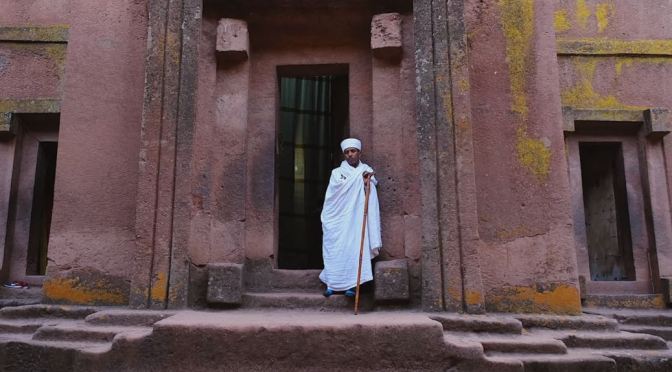
Filmed and Edited: Florence Lepavec
.
Ethiopia, the ‘Roof of Africa’, the ’Cradle of Humanity’, the ‘Promised Land of Zion’…
It had been already given quite many designations.
Another one I also heard before going there for the first time, was ‘Ethiopia, the Africa for Beginners’. ??
Was it because, for the most part, Ethiopians are genuinely friendly, generous and rather naturally relax?
Was it because, as occidentals, we share a common religious identity, rooted in mutual values? Was it because
it is mainly safe for travellers?
For whatever reason it was, I did find the expression suiting me right down to the ground because apart
from Morocco, I had not yet stepped foot in deep Africa.
And actually, now that I am back, I could personally add another title: ‘Ethiopia, the Natural Utopia’.
Is that for its breath-taking Nature? For its colourful Spiritual Identity? For its beautiful People?
Or is that for all of these?
For this abundant land offering an incredible diversity of eco-systems and landscapes, going from arid
desert regions to Afroalpine up-lands breaking down into vertiginous abyss. A land combining peaks reaching
above 4000m and depressions as low as 125m below sea level. Mountains, forests, lakes, meadows, deserts and swamplands.
A diversity also found in the fauna, with some interesting endemic species like the Gelada, the red-hearted baboon
-a peaceful grass-heater with impressive canines.
Or either, for this fascinating primal religious form of Christianity, tinged with animist rituals and colourful arts.
A religious belief deeply infused into the People living according to spiritual principles and values. People trying
their best to give you their best. Everywhere I went, I left it with brothers and sisters. With a sense of home given
by their genuine gentleness and education and their natural sensitive and respectful nature, in deep connection with
Nature Itself. I left with lots of good memories and friends. Filled with Humanity.
The same Humanity our ancestor ‘Lucy’ and her siblings might have been creating some 3.2 million years ago, on the same lands.
On this antic land rich of a unique history and culture.
Those are all the reasons why I called my Ethiopia, ‘the Natural Utopia’: a land that potentially possesses
ideal (or perfect) qualities for People…


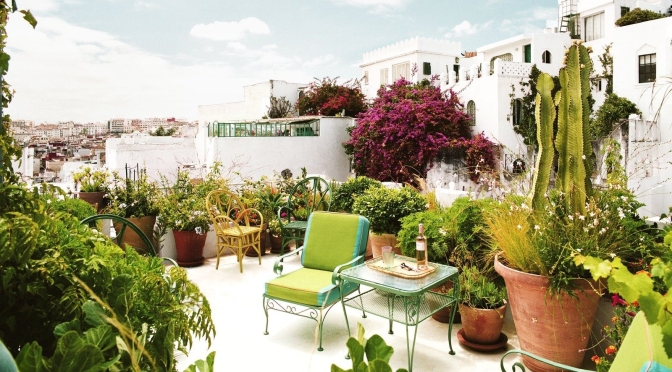
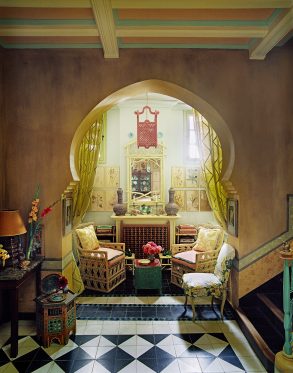 “Tangier is the crossroads of so many civilizations,” says AD100 talent Frank de Biasi of the evocative Moroccan port city that he and his partner, the multifaceted designer Gene Meyer, have made their home. “There’s a central energy here,” he explains, “where the Atlantic meets the Mediterranean, where Europe meets Africa. It’s a psychic point like no other place.”

 BBC Radio 4 speaks to Petina Gappah on her new book, “Out of Darkness, Shining Light”.

 Boomers Daily