
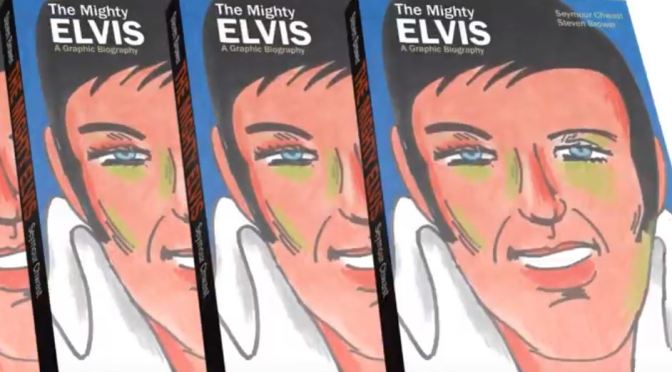
The Mighty Elvis is a commemoration of his life and times in the form of an art book, told through the unique vision of legendary designer and illustrator Seymour Chwast. Beautifully illustrated throughout, it presents an enhanced portrait of one of America’s greatest celebrities.
With text by author Steven Brower (Satchmo: The Life and Art of Louis Armstrong), The Mighty Elvis reminds us of the continuing stardom of one of the most popular American singers of all time. Through Chwast’s illustrations, cartoons and comics we get to relive his early life, his meteoric rise to fame and how he was affected by, and in turn, affected the world of music in the many genres he mastered. The book covers his first appearances on television, Graceland, his meeting with President Nixon, his wedding to Priscilla, and much more. Millions of fans loved him, purchased his records, attended his sold-out shows, and went to his 33 films. Death, 40 years ago, has not diminished his fame. “Elvis Lives!”


 In people with Type 1 diabetes, the pancreas can’t make insulin. Those with the condition require several doses of insulin a day and spent $5,705 per person on it in 2016, an increase of $2,841, or 99%, per person since 2012, according to the nonprofit
  Costs continue to rise, so much so that almost half of people with diabetes have temporarily skipped taking their insulin, according to a 2018 survey by UpWell Health, a Salt Lake City company that provides home delivery of medications and supplies for chronic conditions.
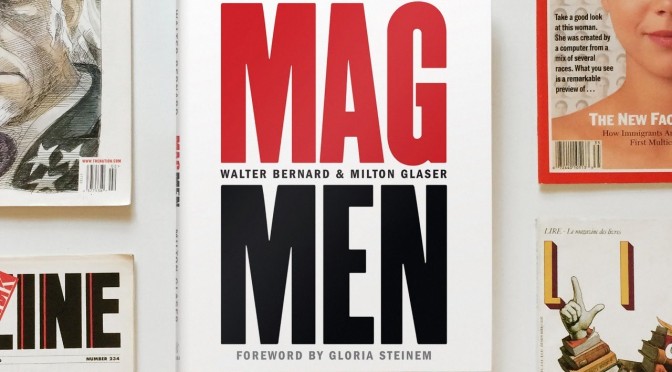
 For more than fifty years, Walter Bernard and Milton Glaser have revolutionized the look of magazine journalism. In Mag Men, Bernard and Glaser recount their storied careers, offering insiders’ perspective on some of the most iconic design work of the twentieth century. The authors look back on and analyze some of their most important and compelling projects, from the creation of New York magazine to redesigns of such publications as Time, Fortune, Paris Match, and The Nation, explaining how their designs complemented a story and shaped the visual identity of a magazine.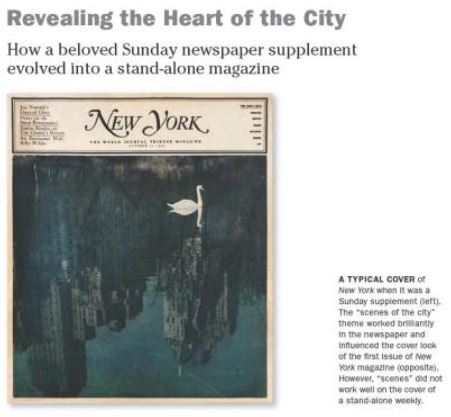

 The premise is simple: a black cat loves scheming a white mouse who incessantly throws bricks at the cat’s head, which police dog Officer Pupp, secretly harboring a passionate love for the cat, tries to prevent.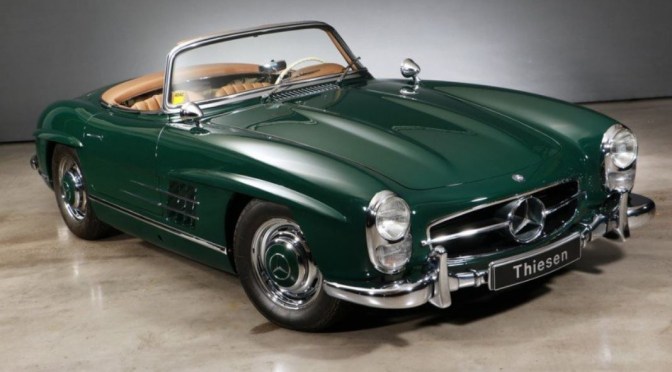
 The 300 SL celebrated its premiere at the? International Motor Sports Show? in New York, which took place from February 6th to 14th, 1954. Mercedes-Benz experienced an enormously positive response from visitors to the 300 SL at the Motor Show, so series production began in August 1954 at the Sindelfingen plant.
 This 300 SL Roadster was delivered in Germany on September 22, 1960. In the mid-1980s, the car came into the possession of an experienced Mercedes specialist. The roadster underwent extensive restoration under his direction. According to the available documentation, the body was separated from the chassis and completely overhauled. Since then, the car has only been moved about 28,000 km and serviced regularly. A few years ago, the vehicle changed hands within Germany to a businessman and classic car enthusiast who used the roadster for nice trips and events.
 “Today, we made history,” said Greg McDougall, CEO and founder of Harbour Air Seaplanes. “I am incredibly proud of Harbour Air’s leadership role in re-defining safety and innovation in the aviation and seaplane industry. Canada has long held an iconic role in the history of aviation, and to be part of this incredible world-first milestone is something we can all be really proud of.”

 The arresting visual beauty of “A Hidden Life,” which was shot by Joerg Widmer, is essential to its own argument, and to Franz’s ethical and spiritual rebuttal to the concerns of his persecutors and would-be allies. The topography of the valley is spectacular, but so are the churches and cathedrals. Even the cells and offices are infused with an aesthetic intensity at once sensual and picturesque.
  Boomers Daily